

By Scott Etkin
It’s a common sight in Central Park and Morningside Park, especially in the summertime: ponds and lakes that are a sickly green color. Toxic algae blooms, caused by too much phosphorus or nitrogen, are a problem in many of New York City’s water bodies that are calm and warm.
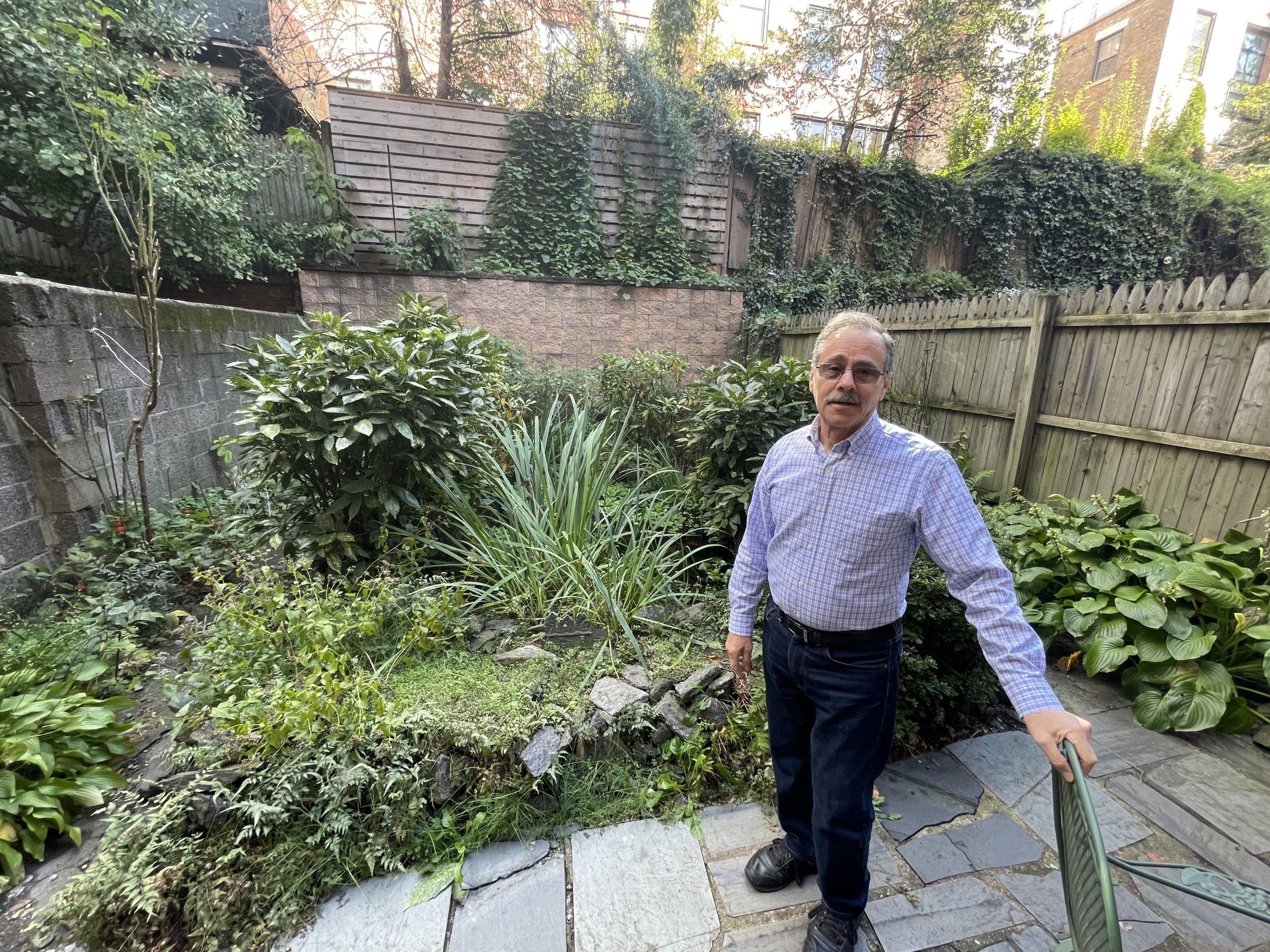
“It looks like pea soup,” said Peter Cohen, an Upper West Sider of 50 years. But algae has never been an issue in the pond that Cohen keeps in his backyard on West 80th Street. You read that right – Cohen has a pond on the UWS. He built it when he moved into the building in the 1970s and has maintained it ever since, and he thinks it might be part of the solution toward the city’s persistent issue with toxic algae blooms.
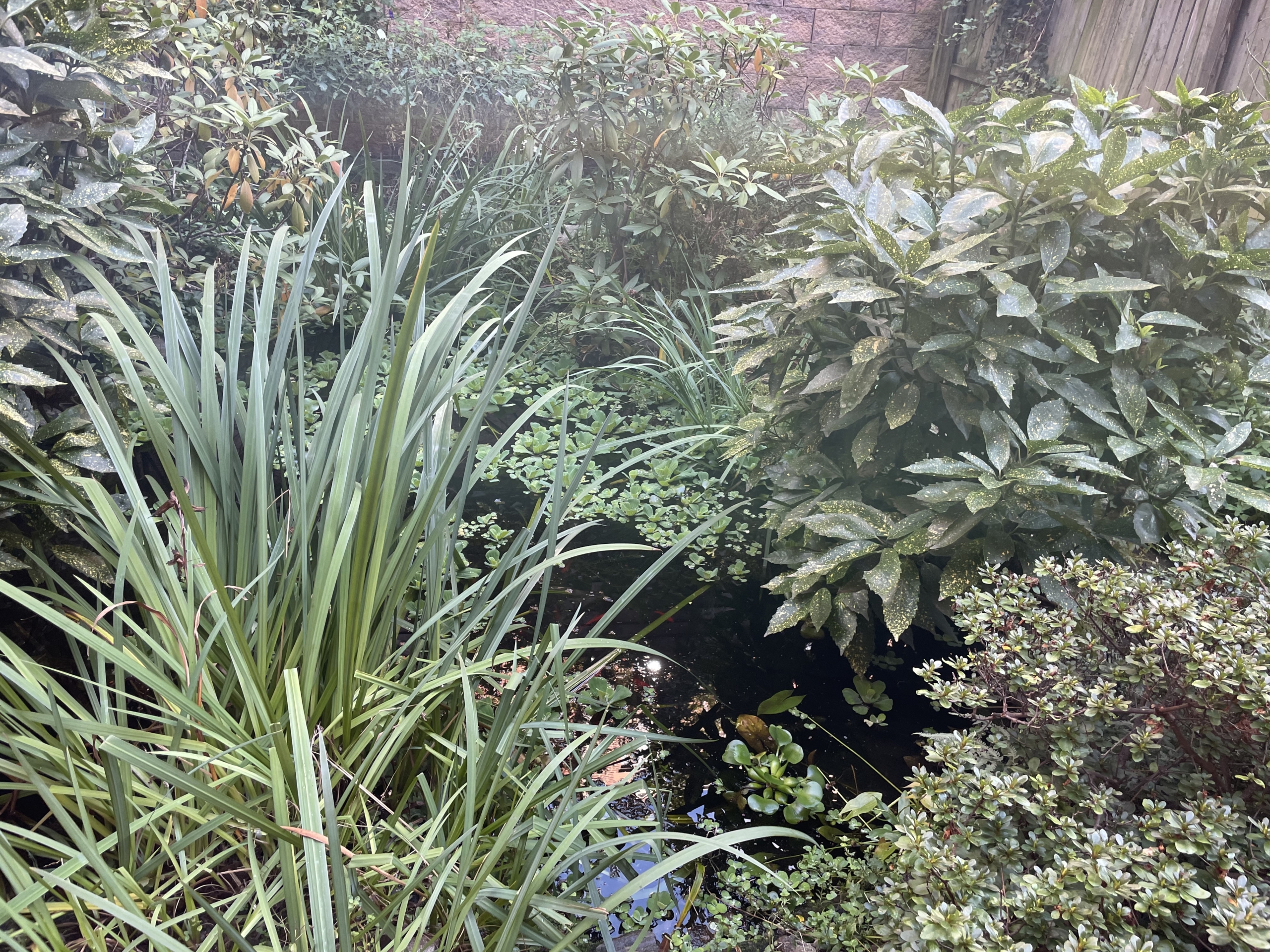
Unlike the Parks’ ponds, the water in Cohen’s pond is clear — lean over the edge and you can see a dozen goldfish darting around beneath the surface. He attributes the health of the ecosystem to the abundance of floating plants that rest on top of the pond. These include water hyacinth, water lettuce, hornwort, and water lilies, as well as plants along the side whose roots migrate into the pond, such as water iris and arrowhead weeds. The plants’ roots filter the water naturally, allowing the fish and his five bullfrogs to live there without contaminating the water.
“There are more than enough plants to suck up the suspended material,” said Cohen, 78, a retired railroader with no formal training in botany, but boundless energy to discuss his pond and garden.
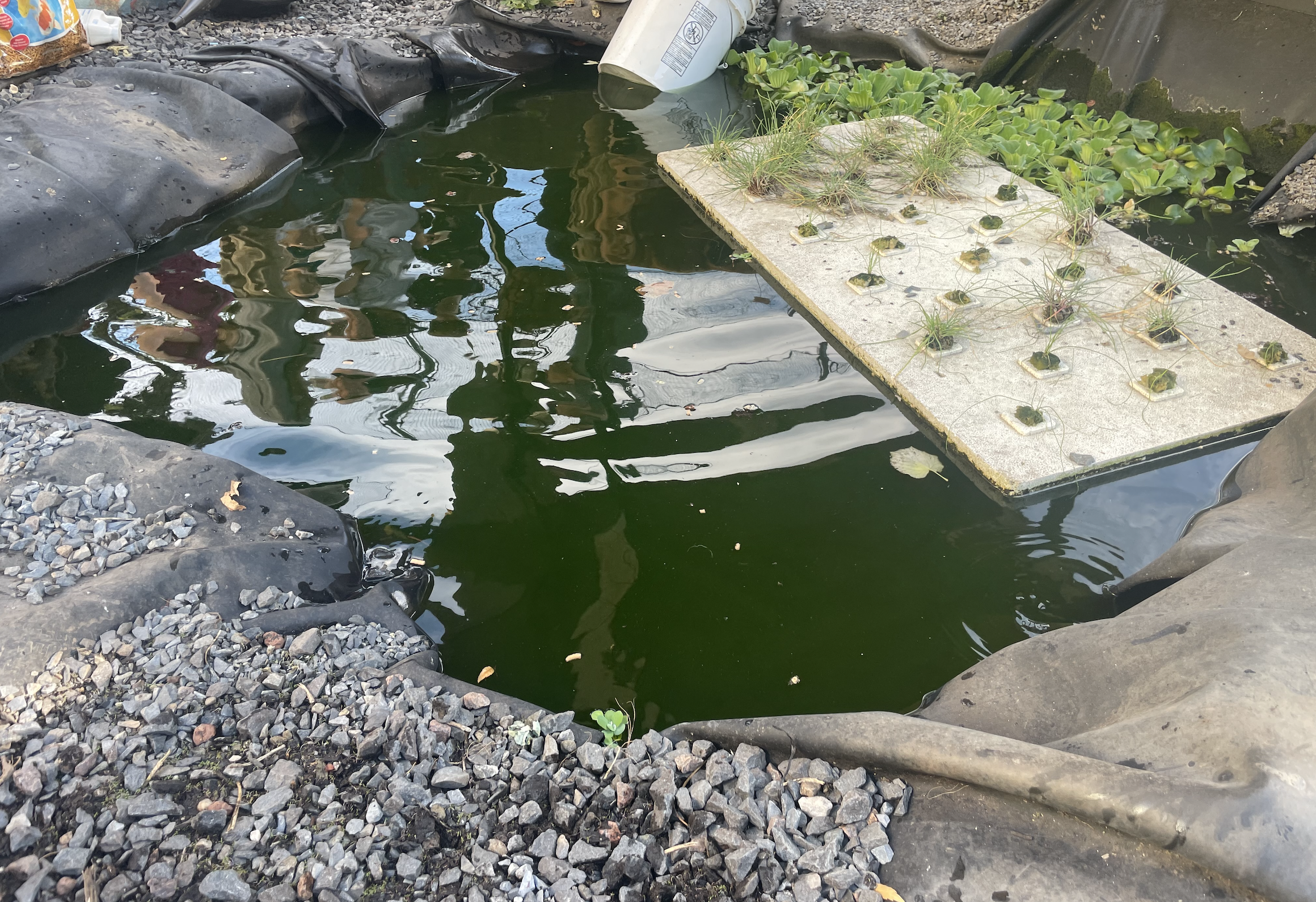
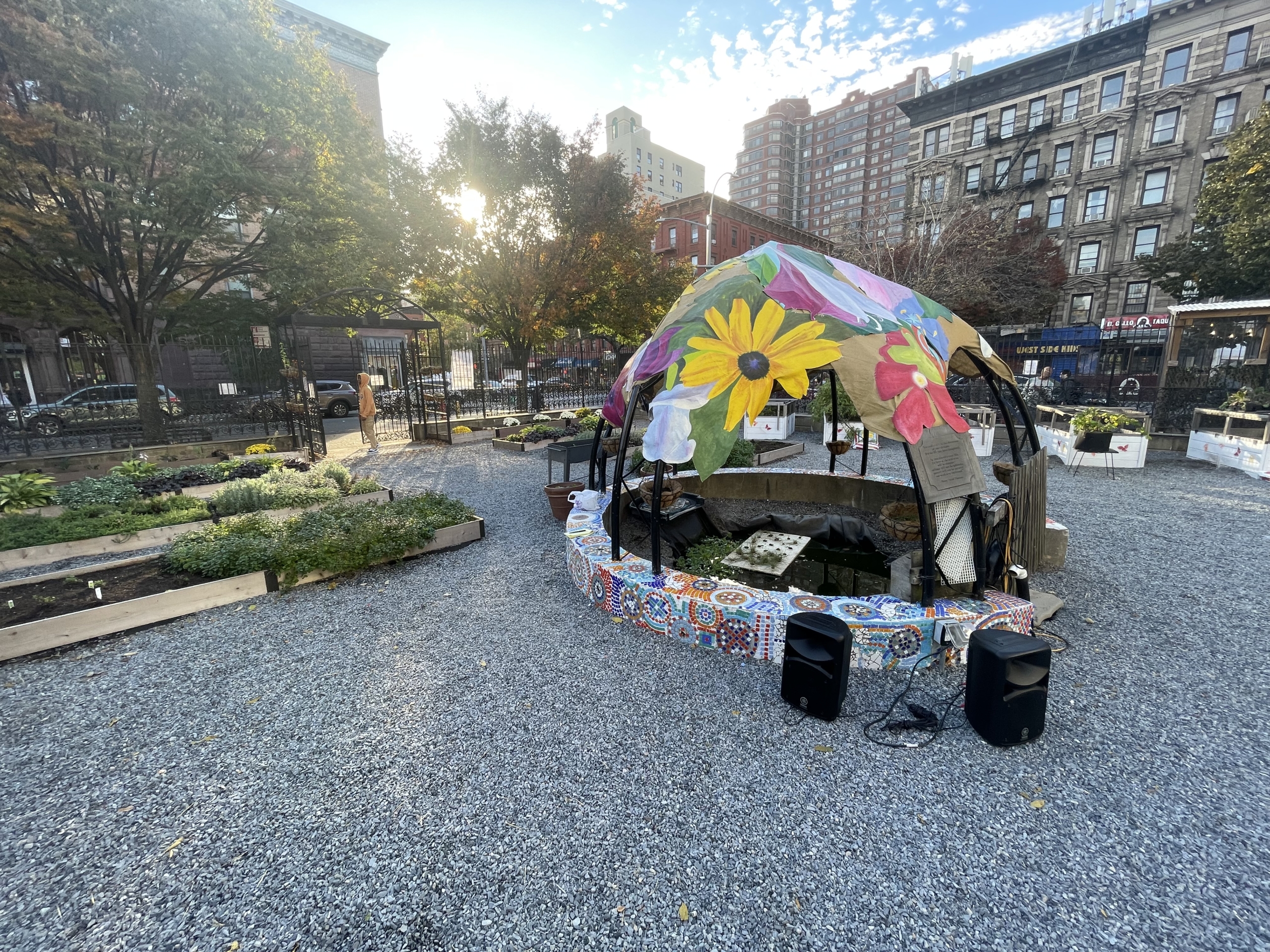
In fact, the plants are growing so fast that he gives them away to friends during the winter (the plants and frogs come indoors during the colder months). That’s what led him to reach out to the Urban Assembly School for Green Careers (UAGC), a public high school on West 84th Street, between Columbus and Amsterdam Avenues, a few blocks away from his apartment. UAGC has its own small pond, prominently located in the center of the school’s outdoor learning area along Amsterdam Avenue. The pond has been there for six or seven years, according to Emma Flemming, an urban-agriculture teacher at the school. It is covered with dark-green algae, despite the colorful shading over it that blocks direct sunlight in an effort to prevent it.
Aquaponics – a system of growing plants in water instead of in soil – cleaned up the water for a time, Flemming said, but it didn’t offer enough filtration and the algae returned. Then, earlier this month, she added several floatings plants from Cohen to UAGC’s pond. During the winter she will bring them indoors, so their effect on the water quality won’t be known for some time. “We’re hoping next year to have a clear pond,” she said.
Cohen is energized by the idea that the students could analyze the impact of these plants on their pond and try out other varieties. If they were to draw their own conclusions about the pros and cons of using flora to clean up water bodies, perhaps they would eventually go on to try to improve the water in some of the city’s ponds and lakes. “Nothing’s easy in this town,” he said, “But if it’s all part of an experiment, then there is no failure.”
To receive WSR’s free email newsletter, click here.





What a wonderful idea! Thank you for implementing this. I’m curious to see if it will help our impacted ponds and pools in Central Park . The overgrowth of algae has gotten worse over time and it’s terrible to see the ducks and geese covered in it.
Of course there is a backyard pond in this city with beautiful fish and frogs and plants…even if my own limited mind had never imagined such a thing! Thank you for sharing the story of this jewel. And good luck to UAGC. As to parks…there’s “good” and “bad” summer algae, no? Such a tough environment. Appreciation to all who work to make it better.
I can’t believe a school for Greene careers doesn’t know about plants. This is really scary.
Well some of the plants named are pernicious invasive species, so it would not be wise to attempt this in parks or anywhere else that plants can escape. Better to use strictly native plant species.
It’s not all bad. Duckweed resembles algae and covers some of the lakes and ponds in city parks with nutritious food for water fowl.