

By Abigael T. Sidi
In my family lore, beef stroganoff is known as the one and only dish my great-great-grandmother Bogdana executed to perfection. “You wanted to cry, that’s how good it was,” my dad said, sharing childhood memories of Wednesday lunches at Bogdana’s, where she’d often dish out her specialty. “But these lunches were always a risky proposition – everything else she made was to be avoided at all costs, especially her cakes.”
A Muscovite Jew – and, according to Dad, the first female dentist ever in Russia, who treated the likes of Rasputin – Bogdana fled the Russian Revolution and “walked with her son under her arm all the way to Paris, arriving there around 1920,” Dad recalled. The first evidence of beef stroganoff being served in Parisian restaurants was right about that time. Coincidence?
“Tender meat cubes blended in a mustardy sour cream sauce, it’s the ultimate Slavic comfort food,” Dad added. “The combo is as miraculous as it’s the opposite of kosher; it must be hitting a specific pleasure receptor in your brain or something.” A little research revealed that the dish was likely created by a French chef to the noble Stroganov family in the late 19th century; the chef, Charles Brière, presumably utilized Russian sour cream as a substitute for the butter and stocks more common in French sauces.
I had personally never tried the dish, so when I discovered it on the menu at Sipsteria, whose Upper West Side location opened last year at the corner of Amsterdam and West 98th, I was intrigued. (More than just intrigued, in fact, given that that my friends and I had initially thought of getting coffee there; the place was advertised as such.)
The original Sipsteria location, in Morningside Heights, “was founded in 2024 by two friends, Sopio Marcellus and Giorgi Papiashvili [both of Georgian descent], with a shared vision of creating a cozy coffee shop and wine bar, offering specialty coffee from Colombia and Ethiopia alongside fresh pastries,” Sipsteria general manager Raymond Mara told me. “In the evening, the space transforms into a wine bar, featuring a selection of organic and natural wines and small plates, which soon began to include Georgian dishes as well. The Georgian offerings quickly became so popular that expanding felt like a natural next step. This led to the opening of this Sipsteria, a larger venue that offers a full dining experience, including lunch and brunch, along with a full bar program.”
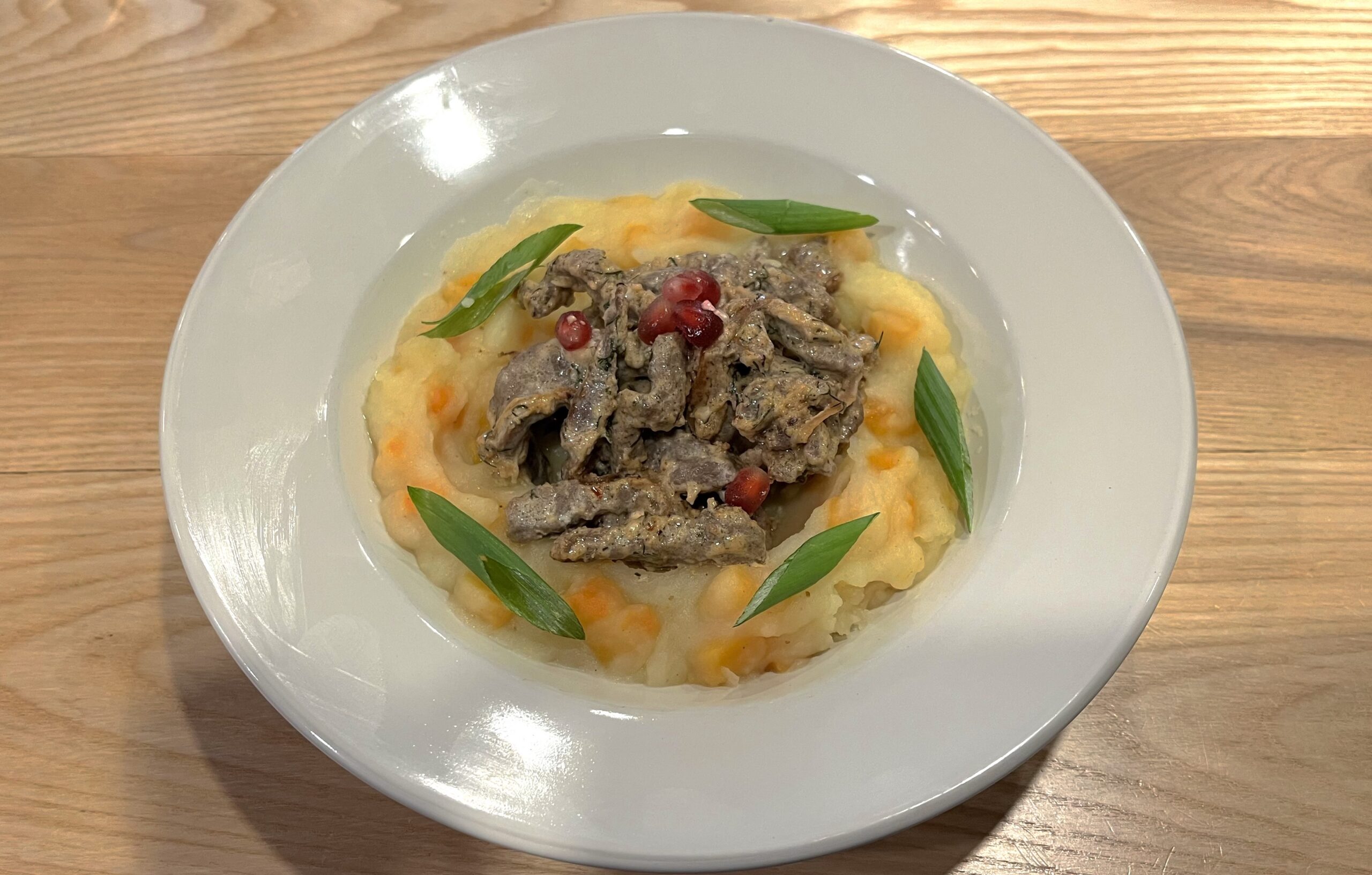
After a quick wait, the beef stroganoff arrived. A beauty to look at, the bite was rich, creamy and deeply savory, whereby the tangy (but not mustardy) sour cream blended with the hearty beef in perfect harmony. Luscious would probably be the best descriptor, and the puree it was served on was a perfect, velvety complement (Bogdana’s version reportedly used noodles, the traditional side, or rice; also, no mushrooms in Sipsteria’s version). The dish was an wonderful marriage of homeyness and refinement, with an ingredient combination that just clicks. Lastly, a few pomegranate seeds and raw green onions stems, added as garnish, provided a pleasant little crunch as I went.
I asked Mara for specifics on their recipe. “Our beef stroganoff begins with marinated strips of beef that are seared with onions to develop a rich, savory base,” he shared. “The meat is then folded into a creamy sour cream sauce, seasoned with garlic and fresh cilantro [and tarragon], which gives the dish a subtle herbal brightness.” Tarragon, that was the ingredient that eluded me, which provided that beautiful sense of freshness on top the richness of the dish.
“The puree is made of potatoes, apples and pumpkin,” Mara continued. “The potato provides structure, the pumpkin adds warmth and depth, and the apple brings a gentle acidity that lifts the whole dish. And there is a little tweak: To finish, we season it with Svanetian salt, a traditional Georgian spice blend, and a touch of butter, which adds another layer of aroma and complexity.”
Back home from my revelatory experience, Dad was particularly intrigued by the addition of tarragon to the sauce. I shared that several other dishes on the menu featured the herb as a star ingredient, and we’d go on to try them all, all well executed and refreshingly delicious.
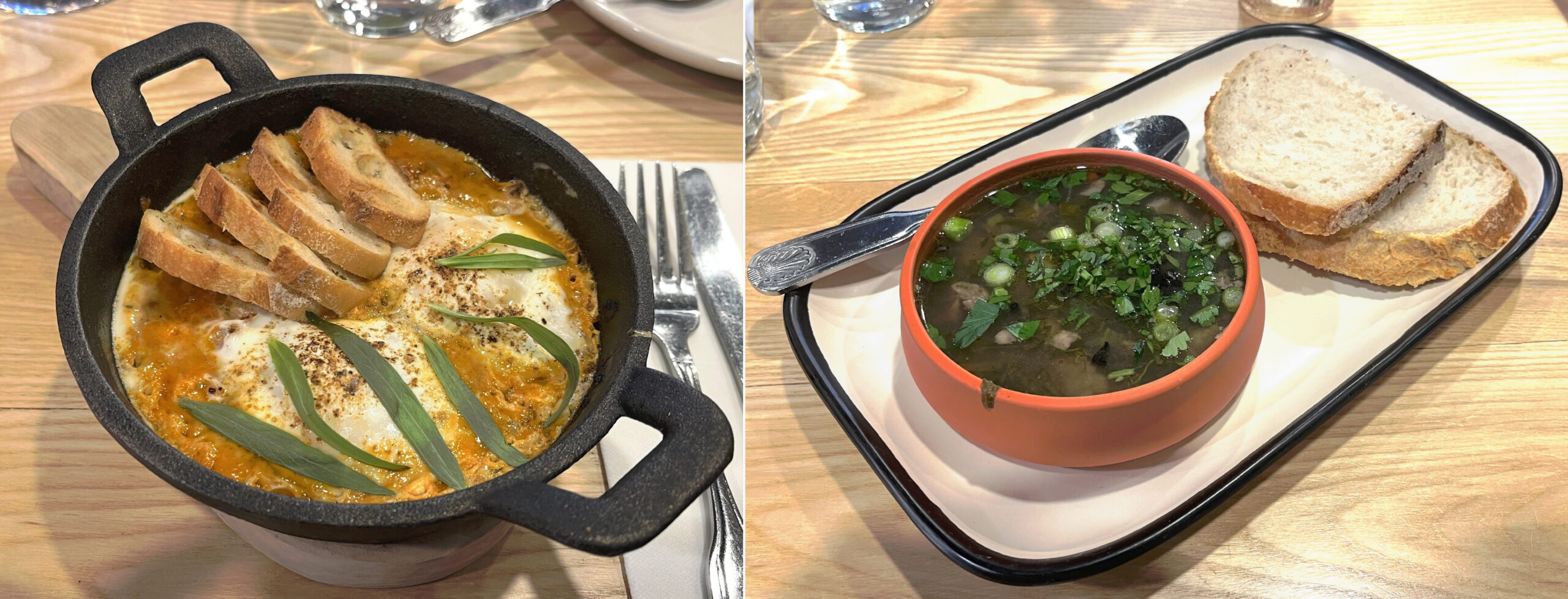
“Tarragon is actually very common in Georgian cuisine and plays a central role in many traditional dishes,” Mara said. “There are recipes built almost entirely around it – one well-known example is chakapuli [$24], a spring stew of lamb, herbs, and white wine where tarragon is the dominant flavor. Incorporating the herb into shakshuka [in their fantastic tarragon shakshuka ($18)] was a deliberate way to introduce a Georgian twist to a familiar dish. The herb [which is both used to infuse the sauce and as a topping] adds a fresh aroma and character that works beautifully with tomatoes and peppers. Georgia also has a popular bright green tarragon lemonade, known as Tarkhuna, which shows how beloved this herb is in everyday cooking.”
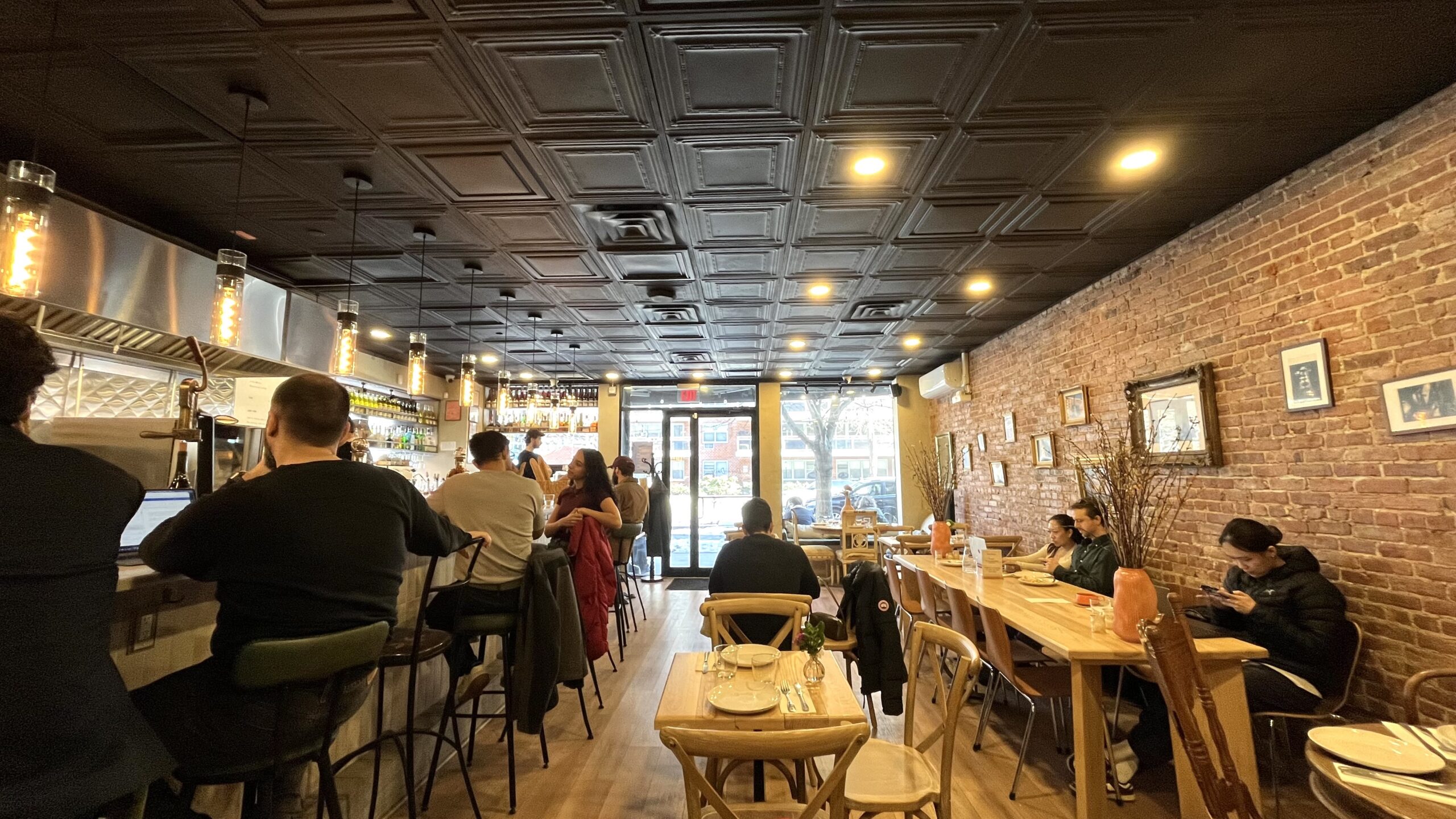
The breadth, complexity and character of Georgian cuisine, which I first discovered last year at Chama Mama, have continued to amaze me since. Like this and other Georgian restaurants in the city, Sipsteria strikes by its warm, gregarious vibe. The setting is open, bright, a little retro and modern at the same time, very convivial. Patrons comprise coffee and wine sippers, croissant/pastry lovers, and trendy foodies alike. It is open from 7 a.m. to 11 p.m. every day, except on weekends, when it opens at 8:30 a.m., with pickup and delivery available at these times. Vegetarian and vegan options available and clearly marked.
The Dish: Beef Stroganoff ($26)
The Restaurant: Sipsteria, 774 Amsterdam Avenue (corner of West 98th Street)
Read all Here’s the UWS Dish columns here.
Subscribe to West Side Rag’s FREE email newsletter here. And you can Support the Rag here.





The photo emphasises why food photogs are highly paid.
Thank you for this. I have cravings for this dish, possibly an inherited taste from my Moldovan mother. I recently had a delivery of Stroganoff from Veselka, from the Grand Central location and it was copious and delicious. (https://order.online/store/veselka-grand-central-26078334?pickup=true) I will add Sipsteria to my priority list.
Veselka delivers to the UWS? Who knew? Thank you for the link, Joel. My mother was also Moldovan, but she kept kosher so beef and smetana (sour cream) never came within a yard of each other. I had to discover the joys of Stroganoff for myself in the glory days of the Russian Tea Room.
And thanks, WSR, for fixing the site so we can now upvote comments.
Inedible Russian cakes? You mean like the infamous kugel?
I’ve had this dish! I agree with most of what you said except the beef is not of the super tender type, a little stiff, but still OK. The taste is there though, and the puree is delicious as well.
Upon my first visit there, I immediately wanted to make this restaurant my hangout — I love their food, the wine list is interesting, and the people who work there are welcoming. However, it is so deafeningly loud that I can’t bear it. I’ve gone 3x, twice with another person, and both friends said they would never return for the same reason, even though they loved the food. So I haven’t gone back, which makes me sad because this pocket of the neighborhood lacks for good food and wine, and this place could have fit the bill perfectly. Alas, another restaurant’s owners clueless about the fact that people want to hear what their friend across the table has to say.
I’ll just continue going exclusively to Gennaro’s, where the vibe is lively but I can always hear what my dinner companion has to say.
Any chance of highlighting dishes that are more plant-forward?
Was so excited for this addition to the neighborhood. Dined here several times and really enjoyed it. On about our fourth or fifth visit, we sat at the end of the bar near the back, where we witnessed the vast majority of the dishes being reheated in the microwave in plastic containers. Yuck. Sadly, we haven’t been back since.