


Sponsored Content
I had a few topics in mind to speak of, but this one is festering in me. Question: Is this the “it’s always something” moment for this cycle?
I ask because, virtually every time over the past 6-7 years (excluding the rubber-band effect we had post-pandemic in 2021), the market surges we had anticipated at the time got tripped up by SOMETHING. In 2019, it was The Housing Stability and Tenant Protection Act of 2019 (a big name for “what a disaster”); then in 2020 it was the pandemic; (2021 was the snap-back like something we will never see again); in 2022 it was the war in Ukraine, followed immediately by the beginnings of the spike in interest rate; in 2023 it was the Regional Banking crisis and rates that were still rising (up to 8% in Oct 2023); 2024 was simply the continued malaise of sticky 7% rates; 2025 was Liberation Day and now in 2026…the moment we hit 6% on the 30 year jumbo mortgage and sub-6% for the conforming, here comes the war in Iran, causing rates to abruptly reverse course and pop up several points.
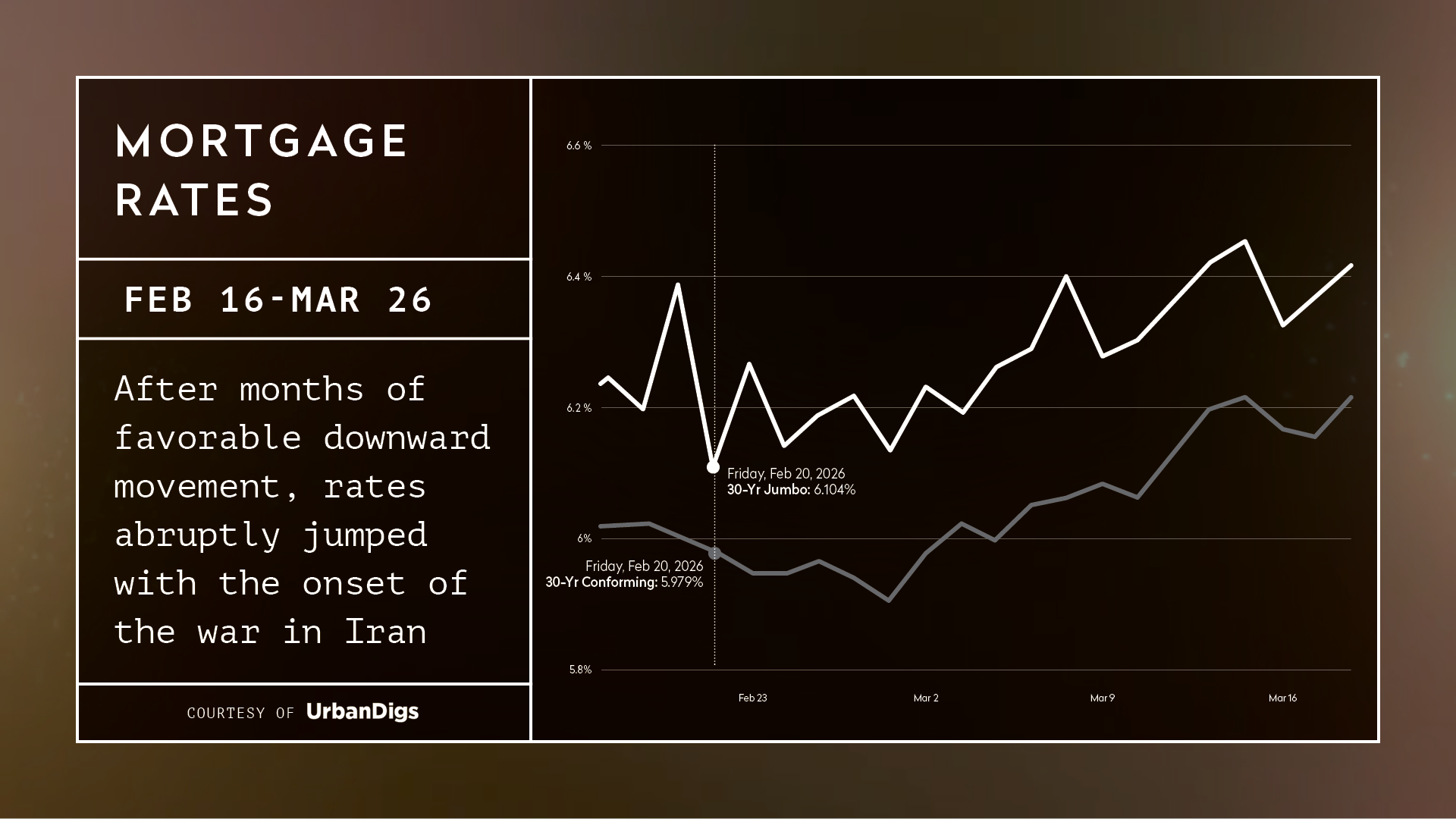 My observation is this. This only affects deal volume, not pricing or even the availability of opportunities. We have to differentiate between the two circumstances. Enduring those 6-7 years of headwinds has indeed diminished overall deal volume (meaning fewer transactions), but not value. That reduced activity is largely because of constrained inventory; with fewer homes to sell, there are fewer deals. It’s like food; put some food out on the table, and it gets eaten.
When there’s less food, fewer people eat. The reason the value has not diminished is that in Manhattan, there is always a core level of demand. It’s like water, if there’s a crack it seeps in, or when you inadvertently step into that slushy corner just off the sidewalk, and your foot becomes submerged; Instantaneously, you can feel that water gets to your feet. That level of demand is constant and sustains us in a buoyant place. So, deal volume contracts due to lower inventory, but pricing and value (which tend to rise in “normal” circumstances, something we have not been able to achieve for years now) remain stable. That is a sign of a healthy and stable marketplace.
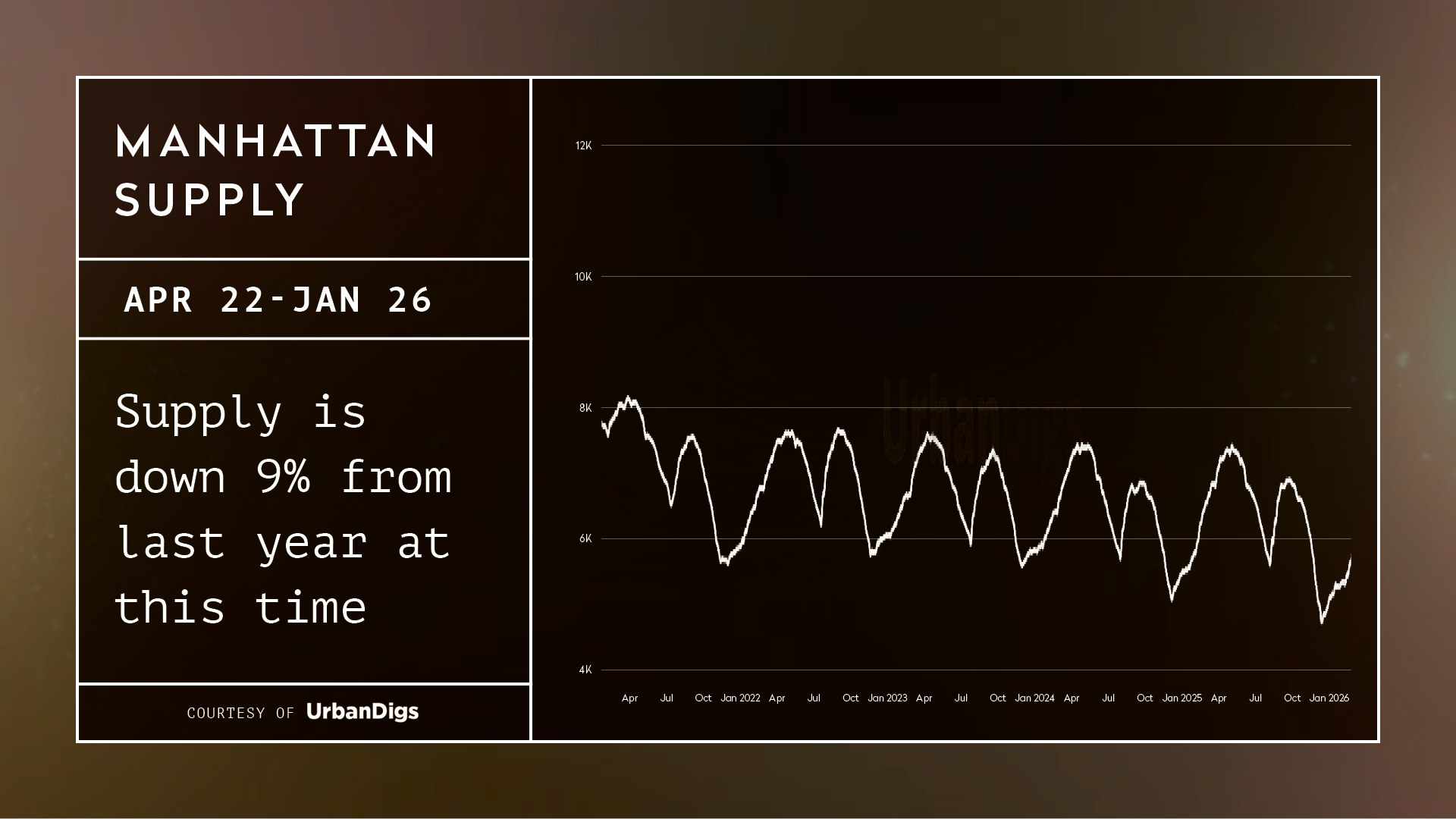 The lack of inventory (which is caused this dynamic) has been a result of elevated interest rates….sellers reluctant to put their properties on the market. But why? Why would a seller care about interest rates? Well, 1) limited inventory affects them too, because they can’t find what they want either; 2) if they’re looking to upgrade, higher interest rates will cost them more money to move; 3) regardless of upsizing or downsizing, a lot of people are favorably locked into a lower interest rate then they can get today, which if you really want to move, is a bit of a curse. You end up not moving on with your life’s pursuits and goals because you’re afraid to lose that rate. These are just a few reasons; there’re more.
But all of that should be further differentiated from the fact that quality deals are still indeed taking place and the fact that pricing has remained overwhelmingly
stable. If you’re a seller, the fact that you would only be competing with a few properties is a very strong place to be; you have leverage than you think. And for buyers, pricing is still flat…and the fact that some people will now sit back down because of the “war” and that pop in rates, presents opportunity for less competition.
So, is it the beginnings of the next “It’s Always Something” moment? Probably. Those who faced all those obstacles identified opportunity and have been building equity for years now. Consider the moment.
Let’s Go Shopping ! ®
Anyone interested in buying or selling should be rolling up their sleeves to determine whether the time is right to sell or if there’s a home/investment property out there for them. Who represents you matters… your best investment is often in the broker you choose; find someone with experience and whom you feel you can trust.
NEW TO THE MARKET


The Dakota is the crown jewel among the most extraordinary residences of Central Park West. It’s the most storied residential building in New York’s long history. The late 1870s were a time of burgeoning prosperity. A post-war boom saw the proliferation of Mansion and Townhouse living among the affluent; it represented status. It was then that Edward Cabot Clark, architect of the Singer Sewing Machine Company fortune, conceived of an apartment house to be built, as an alternative, for precisely those affluent who preferred not to manage the responsibilities of caring for a house. His vision was to preserve the aspirational and distinctive way of life characterized by sophistication, exquisite taste, privacy, pleasure, and service for those accustomed to it. This was to be a house of a different kind. Click here to see the full listing details.