

Today is Monday, June 22nd, 2026
Today’s forecast calls for rain and possibly a thunderstorm, with a high of 75. There’s also a possibility of morning showers tomorrow, but after that the week should be pleasant, with mostly sunny skies and highs in the upper 70s to low 80s.
On this date in 1981, Mark David Chapman pleaded guilty to killing John Lennon as the former Beatle returned to the Dakota after an evening recording session.
Notices
Our calendar has lots of local events. Click on the link or the lady in the upper righthand corner to check.
Today at 11 a.m., at Cherry Hill Fountain in Central Park, a vigil will be held for Romanch Mahajan, the 18-year-old who died last week in Central Park after falling out of a runaway horse carriage.
Our Here’s the UWS Dish column returns from hiatus today with a new columnist, Yana Krasnitskaya, at the helm. Be sure to check it out!
News Roundup
Compiled by Laura Muha
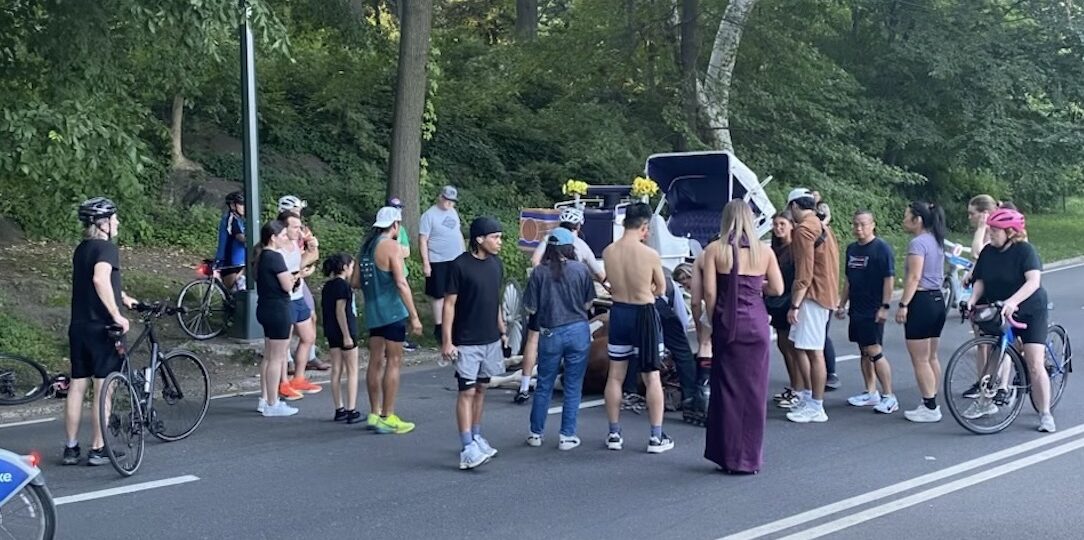
The carriage horse who collapsed suddenly in Central Park two weeks ago died after eating Japanese yew, a common shrub that contains deadly toxins, The New York Times reported.
In a statement, the Central Park Conservancy blamed the driver of the 16-year-old horse for his death, noting that park rules forbid the horses from eating park vegetation, and that carriage drivers are responsible for supervising their horses at all times. “This tragedy underscores something larger: it’s time for New York City to join other major cities around the world and ban horse carriages from our city,” the conservancy said.
However, Christina Hansen, a representative for the carriage drivers union, said that even with close supervision, it’s impossible to prevent horses from nibbling. “Being with a horse all day is like being with a 1,500-pound toddler, who is hungry as a horse,” she said. She blamed the horse’s death on the conservancy, which oversees landscaping in the park, saying it was “outrageous” that a plant known to be toxic to horses was “anywhere within reach of a horse that was on the carriage drive, which was designed for horses.”
Tests conducted by a veterinary pathologist at Cornell University found that the horse, named Deniz, had consumed Japanese yew, a shrub that is common in the park, and which can disrupt heart rhythms if eaten in sufficient quantity. The shrub was found in both his mouth and his stomach. The pathologist who performed the necroscopy said it would have taken less than 1.5 pounds to kill the horse, who weighed 1,433 pounds, the Times said.
Read the full story — HERE.

A special Lincoln Center concert series for people with dementia made news around the world last week, after a reporter and photographer from the French news agency Agence France-Presse (AFP) attended the final performance of the season.
“The musicians [played] to a packed house of some 100 people,” reported AFP, in a story that was picked up by publications in Canada, the Philippines, Malaysia, Thailand, and Turkey. “One audience member closed her eyes and mimed conducting as the artists played Mozart, while another tapped her caregiver’s arm as if there were piano keys.”
Miranda Hoffner, Lincoln Center’s accessibility director, told the AFP that the series — now in its 10th year — sprang from demand. “We were hearing more and more from our subscribers at the Philharmonic and the Chamber Music Society that they weren’t renewing their subscriptions because of dementia, as their family members were impacted,” she said.
So the center worked with an Alzheimer’s nonprofit to figure out how to make performances by world-class musicians accessible to people with dementia. “Concerts are less formal and subdued than traditional classical music performances and are followed by workshops led by music therapists and teaching artists to encourage participation and imaginative engagement,” AFP reported.
Added Hoffner: “You will see people holding hands, you will see people tapping their feet, you will see people vocally participating in the music.”
Some of the concerts are on zoom and open only to people with dementia and their caregivers; others are in person and also open to people with developmental disabilities.
Read the full story — HERE. More information on the concert series is — HERE. (The spring series has wrapped up, but the lineup for the fall series will be announced soon.)
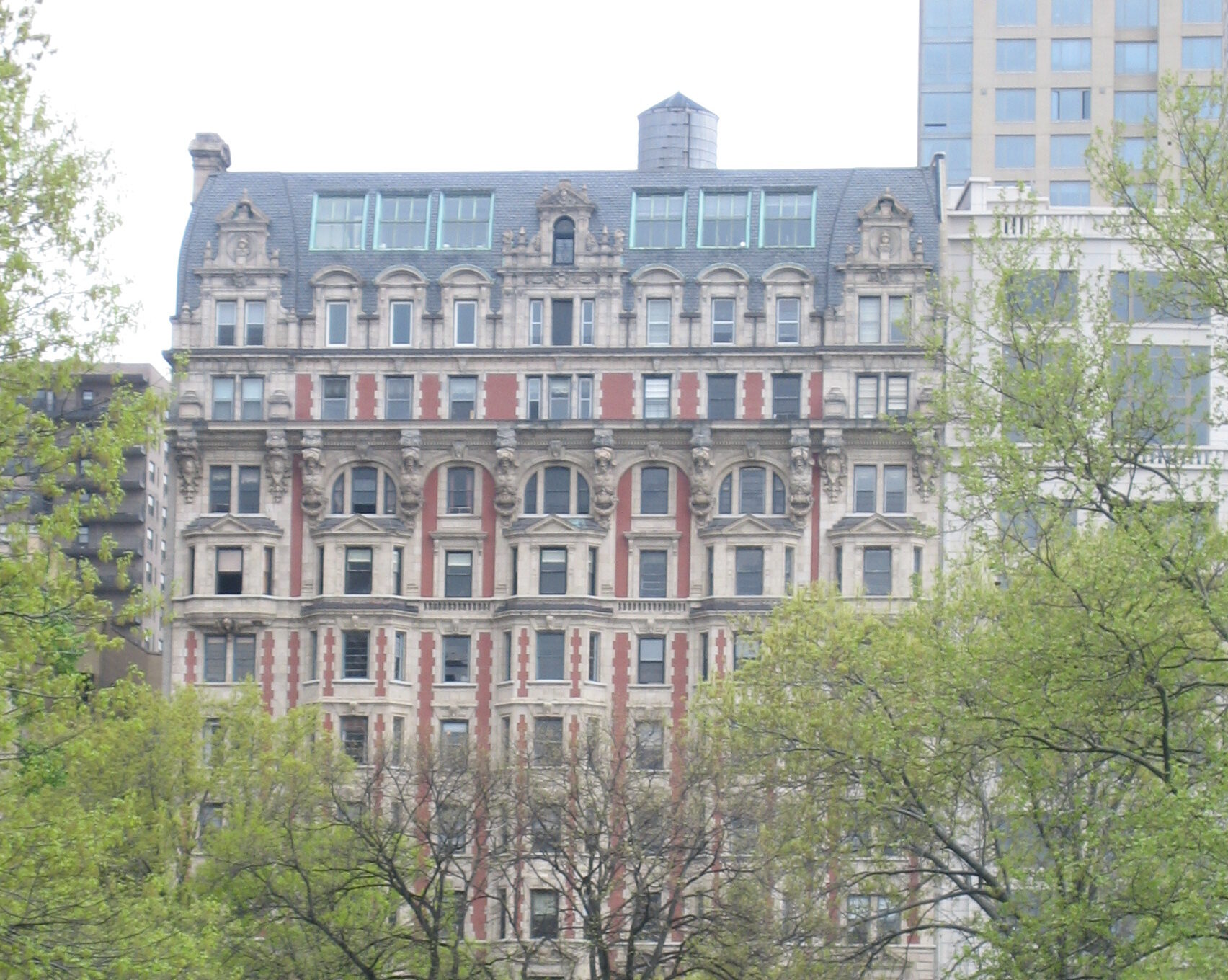
Last week was another busy one for the neighborhood’s luxury real estate market, with six deals closing over the $4 million mark, Patch reported.
The most expensive apartment to sell was a five-bedroom, five-and-a-half bath in the Chatsworth at 344 West 72nd Street (at Riverside Drive), which closed at $7,100,000. The apartment features a double-height master suite, a chef’s kitchen, and views of Riverside Park, Patch said.
The least expensive of the “luxury” sales was a three-bedroom, three-and-half bath apartment in Lincoln Square, which closed at $4,475,000.
See the rest of the list — HERE.
In Other UWS News:
- An Upper West Side couple had a memorable wedding at City Hall last week when they found themselves in the middle of the Knicks ticker-tape parade, the New York Post reports. Read the full story — HERE.
- Hundreds of Catholics marched through the Upper West Side and Central Park recently in a show of faith known as a Corpus Christi procession, reported The Good Newsroom, a news site run by the Archdiocese of New York. See the video — HERE.
- Apartment Therapy recently featured an UWS interior designer, who, after a divorce, furnished an apartment for herself and her three daughters almost entirely with curbside and “buy nothing” finds. Read it and take a video tour — HERE.
- The BBC’s Discover Wildlife site recently did a piece headlined “A mighty hawk has made a home in New York City’s Central Park.” It turns out to be less about what’s going on now than it is about Pale Male, the red-tailed hawk who captured the world’s attention when he was first spied in the 1990s. The piece acknowledges he is believed to have died in 2023, but it also includes information on hawk watching in the park, along with a heavy dose of nostalgia for Pale Male’s many fans. Read it — HERE.
- A West 92nd Street one-bedroom apartment with a wood-burning fireplace is among those featured in this week’s The New York Times “Homes for Sale” section. See it — HERE.
ICYMI
Here are a few stories we think are worth a look if you missed them last week — or a second look if you saw them. (Note that our comments stay open for six days after publication, so you may not be able to comment on all of them.)
UWS Chapel Completes $18M Renovation as it Celebrates 100 Years in the Neighborhood
Subscribe to West Side Rag’s FREE email newsletter here. And you can Support the Rag here.




I’m with the Conservancy on this one. If the Conservancy happens to plant something that is dangerous or fatal to horses, they have that right. And they are ABSOLUTELY correct – despite the driver’s hopelessly weak response – that drivers should be keeping their horses away from ANY vegetation that they may be tempting to them.
What this incident proves is that the driver was NOT paying proper attention, or ignoring what their horse was doing. Otherwise, they should have “pulled the reins” the moment the horse began trying to nibble on the plant. Period. If a driver doesn’t want to “watch” their horse AT ALL TIMES, then that is on THEM, NOT on the Conservancy.
End the horse and carriage industry NOW!!
Will you be saying the same if a toddler pulls some berries off a Japanese yew and consumes them? It is unconscionable tjat the Conservancy knowingly planted a shrub that is poisonous to horses, to dogs, and especially to people.
Again, condolences to the family of the 18 year old boy from India on his Central Park death.
To Brandon:
1. As a parent of former toddlers, I realized my responsibility to keep my children safe, including being sure they put nothing in their mouths I wasn’t sure of..
2. Many plants are toxic, including familiar local ones.
3. No matter how careful you are, occasionally accidents do happen, sometimes tragically.
4. Beware of over-reaction. Over 30,000 automobile-related human deaths occur every year in the IUSA. We should do all we can to minimize them, but should we ban automobile travel?