

By Yvonne Vávra
What’s a dad? What does it take to earn the title? They love, care, guide, and provide stability in all kinds of ways. Some pass down wisdom. Many are always building, fixing, or finishing something. And at least one helped transform a rocky, swampy stretch of Manhattan into one of New York City’s most desirable neighborhoods.
Rag readers, meet your daddy.
A man who aimed high in leaving behind a legacy, he had such a huge impact on our neighborhood that history remembers him as the “Father of the Upper West Side”: Cyrus Clark.
Nineteen-year-old Clark arrived in the city in 1849 and quickly made a fortune in the silk trade. By 30, he was wealthy enough to retire and curious enough to set off for Europe to study how its great cities were built and run. Before leaving, though, he bought land on the West Side, which was still in its mud-and-meadows era. Clark had a nose for a deal. He saw potential in the mix of shacks, puddles, and rocky fields. More importantly, he had a vision for what it could become.
When he returned to New York in 1870, Clark got to work shaping the neighborhood. The West Side of Central Park was still largely undeveloped, and it would be another decade before the first major apartment building appeared. Bloomingdale Road—later renamed Broadway—had only just been paved. Change was in the air, and early investors like Clark understood they could shape the future of their land, turning it into a place other wealthy New Yorkers would find irresistible.
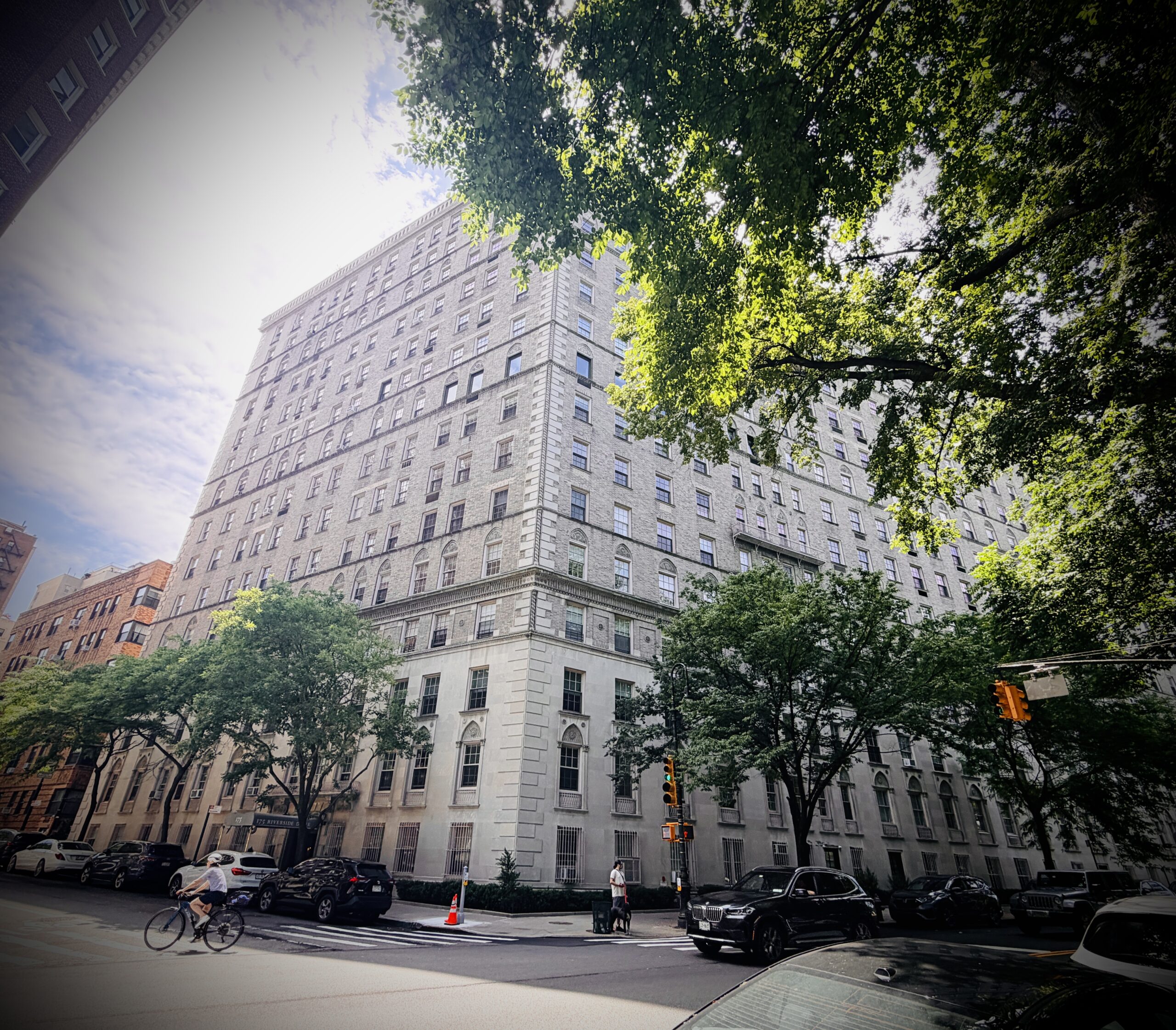
Clark mingled with the city’s elite in several clubs and was a founding member of the West Side Association. He later became president of its offshoot, the West End Association, which lobbied the city to bring infrastructure and services to the area. By then, he had built a small palace for his family at the corner of 90th Street and Riverside Drive, complete with towers and enough porches to spend a good while deciding where the river breeze felt nicest. It was the perfect place to dream up improvements for the neighborhood.
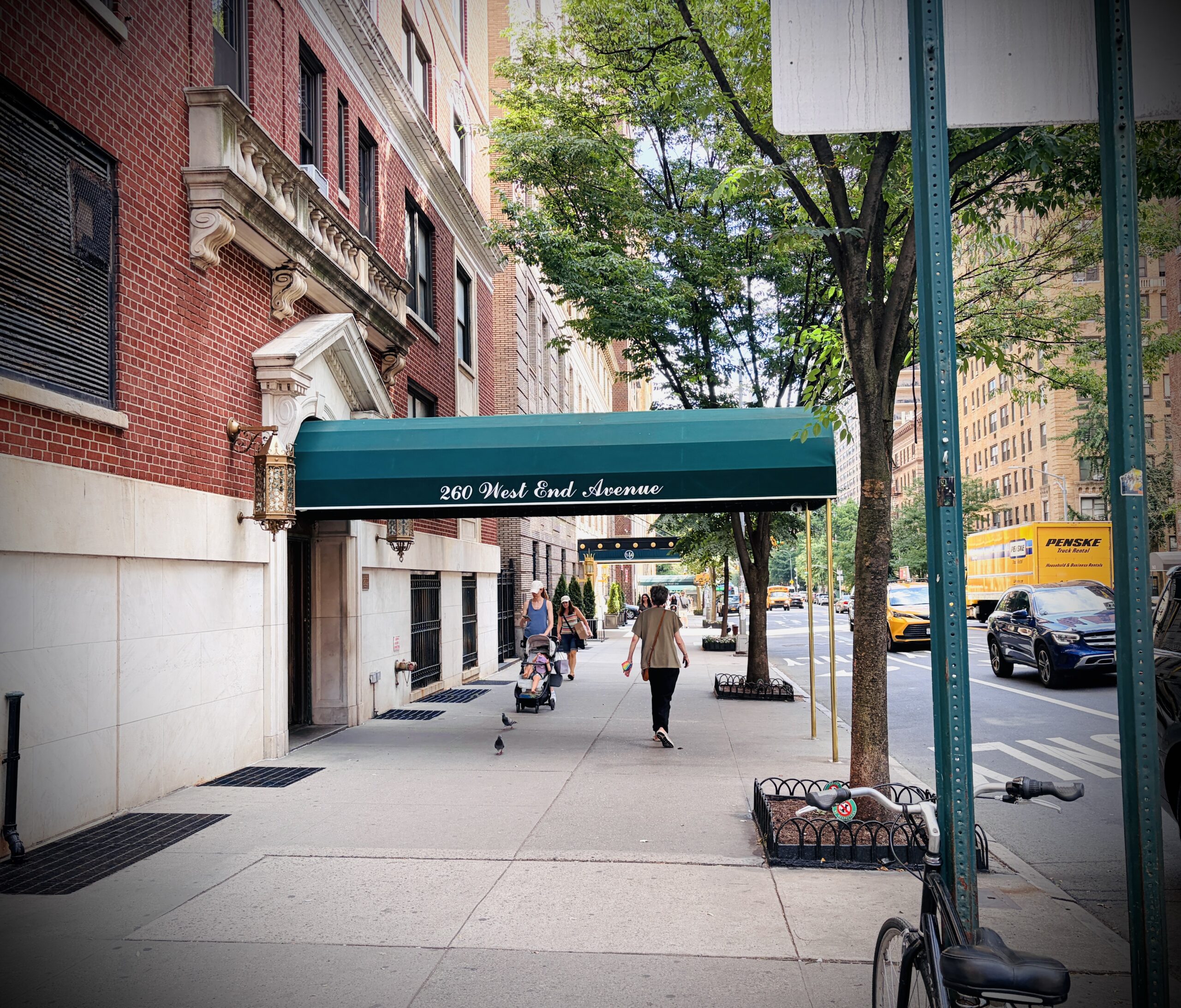
He pushed for streetlights, gas and water lines, sewers, and more paved streets, and kept pressing for mass transit to reach the Upper West Side. Without it, attracting homebuyers was still a hard sell. He helped ensure that Riverside Park was completed and that Riverside Drive became an address that could hold its own against Fifth Avenue on the Upper East Side. Clark wasn’t just concerned with what was built, but where it belonged. He championed a clear separation between residential and commercial streets. If you stroll down West End Avenue enjoying the quiet, thank our father for the fact that the bustle of Broadway, Amsterdam, and Columbus feels galaxies away.
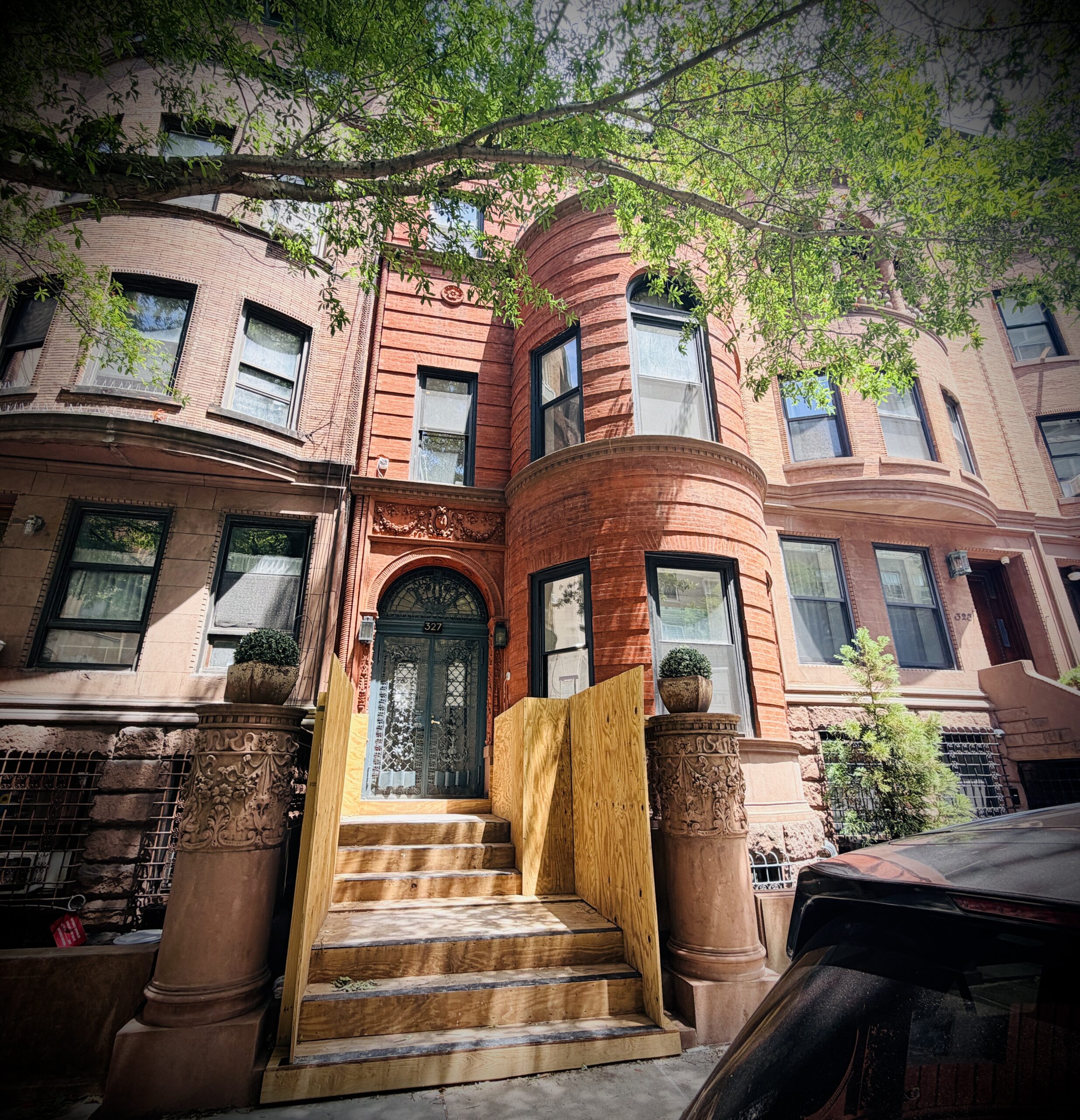
In 1898, he left the villa for a smaller townhouse at 327 West 76th Street, between West End Avenue and Riverside Drive. From there, he took up a fight to protect the Upper West Side from ashes, garbage, and other assorted filth. A New York State senator had proposed building piers at 79th and 96th Streets and turning them into dumping grounds. Clark invited reporters into the parlor of his new home and announced that, no, that wasn’t going to happen, not under his watch.
And it didn’t.
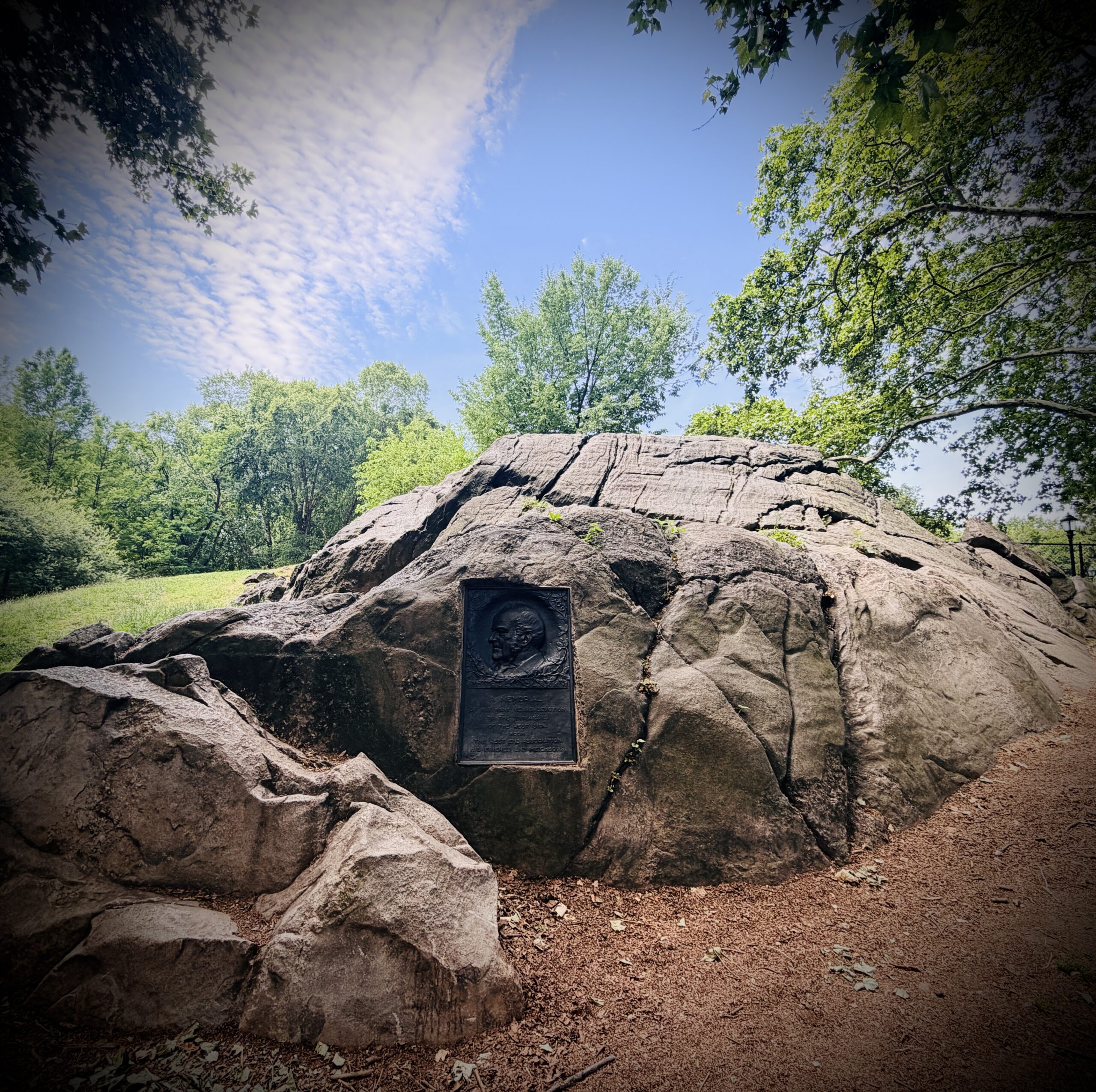
Until his death in 1909, Clark fought anything he believed threatened the beauty, character, or future of the Upper West Side. He imagined the neighborhood before it existed, helped bring it into being, and spent decades improving and protecting it. When he died, his friends, neighbors, and fellow campaigners rallied to return the favor. They honored the Father of the Upper West Side with a monument in Riverside Park, set into a boulder near the 83rd Street entrance.
Chances are, you’ve never noticed it or even heard his name. I know I hadn’t. But Clark’s legacy is all over this place, perhaps most of all in the feeling that this corner of Manhattan somehow feels like a bustling city and a quiet residential pocket at the same time. Not bad for a dad.
Yvonne Vávra is a magazine writer and author of the German book 111 Gründe New York zu lieben (111 Reasons to Love New York). Born a Berliner but an aspiring Upper West Sider since the 1990s (thanks, Nora Ephron), she came to New York in 2010 and seven years later made her Upper West Side dreams come true. She’s been obsessively walking the neighborhood ever since.
Subscribe to West Side Rag’s FREE email newsletter here. And you can Support the Rag here.




I didn’t know this! What a lovely bit of history to start the day with. And West End Ave still feels like an oasis amidst the city.
Lovely story! Thank you.
Yvonne I love your writing!
Learned a lot from this article, I love a visionary dad with a passion for the UWS!
Happy Father’s Day to my fellow dads!
As always, a beautiful tribute. Thank you, Yvonne!
Thank you Cyrus for fighting and winning against your generation of politicians and their horrible 79th and 96th Street pier idea. And, as a 53-year resident of Riverside Drive, keeping it and WEA residential was another brilliant idea for which so many are grateful. Too bad we don’t have someone of your vision and ability now to fight the electric carriage idea politicians are promoting to substitute for the antiquated and dangerous horse-drawn carriages in Central Park. Thank you to Yvonne for bringing Clark’s story to our attention. He was a strategic thinker and an achiever and not just interested in a photo op.
Thank you, Yvonne, for bringing this unsung hero to our attention. Your well-written pieces are always entertaining and enlightening.
Here’s a picture of the original Cyrus Clark mansion at 90th & Riverside:
https://preview.redd.it/Fthe-cyrus-clark-mansion-riverside-drive-90th-street-new-v0-76u2lim7srrc1.jpeg
Thank You, Yvonne, for this stellar hommage.
passed the monument the other day and said to myself, I need to read up on this guy. Thank you Yvonne!
Yvonne, you’re the best.
That is all:)
Loved reading this — the history of the UWS is so rich! Thank you, Yvonne, for always telling great stories.
Happy Father’s Day to all. While this might be a little off topics, I feel the need to say how I know days like this aren’t joyful for everyone. I want to make a point of acknowledging those out there whose fathers have passed on, fathers whose children have passed on, those who never knew their fathers, are fathers of estranged children, are divorced fathers, fathers who have challenging relationships with their children and vice versa, and are “fur fathers.”
My father passed 2 years ago, and so Father’s Day takes on a new meaning for me, as I know it can for many. Sending love and hugs to anyone out there who needs it today.
Feel free to add to my list in the comments, as I couldn’t possibly list all of the types of situations people are in.