
by Yvonne Vávra
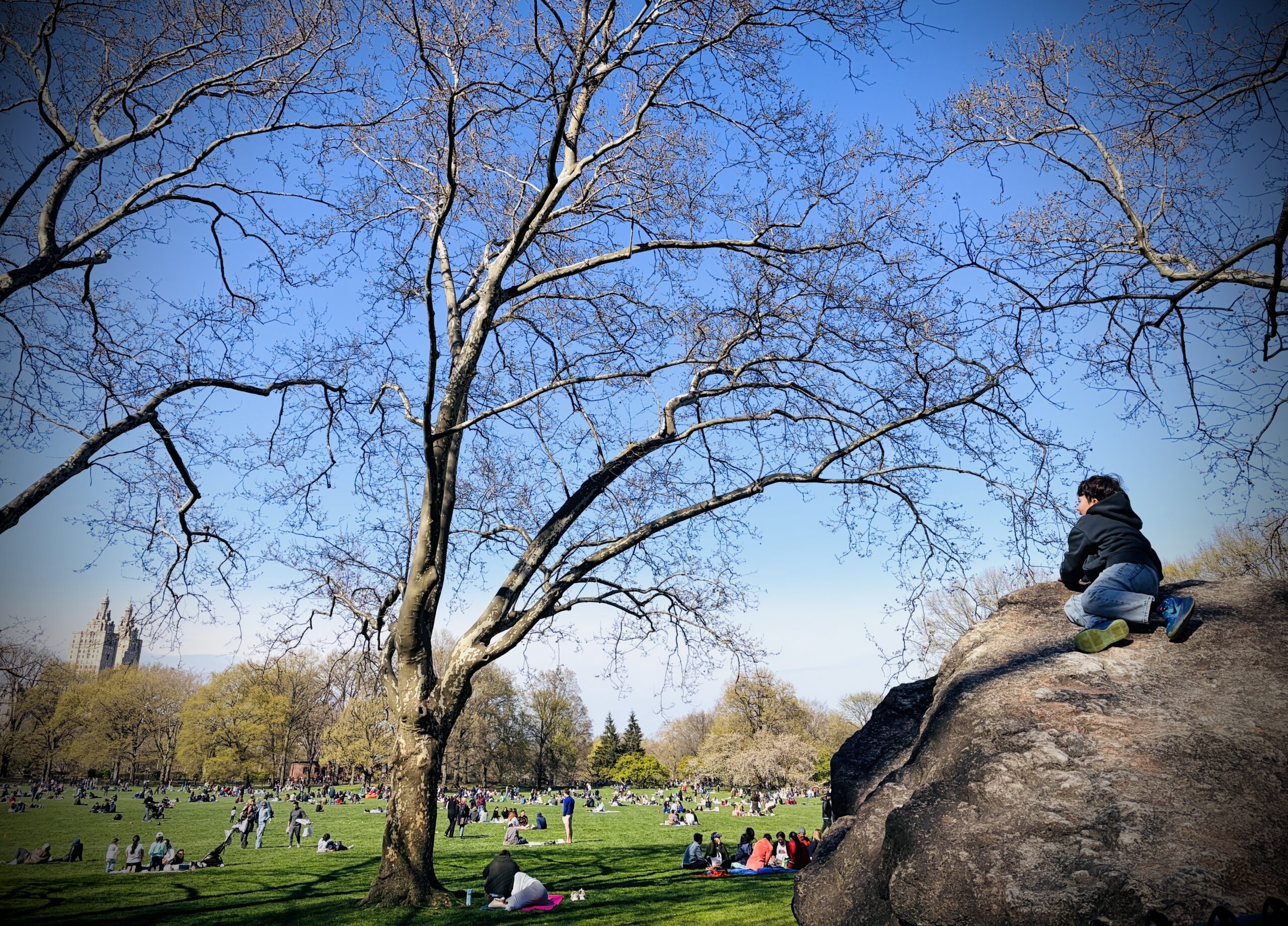
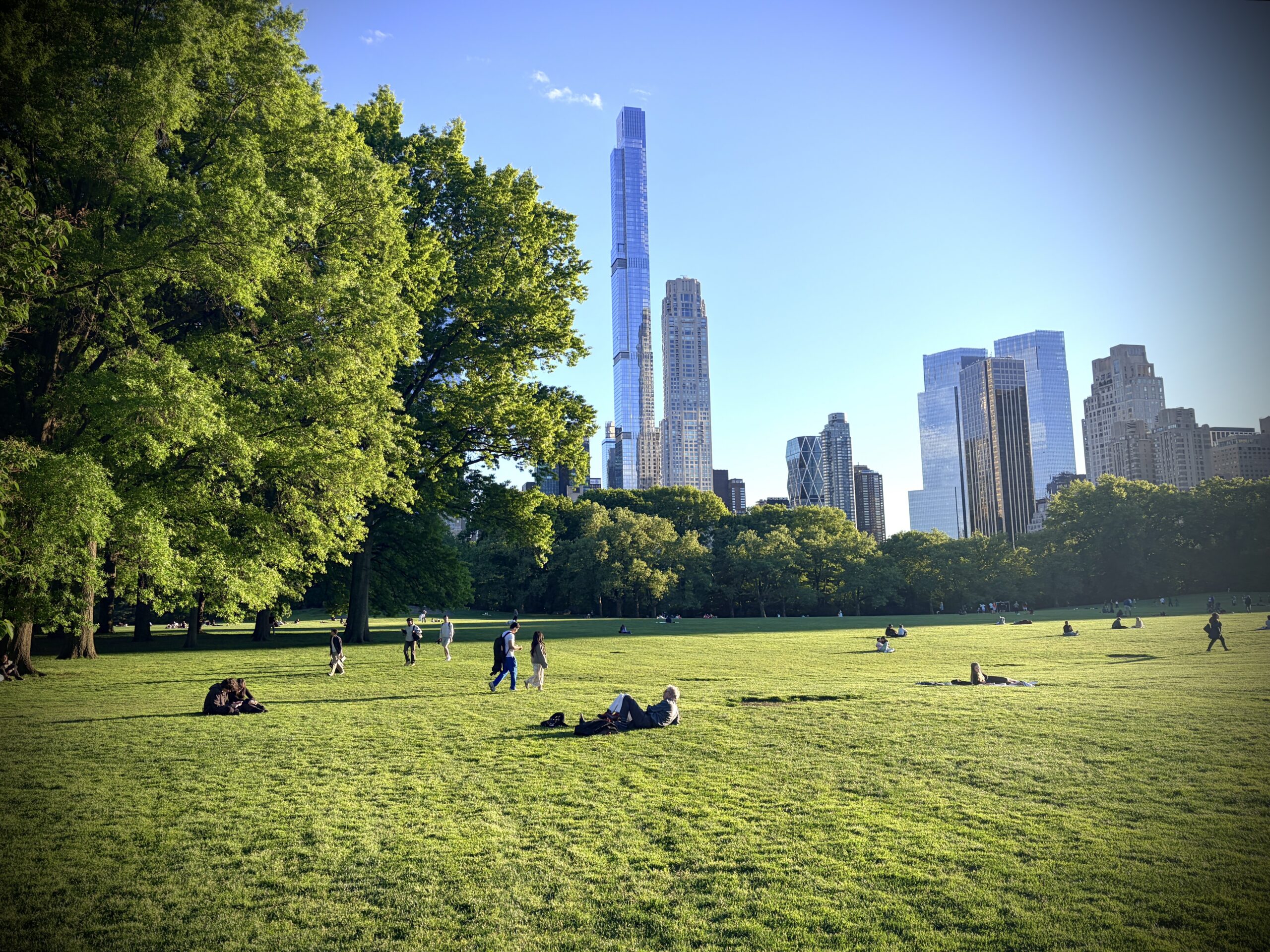
I’m desperately waiting for the sheep to come out and stay out. Frankly, I’ve had it with spring’s ongoing commitment issues. One day it’s hot, the next it’s cold, and the only constant I can count on is that I’m always wearing the wrong thing. But I have high hopes for this weekend to be the beginning of a long stretch of Central Park filled with happy sheep.
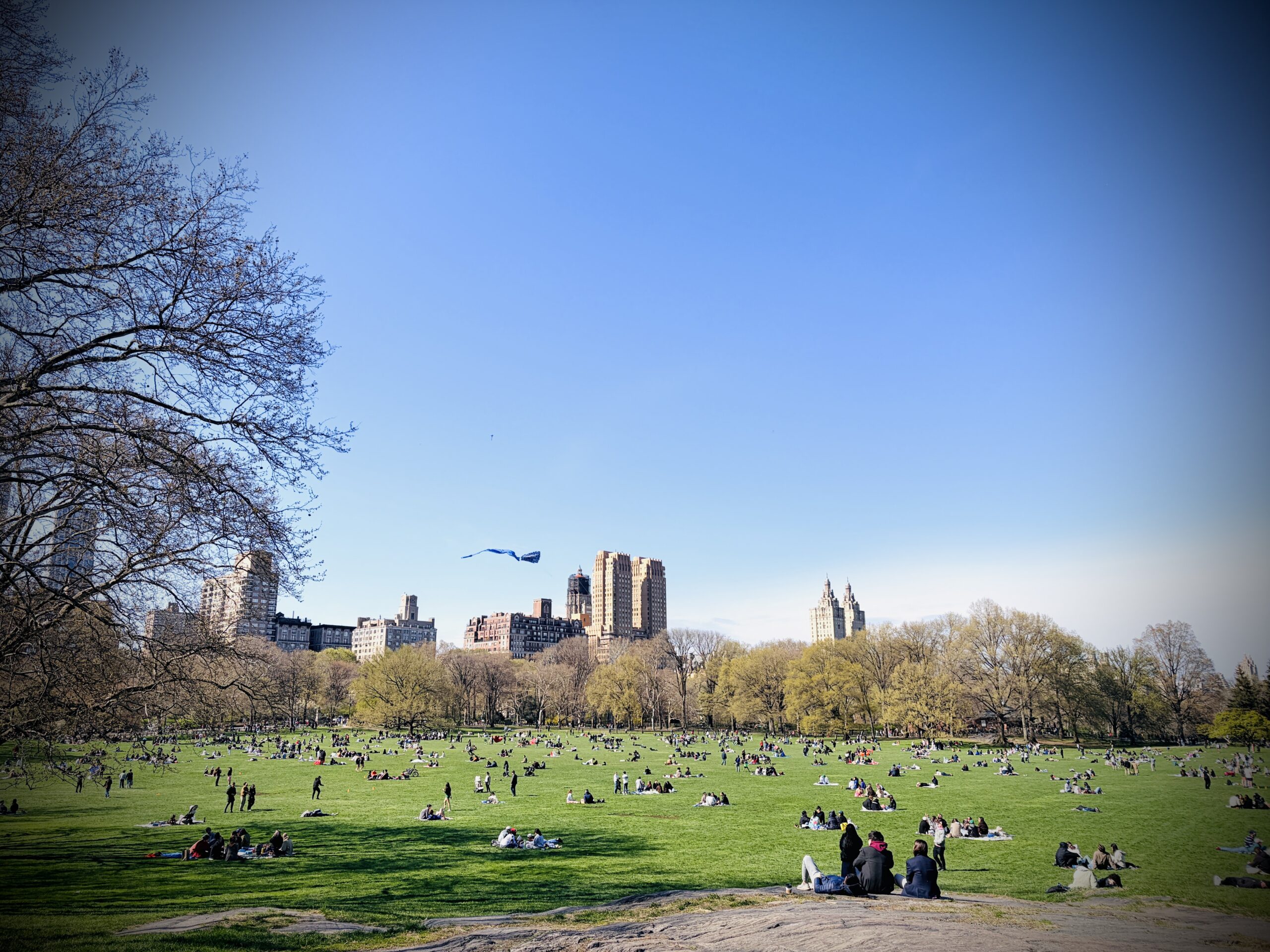
By sheep, I mean the thousands of people flocking to Sheep Meadow on sunny days. From a distance — and with eyesight that conveniently blurs the details — I prefer not to correct the illusion. It’s more fun to indulge in a bit of time travel and chase traces of old New York, back when the meadow was, in fact, full of sheep.
Both we and those sheep, it turns out, have been lucky to end up on the meadow at all. The space was originally intended to host militia drills — a parade ground was one of the required features in the 1857 competition to design Central Park. Frederick Law Olmsted and Calvert Vaux won the commission with a design that dutifully included one. But once work began, the idea of a more romantic countryside won out. So Olmsted and Vaux created a bucolic pasture for New Yorkers to look at and briefly feel at peace.
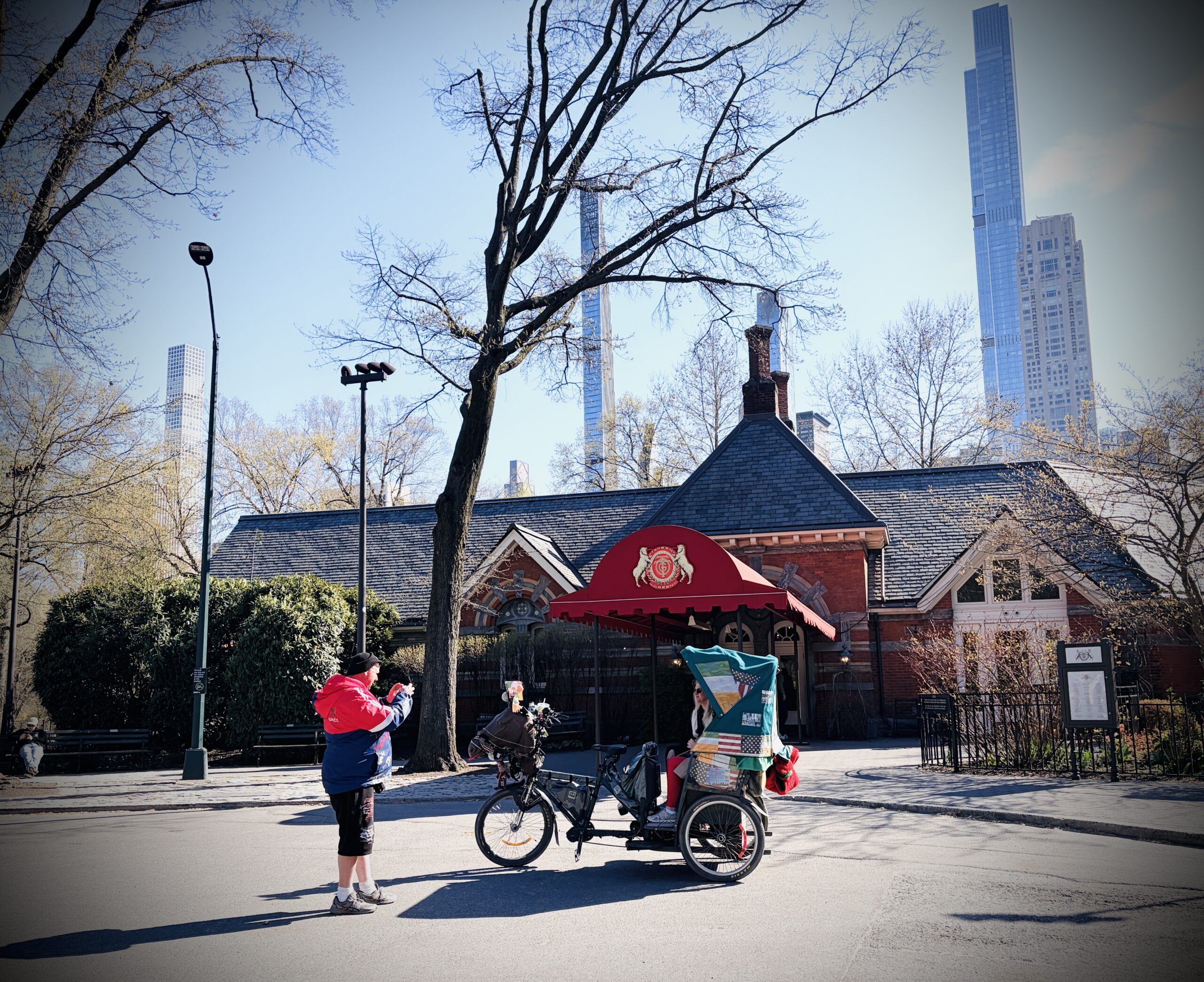
Two hundred pedigreed sheep were imported from England, all the same color and size, to complete a picture-perfect pastoral scene. From 1864 onward, they kept the lawn trimmed and fertilized, and even produced wool that the park commissioners could auction off. When their day was done, they’d go to sleep in the sheepfold just across the meadow. And that’s where you now sit down to grilled lamb chops with a mustard-honey glaze at Tavern on the Green.
For 70 years, sheep and people shared the park peacefully, though I’m sure there are a few lost stories of impatient New Yorkers losing it while waiting for 200 sheep to cross the drive twice a day.
Like many nice things in the city, Robert Moses put an end to it. He evicted the sheep and sent them off to Prospect Park. Once they were gone, it didn’t take long for the human crowds to take over. The 1960s and ’70s, in particular, made the meadow famous for large gatherings. In March 1967, more than 10,000 people held what The New York Times described as a “noisy, swarming, chaotic and utterly surrealistic” be-in. The crowd reportedly included “poets from the Bronx, dropouts from the East Village, interior decorators from the East Side, teachers from the West Side and teeny boppers from Long Island”.
Less than three weeks later, the meadow became the starting point for a massive march organized by the Spring Mobilization Committee to End the War in Vietnam. With hundreds of thousands in attendance, it was the largest antiwar demonstration the country had ever seen.
That same year brought another kind of spectacle: Barbra Streisand drew a crowd of 135,000 fans for a free sing-in, and soon the meadow was filled with more be-ins, lie-ins, and even a moon-in to watch the televised landing on the moon.
 In 1970, the first Gay Pride March ended on Sheep Meadow, and in May 1975 about 50,000 people once again filled the lawn for an End-of-War Rally celebrating peace in Vietnam.
Well, to call it a lawn at this point might be a stretch. Years of political and cultural gatherings had turned Sheep Meadow into a trampled field of dust before Central Park restored it to its original grassy self. The sheep, of course, did not return. But we did, and hopefully the warm weather will stick around so that we can finally flock back to the meadow for the season.
Give me your frisbees, your picnics, your shirtless crowds. Let them proudly find the perfect blanket placement, and make the days so glorious that not a single sheep could squeeze between them. Then you’ll find me squinting just enough for a little time travel, turning the meadow into a bucolic pasture to look at and briefly feel at peace.
 Yvonne Vávra is a magazine writer and author of the German book 111 Gründe New York zu lieben (111 Reasons to Love New York). Born a Berliner but an aspiring Upper West Sider since the 1990s (thanks, Nora Ephron), she came to New York in 2010 and seven years later made her Upper West Side dreams come true. She’s been obsessively walking the neighborhood ever since.
Subscribe to West Side Rag’s FREE email newsletter here. And you can Support the Rag here.




Insightful and cogent history of the Sheep Meadow. Please write more like this! Keep up the exemplary work.
Beautiful!
Great article!! In the early 80s we’d hangout there after school. To my surprise, Tavern on the Green always kept us use their bathroom despite our shorts and flip-flop-esque attire. The public bathroom was beyond disgusting in those days.
Exactly whatI needed to read this morning Thank you
I remember my cousin telling us how he would walk through the Sheep Meadow, complete with sheep, from the East Side to the West Side to get to school in the 1910-20’s!
Great bit of local history! A curious-mind question – anyone knows whether The Dairy, which was meant to provide children with fresh milk, was giving out sheep’s milk or was cow’s milk ‘imported’ into the park for the children?
https://centralpark.org/dairy/
The Dairy was created as a distribution point for safe cow milk during some dark times when children were dying because of the “swill milk” crisis.
New York weather is schizophrenic.
London’s Hyde Park was also home to a flock in the 40s/50s which I saw in person.
In the 1960’s and 1970’s the Metropolitan Opera did their annual round of performances on Sheep Meadow before the move to the Great Lawn where concerts carry on. Concerts in the parks are mystical experiences. In both places music seems to fill the sky with joy for the art form. And we’re lucky admission is free.
Sheep’s meadow during COVID also earns a mention here – it was a beacon of joy for those of us that remained in the city and the last remaining place of wider social connection for a time.
Good article, but to be clear, a charity, the Central Park Conservancy restored Sheep Meadow. Many think the city did it. Ha!
I love Sheep Meadow. My extended family meet here once a year for our picnic. Always a lovely time. Thank you for the informative article.
In the late 70s (or perhaps 1980) I came into the city from Westchester for a free James Taylor concert on the Sheep’s Meadow. I believe it was just before the lawn was closed for restoration and I recall it was very, very dry and dusty.
How about bringing the sheep back one day a year? Let’s call it SHEEP DAY. It would be a sensation.
The perfect day for it would be Worldwide Knit in Public Day, which this year falls on June 13. https://en.wikipedia.org/wiki/World_Wide_Knit_in_Public_Day
Süße Erinnerungen
If you want farm animals, there are goats in Riverside Park, grazing to clean up overgrown areas. “Goatham” in Riverside Park will be July 18th, and the herd will be working between 143rd and 153rd Sts.
Love your writing!
A wonderful tribute to a place we love so much! Thank you, Yvonne!
Is anyone else bothered by the fact that the no dogs rule on Sheep Meadow is not enforced? I find it kind of gross to put a picnic blanket down on grass that is being used as a toilet (which I have seen). Nobody seems to care about the signs that are clearly posted at the entrances, including the “park rangers” who were no where to be found on a busy day. I emailed and called the people at The Conservancy and got no response. I consequently stopped my monthly contributions, which they didn’t seem to care about, either.