

By Scott Etkin
From teaching Snoop Dogg to ski, to snacking from an industrial-sized jar of Nutella, competing at the Olympics can be a surreal experience.
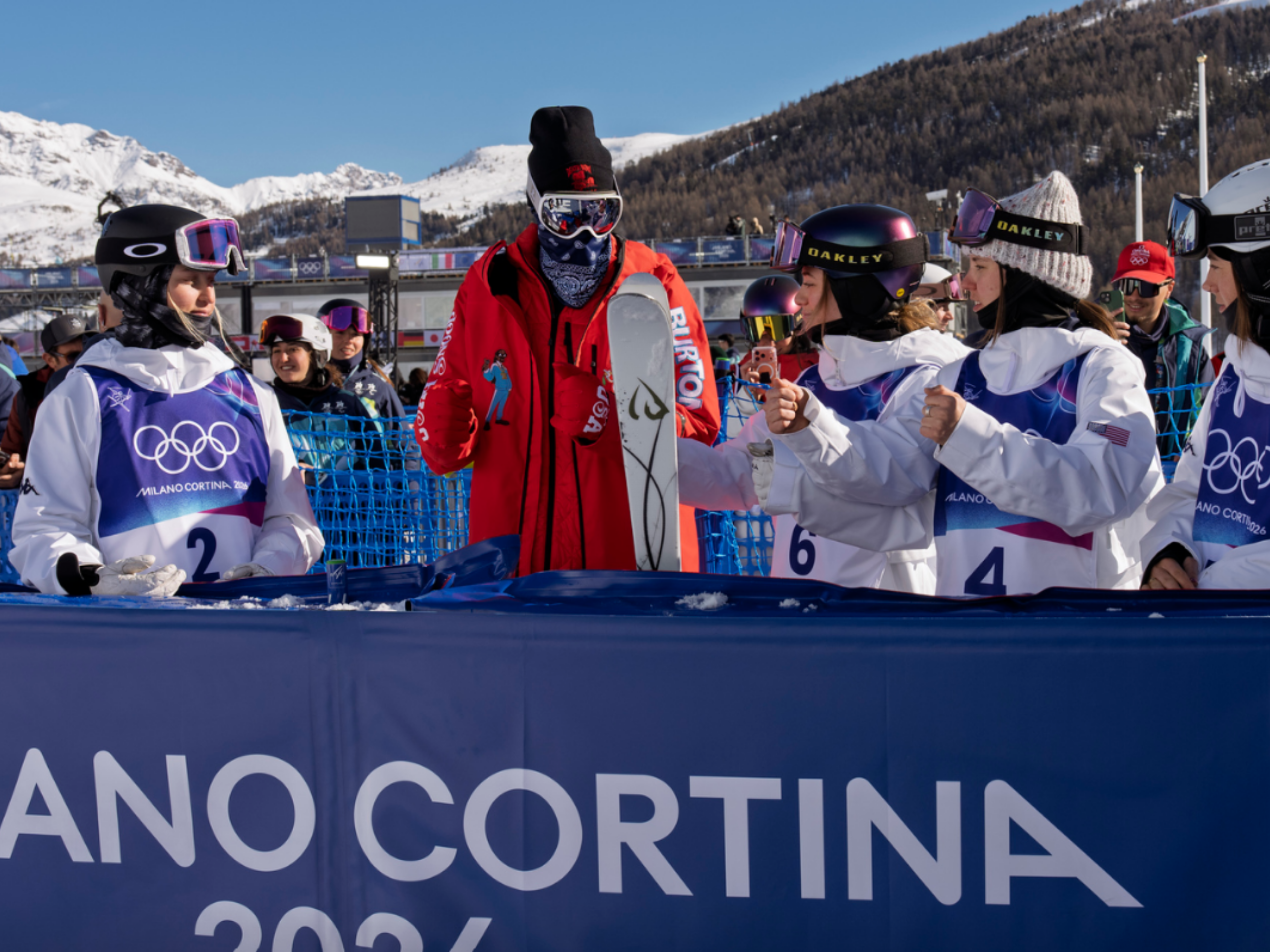
Olivia Giaccio, a Columbia College alum and current graduate student at the university’s School of Social Work, finished 9th out of 30 women in the freestyle ski moguls, and somehow found time to give Snoop Dogg an impromptu ski lesson during a training day.
“He’s definitely as charismatic in person as he is online,” she said about the rapper-turned-Olympics-commentator, who told Giaccio he had never seen moguls before. (Fellow Americans Elizabeth Lemley and Jaelin Kauf won the gold and silver, respectively, in Giaccio’s event.)
While Milano Cortina was Giaccio’s second Olympics, this time around was vastly different from the 2022 Games in Beijing, where she finished 8th. The Beijing games were affected by the COVID pandemic, so her family wasn’t able to attend, and she and her teammates decided to avoid the dining hall altogether to minimize their chances of getting sick.
At the Olympics, Team USA typically houses all of its athletes together. But because the events in Italy were spread across multiple venues, athletes from all countries competing in skiing and snowboarding were lodged in the same two or three hotels in Livigno, Italy.
“Within the context of moguls skiing, I’m familiar with everyone on [skiing’s World Cup circuit], so that was nice to have that familiarity among other countries,” Giaccio told the Rag on a Zoom call from Japan, where she is competing in the World Cup tour.
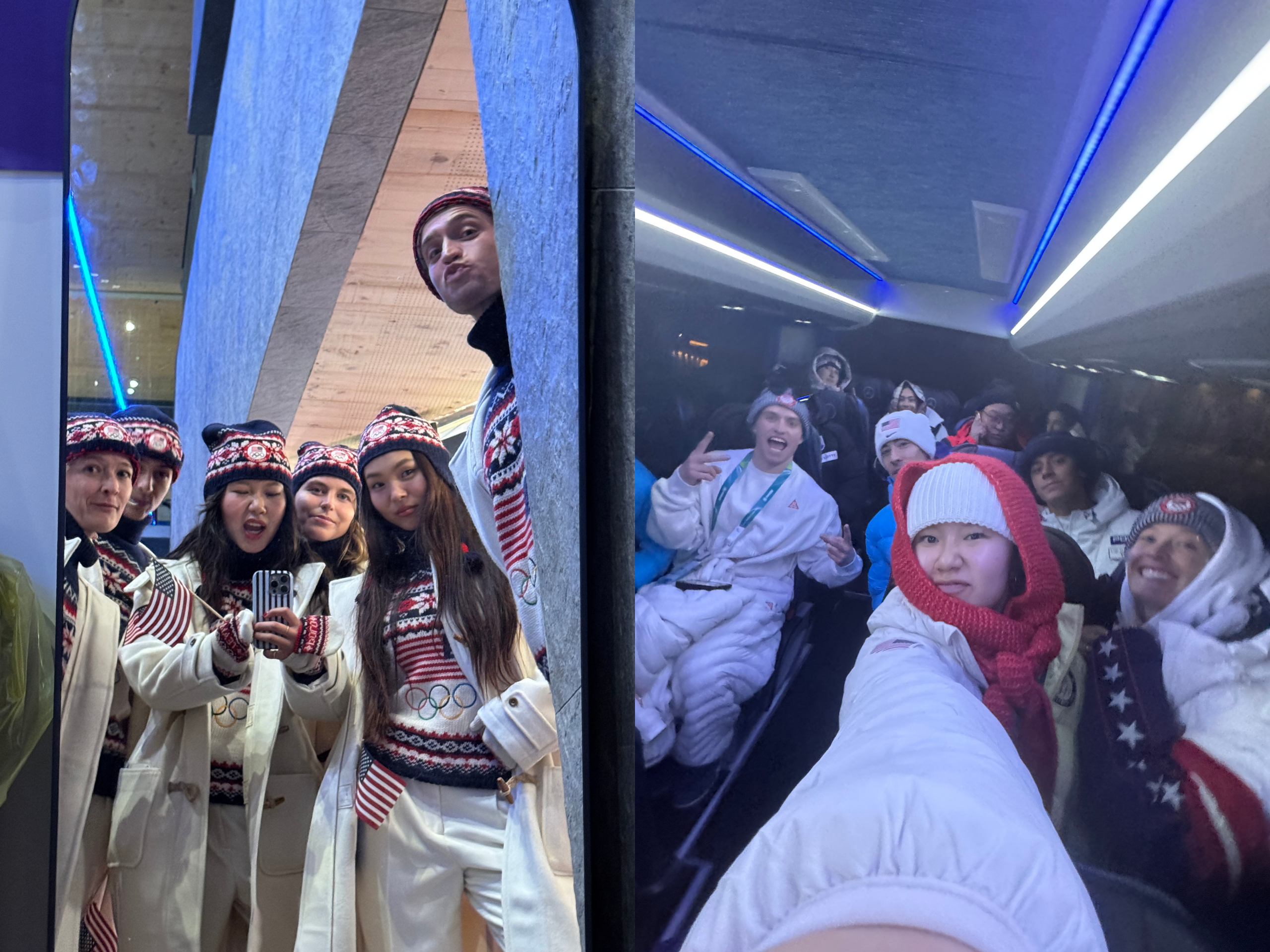
For Bea Kim, who starts her first year at Columbia in the fall and finished 8th out of 24 women in the snowboard halfpipe, the Olympic Village was how she imagined dorm life, “but with much nicer rooms and there’s people everywhere to ask for help [when] you don’t know where to go,” she said with a laugh. (American Chloe Kim, who is not related to Bea, took silver in the event.)
Some of Kim’s favorite memories from the Games were spending time with her teammates in the dining hall. “After our late night practices [at] 11 o’clock and we’re just eating pizza and talking and hanging out. It really just created a bond between everybody,” she said.
The food, while impressive in scale (the Nutella dispenser was “larger than my head,” said Kim), left something to be desired. “Maybe I’m spoiled living in California with all the variety,” she said, though: “One night they fed us pasta that were in the shape of Olympic rings, which was awesome.”
Giaccio and Kim both said they plan to continue competing in their sports when they return to Columbia. Giaccio goes for runs and bike rides in Central Park to train, in addition to lifting weights, when she’s attending school full-time.
Thinking about the future, however, is complicated by the precariousness of winter sports in an increasingly warming world. Since she started competing internationally in 2016, Giaccio has noticed the changes when she returns to the same locations. “Year to year, you could see the glaciers recede and start to slip away,” she said.
Both athletes are active with the environmental nonprofit Protect Our Winters, and are planning careers beyond their respective sports, with Giaccio studying social work and Kim planning to major in climate and sustainability.
An optimistic outlook came through in Giaccio’s response about what it means to represent the U.S. during a time of political division back home.
“The biggest values [of the Olympics], I think, are respect for one another, compassion, and lifting one another up,” said Giaccio. “Regardless of what’s going on in the world, I really hope that we’re able to live with those values in mind on the day-to-day, not just once every four years.”
Read more: Columbia University Athletes Go for Gold at the Winter Olympics
Subscribe to West Side Rag’s FREE email newsletter here. And you can Support the Rag here.