

By Gus Saltonstall
It is a rare occurrence for West Side Rag to cover a political figure best known for his work representing the Upper East Side. But that is what we are doing today in our continued coverage of the political race underway in New York’s 12th Congressional District.
There are nearly 20 candidates running to succeed longtime Democratic Rep. Jerrold Nadler for the seat that — after the redistricting in 2022 — now includes both the Upper West Side and Upper East Side.
West Side Rag will profile as many of these candidates as we can; our first interview was with Nina Schwalbe.
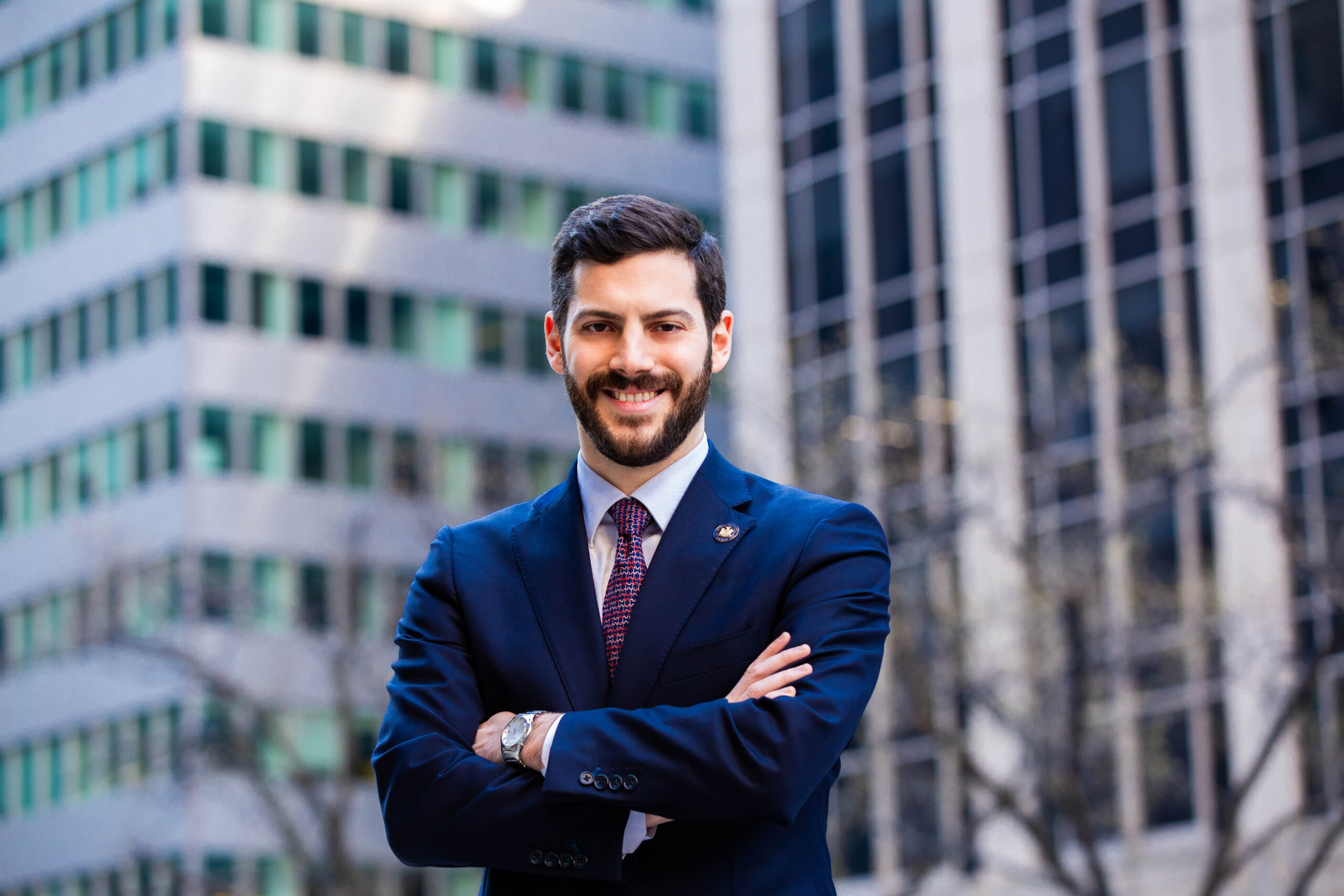
Next up, the Rag had a conversation with Upper East Side New York State Assemblymember Alex Bores, who is considered one of the frontrunners in the NY-12 congressional race, and who has been in the headlines recently for his work on regulating artificial intelligence, which made him a target of attack ads funded by a Super PAC.
Bores worked as a data scientist for five years at the beginning of his career at Palantir, a software and AI company that intersects with government and commercial enterprises. During his time in the New York State Assembly, Bores used his technology background to pass legislation on the regulation of artificial intelligence.
In response to that work, along with his candidacy announcement in the NY-12 congressional race, a Super PAC has inundated mailboxes and television screens, including on the Upper West Side, with attack language, such as alleging Bores is an “expert in hypocrisy.”
WSR interviewed Bores earlier this week about the race and his stance on central issues, including the world of AI.
The interview has been edited lightly for clarity.
WSR: In the past few years, you’ve represented the Upper East Side in the State Assembly. It is generally done in jest, but the Upper East Side and Upper West Side are sometimes pitted against one another. I was wondering what similarities you thought the neighborhoods shared?
Bores: I did enjoy, when the Upper West Side and Upper East Side were different congressional districts, every 10 years or so, the two sides would get together and talk about how these neighborhoods are entirely different. But one of the best and funniest things I ever saw Jerry Nadler say is, after he won in 2022, he came over to speak at an Upper East Side political club and someone asked him this exact question.
He had been giving really long answers on all of the previous questions, but on that one, he simply said, ‘No difference.’
There is truth to that. NY-12 is a district where both the east and west side of it have real pride of place, have a real neighborhood feel, and even though it is the smallest geographic congressional district in the country, it feels much larger because there are so many hyperlocal neighborhoods where people have huge pride in their local places and establishments.
WSR: How much did the fact that you’re from NY-12 inspire you to run for this seat?
Bores: It’s the district I was born and raised in, and lived in almost my entire life. It’s where I’m now raising my newborn son. I had a lot of success in Albany. I passed 28 bills through the State Assembly, which I think is four times more than the rest of the field combined. I was ranked by the Center for Effective Lawmaking as the most effective new legislator for New York City. I had every reason to stay and keep doing that work, which is really important. But ultimately the things keeping me up at night, other than my newborn son, were not coming from Albany, they were coming from [Washington] D.C.
WSR: What are some of those things?
Bores: We are facing a threat in Donald Trump that is unlike any before. We need people who know how to stand up to him and have taken him on and won. People who don’t just talk about beating Donald Trump or write about Donald Trump, but who have actually beat him.
Trump specifically targeted one of my 28 bills last year, the RAISE Act, [legislation that requires AI developers to have a safety plan to protect against automated crime, bioweapons, and other potential harms to public safety] with an executive order trying to prevent it from going through, along with a number of other AI bills across the country, but our bill was the only one in the country that has been enacted into law. I know how to stand up to Trump. It’s not theoretical. And I want to take all of that work from the Assembly, on AI, along with housing, healthcare, childcare, and all of the things that I’ve done, and make sure I can serve the community from Congress.
WSR: You mention AI there. One of the most discussed and written about topics in the NY-12 race so far is your stance and work on AI, and the amount of money being spent both against you and in support of you, on the topic.
On our end, it seems as readers are almost confused about what exactly is going on. They get mailers about it. They see advertisements. How would you explain the current situation, and then could you speak to why AI regulation is such a crucial part of your platform.
Bores: It is absolutely confusing that a Super PAC has become so interested in me and the subject. What happened is that a number of Trump mega-donors really don’t want there to be any AI regulation. That includes people like Marc Andreessen and Ben Horowitz from a prominent venture capitalist firm, and Greg Brockman, the president of Open AI, who in the second half of 2025 was one of Trump’s largest mega-donors.
What they got in exchange for that support was this executive order to try to limit any AI regulation development, but then, as we discussed, I managed to get my bill through, which was the strongest AI safety bill in the country. That is terrifying to them. It’s not because I have the ideas that are the most anti-AI, but it’s because I’ve been effective at actually getting a bill passed aimed on its regulation. So, they created a Super PAC that ran ads against me that were really targeted at Gov. Kathy Hochul to try to convince her to not sign my bill. But when she did, they decided they had to make an example of me.
So, they have committed to spending $10 million against my campaign. You say you’ve seen some confusion over what is happening. Yeah, that amount doesn’t make sense in most circumstances, but for them, me winning is the biggest threat to their unbridled control over our kids’ minds, over the American workforce, and over our climate. So, they’re willing to go all in for it. It’s notable that in a race where we are all promising to fight Donald Trump, I am the only one that Trump mega-donors are fighting back against.
Bores began his professional career as a constituent services representative for then-City Councilmember Jessica Lapin. He went on to join Palantir Technologies in 2014 for five years as a data scientist, which he then says he left because of the company’s controversial work with ICE. In 2022, he was elected to Assembly District 73.
WSR: If elected, do you have a first bill you would look to sponsor, and would it relate to artificial intelligence?
Bores: The first priority has to be restoring faith in government and ending the corruption in government. We’ve seen previous bills focused on campaign finance reform, banning congressional stock trading, ethics reform for the Supreme Court, and establishing separation between the Department of Justice and the presidency. A package on corruption and restoring faith has to be the top priority, and those are the causes I would look to first back.
But many other members have proposed versions of that. The thing that I will bring, that nobody else in the race will bring, and frankly nobody else in Congress, is my knowledge of tech and AI. We are absolutely missing the boat on this new technology, in the same way that we missed it on social media, and the consequences can be dire. I released an AI framework that has eight points and 43 sub-points for what we can do as a country to address a number of issues that I’d want to address in this area.
WSR: Immigration and the role of ICE continue to be a leading subject within political discourse nationally. If elected, what would you look to achieve on the immigration front?
Bores: We should abolish, dismantle, and prosecute ICE. ICE is only 23 years old and Donald Trump has created such a rot in that agency that I don’t think it can be recovered. That doesn’t mean we don’t have any immigration or safety enforcement of immigration, but absolutely, ICE needs to go.
We should have a proper asylum system; we have underfunded that part of immigration for so long. The asylum system is supposed to take two to three months, but because of backlogs and limits on judges, it currently takes around eight years. We can do comprehensive immigration reform that is focused on a pathway to citizenship for those who are here peacefully, and redirect enforcement to those who have committed violent crimes, and develop a system that actually recruits and invites the best and brightest to America, instead of sending them away.
WSR: How would you look to balance the work you have in D.C., like the country’s immigration system, with the more local issues in the NY-12 District?
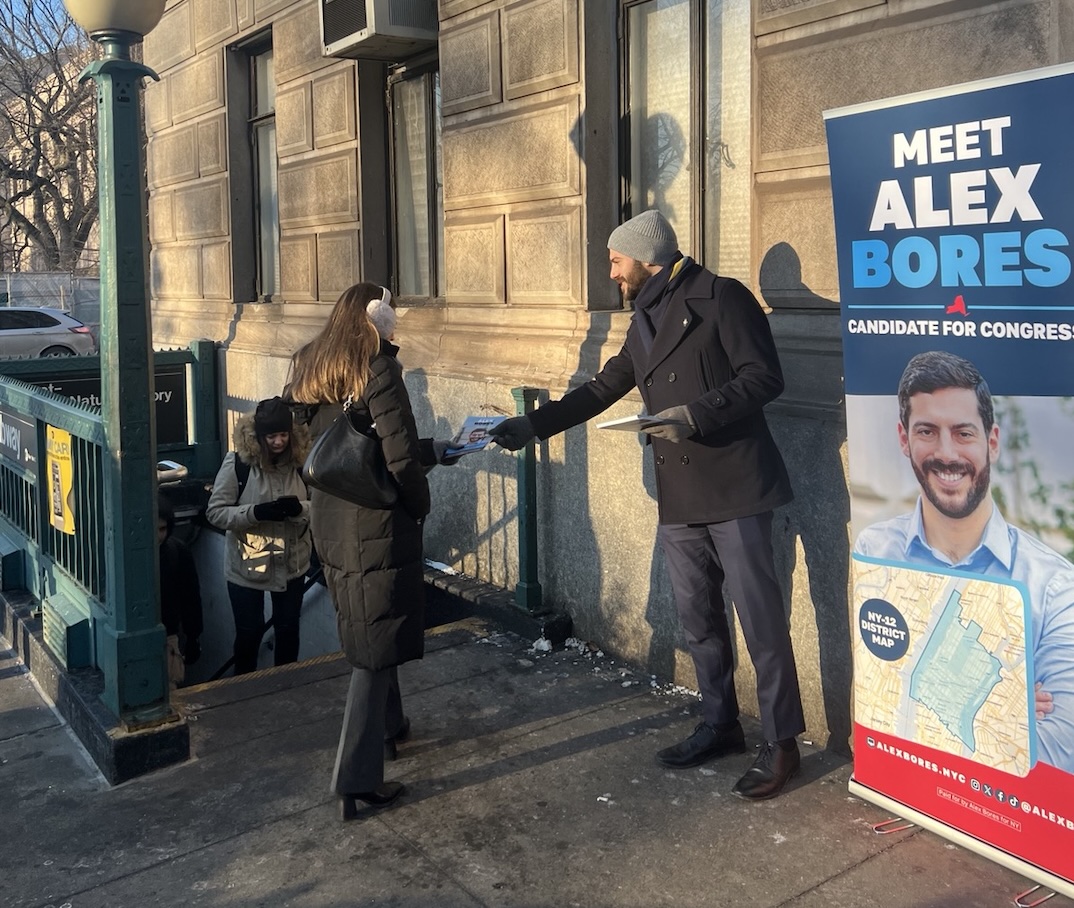
Bores: That balance is absolutely vital. Some of my best legislative ideas have come from engaging with people locally. I am well known for greeting New Yorkers at subway stops. It’s something I’ve done nearly every Friday since I was elected to the State Assembly three years ago, and it’s something I plan to bring to this congressional campaign. There are 54 subway stops in District 12, and I’ve made a pledge to visit every one of them and greet people.
I frequently am at street fairs and local neighborhood events. Each year, I also host a town hall where I stand up in front of my constituents and take nearly two hours of completely unvetted or unscreened questions on any topic and make sure that I answer them. I also maintain a very robust constituent service operation where we do mobile office hours, participate in our local community groups. It’s absolutely vital and our work has to be grounded in the community where we’re from and representing.
WSR: Continuing on the local front, and despite your Upper East Side roots, do you have any favorite spots on the Upper West Side?
Bores: I’ve been going to Friedman’s at West 72nd Street a number of times. My dad’s partner is Celiac, so it’s great that its gluten-free. I’m not, but the food is delicious. This is going to get me in trouble, but the Museum of Natural History is my favorite museum in the city and always has been. That subway stop has been one of my favorites to go to in the mornings. Part of my introduction to activism was my dad picking me up in second grade and bringing me to the picket line at ABC Studios, when he and his union were locked out for fighting for better healthcare, and that is the old ABC Studios, just north of Lincoln Center. I spent a lot of time there as a kid fighting for the rights of workers.
WSR: Finally, if someone came up to you on the street and said, ‘Tell me in 30 seconds why I should vote for you,’ what would you say?
Bores: Well first, I’d start talking really fast. But the quick version is that we need legislators who are devastatingly effective to paint a positive vision for Democrats beyond fighting Donald Trump. On the Trump front, though, everyone else in this race is theoretical in their opposition, or they were doing it in support of someone else. I’ve proven that I can move bills in the legislature and have done it across a wide variety of issues.
If you need a fighter against Trump I’m your guy. If you need an effective position vision, I’m also your guy.
You can learn more about Bores’ campaign — HERE.
Read More:
Subscribe to West Side Rag’s FREE email newsletter here. And you can Support the Rag here.





Not voting for someone who worked on Peter Thiel’s panopticon.
That’s a reason that I WILL vote for him!
So even more of your data, movements, and reading can be cataloged and sifted?
I wouldn’t vote for a Palantir employee. I would however vote for someone who walked away from that kind of paycheck to go into public service and enact legislation to better regulate the tech sector.
Peter Thiel’s panopticon is spending $100 million to spread that exact message.
“Think Big is an affiliate of Leading the Future, a super PAC that has raised over $100 million from figures including a Palantir co-founder, Joe Lonsdale; the venture capitalist Marc Andreessen; and OpenAI’s president, Greg Brockman. Their goal is to take down politicians who want to put guardrails around A.I., and they’re happy to exploit public suspicion of the technology to do it. Bores is their first target. The PAC has already spent $1 million to try to make an example of him.”
Bores still chose to work for Palantir, it’s not like Palantir changed it’s mission/message and then Bores left.
Palantir and OpenAI thank you for your vote!
So if Josh P. commenting in favor of Alex Bores is any indication, Alex Bores gets the urbanist vote? I wonder what Andrew Fine from the UES and the EVSA core four has to say about that? He’s also gotten the StreetsPAC and Open NY endorsement in the past.
Josh,
Hillary Clinton voted to greenlight the illegal invasion of Iraq, because she thought it a good idea and politically sound.
Bores chose to work for Palantir, and now he expects us to trust him?
The analogy is nearly perfect.
Trust Laura Dunn!
Please be tough on crime, increase police and cameras, hold and arrest criminals.
Congress doesn’t run the NYPD, and he’s running for a House seat.
Congress does provide federal funding and federal authorities work closely with law enforcement! Laura Dunn will get the job Dunn to make sure that there is real public safety in NYC!
That’s why I wrote “run”.
Dunn is too willing to engage in Putin paranoia, not like Nadler wasn’t.
At least Laura Dunn is more pragmatic than most people realize! Even if she sometimes pushes people beyond the ideological median for the district
Alex Bores is the candidate that happens to get all the support from moderates in this district and a lot of super progressive people who would normally be at odds.
Voting for anyone who doesn’t fall in with the “quality of life” crowd
Um, what? You’re against quality of life?
Can you explain your comment?
Claire, vote for Laura Dunn!
Will the Republican Party ever have a viable candidate?
No because the Party of Lincoln lost its way during the Civil Rights era.
I’ve received so many text messages telling me not to vote for Alex that I’m starting to like him. But when all he can say in 30 seconds is that he’s “my guy to fight Donald Trump”… nah. Moving right along.
Laura Dunn is a way better candidate!
I am so tired of the “standing up to Trump” platform. Trump is doing a great job! If a candidate could work with him not against him…
How is Trump doing a great job? He just started another illegal war, except this one could lead to a world war.
He’s the worst of all time and I know EXACTLY why you love him
Laura Dunn would if there is mutual benefit!
Anthropic makes it clear that AI needs laws to control it from governmental abuse. Alex, like him or not, has the creds to do that! Ya can’t trust the GOP spineless to protect us ! Anti-Bores ads make us aware that the MEGA (MAGA) donors are worried and scared.
They are more afraid of Laura Dunn!
Palantir and OpenAI are not spending any money to defeat Laura Dunn.
Alex Bores plays all sides! Laura Dunn doesn’t!
This suspiciously monied and aggressive PAC has accomplished nothing but make me look closer at Bores and I like what I see. I think they overplayed their hand way too soon. The near constant text messages really annoyed me.
Great interview. Excited to learn more about him. He comes across smart and strategic and I think his business/professional background is what we need more of. Someone who has the ability to understand issues and resistance to it from the super PACs and how to write legislation that can be passed. It boils down to economics and he clearly understands it. I applaud his mature and intelligent response to standing up to President Trumps leadership style. Not resisting everything at all costs (swear words, catchy slogans, etc, but by writing and getting legislation passed. So many electeds these days seem to think their primary job is becoming a Tik Tok star and forget legislative branch is supposed to pass laws.
And, as I recall, he was one of the first local candidates to understand and support the efforts of NYCEVSA to rein in the evehicle terrorism unleashed by Trans Alt. One could also call Trans Alt a Super PAC.
It’s worth noting that Alex Bores has gotten the endorsement of StreetsPAC, a PAC aligned with TransAlt for his assembly run. He is good at playing both sides.
Well, I wasn’t interested on Bores until I started getting obviously fake attack ads.
Laura Dunn gets the job Dunn while Alex Bores tries to play all sides! He cannot be fully trusted!
Fight to do away with the annual daylight savings back and forth debate and finally let us enjoy the longer, safer days of extended sunlight that we are about to experience. That’s something practical and specific he can do that would allow people to get out and enjoy their neighborhoods without the fear that comes with the early dark hours, which are also depressing for many. Since this has been an endless debate, how effective does he think he can be in effecting real, permanent change? Of course, states have the right to make such a change, so it obviously wasn’t a priority for him in the Assembly.
Frontier AI regulation is so critical at this point in time that this gets him my vote regardless of any other position. Bores won’t be able to get laws through alone, but we desperately need people in Congress who understand how the tech works well enough and the level of risks we’re facing over literally the next five years to push this issue forward. I’m not remotely surprised that the PAC is after him. Tech with the real potential to replace substantial numbers of white collar workers, carry out mass surveillance and propaganda operations on previously infeasible scales, and walk an ordinary person through making a bioweapon is COMING, and our government is just waving pompoms cheerily as if there’s nothing to worry about. It also has massive positive potential but we need some brakes on the companies doing this, we need to stop selling chips to China, and we need common-sense mitigation of the many possible and terrible risks.
AM Alex Bores was incredibly helpful in the UES fighting the ugly, unnecessary sidewalk cell towers which were threatened. With his help, the community has managed to stop almost all of them after being told there would be 12 32 foot towers going up next to schools, Central Park and their windows.
The best argument for Mr. Bores is Michelle Goldberg’s column in today’s NYT.
Thank you for the helpful interview – much appreciated. Please keep them coming.
He sounds interesting and, as others have noted, the ad offensive against him has actually made me more interested.
I just went to his web site and while it is interesting, there is almost zero information on policy stances – he really needs to build that out to tell us where he stands on key issues (and what he thinks the key issues are!). That should be table stakes.
Did you go to his assembly district website?
https://assembly.state.ny.us/mem/Alex-Bores/sponsor/
Alex Bores also got Open NY’s endorsement! They’re real estate shills who want to destroy and gentrify our communities!
Thanks for doing this series, Gus. Good interviews. I think you get the candidates to reveal and differentiate themselves — a good thing, given the insanely large number of people who want this job.
Laura Dunn is a much more capable candidate!
I like that government reform will be his day 1 focus. I also like that he’s not Micah Lasher—who claims he’s not benefiting from corporate PACs, but has nothing about standing up to Big Tech billionaires in his platform while they savage his opponent. His silence speaks volumes.
Laura Dunn is the underdog! Plus her dog is cute!
If the Abnoxious Jerk coming up to everyone at the Sunday Natural History Greenmarket-trying to get them to sign his “list”- is an example of who Alex Bores will have working for him-then NO THANK YOU. Is it Really necessary Mr. Bores to have 7 people trying to get signatures along Columbus Avenue between west 73rd st and west 80th street ?
Laura Dunn gets the job Dunn without being obnoxious like Bores’ people! She doesn’t play both sides and tell everyone what they want to hear like Alex Bores does! She may not be as charismatic as Bores, but she gets the job Dunn!
PALANTIR?? NAH
Former Palantir? Nooooooooo way
Consider Laura Dunn! Laura gets the job Dunn while Alex plays both sides and is a smooth talker!
Interesting that West Side Rag reviewers did not “approve” of my recent comment about Alex Bores and the Overkill of volunteers this past Sunday on Columbus Avenue canvassing for signatures.
They did post your previous comment. I met Alex Bores years ago when he was standing on the corner of 86th and Madison and he was introducing himself to everyone. Why shouldn’t volunteers be canvassing for signatures? Maybe they’re happy about doing something positive instead of just complaining about everything online.
Laura Dunn is doing a much better job of meeting people where they are compared to Alex Bores! Alex is a smooth talker while Laura gets the job Dunn!
Yes Caly- I do now see my comment. My original comment was posted 23 hours ago . This morning it had not posted. To West Side Rag-my apologies. Accosting people waiting in line to purchase from vendors at the market, multiple “volunteers” per block and within the Green Market block asking people over and over again to sign their “list” is annoying at best. If you don’t mind being asked the same question 7 times by 7 different people-good for you. However, not only was I annoyed but a number of people standing in line were also Annoyed. Carry On Caly, it looks like he needs your support.