
 By Rob Garber for the Bloomingdale Neighborhood History Group
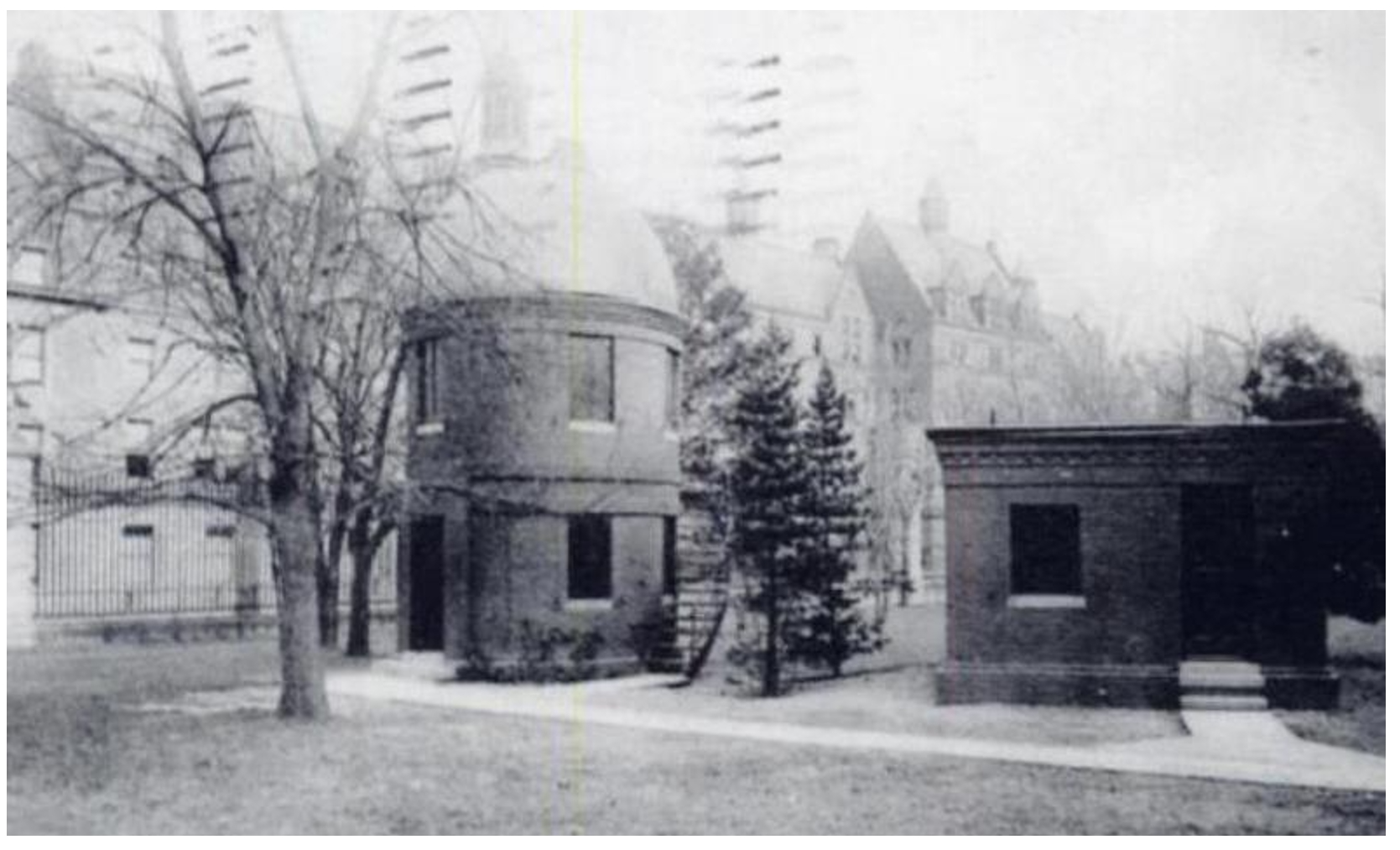
Welcome to another installment in the Rag’s Historical Photo Challenge. The image above was taken somewhere on the Upper West Side, sometime in the past. Can you figure out where, when, and what it shows? Look closely; this week’s challenge photo, like the others in the series, includes clues that will help you identify the scene, if you’re a dedicated UWS history sleuth. And even if you don’t recognize the picture—not to worry! Come back in two weeks and I’ll decode it, show you the clues that help identify it, and—best of all—tell you a story the image unlocks, because this column isn’t just a test of your neighborhood knowledge; it’s also a rolling celebration of the people, buildings and events that wove the tapestry of the Upper West Side.
Ready? If you think you know where and when the photo was taken and what it shows, post your answer as a comment on this column.
Solution to Historical Photo Challenge #35
Subject: Orestes Brownson bust
Location: Riverside Park near West 104th Street
Date: approximately 1920
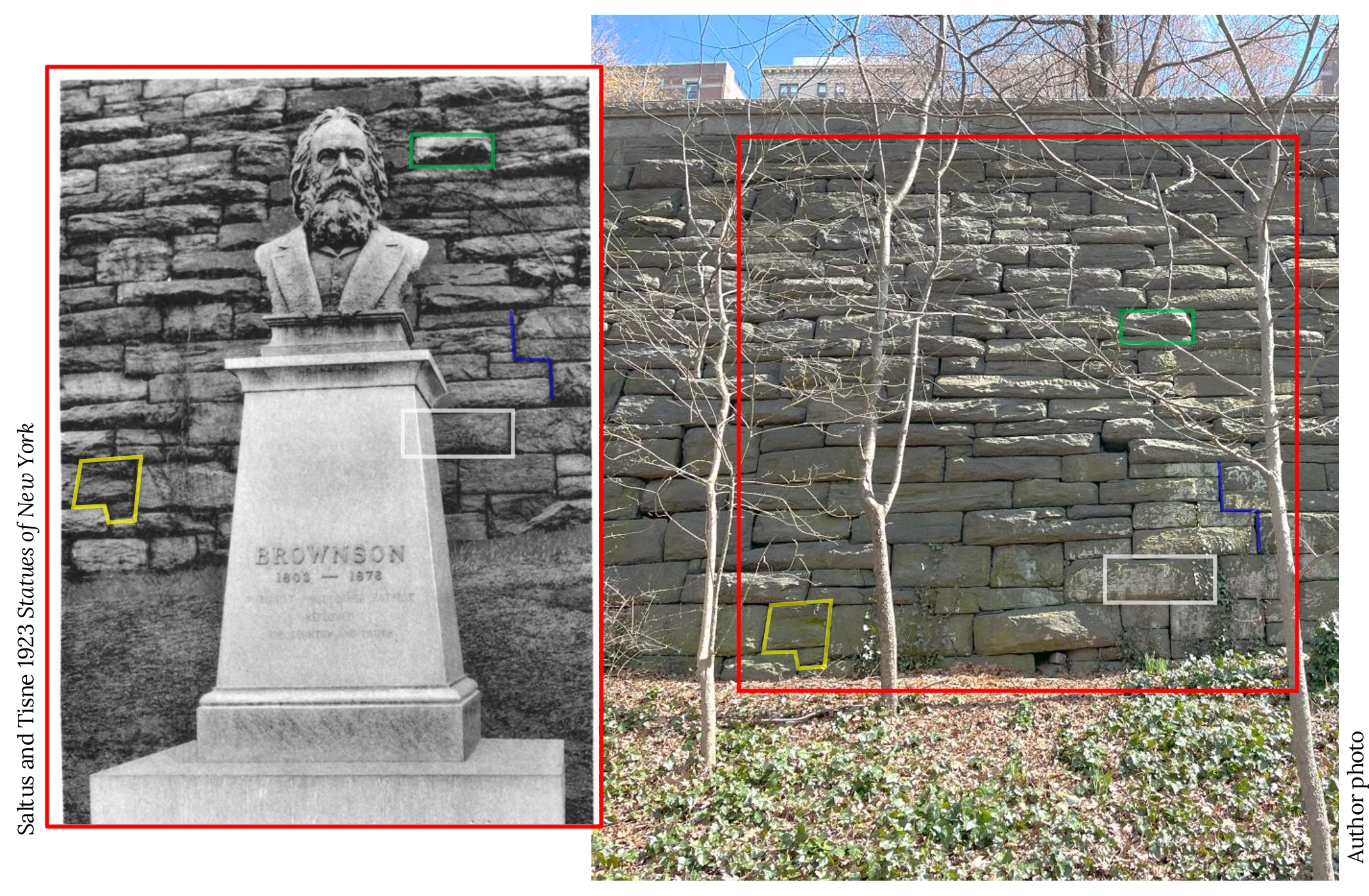
Image Source: J.S. Saltus and W.E. Tisné. 1923. Statues of New York.
Clues: This one’s a walk in the park. Where else on the UWS will you find a rusticated stone wall this tall besides Riverside Park? But where, exactly? You could walk along the wall, looking for this exact pattern of stone and hoping it hasn’t changed in 100 years. So that’s what I did. To be sure, I had a good idea where to look. Between 104th and 105th, I found it—the same unique pattern of stones, but no evidence that there had once been a bronze bust on a sizable marble pedestal in front of it. Who was the Karl Marx lookalike, why was he here, and where did he go?
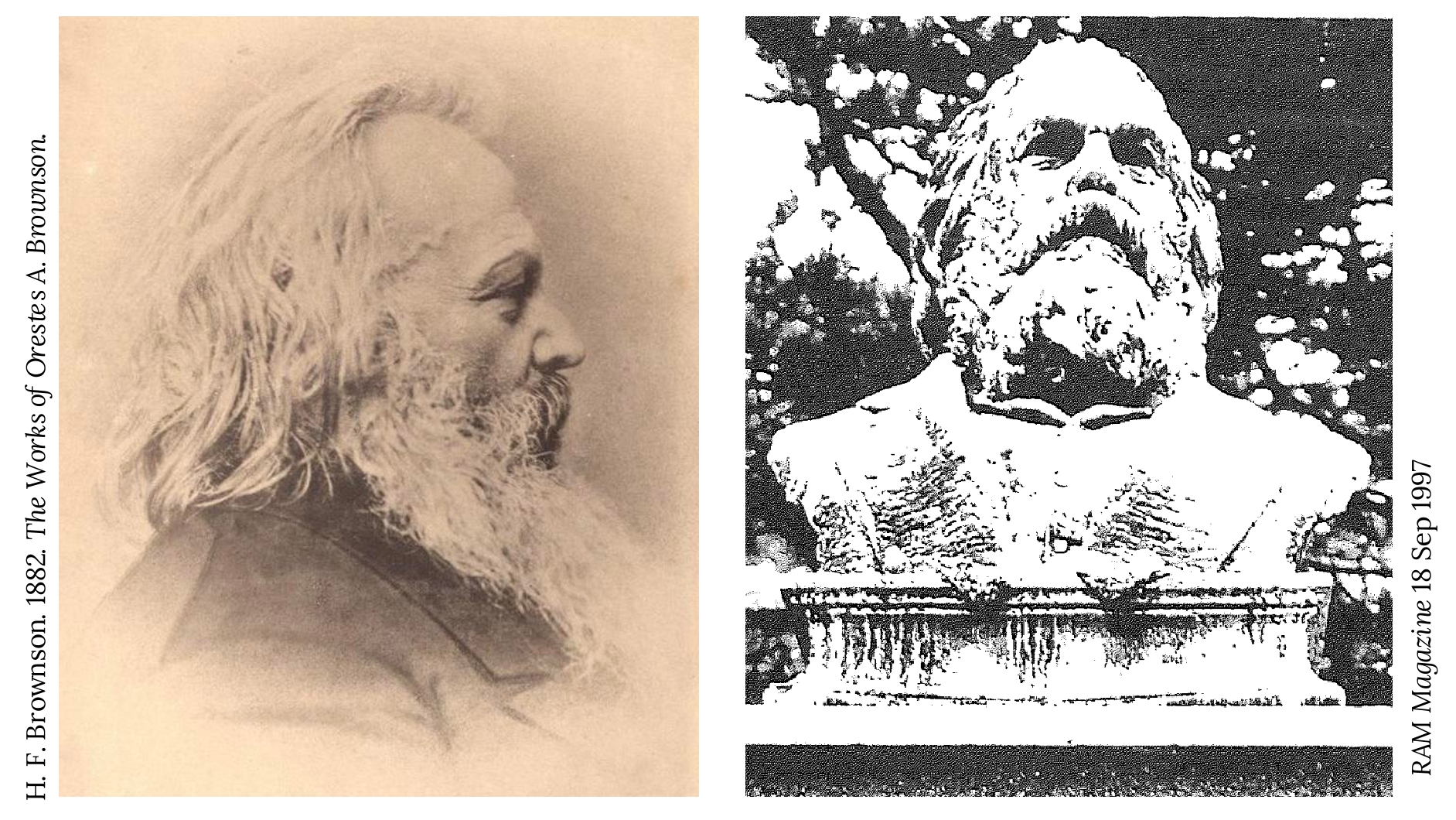
The rest of the story: The inscription on the pedestal read “BROWNSON 1803-1876 Publicist—Philosopher—Patriot. He Loved Country and Truth.” From the 1850s to 1870s, Orestes Augustus Brownson was a formidable American intellectual and a prodigious writer. Largely forgotten now, he was the subject of numerous book-length studies—a reviewer of the 1939 biography by a young Arthur Schlesinger Jr. called Brownson a “harsh and turbulent, uneducated, powerfully intellectual man.” Brownson’s complex political and spiritual journey took him from Transcendentalism, abolitionism and socialism to Catholicism, racial bigotry and what Schlesinger Jr. called “almost savage conservatism.” Brownson’s outspoken defense of Catholicism made him a prominent figure in the church and led the Catholic Club of New York to commission a bust of him, which was moved to Riverside Park in 1910 when its original home on Central Park South was demolished. In the 1930s the bust was vandalized and put into storage by the Parks Department. Fordham University, which had granted Brownson its first honorary degree, retrieved the bust in 1941 and today it is displayed at Fordham’s Bronx campus.
…and that’s the story behind the image in the last challenge. Now scroll back to the top of the column and take on your next one, Sherlockians! If you’ve missed any pictures in this series, you can find the complete set on my author page. All photos in the Upper West Side Historical Photo Challenges used with permission.
About the author: Rob Garber has lived on the Upper West Side since the late 20th century and is a member of the Bloomingdale Neighborhood History Group. To learn more, visit their website at upperwestsidehistory.org.
Subscribe to West Side Rag’s FREE email newsletter here. And you can Support the Rag here.



Is that the Dakota in the background?
Hi. The Dakota is on 72nd & CPW. I can see the resemblance..
Teachers College appears unchanged across the street!
Thanks for the bust of Orestes Brownson. His Wikipedia page is quite interesting for the philosophically or religiously minded. That man went all over the religious, philosophical, and political map! Van Buren said Brownson contributed to his presidental election loss!
The short sidetracks to his brother Oran and to the term Odinism are interesting in their own right.
Orestes was a philosopher with a bust to remember at Fordham. Is he forgotten today? Mostly.
I’m guessing it’s one of the vintage manifestations of Columbia’s Bloomingdale Observatory on W. 120th Street near Amsterdam.
Broadway & 120th Street. East corners
Lovely photos- Fall in Riverside is just gorgeous. Just off topic- do any of you own a parrot? No more big apple bird club, not much of anything. Looking for others who love their birds and feel like they are isolated in NYC.
Looks like the original section of the Museum of Natural History in the background, so this would have been taken on W 77th St.
Im not sure when, however I am pretty sure it is the now youth hostel on amsterdam ave between 104th and 103rd streets. The picture is of the back yard.
Broadway and 120th. That’s the observatory on Pupin Hall when it was a baby.
Could it be the blockhouse in northern Central Park?
On the other hand Paul Hekilla is usually right (see below) so I bow to his greater wisdom.
This is the Wilde Astronomical Observatory which was located on the Columbia Campus near Broadway and West 120th Street.
North end of Columbia Campus at 120th street between broadway and amsterdamfacing northeast with teachers college in the background. The grounds of the north end of the campus were designed by Olmsted in keeping with his work in riverside park and Morningside park. This shows the building holding an old telescope. There is a telescope on top of the building that sits there now, Pupin Hall, site of the Manhattan Project.