
By Scott Etkin
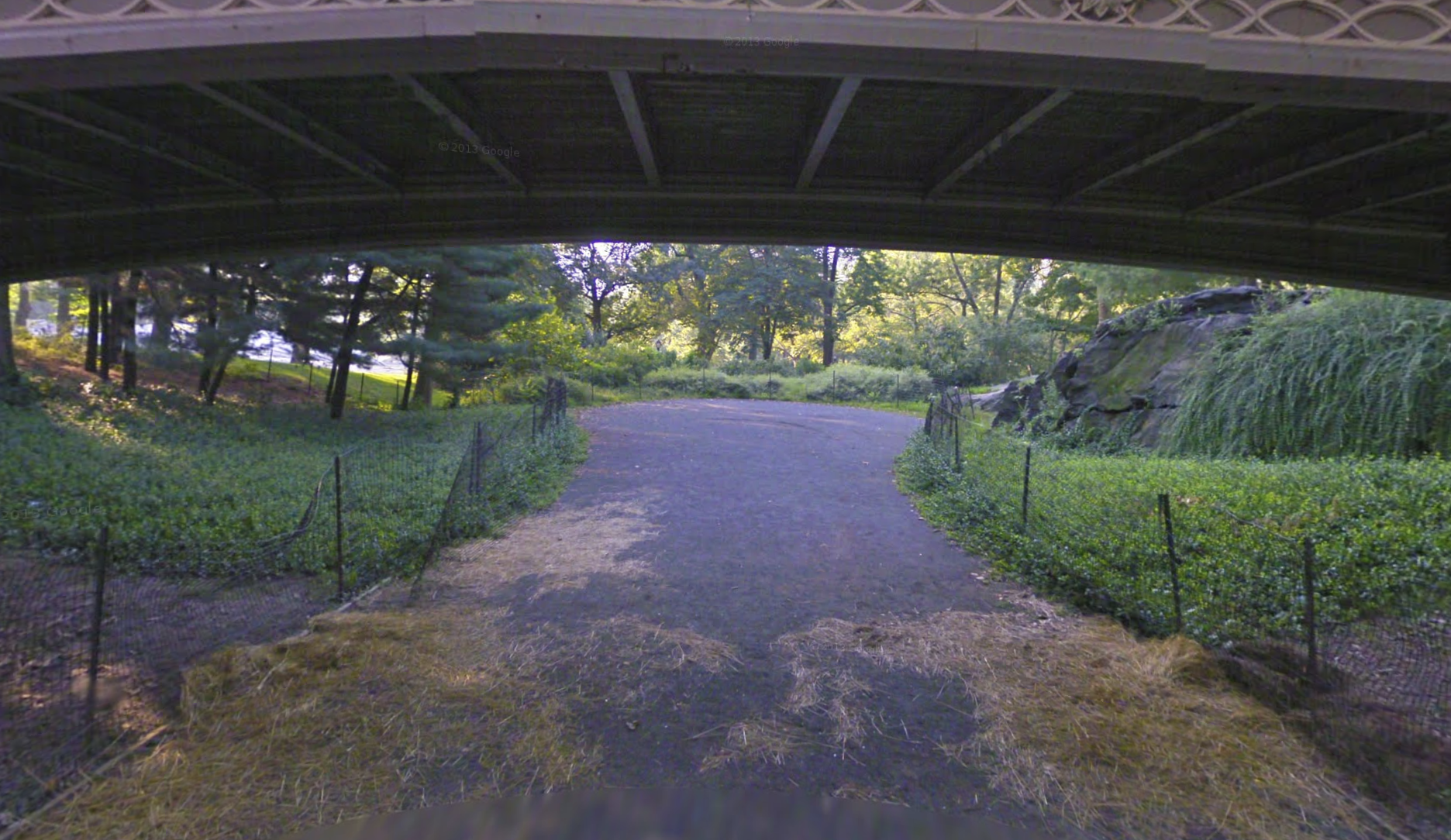
The Central Park Conservancy is planning to remedy an issue that’s likely familiar to walkers and joggers who frequent Central Park’s Bridle Path: the abrupt end to the path underneath Pinebank Arch, near West 62nd Street.
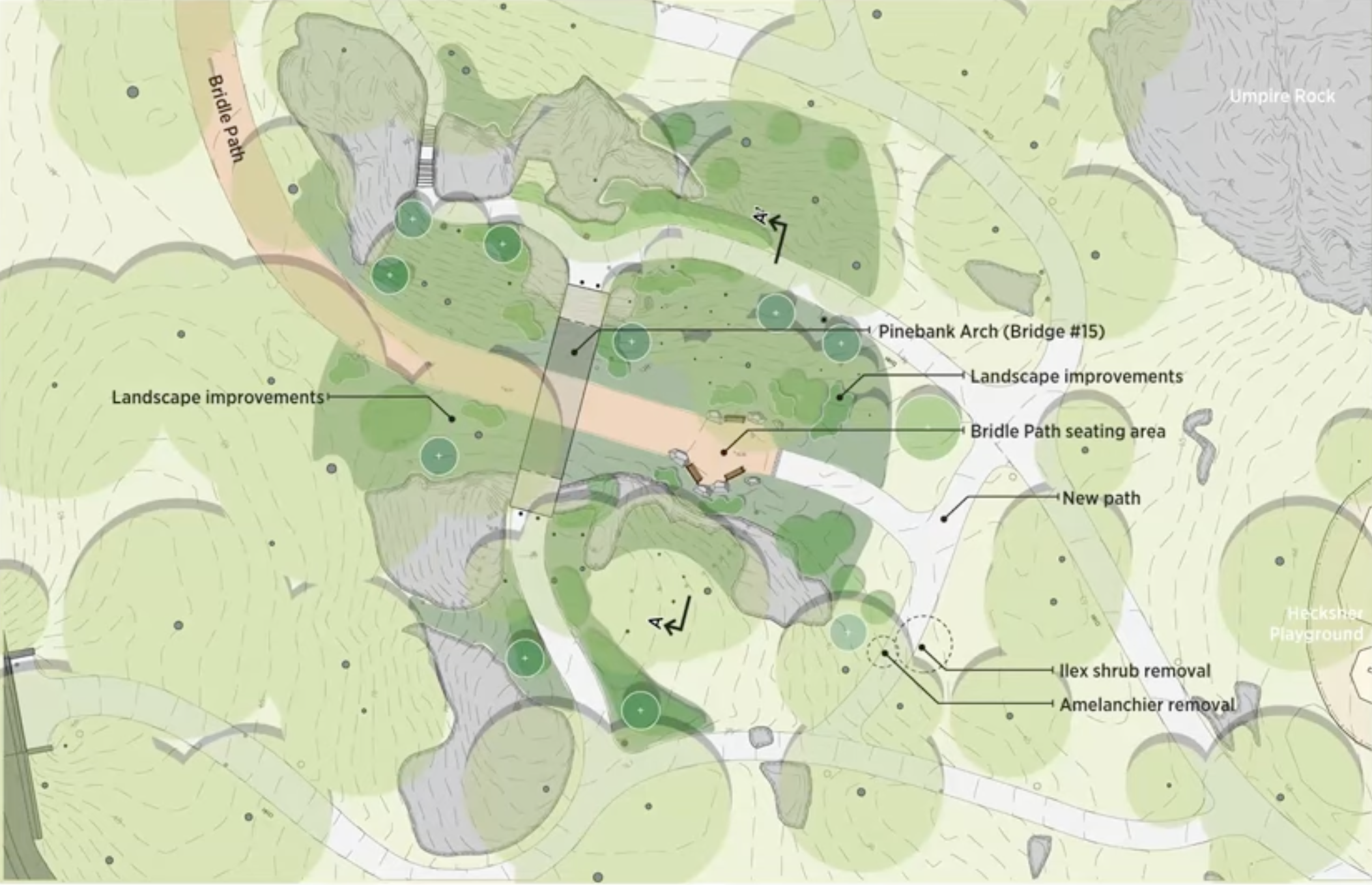
Currently, park-goers stuck at the dead end often resort to cutting across the nearby lawns and planting beds. Next year the Conservancy, which manages and maintains the park, will remove this dead end and create a new asphalt path that connects with other nearby paths.
It will also add plantings and benches beneath the bridge, according to information shared at a recent Community Board 7 meeting.
This project came about because of the restoration of Pinebank Arch, which is set to be completed this fall. Pinebank Arch is one of the four remaining cast iron bridges in Central Park.
The Conservancy hopes that resolving the dead-end-path issue will improve access to the arch and its sight-lines.
It’s rare to reach a dead end when traveling along Central Park’s many winding and looping paths. These interconnected pathways allow people using different modes of transportation to continue uninterrupted, according to Diane Jackier, vice president of program management at the Central Park Conservancy.
“One of the most ingenious ideas that [Frederick Law Olmsted and Calvert Vaux] had was to separate the traffic between the vehicles, the equestrians, and the pedestrians,” she said.
Originally, the Bridle Path continued past the dead end and went all the way to the southeast corner of the park. Over time, it became truncated to accommodate the construction of the Central Park Zoo and Heckscher Playground.
Construction on the new path is expected to begin in the spring of 2027. The scope of the project also includes removing overgrowth to improve views of the archway, and adding new plantings and benches.
The project’s estimated budget is $1 million to $1.5 million, using private funding. It is expected to be completed in the spring of 2028.
Subscribe to West Side Rag’s FREE email newsletter here. And you can Support the Rag here.



As a runner, I love this. It did always feel a bit awkward running into the roundabout only to have to turn around a head back. I always prefer a loop to a dead end. Now I’ll just have to figure out what the new route looks like!
Ditto!!! And I always “forget” that it’s a dead end and feel foolish and say, “Whoops” and backtrack. I’m excited to see what they come up with!
Same!
This has been a dead end for a few years now and it’s about time the corrected it. At the very minimum they should have posted a “Dead End” sign here. I have walked into this area a number of times (forgetting) and have had to turn around — clearly not the end of the world, but still annoying.
annoying… what, turning around (again) or forgetting.(yet again)?
I doubt we need more asphalt in the park; how about continuing the dirt path? Bridles or not, it’s a great evocation of a time past.
This. Why would they pave it?
Hooray.
“…park-goers stuck at the dead end…”
Stuck? Is it really that challenging to just turn around?
Why don’t you try to walk it yourself? It leads you to a cul de sac which is difficult to figure out where you have already walked 200 yards only to turn around.
I think that’s why the WSR wrote an article about it. It is an issue.
The connective paths had a different result before e-bikes.
Good! It made no sense, and people will find a way – not always in the best way – to continue on their path (pun and all). So, making an official way to connect will benefit everyone, park-life included.
Instead, maybe they should use the money to fix and replace existing benches on Riverside Drive next to Riverside Park. In the 90s, they simply remove benches instead of repairing them and there are many benches that need repair. As does the pavement. Below 96th St. it’s perfectly maintained above. 96th St. apparently is still considered a red lined area.
The funds come from the Central Park Conservancy which has nothing to do with Riverside Park.