
by Yvonne Vávra
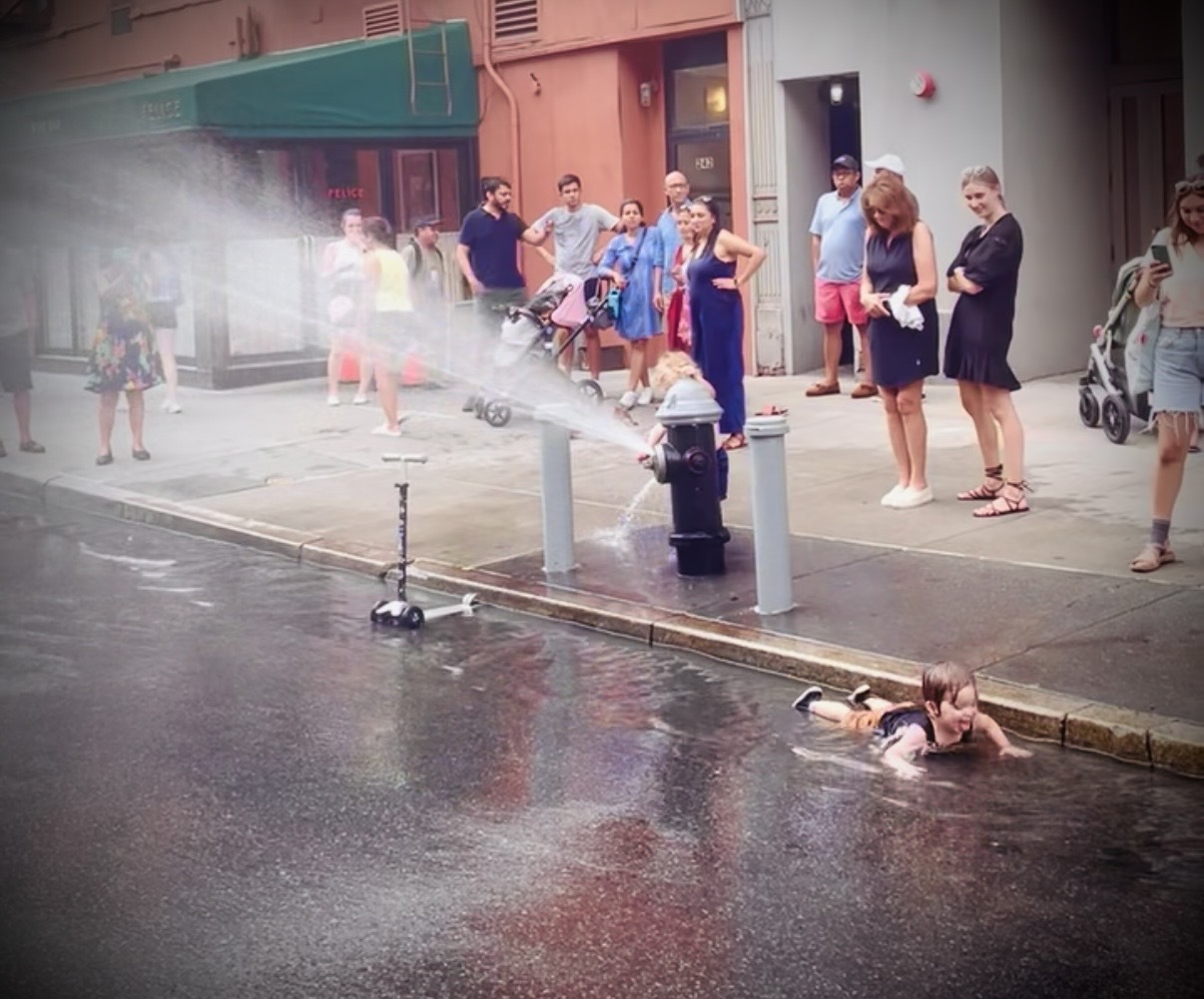
During the lava days of summer a week ago, when the weather was microwaving us, I melted my way into a supermarket in search of hydration. Just a simple bottle of water. But simple it was not.
There sure was water. Sort of. Vitamin waters, ionized waters, and subtly and heavily and naturally and artificially flavored waters. Power waters, protein waters, electrolyte waters, and smart waters. Waters with every level of bubble intensity, from gentle fizz to aggressive throat-assaulting bubbles. Artesian waters from the Italian Alps, functional waters promising joy or calm or flow, and four different bottles of what looked like the exact same Evian. Even when I finally made my way to good old Hal’s New York Seltzer, I still had eight flavors to choose from.
I became so paralyzed by indecision that I got cold standing in front of the sweating refrigerator and lost my thirst altogether. Problem solved.
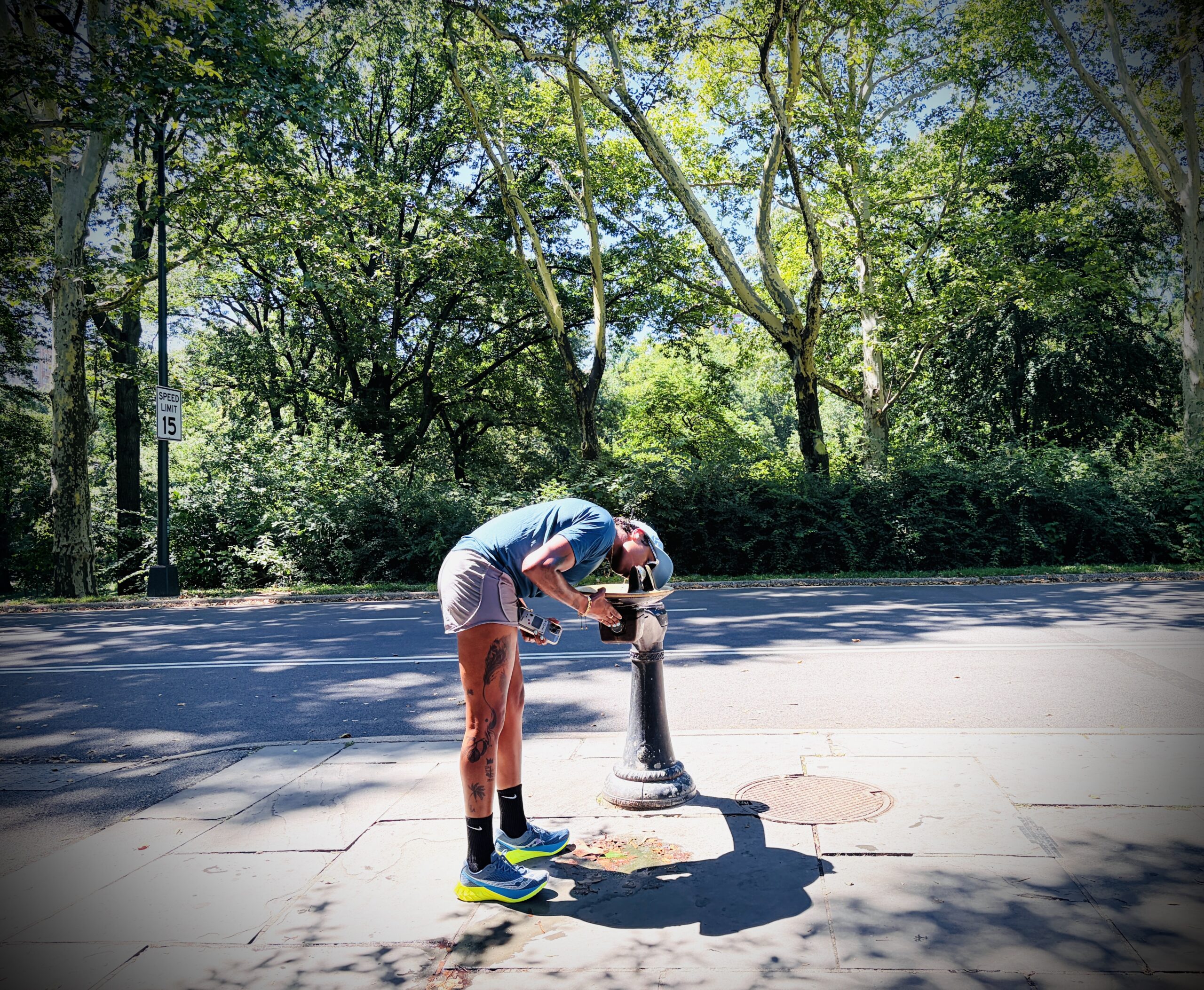
I should’ve just gone for straight sink-to-mouth hydration. The most delicious drink around is, famously, New York City tap water—the “champagne of tap water,” as the Department of Environmental Protection once called it in a report. A few years ago, water sommelier Martin Riese, a global authority on all things H₂O, scooped up two handfuls straight from a city faucet, slurped and swished them around in his mouth, and declared the water “very, very unique,” with “a slightly earthy feeling to it.” It was like walking through a forest, he said, “super refreshing.”
Likewise, Gothamist held a taste test of tap water from several cities the other day. Their sommelier gave New York a perfect 10 out of 10—the only water tested to earn top marks. Jersey City, meanwhile, got an “ugh, yeah, no good.” One out of 10. We’re allowed to be a little smug about our water, yes?
The deliciousness is not to be taken for granted. The city’s drinking water was not always so celebrated. It was, in a word, lousy, as historian Jill Lepore puts it in New York Burning: “By the middle of the eighteenth century, Manhattan’s water was already infamous: there was too little of it and what little there was tasted terrible.”
Things improved in the middle of the 19th century, when the city began drawing water from the Croton River in Westchester County, which flowed into a reservoir at what is now the Great Lawn in Central Park. But New York grew so quickly that it soon needed new supplies. By the turn of the century, the city turned its eyes north, seeking to tap the exceptionally clean and delectable waters of the Catskills.
Water was having a moment back then anyway. Just like we’re obsessed with functional waters today, 19th-century New Yorkers were chasing the promise of water as medicine. They believed that mineral waters could heal and prevent all kinds of ailments, spa cures were all the rage, and everyone who could afford it traveled to bathe in mineral springs.
Carl H. Schultz was one of those believers, and he was on a mission to cure every New Yorker by bringing the healing waters home to Central Park. He had studied the mineral spring waters in Europe and written a book about their physiological action and therapeutic uses. In 1863, he opened a company producing artificial mineral water and became, in Henry H. Sapoznik’s words in The Tourist’s Guide to Lost Yiddish New York City, “New York’s big shot of seltzer spigotry for the remainder of the nineteenth century.”
With the help of the city’s medical community, Schultz convinced the Board of Health to grant him permission to build a water spa in Central Park. And what a building it was. Designed in the Moorish style, the water pavilion was richly decorated with colorful patterns, columns, and arched windows. It stood just north of Sheep Meadow, near the 72nd Street entrance.
It became an immediate success after its opening in 1869. “Thousands of people visit the springs early in the morning for the purpose of drinking the waters, and for recreation,” wrote the New York Times. At a marble counter, a variety of spring waters flowed from silver faucets, including natural waters “from all the famous springs at home and abroad,” as Scientific American recalled in 1903, as well as Schultz’s recreated “mineral waters prepared artificially and scientifically, thus ensuring a definite chemical combination at all times.” I wonder whether New Yorkers of the day stood at that marble counter with the same paralysis of choice I did in the water aisle.
“Bitter waters,” “earthly waters,” “alkaline waters,” and “muriated waters” were some of the items on the menu, and according to Scientific American, the double and quadruple Carlsbad seemed to be everybody’s favorite. There were little silver cups on racks in steam kettles for warming the natural mineral waters, weighing scales, and little tables that were “very suggestive” of European spa towns. “By a systematic course of the waters, coupled with proper exercise, it is not unusual to decrease the weight in six weeks by thirty-six pounds, in cases of obesity.”
If all that does not sound spectacular enough, there was “The Schultz Band” too, entertaining the thirsty masses during the busy morning hours.
But even the most fashionable waters eventually lose their sparkle. As more New Yorkers had delicious tap water straight from their own faucets, fewer and fewer made their way to Central Park to drink and dance. Not even “The Schultz Band” could keep the crowds coming. By the 1920s, the pavilion was selling candy and soft drinks instead of liquid weight loss, and it finally faced the wrecking ball in the late 1950s.
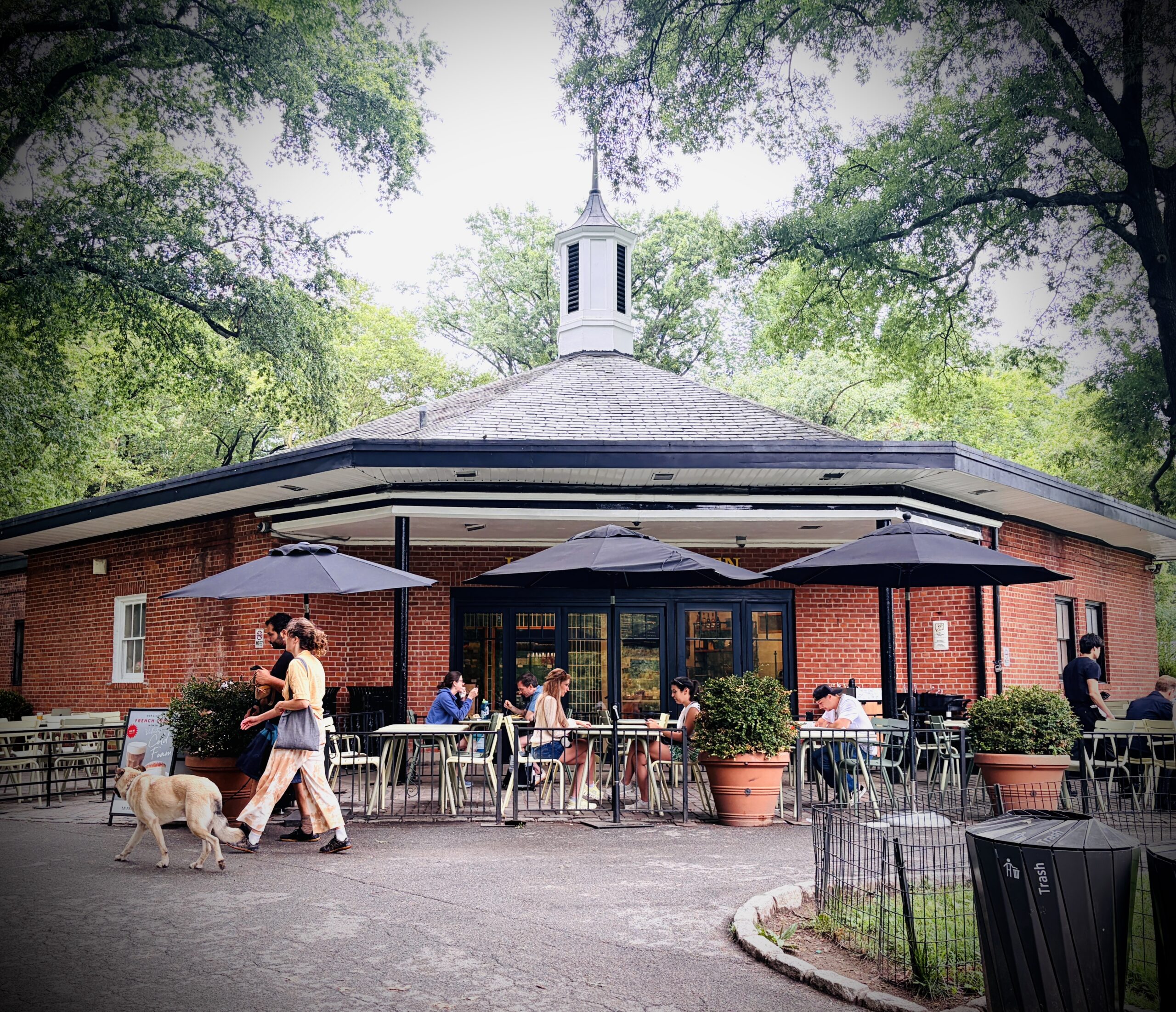
Today, there’s a new structure in its place. No ornate Moorish pavilion, but cute. It’s home to Le Pain Quotidien and serves exactly two waters: one sparkling, one still. For $3.75 a bottle, you get the rare luxury of freedom from choice.
Yvonne Vávra is a magazine writer and author of the German book 111 Gründe New York zu lieben (111 Reasons to Love New York). Born a Berliner but an aspiring Upper West Sider since the 1990s (thanks, Nora Ephron), she came to New York in 2010 and seven years later made her Upper West Side dreams come true. She’s been obsessively walking the neighborhood ever since.
Subscribe to West Side Rag’s FREE email newsletter here. And you can Support the Rag here.




Fascinating story. My late partner, a devotee of our excellent liquid refreshment, would proudly order “New York City water” when the waiter asked whether we wanted still or sparkling. Me, I appreciate the stuff, but harbor a secret yen for an occasional San Pellegrino.
I guess that’s what’s good about having choices. I totally relate to the article, and I often walk out of a store when there are too many choices to make! but San Pellegrino does not taste or feel very delicious to me at all.
Sometimes, an ice cube in less than perfect water helps.
But I do also think we have the best water.
I remember visiting Schenectady as a child. Worst water, ever. That’s all I remember about the place!!
I USE DELICIOUS NYC WATER FOR MY SODA-STREAM, THEREBY CREATING DELICIOUS NYC SELTZER. I FIND THE WATER IS LESS CHLORINATED IN THE MORNING…
I think that just letting the water sit for a while will allow the chlorine to evaporate.
Thanks so much for this informative article. I thought I knew a lot about NYC Water and Central Park, but now I know much more. NYCH2O.org salutes you!
Another fun one, Yvonne. Love hearing your perspective.
I prefer my NYC water from parks water fountains because I like that the dogs drink from them too. Yum!
A refreshingly cool article. Thanks!
Yes, NYC water is really delicious! I actually do think it is.
Please everyone, let’s all get a water bottle, and fill it up from your kitchen sink before you head out! So none of us should ever have to buy bottles of water of any kind. So much plastic being manufactured, disposed of, and (rather rarely) maybe recycled. So much energy going into bottles! No need, please get a good reusable one from a local store (I like the ones at University Hardware, myself, on 113th and Broadway), and fill it up from any handy sink or water fountain you pass in the course of everyday life.
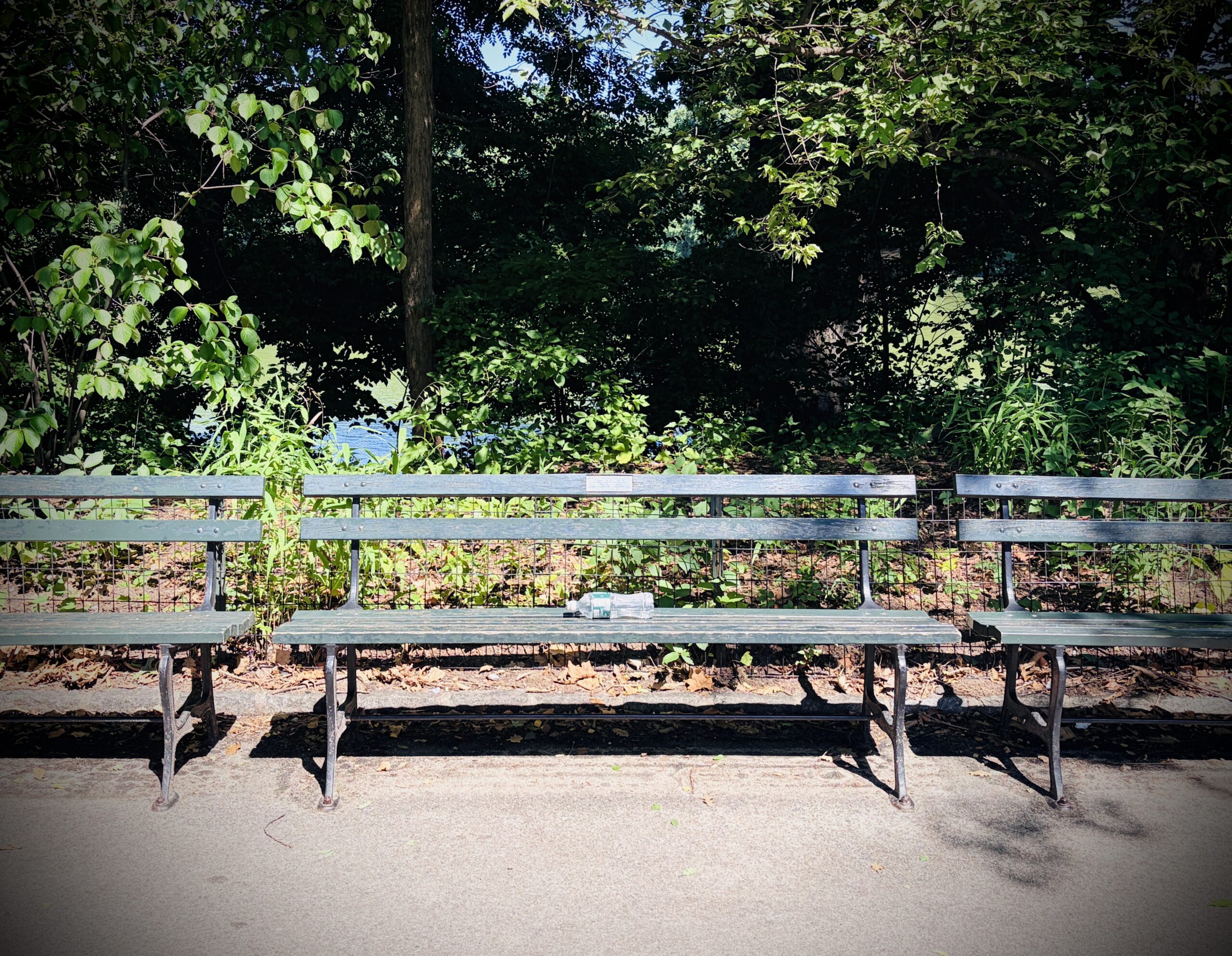
Yay, NY water! Yay, no buying water and no plastic in the recycling stream, left on a bench, or dropped in the trash!
Thank you neighbor. To add to your comment, when you drink water or any drink from a plastic container you are also swallowing tons of microplastics. This was proven by physicists at Columbia and Rutgers who photographed thousands of microplastics floating in all the top brands of bottled water. Microplastics affect our health. Solution: carry your own metal, ceramic or glass refillable containers.
this is kinda of true, the problem though is the plastics get in the water from the filtration systems, not the bottles themselves. so even if they repackage it, it still has microplastics. there is nothing that is not contaminated at this point. they cannot even properly study the effects of MP’s because there is no longer an existing control group that is not contaminated by them to compare against.
they are in everyone’s brains and reproductive organs etc.. there is literally no one who has been spared.
Very good article….always informative and interesting.
The old Croton aqueduct still exists underneath many of the buildings on the west side of Columbus Avenue. You can see a few of the old gatehouses on upper Amsterdam.
You can also glimpse a remnant of the stone Receiving Wall of the reservoir just east of the police station in the 86th St. transverse.
The stone wall of the Receiving Reservoir, that is.