

By Gus Saltonstall
A supportive housing building on the Upper West Side just landed more than $20 million from New York State for a full renovation of the property.
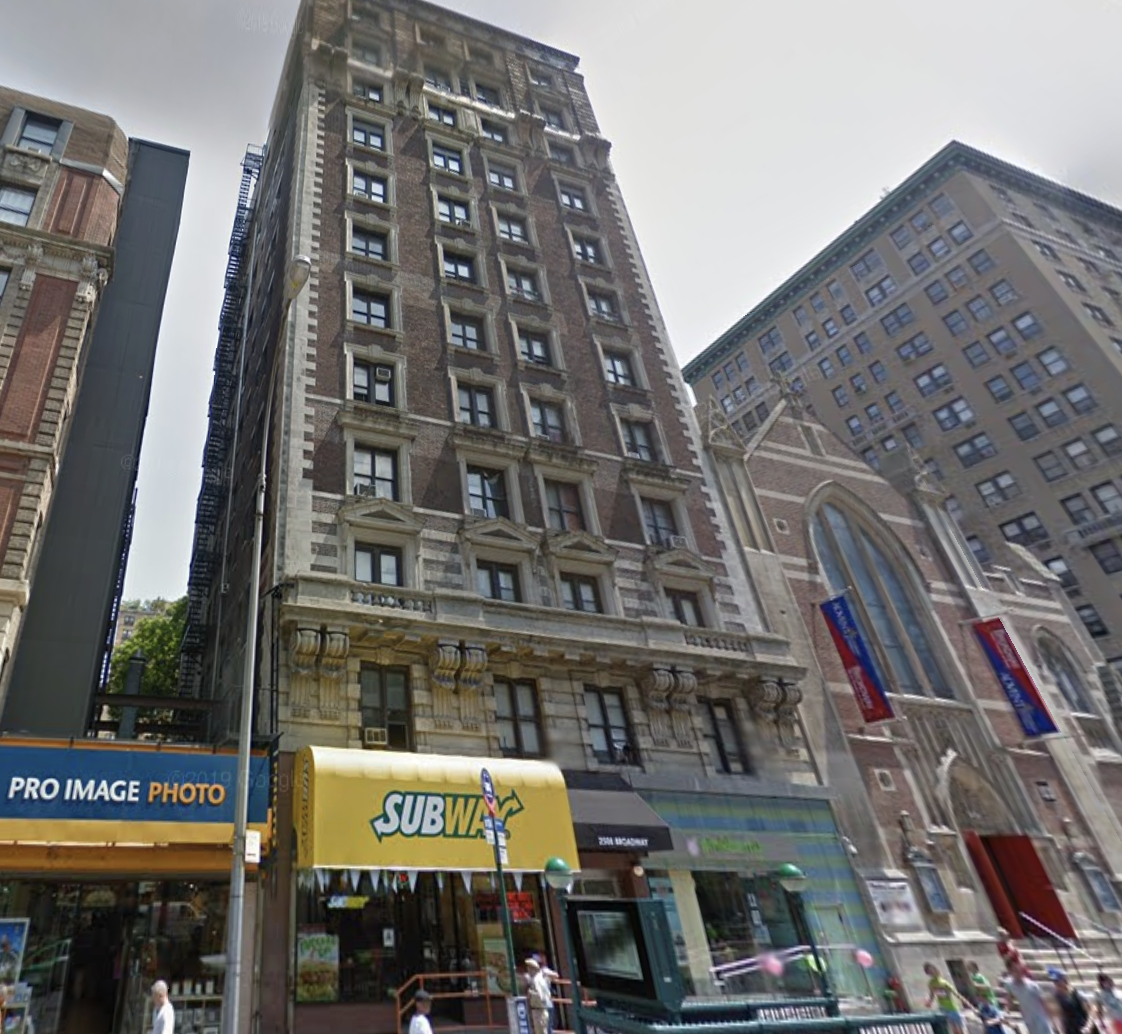
The Narragansett at 2508 Broadway, between West 93rd and 94th streets, received $21.6 million as part of Gov. Kathy Hochul’s $25 billion five-year housing plan, according to a press release from New York State Homes and Community Renewal, which is the state’s agency for affordable housing and housing finance.
The funding will go toward rehabilitating the 12-story Upper West Side building that contains 104 affordable apartments, 78 of which provide supportive services for vulnerable New Yorkers. All of the residents are at or below 60 percent of the area-median income.
“The Narragansett provides permanent, supportive housing for New Yorkers on the Upper West Side, and this $21.6 million investment ensures it can continue that mission by rehabilitating homes for the 104 families and individuals who live there,” Assemblymember Micah Lasher said in the press release from the state.
The Narrangansett has provided permanent supportive housing on the Upper West Side block since it opened in 1994. It specifically serves New Yorkers who are medically fragile or have other special needs. The building’s most recent renovation took place in 2012, when it received $7.1 million from New York City’s Housing and Preservation Department.
The address has also been the longtime home to a Subway and Pinkberry on the ground floor.
The state did not provide a timeline for when the renovations to The Narrangansett would begin.
You can find out more about the funding coming to the Upper West Side building — HERE.
Subscribe to West Side Rag’s FREE email newsletter here. And you can Support the Rag here.





I strongly believe in helping people out. But this does not seem like an efficient use of money. I’m not saying $0 should be spent. But this seems like a lot. And given the state and city’s history on such things, there is good reason for my doubt.
I also wonder why there seems to be a cluster of these types of facilities in this area. Note that I do not live there so I am not being NIMBY. But again, it is a lot.
Agree. Why so much supportive housing within a few blocks. Try the east side for a change.
At roughly $200k per rehabilitated apartment that doesn’t seem crazy expensive
That’s to Leon’s point – you can buy an apartment for this money in less desirable neighborhood, not just renovate it.
And $200 grand for a small apartment renovation is a bit steep even for expensive neighborhoods.
That money would go a lot further in a less desirable area of NYC. Not saying this to be NIMBY (I don’t live near there). Saying it based on basic economics – bring the most good to the most people with the least money. For the cost of fixing up 100 apartments there you can probably fund twice as many elsewhere. All I hear is complaining about housing shortages…
No argument here! It would certainly be more efficient to build more units somewhere in deep Brooklyn. The NIMBYs there would probably make the same case, so it’s a political problem at the end of the day.
Except that in a less desirable neighborhood the people don’t have the power to say NIMBY.
So…What about the East Side?
That’s about $207,000 per unit. Are the tenants to received free rent as well, or is it “affordable” housing.? What if any of them need parking?
And where shall the residents reside during the construction process??
Why would they need ‘parking’ .. The is the UWS for f’s sake!! The building is just steps away from the subway on Broadway! .. And also buses ! ??? Lucky tenants!
So every 15 years the state will have to shell out double-digit millions of dollars to renovate and maintain 100 apartments on top of the operating expenditure, which is also funded by the state.
I think we all want to be supportive, but this doesn’t feel like the most efficient way to help people.
It is insane how much supportive, immigrant, drug rehab housing is on the expensive UWS. Why not other neighborhoods??
Imagine tge optics for any official who states that residents are being relocated to a less desirable neighborhood and the existing structure will be converted to a different caliber of housing? Perhaps a first step is to not use the term “less desirable” which is classist. Perhaps the money could have gone towards refurbishing an underutilized area of the city and with if build out infrastructure to make the area more appealing providing housing opportunities in all categories for so many more. Similar to changes we have seen in other neighborhoods and now they are a very enticing place to live for people who want to live in NYC. It would be a net gain for the city. I do agree that the density of homeless and supportive housing n the low 90s – even if provided a facelift – takes a toll on the neighborhood. Im not sure the investment will have much long term impact.
Those optics happen all the time. They got away with moving families out of shelters to the boroughs, despite kids having to change schools mid-year. And they moved single immigrant men into the place. Not right.
Wow instead of being glad the people who live here will have decent living conditions so many here are why spend money on these people? Not the west side i moved to 50 years ago
Most of us support helping vulnerable people. However, this deal mostly helps the industry, not the vulnerable.
That’s not true. I just signed my 5th year lease in a place like this. Because of housing like this I’m stable and housed and doing okay. I lived on the UWS years ago and I am happy to live here again. Supportive affordable buildings like this make a huge difference.
Is that the building where the cops and firemen are called to many times a month??
Yes, it’s a lot of money, but I doubt that $200k will be spent on each apartment. A building of that age (and probably that degree of disrepair) may well need upgraded heating, plumbing, roofing, etc., and much of the funding will go for that, not for fancy apartment upgrades.
The reason there is so much supportive housing (including shelters, Safe Havens, and other housing for the impoverished, including some dedicated to local homeless or other unhoused residents) is that, unlike many other neighborhoods and communities, the UWS has always been far more welcoming to “the least among us” than many other neighborhoods. We also have one of the largest food pantries and food programs (the WS Campaign Against Hunger) in the City.
And we don’t even rank in the top ten of neighborhoods with homeless and supportive housing facilities.
Actually the reason is the UWS used to be a neighborhood with a lot of sketchy blocks and buildings and a lot of SROs housing alcoholics and addicts.
Those buildings have been upgraded to Supportive Housing and the improvements in them have helped make the neighborhood what it is today.
Trust me, as the son of an owner of a liquor store in the 1960s I’m pretty well aware of the situation and who inhabited buildings like this one back when.
The notion that this represents a setback for our neighborhood is false.
Wow, the heartlessness of West Side Rag commenters never fails to disappoint. “Why can’t all struggling New Yorkers just be sent off to terrible neighborhoods in the furthest part of the outer boroughs, so we don’t have to see them?”
The burden of caring for underprivileged neighbors should be shared by all New Yorkers. The chances of those recipients getting safe and healthy housing and building better futures is stronger here than way out. Of course, all things in moderation — but this really isn’t a huge expense or a huge burden. Lighten up, Francis.
This is (was) Giuliani’s base – the sort of person who wanted homeless people trucked off to Niagra. Very retrograde thinking
You are putting words in our mouths. All I hear about is housing shortage. We need beds for people. We do not have unlimited funds. So why not build lots of housing in the least expensive areas so that we get the most bang for our buck? It is basic economics. So please stop clutching your pearls, virtue signaling, and calling us names and be realistic.
And to your point about “all New Yorkers” – do they have a God-given right to be in NYC? Housing could be built much cheaper outside of the city altogether. And care for them (and I strongly support caring for those who can’t care for themselves before you accuse me of being heartless and selfish) can be provide much more cheaply in these places as well.
Yeah it could but people like this need access to mass transit, hospitals, social services, food pantries etc. That’s why they are located here. All that is available here. It’s not as simple as you think. I know. I am one of “those” people.
Have any of you ever lived on the ES? I’ve spent more than 90% of my life working and living there. You’re all so quick to dismiss anyone who is less fortunate than you, while at the same time complaining that YOU want affordable housing. The ES has several assisted living facilities, there are families living in affordable walk ups, and there are shelters being built and populated as we speak. Maybe not up to your high standards, but no one is telling these families that they’d be better off living in slums in Brooklyn. 😣
Fantastic. Supportive and transitional housing are essential for helping people out of homelessness. The city needs MORE of this instead of empty filing cabinets for the ultra wealthy
No mention of current ownership? The owners of the property and their vendors are the real winners here. Who are they?
Puzzled by the argument that supportive housing should be in other neighborhoods rather than ours. Is it because you want those apartments at market rate? Get a grip and share the joy of living on the upper west side. You’re not king of the neighborhood. Where do you draw the line w that argument – only coops and condos are allowed, no rent stabilized renters?I’m glad our neighborhood is diverse, rather than just filled w rich folks buying multimillion dollar apartments.
I’m happy that these folks were able to secure funding to renovate their building.
You all do not realize what the cluster of the supportive housing has done to the businesses and Broadway. the last 6 years. Of course there should be supportive housing but it was supposed to be spread equally among all the boroughs and neighborhoods – it’s called the Fair Share policy that was instituted years ago. The DHS has used the “SRO” type buildings without any input or thought and did not add additional resources – something they are supposed to provide – to persons with high needs and addictions. There is no accountability. The Fair Share states that there should be a 1/2 mile in between each supportive housing/shelter and that has been broken throughout the UWS. People with special needs unfortunately have problems that cause issues for other residents and businesses, which is why it is supposed to be a Fair Share. This is a big city and asking one neighborhood to handle more challenges than most is wrong. Only our city council and State reps can speak up to keep things fair for everyone – unless you personally are going to solve all the problems happening, there needs to be changes.