

Yvonne Vávra
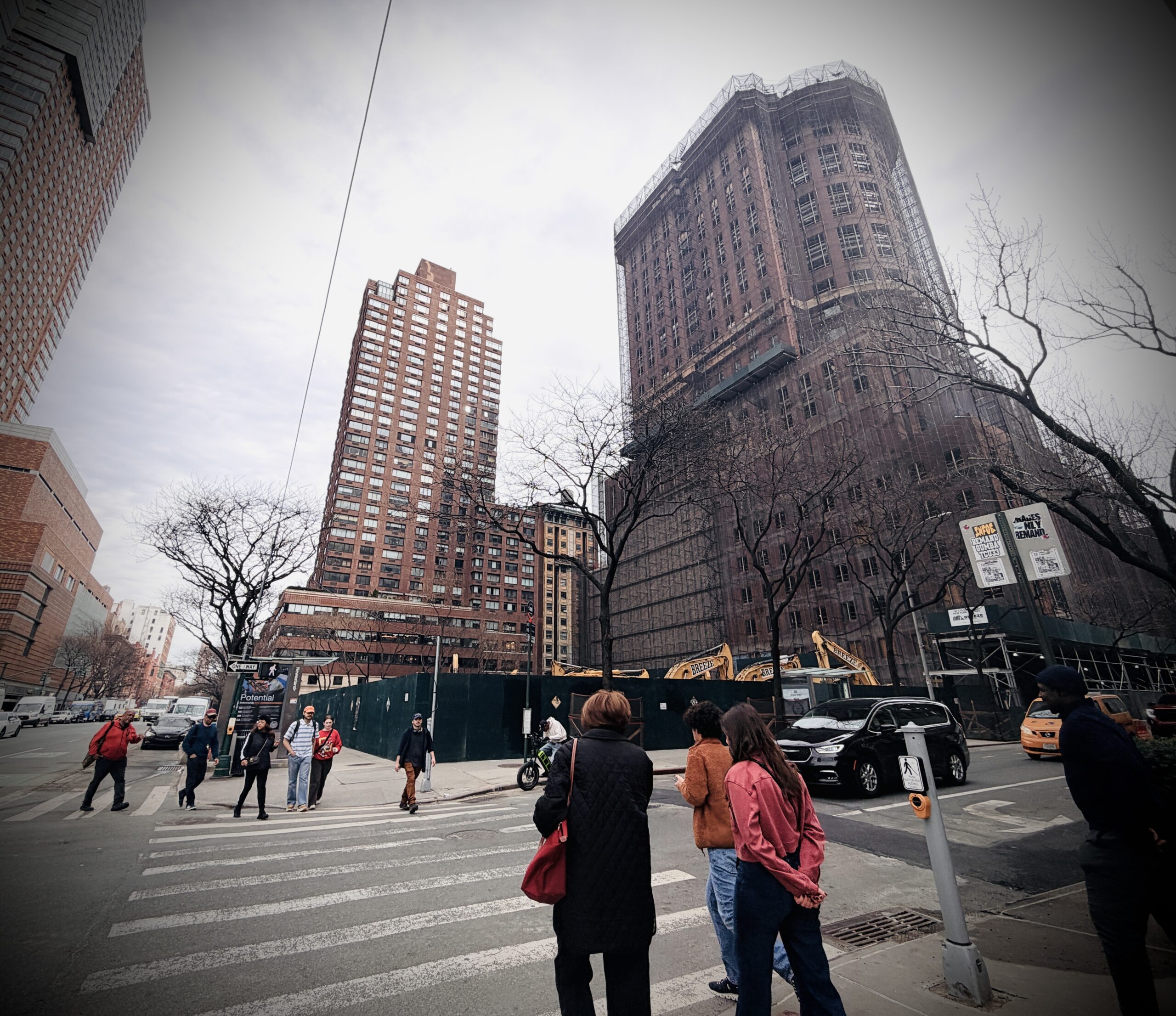
No goodbyes. I knew its days were numbered, but it still startled me when I walked past 67th and Columbus the other day and saw that the ABC building was gone. The whole corner—razed, knocked down, wiped away. The future had taken a big bite out of the block between West 66th and West 67th, leaving nothing but nothing where there once was a building I can’t even picture clearly anymore. All I remember is the ABC studio on the ground floor and the posters of TV hosts with big smiles. Now the block is just staring back at me with a gaping mouth.
I have no idea how long it’s been gone. The last time I walked by, workers were already busy stripping it down and hauling its bones away. But it was still there. And now: poof.
In its place, a giant could rise. A structure so tall, Empire State Building tall, that the whole Upper West Side would shrink beneath it. What now feels big would suddenly seem tiny. Even 200 Amsterdam, which stands at 668 feet a few blocks northwest and sparked outcry for sticking out of the neighborhood’s height vibe, would look like a toddler. The building now planned would be twice as high.
But it wouldn’t be the first time the neighborhood experienced a dizzying shift in scale.
In the late 19th century, development on the Upper West Side picked up speed, and row houses sprang up everywhere. At the same time, wealthy New Yorkers were warming to the idea of luxury apartment living, and developers couldn’t tear down small single-family homes fast enough to make way for taller, more profitable apartment buildings.
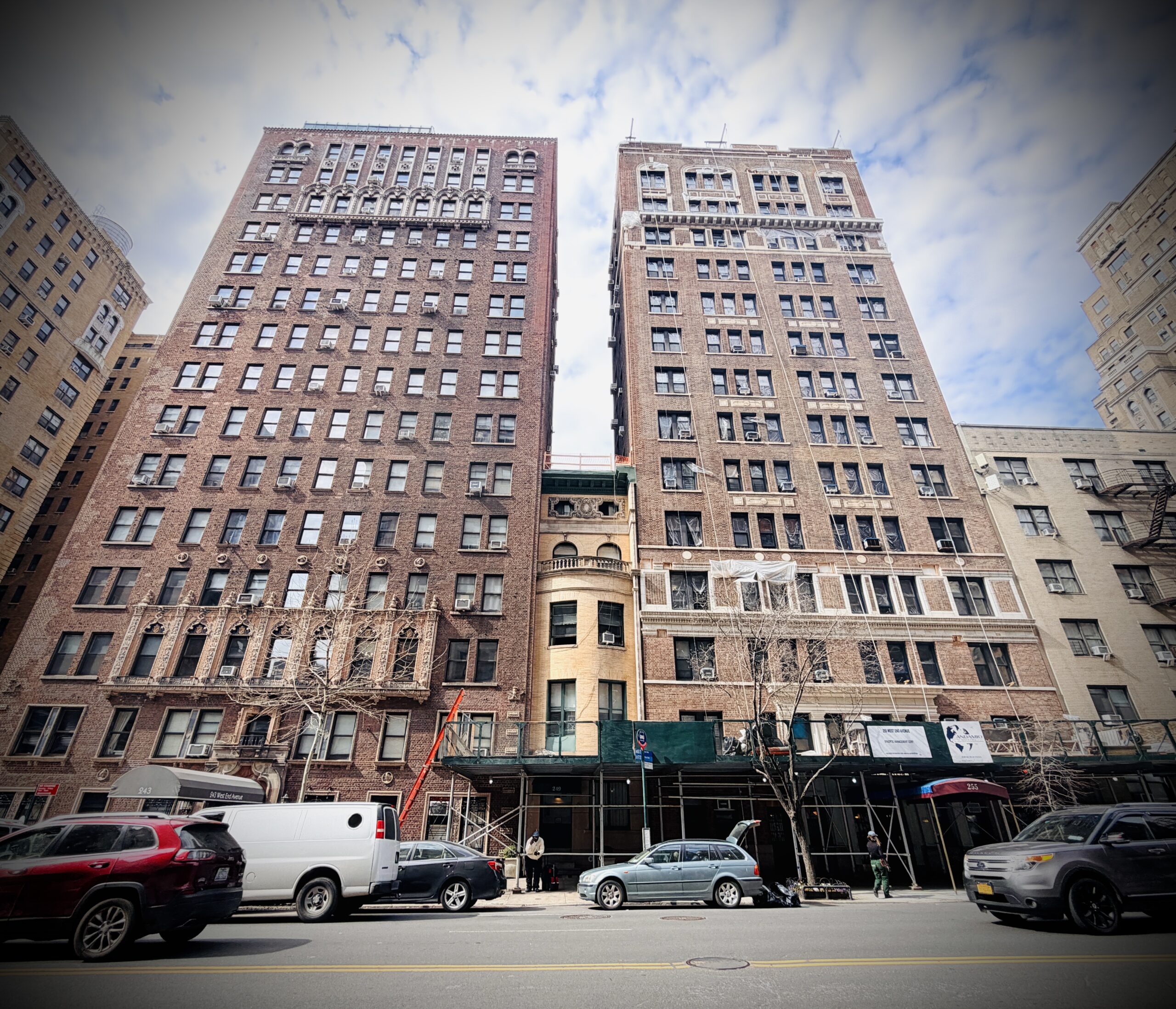
But some smaller houses stubbornly clung to their spots. They’re the Upper West Side’s little rebels—row houses that survived while everything around them grew taller. One of my favorites is the defiant little building at 249 West End Avenue, between West 71st and 72nd streets. At the end of the 19th century, it was just one of five Gilded Age row houses that were similar in design and attached in a way that made them look like a single unit.
249 West End Avenue was home to Mary Cook, mother of five and widow of Ferdinand Huntting Cook, the director of the New York College of Dentistry. On a January night in 1913, just a few days after New Year’s, Ferdinand left the house to go to a liquor store at 72nd and Columbus but never came home. Mary turned to the police, hospitals, and newspapers to search for him, until a month later his body was found in a forest in Queens, where he had apparently shot himself.
After everything she had been through, Mary was uniquely prepared to stand up to the developers who came after her property. While the owners of the other four row houses took the money and left, she refused to sell and endured the demolitions on either side of her walls followed by the construction of a 15-story building on one side in 1917 and, a few years later, another 15-story building on the other. Thanks to her stubborn will, developers had to build the future around her, and we got lucky: 249 West End still lets us see the block’s smaller past, before the neighborhood grew tall.
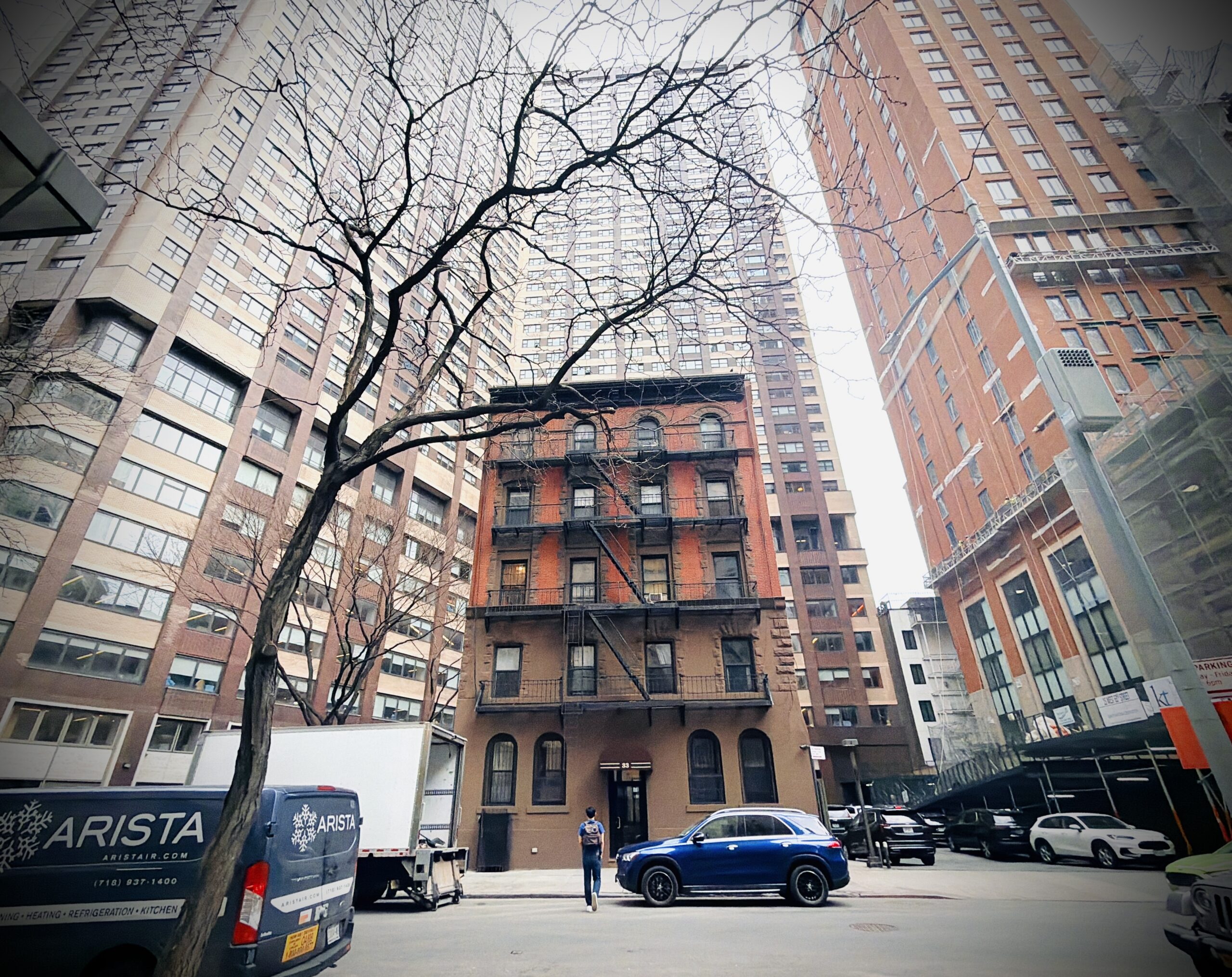
Another scrappy little five-story fighter stands on 63rd Street between Broadway and Central Park West. Completely isolated, it sits stubbornly among huge apartment buildings that “loom over it like bullies ganging up on an old lady,” as The New York Times once wrote.
The owner, Colonel Jehiel R. Elyachar—described by a former tenant as “a tiny, skinny, bent over little gnome of a man”—refused to get out of the way of the powerful developer Paul Milstein, who wanted to build a 43-story giant in the late 1960s. For a while, Milstein seemed willing to play a never-ending game in which the 70-year-old Elyachar kept changing his price, his demands, and his mind. Eventually, however, the developer had had enough and walked away from the deal. He tore down everything except Elyachar’s little red tenement and built his tower, One Lincoln Plaza, around it. Whether Elyachar ever seriously intended to sell remains unclear.
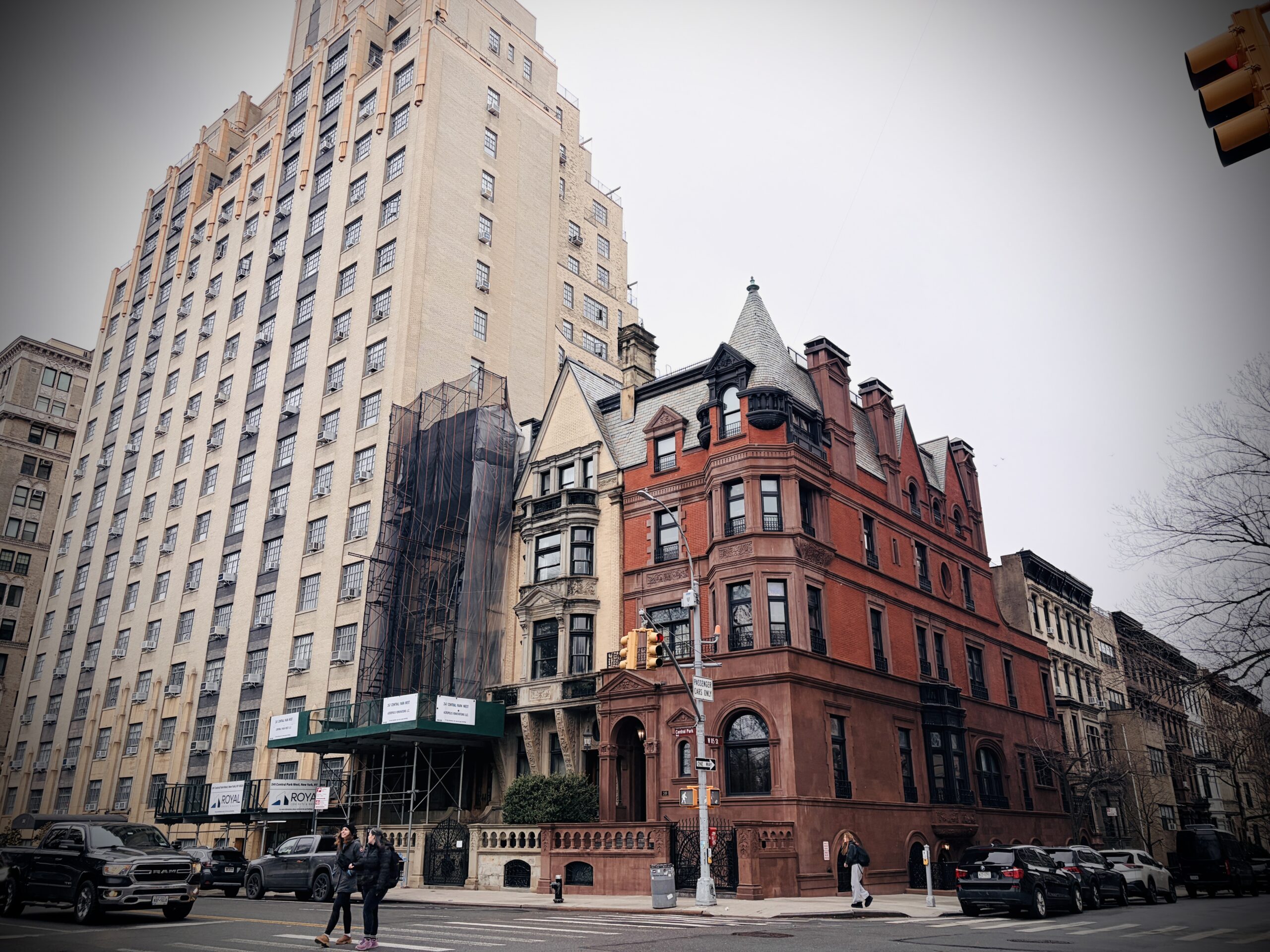
There are so many more. I love the three townhouses on the corner of West 85th Street and Central Park West, the only survivors of what was once a whole block full of them. Their luck in escaping demolition in the 1920s came thanks to the owner of 249 Central Park West, the corner building, who refused to sell and, in the process, saved his two neighbors as well.
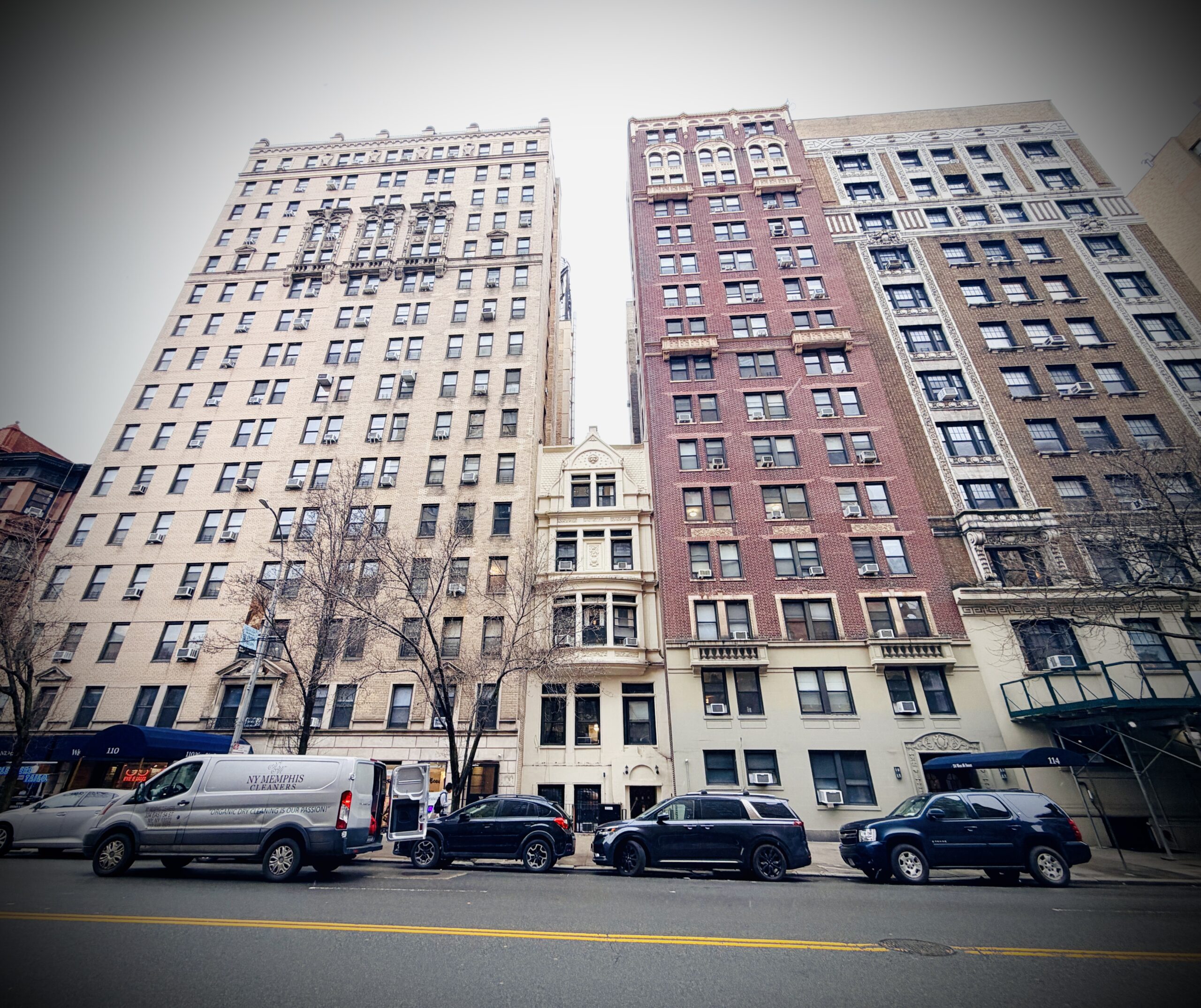
I also love 112 West 86th Street, which in the late 19th century had four-story companions along the block but has been squeezed since the 1920s by two 16-story towers.
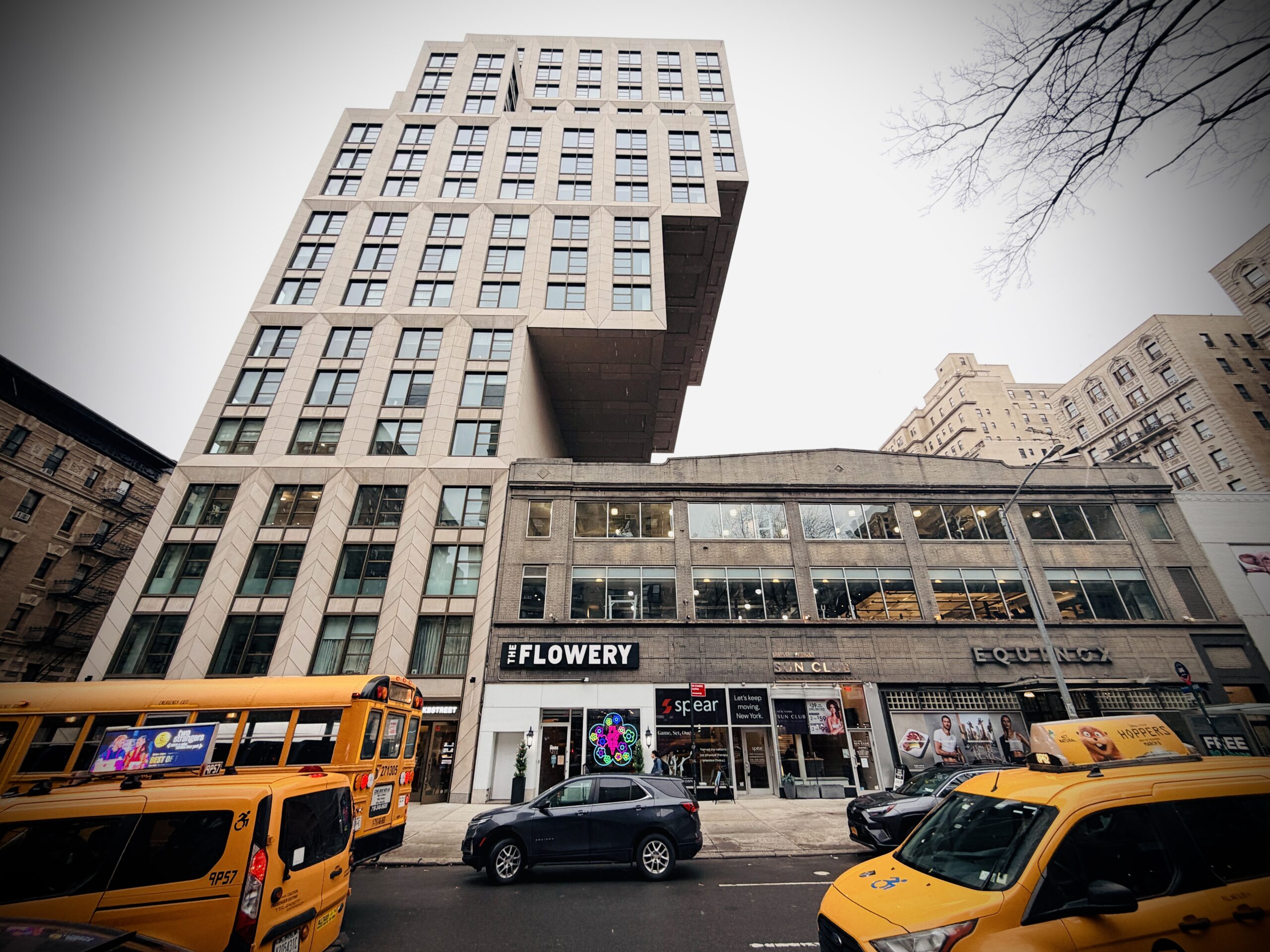
And even if it isn’t technically a stubborn holdout, I love the way 2465 Broadway accepts its fate beneath the 20-story Westly on the corner of 91st and Broadway. Because it wasn’t allowed to grow higher into the sky, the Westly simply grew sideways instead, elbowing into the profitable air above our three-story underdog, who now forever sits frozen in a game of Tetris after an unfortunate opening move.
Who knows how high the Upper West Side will stretch into the sky in the centuries ahead? Who knows which of today’s high-rises will one day stand like a lone wolf, sandwiched between giants? What we do know: The joy of spotting these little rebels will be just as much fun then as it is now.
Yvonne Vávra is a magazine writer and author of the German book 111 Gründe New York zu lieben (111 Reasons to Love New York). Born a Berliner but an aspiring Upper West Sider since the 1990s (thanks, Nora Ephron), she came to New York in 2010 and seven years later made her Upper West Side dreams come true. She’s been obsessively walking the neighborhood ever since.
Subscribe to West Side Rag’s FREE email newsletter here. And you can Support the Rag here.




Another great article about the magic of our neighborhood to brighten my Saturday. It’s always a pleasure to read something from Yvonne!
you left out 788 West End Ave an 1896 original
https://www.nytimes.com/2010/09/05/realestate/05scapes.html
Great article!
Thank you, Yvonne. Whenever I see your byline, I know that I am in for a treat
Great article. I will take a walking tour of these rebels and look for others.
Hooray! Soak the rich: https://www.cnbc.com/2026/03/14/mayor-zohran-mamdani-new-york-budget-deficit-parking-tax.html
Oh wait. This doesn’t soak the rich. The rich don’t park their cars on the street. The middle class does. Whoops!
Excellent article!
Lovely article. Thank you, Yvonne.
How did you come to find all the history of these buildings?
I loved this article. The buildings, the owners…..fascinating!
Well done, quite enjoyable…
Always such a pleasure to read these.
That line about an unfortunate opening move in a game of Tetris…just perfect.
Sometimes I can’t believe that English isn’t her native language. The writing is just so good.
I love this story. Some buildings I knew — others new to me. As always, well told.
Thanks so much for your very insightful article, Yvonne. You help make sense of all these changes in such a clear, poignant way, with a sense of humor mixed in. I’ll be looking at these little rebels in a new light now and with greater appreciation. I think you’re a living little rebel too for pointing all this out! I have loved your other articles also!
Unfortunately? There is nothing funny or fun about BIG REAL ESTATE winning. Aren’t we mostly liberal dems up here? This isnt progess it is devastating …. It makes the 1% richer. This building, like so many, will not be fully inhabited either.
One of the most extraordinary instances is 471 West End Avenue, a 4-story townhouse on the West side of the avenue between 82nd and 83rd Streets. Built in 1885 by McKim Meade & White, a fire ravaged the building in 2013, and it has had all of its avenue-facing windows boarded up since that time. Although it had been separate apartments by then, it currently sits vacant, though I had heard that someone finally bought the building and was going to convert it back into a one-family townhouse. That said, I have seen no work being done in all this time.
Does Gothamist have any further information on this “rebel” with its amazing architectural pedigree?
Love the rebels, and this article!
Thanks, Yvonne, for highlighting another interesting aspect of the neighborhood. Blocks such as mine, and those adjacent to it that are also populated with brownstones, have been designated historic districts by the LPC. So these areas might be safe from the over development trend at least for the foreseeable future.
Yes Susan. We hope so. I appreciate your comment. But why aren’t we ALL calling out big real estate rather than merely observing and commenting and actung like it is innevitable? Our city and its neighborhoiods are being ruined
It is cruminal. This is BIG REAL estate winning again and again. This is OUR council members allowing it.
Well…………..we’ll always have Paris.
I’m having my coffee in Paris as I read this lovely article. Yes Paris did it right.
Absolutely Paris has done a lot of things right. Real Estate, usable bike lanes, and fare enforcement, rent control, etc.
Hang in there little guys. You make the UWS unique.
You LOVE this , Yvonne? This is greed and capitalism at its finest. This is all about $$$$.
Do you see the historic landmark buildings being torn down? The churches? I thought we were mostly liveral Dems here. Almost nobody wants these monstrosities built on the UWS. It is devastating. These buildings stay largely unoccupied. They get approved by our City Council because the developers are paying people off while offering a few units of affordable housing in them. Its all a lie! Please dont celebrate it. And we will hsve SHADOWS where we never did before. And it will be years of LOUD building going on ALL DAY. You think this is cute?
I think you misread/misunderstood the point she was making. She is saying she loves the small buildings, the holdouts, NOT that she is looking forward to/happy about the giant highrise ones. However, the reality is, more of those are, apparently, inevitable no matter how the people in the neighborhoods object. And, yes, it’s all about money; we all know that. Maybe reread the essay.
Extell made a statement recently the new
bldg on the formdr ABC site will be a 25
story bldg. NOT an Empire State bldg height
I’ve got a bridge in Brooklyn I’d like to sell you cheap!! The ABC building is not going to be 25 stories. It is a tall tower similar in height to the Empire State Building.
Yes there is a 25-story tower at 37 W. 66th St.
Also
9-story building at 30 W. 67th St.,
7-story conversion at 7 W. 66th St.,
and also most likely 1,200-foot tower at 77 W. 66th
Otherwise the purchase of the real estate do not make sense for Extell
I agree, over 20 years of noise while special places disappear. Nowhere to meet and greet or shop for exquisite gifts… no culture true places to eat of buy food… and finally, no jazzy music!!!! Just taller building, and yes, shadows!!!!
I went for a run in Central Park this morning. The shadows were so bad I had to run with a flashlight.
Like you, Yvonne, I adore the little rebels and the snippets of older times that come with them. I hope they get SOME compensation for their scrappy spirit via air-rights (at least?) that then benefit the buildings that squeeze them, giving them the option of windows on a side that otherwise will have none. A kid I know once told me, about the little buildings, “look, if there’s lightening, they’ll never get hit, because they’re totally not the tallest thing.” 🙂 Truth, that. Here’s to our city’s constant change and stubborn holdouts to history.
Thank you! I just loved this article. And I have passed it onto my neighbors and friends. Well done !
R.
Yes, we all think we live on the “Ultimate” UWS and that nothing has ever been any other way, and that nothing should change. I live in a 16 story West End Ave building which replaced 3 floor single family homes when it was constructed in 1924. We “ruined the neighborhood” with our big tall apartment building in 1924.
I grant that a building the size of the Empire State Building would be out of place, but many changes will be made along the way. Most developers propose a building larger than they ever expect to build, so that the ‘compromise’ ends up being closer to their initial intentions.
Do readers realize that the population of the UWS is actually smaller than it was 60 years ago? In the 1960s, all those fancy mid-block single family brownstones held 15-20 small studio apartments. Now they hold one family. (Population 220,000 today, 360,000 in 1960 per various statistical sites) So, it’s really not as ‘bad’ as you are imagining.
That first picture of a house surrounded by skyscrapers could have come right from this book: https://bookshop.org/p/books/the-little-house-a-caldecott-award-winner-virginia-lee-burton/3d29a9f49e0c9024?ean=9780395259382&next=t
Yvonne, as is often the case, you put into words what id thought about as I walked the UWS streets several years ago. I was especially glad to see that the old timer on 85th and CPW was still standing because a friend and colleague lived there. Seventeen years have passed since I left NYC, but I’m praying that she’s still calls its home.
I worked at One Life to Life and we ate lunch in that ABC Cafeteria. #sad.
The building on the corner of 85th and CPW is spectacular. I used to walk by when they were renovating it and saw a huge pool in it’s basement. Just gorgeous.
Yvonne – You are a good writer. You had an opportunity here to tell the full story about how BIG REAL ESTATE runs our city. This new skyscraper being erected is DEVASTATING to the UWS. It is being built on lies and greed. It changes ghe entire landscape of UWS. It is criminal and corrupt. You seem to have the point of view that it is more interesting and inevitable than thoroughly TRAGIC. Are we all just going to roll over and give in to what keeps happening all over our city?! This could have been an article about fighting back and against big CORPORATE GREED. Who will write this article? Who at WSR will stand up for the TRUTH of this nightmare!
If “big real estate” actually “ran” the city the building you’re fearing and several others would be up and running today.
You can argue that developers have disproportionate influence. But the fact is that development takes an inordinate amount of time here because they don’t “run” the city.
How about you, Jackie?
I don’t disagree with you. Maybe you should write that article?
But don’t criticize Yvonne. She doesn’t write about politics or anything controversial, nor should she.
These are fun, slice-of-life, think pieces about our beautiful and historic neighborhood, from the viewpoint of an outsider (who has definitely earned her UWS cred, and then some).
Quite frankly, I look forward to them every Saturday morning. We are lucky to have someone like Yvonne who loves our neighborhood as much as we do.
Give her a break.
Very fun article. Danke, Yvonne.
Vavra family name sounds so Czechoslovakian
Another terrific article Yvonne. Long may you walk (and write)!
Well written, very entertaining. Thank you.
Great article – thanks. Fun weekend read.
There is a great one one the NE corner of 85 and West End. It has a childcare program at the street level. I always enjoy looking at it.
My first apartment in NYC was a rental in a quirky brownstone. It was on a block of brownstones so nothing particularly interesting like the ones in the article, but I still enjoyed having that quintessential NYC experience before moving into larger buildings.
Developers don’t always offer enough to make it worthwhile to sell. Four 2 story buildings adjacent to me sold to build a six story building. They wanted me to sell too. They didn’t offer anything more than I could get from any real estate broker. In addition, if I sold I would have to pay capital gains tax. They kept telling me how I could do a 1031 exchange. They claimed that I wouldn’t have to pay any tax. They could say what they want but the IRS would not agree. It was not easy. I was stressed out. I wasn’t so sure that I wanted to live next to a six story building when I had a 5 story building on the other side. I went back and forth in believing them about the 1031. I asked my accountant if I should take the money and run. He told me that if I did, I would never live in Park Slope again. I also spoke with a lawyer friend. He said that they were setting me up to get my property and would leave me on my own to deal with the consequences.
Turns out it’s really not all that bad. When I look out the front window I don’t see the building. When I look out my back window I don’t see much of the new building but I do see the deck that they built that overlooks my yard. So I had my own deck built and put up a privacy screen.
This is a good neighborhood with many conveniences.
So glad that I did not leave !
You could have done a 1031 exchange; you must exchange for like-kind, invest all the proceeds, otherwise you would pay tax on the boot. I am sure you were depreciating all your properties exchanging also alleviates depreciation recapture.
That “Tetris” building looks scary.
Thanks for the story.
Thank you, Ms. Vavra, for your fascinating column! You might be interested in Holdouts!: The Buildings That Got in the Way by my brother, Andrew Alpern, He includes many such stories as you relate. He has also published several other books on NYC architecture that might intrigue you. In the 1950s our mother, Grace Alpern, was involved in the successful protests against Robert Moses when he attempted to widen and expand the roadway that ran close by the 81st St, playground, near where we lived at 41 West 82nd St. You have written about the similar events a little south around Tavern on the Green in those years.
Hoping to hear from you,
All best, Jerry Alpern
Yvonne, you write beautifully, no mater the subject. Thank you for sharing.