

 By Rob Garber for the Bloomingdale Neighborhood History Group
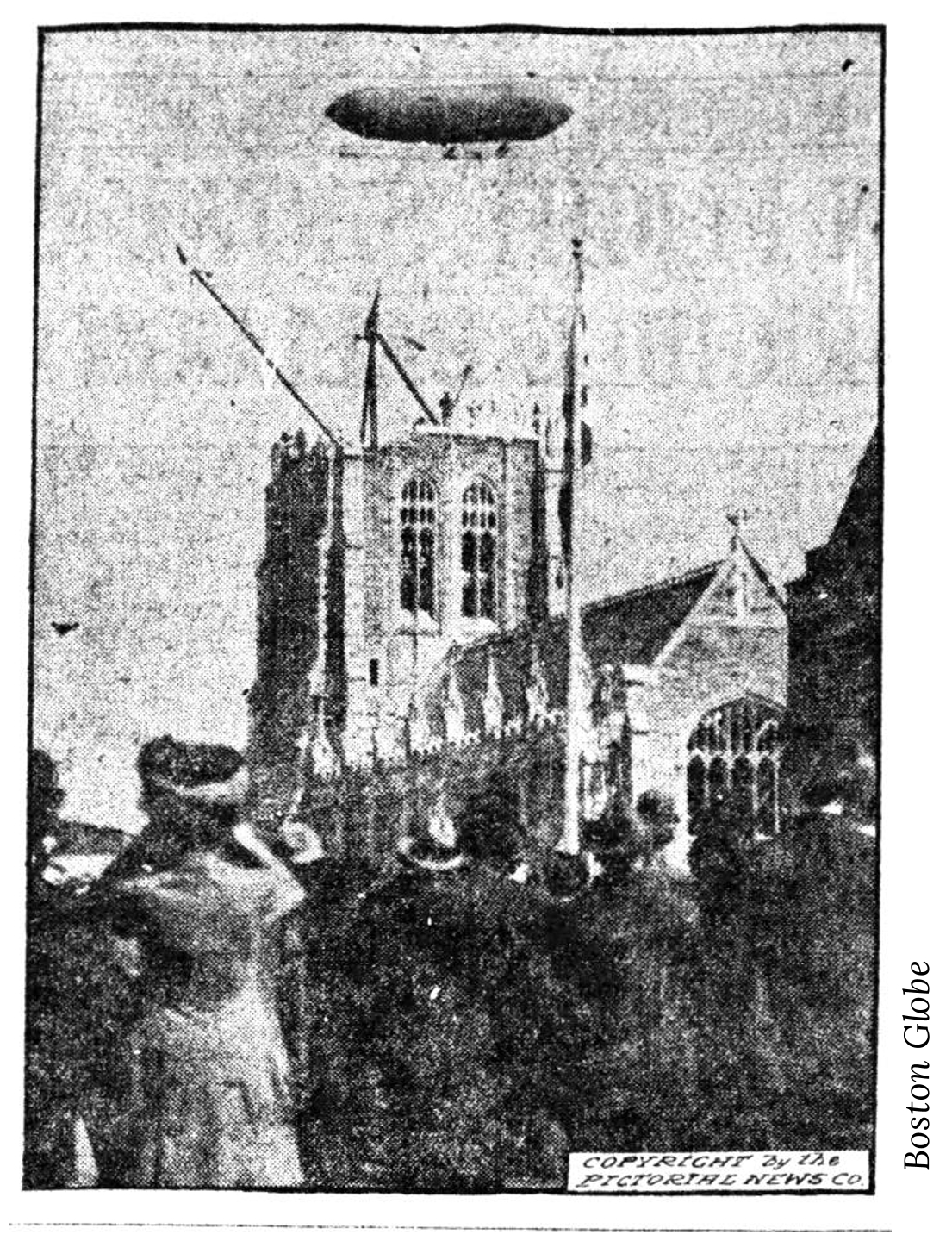
Welcome to another installment in the Rag’s Historical Photo Challenge. The image above was taken somewhere on the Upper West Side, sometime in the past. Can you figure out where, when, and what it shows? Look closely; this week’s challenge photo, like the others in the series, includes clues that will help you identify the scene, if you’re a dedicated UWS history sleuth. And even if you don’t recognize the picture—not to worry! Come back in two weeks and I’ll decode it, show you the clues that help identify it, and—best of all—tell you a story the image unlocks, because this column isn’t just a test of your neighborhood knowledge; it’s also a rolling celebration of the people, buildings and events that wove the tapestry of the Upper West Side.
Ready? If you think you know where and when the photo was taken and what it shows, post your answer as a comment on this column.
Solution to Historical Photo Challenge #18
Subject: The van den Heuvel Mansion/Burnham’s Hotel
Location: Between 79th and 80th streets and between Broadway and West End Avenue
Year: 1893 and approx. 1903
Image Source: Real Estate Record and Guide and The New York Historical
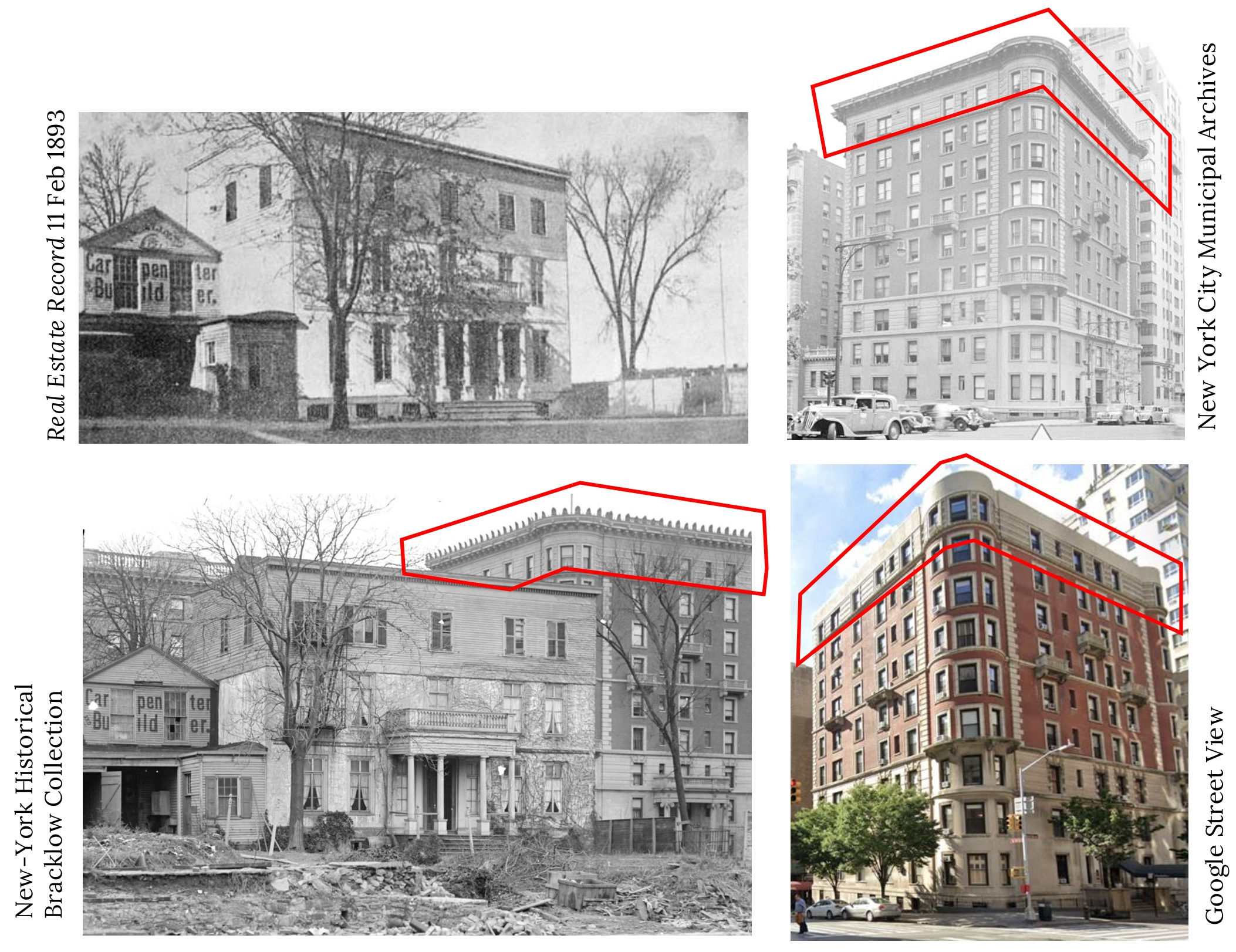
Clues: All of the structures in the top image are gone, so there aren’t any clues there. The old mansion still looked pretty good in 1893 when the photo was published, but when the bottom photo was taken a decade later, it was slated for imminent demolition. It was a new century, and the recently-completed building at 401 West End Avenue, fittingly called The New Century, was your clue–because it’s still standing on the northwest corner of 80th and West End Avenue. First it lost its crenellations, and more recently it lost its cornice.
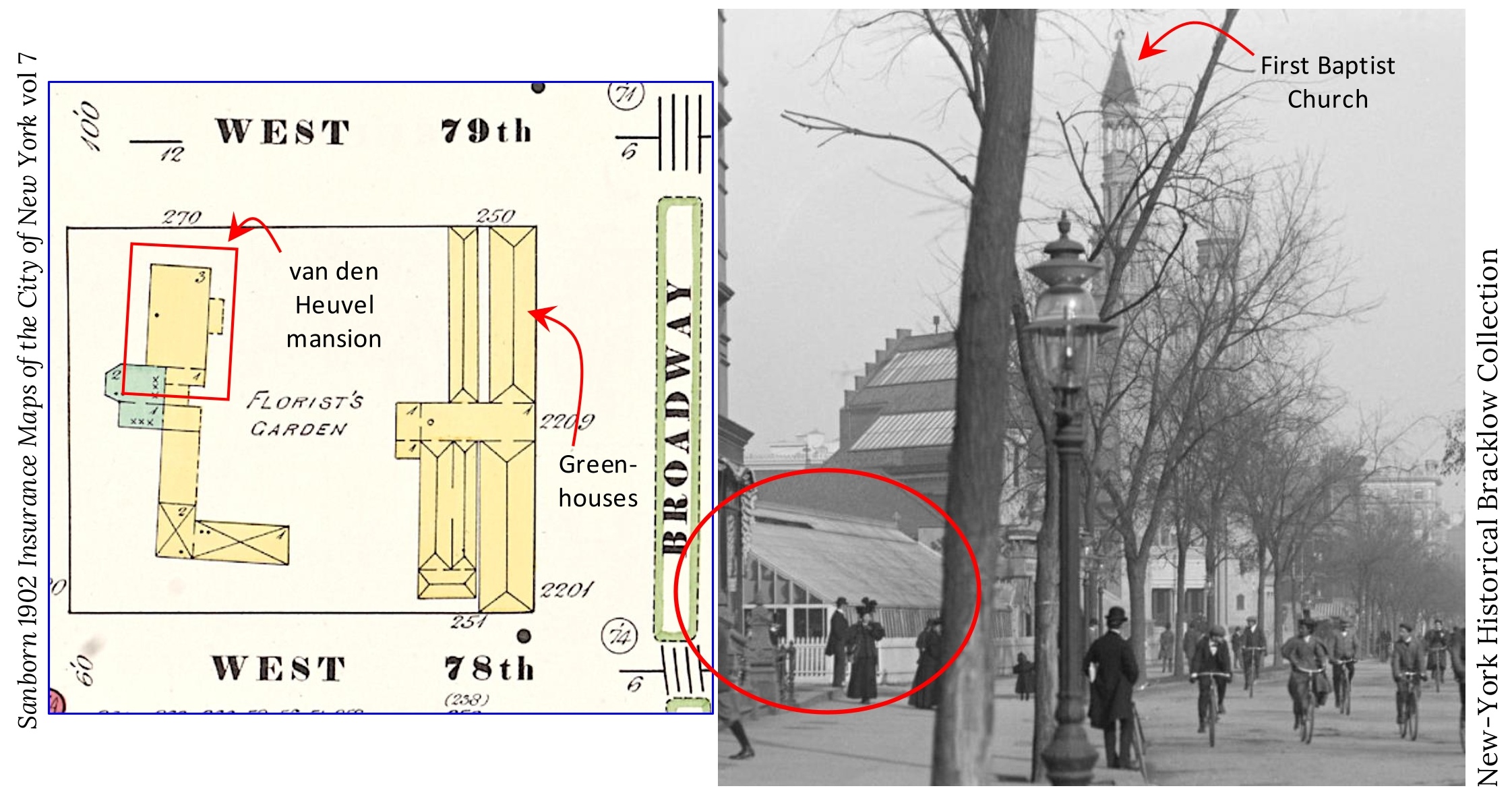
The rest of the story: They don’t make ‘em like they used to. The van den Heuvel mansion was constructed of stone with floors supported by “great beams of black oak.” Its four prominent columns at the front door were “white cedar hewn from logs of trees grown on the estate.” Its 18th-century interior was lavish in materials and detail with expensive custom-built furniture. Tom Miller described the house’s history and contents in a Daytonian in Manhattan column a decade ago. Given the house’s prominent location on the Bloomingdale Road and its long life as a genteel hotel or inn long after the original owners sold it, it’s surprising that no one is sure who built it! Jan van den Heuvel, its most famous early owner, has long been credited with arranging its construction, but the dates don’t work: If the house was built around 1759 and housed both British troops and George Washington himself during the American Revolution, then it could hardly have been built by van den Heuvel, who was a Dutch colonial governor in South America and only arrived in New York in 1790. Charles Apthorpe, part of whose estate was purchased by van den Heuvel’s wife in 1792, already had an impressive mansion nearby. The van den Heuvel mansion’s distinctive rectangular appearance is misleading—a mid-19th century fire destroyed the top floor, and the gabled top floor was replaced with the one seen in photographs. The story of the mansion’s ownership by the feuding Astor family is well-known, as is its demolition and replacement by the Apthorp apartment house. Solidly built as it was, the mansion could probably have stood for another 150 years. An interesting chapter late in the building’s life was its tenancy by the Clarke family of florists. They lived in the mansion and built an extensive set of greenhouses to supply their cut flower business. This led to the incongruous sight of glass buildings along busy Broadway until the first years of the 20th century. Family member Gilmore Clarke became the first professor of city and regional planning at Cornell University and as consulting landscape architect for the Parks Department, was responsible for many elements of New York City’s public landscape: Bryant Park! JFK Airport! Even the design of our park benches! Learn more in Tom Campanella’s new book The Public Landscapes of Clarke and Rapuano, 1915-1965.
…and that’s the story behind the mystery image. Now scroll back to the top of the column and take on your next challenge, Sherlockians! If you’ve missed any pictures in this series, here is the complete collection.
About the author: Rob Garber has lived on the Upper West Side since the late 20th century and is a member of the Bloomingdale Neighborhood History Group. To learn more, visit their website at upperwestsidehistory.org. All photos in Upper West Side Historical Photo Challenge are used by permission.
Subscribe to West Side Rag’s FREE email newsletter here. And you can Support the Rag here.





These are fabulous photos . Reading about the history of each is so interesting. Thank you for having this series.
Lily
The Church of St. John the Divine
Van den Heuvel mansion What a great find! Thanks for these wonderful history lessons!
Cathedral of St. John?
riverside church while being built
My first guest would be the Chapel of the Intersession (now the church of the Intersession). But it is not on the West Side.
Riverside Cathedral under construction,
It’s the seat of a bishop?
The Hindenburg flying over the Cathedral of St. John the Divine in 1936 or 1937.
I believe the date could actually be May 6, 1937. Later that day was when it caught fire and crashed in Lakehurst, NJ.
Blimp or Zeppelin over St John the Divine late 1920’s-early ‘30’s.
UWS photo #19: St. John the Divine, Amsterdam Avenue and 109th Street with the Hindenburg flying over it on June 24, 1936
I lived on the corner of 70th and west end Ave from 64th to 70th were people from Ischia Italy , I love your site,it takes me home again
Riverside church of the LED Zepplin overhead 1914
Love it!
A dirigible flying above the Cathedral of St. John the Divine.
Challenge #19, the Cathedral of St. John The Divine, facing east on south corner of Amsterdam Ave, about 111th Street. Steeple/bell tower construction probably mid 1890’s early 20th century because of the blimp. Present day this view is past the Peace statue and leads to the school and what was the playground (now part of Avalon apartments property).
Gut reaction was that this is a picture of Union Theological on 120th and Claremont. There’s only 1 tower (not 2 like St John the Divine) and the crenellations at the edge of the roof are pretty distinctive.
A bit of online sleuthing says the Brown Memorial tower was completed in November of 1910, and in this picture it is nearly complete. Apparently there was a famous Zeppelin flight on October 15, 1910 (first attempt to cross the Atlantic). So I’m going with Union Theological, October 15 1910. The photo is probably a northeastern view, with the people in the foreground standing on Claremont Ave.
Blessed Sacrament Churvh on West 71 Street
Definitely not Riverside Church (the apse bows out) and not St John the Divine — too short and no do dome.
Riverside Church being built.
Zeplin for a touch of Lang’s “Metropolis”, the Rockefeller builders of the church not being labor friendly.
Do people really not know what the Hindenburg looked like? It was much longer than the airship in this photo, with 4 distinct tail fins. The woman in the front left of the picture is also obviously not dressed the way someone would have dressed at the time the Hindenburg existed in the 1930s, unless she was on her way to an old-time costume party. And that building really looks nothing like either Riverside Church or the Cathedral of St. John the Divine; it’s way too small anyway. Chiara has the right answer
Construction of St John the Divine
Looks like Riverside Church being built, on Riverside and 120th.
Claremont Hall, on Claremont Ave looking uptown
Riverside Church • (490 Riverside Dr, New York)
1927 and approx. 1930
Isn’t that Riverside Church being built? With the Hindenburg flying over it?
Cathedral Of St. John the Divine btwn 110th & 111th facing north east, with a blimp about late mid 1890’s turn of the 20th century. This part of of the property is where present day Peace Fountain is located with the Cathedral behind it. When I was kid this is the entrance we would use to go past the school to the playground (now Avalon apartment complex)
My guess is that it is the Chapel the Intercession in Broadway and 155th Street. It was the northern outpost of Trinity Church, Wall Street. Also the storied chapel that Clarence Day (of Life with Father) is heading up to —to be baptized.
Cathedral of St John the Divine, May 6, 1937