


Today is Monday, January 26th, 2026.
The good news: The snowstorm is, for all intents and purposes, over; a few more flurries are possible this morning, but no additional accumulation is expected. The bad news: The snow that’s already here isn’t going anywhere for quite awhile. Today’s forecast calls for cloudy skies and a high of 28 — well below the melting point — which is as high as it’s likely to get through at least the beginning of next week. Bundle up, everyone!
On this day in 1926, Scottish inventor John Logie Baird gave the first public demonstration of television to a Times of London reporter and dozens of members of The Royal Institution of Great Britain, a group dedicated to scientific research and education. “The image as transmitted was faint and often blurred,” the paper reported the next day. “[But] the visitors were shown recognizable reception of the movements of [a] dummy head and of a person speaking.”
One more bit of trivia: Today is both Dental Drill Appreciation Day — yes, really! — and National Peanut Brittle Day. (You have to wonder who thought that through.)
Notices
Our calendar has lots of local events. Click on the link or the lady in the upper righthand corner to check.
The NYPD 20th Precinct Community Council meeting, originally scheduled for 7 o’clock this evening, has been cancelled.
The Department of Education’s Mid-Manhattan Adult Learning Center is holding a sneaker drive; for more information on how to donate new and gently used sneakers, email Rmustafa@schools.nyc.gov or call (212) 666-1920. Sneakers are being accepted through February 9th, and will go to students in need.
News Roundup
Compiled by Laura Muha

In continuing with today’s real-estate theme: Nine of the top 22 sales in the city for the week of January 12th to 18th were on the Upper West Side, Patch reported.
A three-bedroom, four-and-a-half-bath apartment in The Dakota topped the list at $24 million, making it the most expensive sale on the UWS and the second highest in the city; the next highest was a four-bedroom, four-and-a-half bath apartment at 50 West 66th Street, which sold for $9.1 million.
The top sale in the city for the same time period was a three-bedroom co-op on the East Side, which sold for $30 million, Patch reported, quoting statistics from Olshan Realty’s market report.
Read the full story — HERE.

To round out what’s turned out to be a very real-estate-heavy Monday Bulletin, here’s the ultimate anti-real-estate question: What would happen to NYC if all the people suddenly disappeared and the power went out?
That was the question that Popular Science editor Sarah Durn explored with the magazine’s editor-in-chief, Annie Colbert, on a recent podcast, and the picture they painted was bleak.
“[O]nce the lights go out, temperatures inside buildings start to fluctuate wildly,” Durn said. “No air conditioning, no heat … mold would start to form inside apartments within a week.”
Glass would crack, and water would get in. “Apartments turn into humid hot houses. Warm, wet, moldy, perfect for mosquitoes. Water, snakes, fungus,” said Durn. “It’s like a wetland on the second, or you know, 22nd floor.”
Without the electric-powered pumps that pump 13 million gallons of water a day from subway tracks, the tunnels would quickly fill with water. “Rats, cockroaches, pigeons, opossums, they’re first to move in near the stairs and platforms,” followed by plants like mosses, grasses, and hardy weeds that would create underground wetlands, Durn said
Then there are the buildings themselves: “The newest high rises, like 10 Hudson Yards, 111 West 57th Street, they would actually collapse first … Once their reinforced glass facades crack, water would seep in and eventually corrode the steel beams that keep newer skyscrapers upright,” she said. “[O]lder ones, like the Empire State building or Chrysler Building, would actually last longer thanks to thick masonry and overbuilt steel frames. Basically when they were first building skyscrapers, they over-engineered them so that they were even stronger than they needed to be.”
As for Central Park? It would be unrecognizable in five years, Durn said.
“Like a full-on forest?” Colbert asked.
“A young forest, but yeah,” said Durn. “And then after 50 years, a totally new ecosystem emerges. … It won’t look like anything humans have ever seen. Crab apple trees, London planetrees, honey locusts, pines, oaks, Norway maples would all start filling the city. Poison ivy and nightshade vines would creep up buildings. Moss would cover skyscrapers.”
Read/listen to the full story — HERE.
In Other UWS News:
- Elected officials have been banned from appearing in government-sponsored public service ads since 2007, so why is Mayor Zohran Mamdani the face of the pre-K ads currently running on LinkNYC? The website City and State New York explores the question — HERE.
- A bill to protect bodega cats, which was introduced last year by the UWS’s State Assemblymember Linda Rosenthal, is a step closer to becoming law. Read/watch the story — HERE.
- Perceptions to the contrary, data shows that the redesign of the Central Park loop actually has improved safety for pedestrians. Read the full story — HERE.
ICYMI
Here are a few stories we think are worth a look if you missed them last week — or a second look if you saw them. (Note that our comments stay open for six days after publication, so you may not be able to comment on all of them.)
5 Upper West Side Landlords Named Among 100 Worst in New York City
UWS Middle School Meets With DOE Reps To Discuss Possible Move: ‘We Want to be Heard’
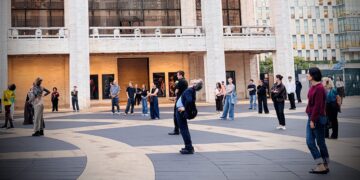
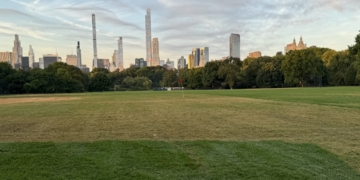



NYC without people made me think of this wonderful piece:
From “To Believe in Man” by Joseph Pintauro
Maybe the whole human race should just disappear…but think of thin packets of petunia seed waiting forever at the hardware store and raccoons in the dark, knocking over garbage pails, finding them empty night after night. What will the gulls do, the ones who like to follow boats? And hammocks strung between giant maples hanging empty, tattered in the wind even the desert would sense something… think of our days the first days without us and the church bells that have to wait for hurricanes to ring going rusty will be bridges and typewriters, golf clubs, battleships and diaper pins cannons and roller coaster tracks think of our cameras… warping cellos, strings popping off guitars our harps snapping… mildewing afghans think of the dust on our tables, sugar turned to rock our onions growing leaves in the pantry our cows bursting… think of our beds, neatly made and daffodils waiting in the spring wondering where we went.
… only the gentle ferns will not miss us they will go on forever unearthing, fanning the forest in places slightly touched by wind and never seen by man.
Regarding: “Perceptions to the contrary, data shows that the redesign of the Central Park loop actually has improved safety for pedestrians. Read the full story — HERE.”
I am a pedestrian and bus-subway user. Not a driver.
As noted in a previous comment I am sorry to see Streetsblog opinion give such weight and seemingly the suggestion that Streetsblog is the definitive on this matter.
Streetsblog is part of the bike lobby groups with Transportation Alternatives and Open Plans.
Their priority is bicyclists – not pedestrians and not mass transit.
As a pedestrian, bus-subway user, I do not feel that Streetsblog-Transportation Alternatives-Open Plans represents me or my family in any way.
Streetsblog et al are far more focused on pedestrian / transit rider experience than just about any other NYC organization, not sure where you get that their priority is cyclists.
I’m usually commuting by foot and crossing the loop at least 2x a day, so while not perfect, the redesigned loop seems far better and safer to me. It turns out DoT has stats that back that up.
The stats do NOT show it is safer. They say pedestrians wait shorter times to cross in December than in August
Streetsblog is the mouthpiece of the Open Plans conglomerate and is about as dishonest as it can get. It can’t even honestly categorize it’s on place in the conglomerate, quoting other employees of the group as if they’re at arms length.
In this case the ‘study’ is the problem and yes, the Parks Department actually ‘studied’ wait times on the loop comparing August and December, as if the same number of bikes, pedicabs, etc are in the park in December as August.
Of great interest to fellow doomers is “The City’s End: Two Centuries of Fantasies, Fears, and Premonitions of New York’s Destruction” by Max Page (2010; https://yalebooks.yale.edu/book/9780300164466/the-citys-end/), which covers the topic quite thoroughly.
Super important, as whether I bid turns on the asking price for the townhouse being $7 mil or $17 mil. Would be quite the tumble from 2017 if it is really $7 mil.
Thanks!
“Pedestrians are waiting less time to cross Central Park’s bustling six-mile loop after the city shortened crossing distances and replaced stop lights with flashing yellow “yield” signals — further evidence of the success of the Department of Transportation’s gradual undoing of the car-first design of the parks roadways.”
The stop lights were coverd in August. Prior to that, since the days were warm, kids were out of school, and tourists were plentiful, there were many more bikes in the loop than there were in December. This so called sttistic about wait times in meaningless. Look at it this way, if there are a million bikes on the loop a pedestrian will never find a time to cross. Of there is 1 bike there will be no waiting. An accurate comparison would be December 2024 to December 2025 or August 2025 to August 2026.
A more fun imagining of at least the New York Public Library without humans is Insectopolis by Peter Kuper. It’s a walk through the Treasures exhibitions with insects (who talk and joke) in a post-apocalyptic world.
“Perceptions to the contrary, data shows that the redesign of the Central Park loop actually has improved safety for pedestrians.”
Tell that to the dozen or more pedestrians who have been injured or killed since the redesign (to say nothing of the 25 “traffic” accidents in that time).
Sorry, but we are dealing in facts, not perceptions – particularly those of professional advocacy groups like Streetsblog and TA.
The REALITY is that while the redesign may have improved crossing times, that is the LEAST important thing to be considering. It has NOT improved actual “safety,” which continues to be an issue, and WILL continue to be an issue until (i) the Park is entirely vehicle-free; (ii) the pedicabs are brought under control; (iii) there is better and more effective enforcement of existing speed limits by the CPP (good luck with that); and (iv) bikers stop acting like they own the Park, and considering pedestrians an “imposition” on their ability to race through the Park at speed FAR exceeding the legal limit.
If New York City became South Boston, once it had been resettled after the apocalypse, this comment section’s regulars would finally be appeased.
I hear the Upper East Wetlands are wonderful this time of year! Or you can always move to Florida if you can’t stand the wait.
Imagination Station, all aboard! 🚂
Whoa. What is going on with the market that a mansion goes from being on the market at 20 million down to 7?
One has to want to be a landlord and many people in that tax bracket do not. Additionally, the taxes are high. Also, the article did not indicate if there was an elevator. A lot of wealthy and older people do not want to walk steps anymore. Ask why they are selling!
The high end market in NYC has been soft for years. It never fully recovered from Covid. Most sales have price reductions. Properties are selling for less than they were purchased 10 years ago. Some sellers don’t price correctly. Miami is a much hotter market.
Currently configured as 9 apartments … a nightmare to terminate those leases and reclaim the space….
Dear WSR,
How did you come to the conclusion that the street blog article shows that data shows that the redesign of the Central Park loop actually has improved safety for pedestrians?
It says this “Reported pedestrian injuries have also remained flat — 22 in 2021, 13 in 2022, 22 in 2023, 21 in 2024 and 22 in 2025, according to NYPD figures.”
Remaining flat does not mean the park is safer.
I clicked hoping to hear about New York being a good place to retire and why. Instead, there’s this strange piece on “if money is no object.”
The link is working now
It’s a piece from the Daily Mail, so I didn’t even bother clicking on the link, knowing it would not contain any real journalism or, if it did, it would have been stolen from a more reputable publication!
As consolation, the roaches wouldn’t survive the first winter without artificial heat.
If everyone left NYC and the power was out, rents would still go up!