
By Pam Tice
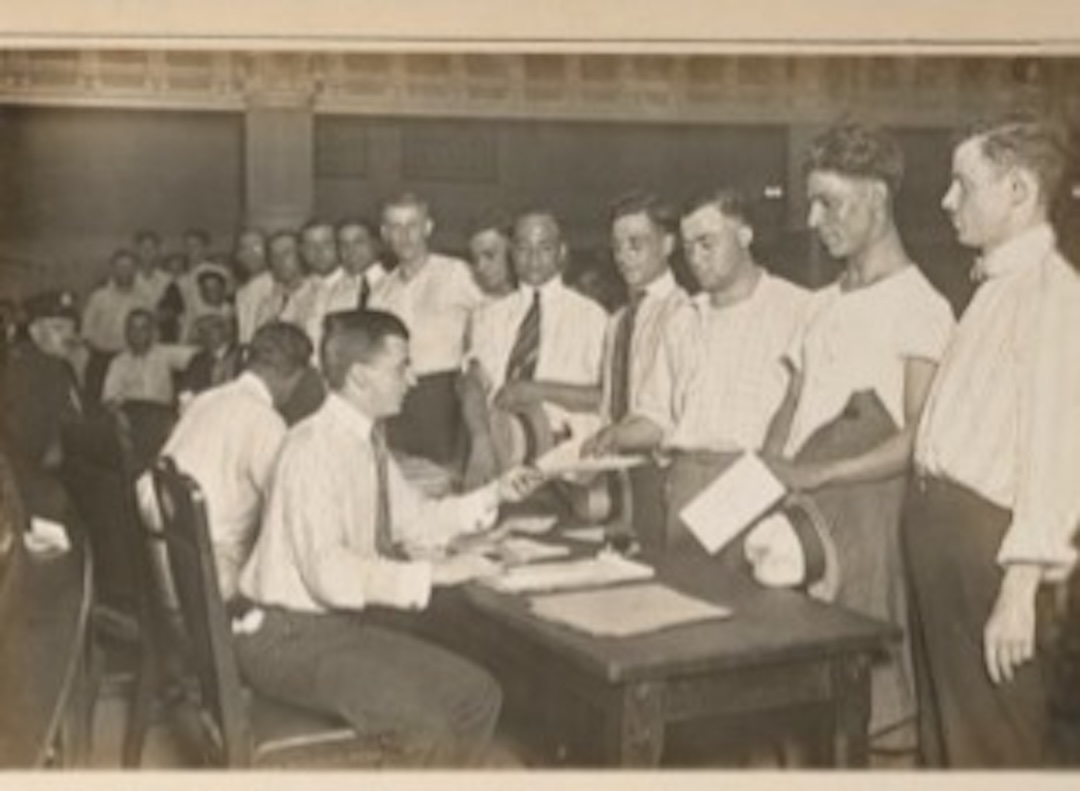
On September 3, 1918, the federal government began a search in New York City for “slackers”: Army deserters, young men who had not registered or completed the military draft process, or men who failed to report for duty when called up.
World War I was still raging in Europe, though an Allied offensive was underway that would lead to war’s end a couple of months later.
Against the backdrop of the war, the so-called Slacker Raids began in earnest early that September morning.
Agents from the Justice Department’s Bureau of Investigation (later known as the FBI), local police reservists (civilians recruited to replace the many police serving in the Army), and 7,000 civilian volunteers from the American Protective League were among those who swarmed all the city’s railroad and ferry stations, busy with morning commuters. Then they moved on to workplaces, factory neighborhoods, certain office buildings, and, later, theaters, restaurants, saloons, barber shops, and parks.
Crowds of New Yorkers began to gather at places where agents were questioning and holding men in the streets. The New York Herald reported that all the barbers cutting hair at West 68th Street and Broadway were rounded up. Another target area was Broadway and West 96th Street, where the Riviera and Riverside Theaters drew their attention, along with the neighborhood’s restaurants and saloons. One young man had tied up his yacht in the North (today’s Hudson) River and walked to Broadway to get a drink; he was taken in. The New York Tribune reported that George Miller, a transit system flagman from West 100th Street, hid in his flagman’s shanty for five days but eventually was arrested for not completing his draft registration.
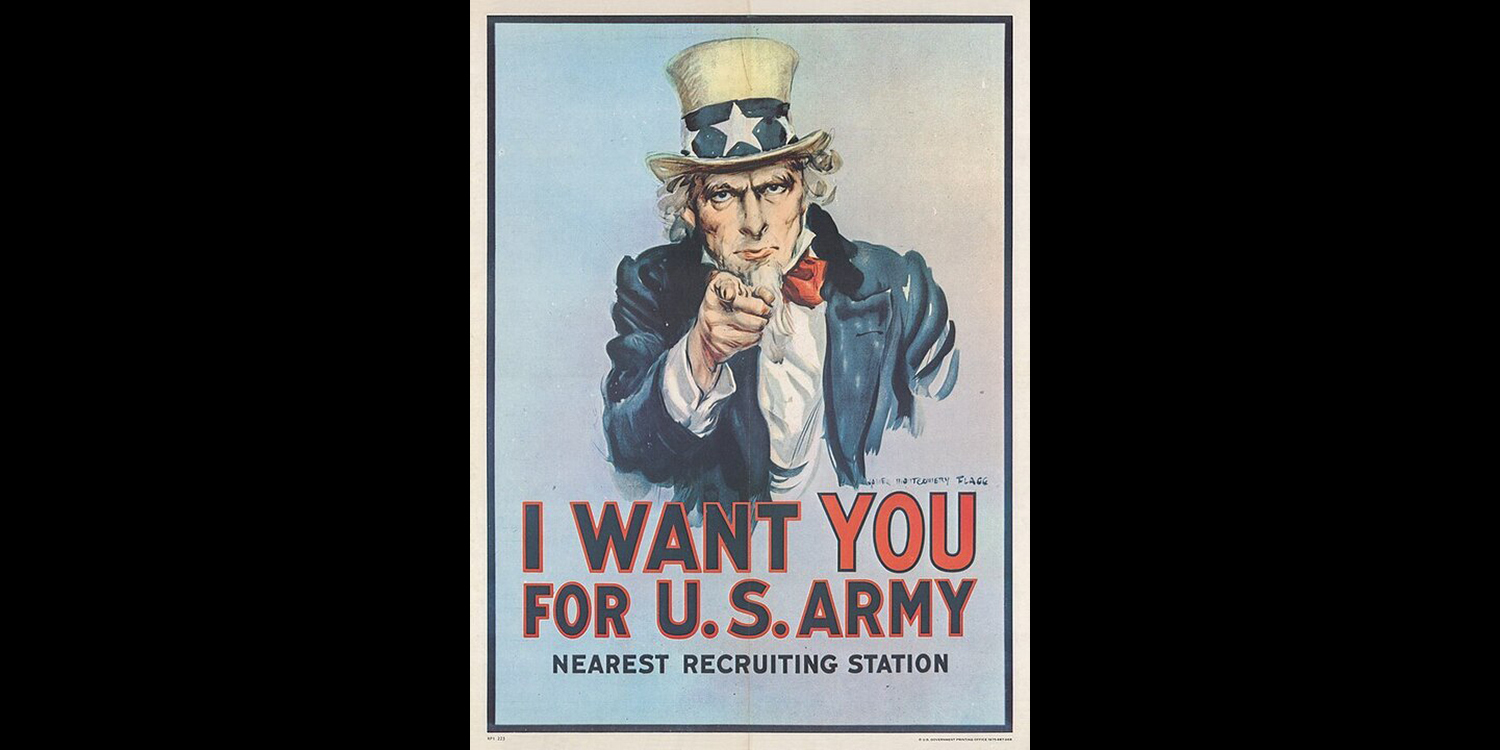
As they spread across the city, those conducting the raid stopped any man they thought looked to be aged 18-30. Those stopped were asked for the white card that proved their draft status; if they did not have it, they were transported to the local police station.
Men rounded up in the first hours of the raid were allowed to call home and ask someone to bring their draft card to the station so they could be released. But as the day wore on and the number of detainees increased, this step was impossible.
From local police stations, detainees were transported to the 69th Regiment Armory, at Lexington Avenue and East 25th Street, the headquarters for the “slacker” operation. At the armory, they were met by armed soldiers who sorted them into groups based on their local draft boards. A “sorter” called their draft boards to check their registration, gave them a card if they didn’t have one, and dismissed them.
Most of the young men were released from the armory within a few hours, but some were held overnight. Cots and sandwiches were brought in. If someone was found to be unregistered or a deserter, they were taken to the Tombs, the city’s prison.
Crowds gathered outside the armory. Women brought the white draft cards belonging to detained family members, or family Bibles or other documents to prove their age. Armed soldiers controlled the crowds; other soldiers with fixed bayonets rode on the vehicles transporting the detainees.
The raids continued into September 4 and then ended. By the next day, outrage at the Slacker Raids was starting to boil. Cries that the raids violated fundamental rights grew, and the U.S. Attorney General started an investigation, while another probe was threatened by the U.S. Senate. Meanwhile, those who had carried out the raids sought to justify them, citing the number of men brought in as an important accomplishment rather than a violation of rights; some bragged about how many men they had “bagged” in one restaurant. Though precise numbers are difficult to sort out since reports covered all of New York and New Jersey, The New York Herald reported on September 7 that fewer than 200 were identified as Manhattan slackers.
The American Protective League, which provided thousands of the civilians participating in the raids, was organized in Chicago in 1917 to find spies and saboteurs – as well as slackers. On the UWS, an APL member facilitated the arrest of a cabaret singer at the Campus Restaurant on Columbus Avenue who had not reported for Army duty. The group’s volunteers also found a New York Yankees player on West 104th Street who had not checked in with his draft board in Pennsylvania.
The APL was disbanded shortly after the war ended in November 1918. President Woodrow Wilson never apologized for the raids; he was said to have thought the action put the fear of God into the young men before the next draft call up in mid-September.
Subscribe to West Side Rag’s FREE email newsletter here. And you can Support the Rag here.



Yes, resistance the US participation in the First World War was the main reason that those National Guard Armories were quickly put up in Manhattan; they were staging grounds for troops used to put down riots by the working class.
The one in the West 60s was an ABC TV studio for decades.
So, it wasn’t just “slacker” raids one day in Sept. 1918.
I didn’t know this origin of Armories. And of the ABC TV studio building. Thanks so much Jay. Is there a good article or book you would recommend?
American Midnight by Adam Hochschild
Melanie,
That’s where I read it.
Were they in the country illegally?
Pretty much anyone who came here, or his her/ancestors, after 1600 CE is here illegally.
Re World War One, read up on the Palmer raids.
Zelenskyy is looking for slackers right now.
“Meanwhile, those who had carried out the raids sought to justify them, citing the number of men brought in as an important accomplishment rather than a violation of rights; some bragged about how many men they had ‘bagged’ in one restaurant.”
It was the Operation Salvo of its time. Everything old is new again.
The Palmer Raids in 1918-19 were much like ICE today. AI summary “The Palmer Raids, led by Attorney General A. Mitchell Palmer during the “Red Scare” (1919-1920), were a series of nationwide police actions targeting suspected radicals, socialists, and anarchists, marked by massive arrests without warrants, harsh detention conditions, and mass deportations, especially following anarchist bombings, but ultimately ended due to public outcry over civil liberties violations and Palmer’s failed prediction of a May Day revolution, damaging his credibility.
As usual the US ruling class, while claiming to fight a foreign war for “democracy”, trampled on the peoples’ democratic rights at home. They also arrested Socialist and IWW opponents of the war by the score, including presidential candidate Eugene V Debs in Ohio for speaking out against the war and, needless to say, continued to preside over a segregated Jim Crow apartheid regime against Black people throughout the country.
Interesting .never knew this..guess why draft Dodgers in the Vietnam War..
Totally fascinating! Thank you for this, showing that the insanity and “righteous” violence of today is not new.
Wsr are you going to address the new comments format? We liked being able to like
Thank you for your comment. We are actively working on restoring the comments back to their previous format.
Phew! This is great news.
Awesome, thank for you that update!
Lest we forget, both the war and the repression were carried out by the “liberal” Democrat Wilson, who was also an ardent segregationist. not the reactionary Republicans. Warren G Harding actually pardoned Debs, who got almost a million votes running from his prison cell.
Wilson was a Dixiecrat, who thought “Birth of a Nation” was a realistic portrayal of post Civil War America. It’s not and the film gave rise to the KKK revival of the 1920s.
In other news for you MLK was a Republican because being a Democrat in Atlanta in the 1960s and 50s meant being a Dixiecrat, like Strom Thurmond and Jesse Helms.
You’d be on firmer ground if you’d stuck with a point about Wilson being anti-war before before he was elected.
Ron, put down the childish RW talking points that don’t apply to politicians from 100+ years ago
Not that way any longer ronny boy. It’ll be your team rounded up UWS residents this time
Bring back the draft. It was the best thing that happened to myself and thousands of other young men. Service in the military gave us the discipline, respect for authority and country that was needed in our lives. It also gave us an opportunity to do something for our country. Every young person should be required to perform some kind of service for his/her country. “”Ask not what your country can do for you—ask what you can do for your country” is a famous line from President John F. Kennedy’s 1961 Inaugural Address, challenging American citizens to embrace civic duty, sacrifice, and public service not what your country can do
Care to elaborate on who we’re at war with and why we’d need a draft now?
Very interesting article, thank you. I was just thinking earlier today, when I was reading another bit of history, how much there is that most of us don’t know.
Wrong Lukey boy. My team is the real red team, the socialists. We oppose both bosses’ parties, their wars and their recurrent red scares and witch hunts. Just like Wilson ran wild after WWI, Truman did so after WWII and gave Joe McCarthy and trickey dicky Nixon their big break. You blue boys started rounding up immigrants long before they let Trump come back in and still they won’t vote to cut off ICE funds in congress. And their only problem with Trump’s wars is that he won’t let them in on the action or give that Latina trump in a dress a chance to screw over the Venezuelan workers because it would get in the way of his robbing them.
About 10 years ago Representative Charles Rangel seriously proposed a reinstitution of the draft. Part of his district was Morningside Heights and Columbia University. I live in Morningside Heights and am too old to be drafted. His idea was very unpopular with male Columbia students. There attitude was, “Why should we be forced to do something which is not needed for the defense of the country and which we can choose to do if we wish?”
It should be mandatory for every politician to serve in the military during war time.