
by Yvonne Vávra
Alfred Hitchcock came just for the swimming. No sex. “He would just come, watch, look at people, swim in the tub and then leave,” Steve Ostrow, founder of the Continental Baths in the basement of the Ansonia, once told the Guardian in a profile of the Upper West Side bathhouse, which became a trailblazer for sexual liberation and one of the world’s most influential gay clubs. “People would say: ‘Who is that fat guy in the towel?’”
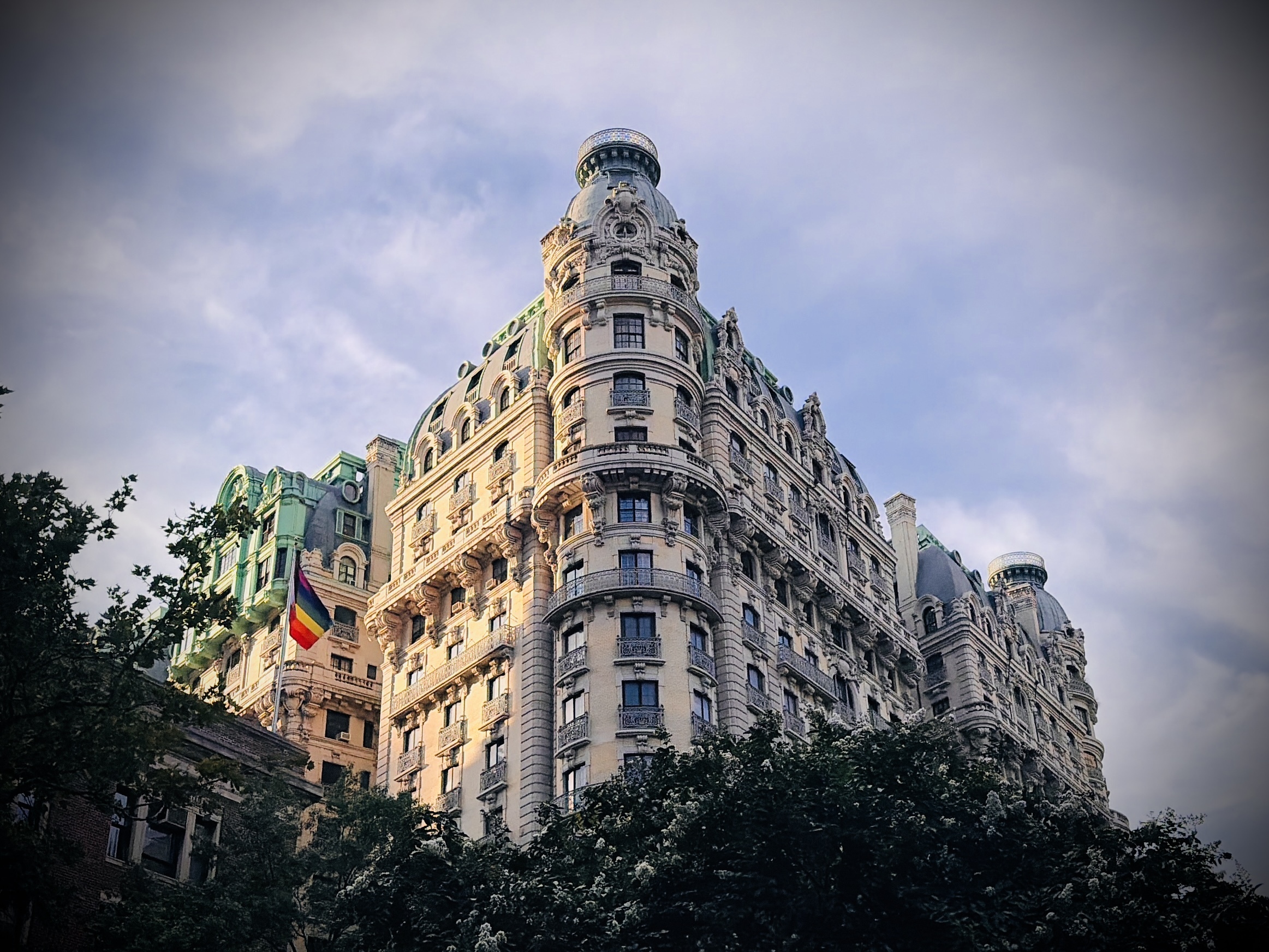
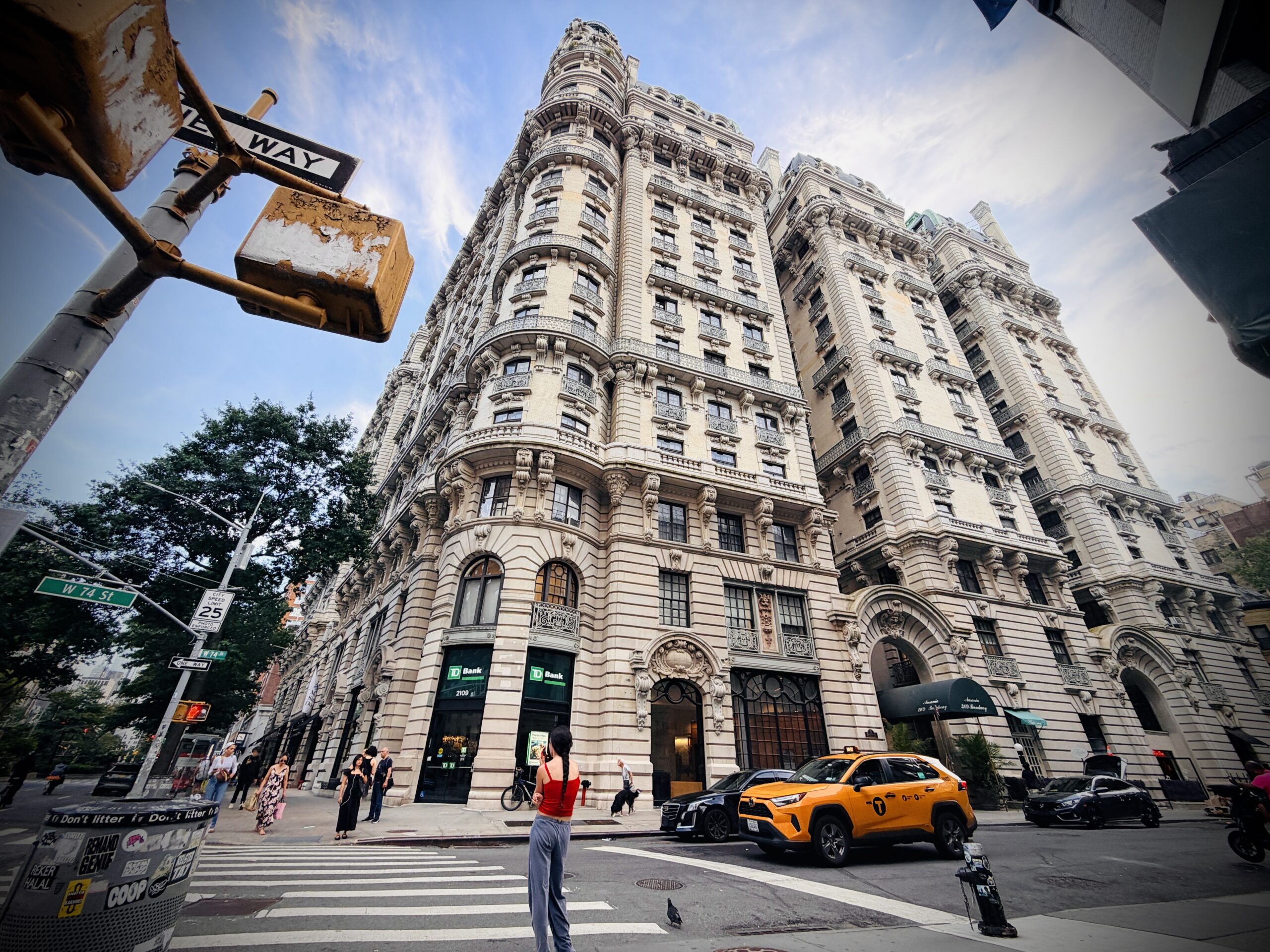
The answer: just one of the many fabulous personalities who would line up around the Ansonia at 74th and Broadway for a night at the Continental, where you could swim, dance, unwind, sweat it out in the black-marble steam room, have sex, or simply watch the action. Or, as Bette Midler did, start a career. In a blurb for Ostrow’s memoir, Live at the Continental, she wrote: “I’m certain that whatever I may do in my life, whatever I may achieve, the headline of my obituary in the New York Times will read: Bette Midler Dead; Began Her Career at the Continental Baths”.
The bathhouse, which opened in 1968, was a place where towel-clad men mingled with Jagger, Warhol, Minnelli, and the New York Dolls; where gay men could find a sense of community in a safe, clean, and uplifting space; where, at least on one night, even the fish in the tanks were on LSD (not voluntarily); and where everyone was free to be exactly who they wanted to be. At least between the regular police raids, because this was still a time when homosexuality, or even just two men dancing together, was illegal.
I was thinking about the Continental when I heard a week ago that gay bathhouses could make a comeback in the city. New York ordered a ban on adult saunas and bathhouses in 1985, when panic over the AIDS epidemic was raging. But in the more than four decades since, public health, science, prevention and treatment have changed dramatically. Now, State Senator Erik Bottcher, who represents the Upper West Side, and Assemblymember Tony Simone, whose district includes the Lincoln Center area of our neighborhood, have joined forces to make the laws catch up with the times. In their effort to lift a ban rooted in fear and stigma, they hope to safely bring back an essential part of queer culture that had been part of city life for more than a century.
The Continental Baths did not disappear because of the ban; they had already closed in 1976. The club fell victim, at least in part, to Ostrow’s secret to success: the stars he was able to book for entertainment. Bette Midler was just one of them. Another was Frankie Knuckles, who would eventually become known as the “godfather of house music.” The top-notch entertainment attracted crowds far beyond the gay scene. In a profile of the Ansonia for New York Magazine, Steven Gaines described it as “a mix of women in mink coats with their husbands in suits and gay men in leather jackets with their boyfriends. In some ways, it prefigured that other exotic mix of entertainment and public sex, Studio 54.”

So there they all were, draped in fine fabrics or next to nothing, which was at least part of the reason the gay crowd eventually moved on. “Gay men, it turned out, wanted to get down to business without straights ogling them,” writes Gaines. And “once the men in towels were gone, so was the Continental charm.”
I don’t think bringing back the bathhouses will bring back anything like the Continental Baths, let alone on the Upper West Side. But I wish it would. I wish there were more room for spectacular things to happen. I imagine descending into the Ansonia’s basement with no idea what I was walking into, what might happen next, or who I might want to be there. A place where I could dance wherever the vibe took me. Or just swim, eat sandwiches from the free buffet, and have Bette Midler sing to me.
Ostrow’s legacy was not only his contribution to gay rights and sexual liberation. It was permission. Permission to be yourself or someone else, to be outrageous, experimental, inexplicable.
The Upper West Side is wonderful. A lot has improved since the 1970s and ’80s. But when a neighborhood becomes desirable, it can leave less room for things that are eccentric, a little unruly, and gloriously weird. I’d love some of that back, please. Senator Bottcher, once you’re done with the bathhouses, I have a list.
Yvonne Vávra is a magazine writer and author of the German book 111 Gründe New York zu lieben (111 Reasons to Love New York). Born a Berliner but an aspiring Upper West Sider since the 1990s (thanks, Nora Ephron), she came to New York in 2010 and seven years later made her Upper West Side dreams come true. She’s been obsessively walking the neighborhood ever since.
Subscribe to West Side Rag’s FREE email newsletter here. And you can Support the Rag here.

I thought Plato’s retreat was in the basement of the Ansonia. Did this come after Continental Baths?
History is just on paper if you’ve never experienced it. A regime will just change the books. Thinking of the history of the Continental Baths as glamorous and uplifting is eye opening yet I’m befuddled. A lot of the social decadence and the birth of our modern political violence culture was brewed in the steamy and moldy rooms of places like that, so enjoy your Bette Midler and Barry Manilow records while longingly reminiscing about those glorious LSD days. Perhaps having a picture of Alfred Hitchcock in a bath towel next to that picture of Bill Clinton in a blue dress makes sense now.
If you want fabulous, look forther back into the past of the basement space —
and to the bildn’gs past in general. THAT’S fabulous@!
“I wish there were more room for spectacular things to happen.”