
By Rob Garber for the Bloomingdale Neighborhood History Group
Welcome to another installment in the Rag’s Historical Photo Challenge. The image above was taken somewhere on the Upper West Side, sometime in the past. Can you figure out where, when, and what it shows? Look closely; this week’s challenge photo, like the others in the series, includes clues that will help you identify the scene, if you’re a dedicated UWS history sleuth. And even if you don’t recognize the picture—not to worry! Come back in two weeks and I’ll decode it, show you the clues that help identify it, and—best of all—tell you a story the image unlocks, because this column isn’t just a test of your neighborhood knowledge; it’s also a rolling celebration of the people, buildings and events that wove the tapestry of the Upper West Side.
Ready? If you think you know where and when the photo was taken and what it shows, post your answer as a comment on this column.
Solution to Historical Photo Challenge #33
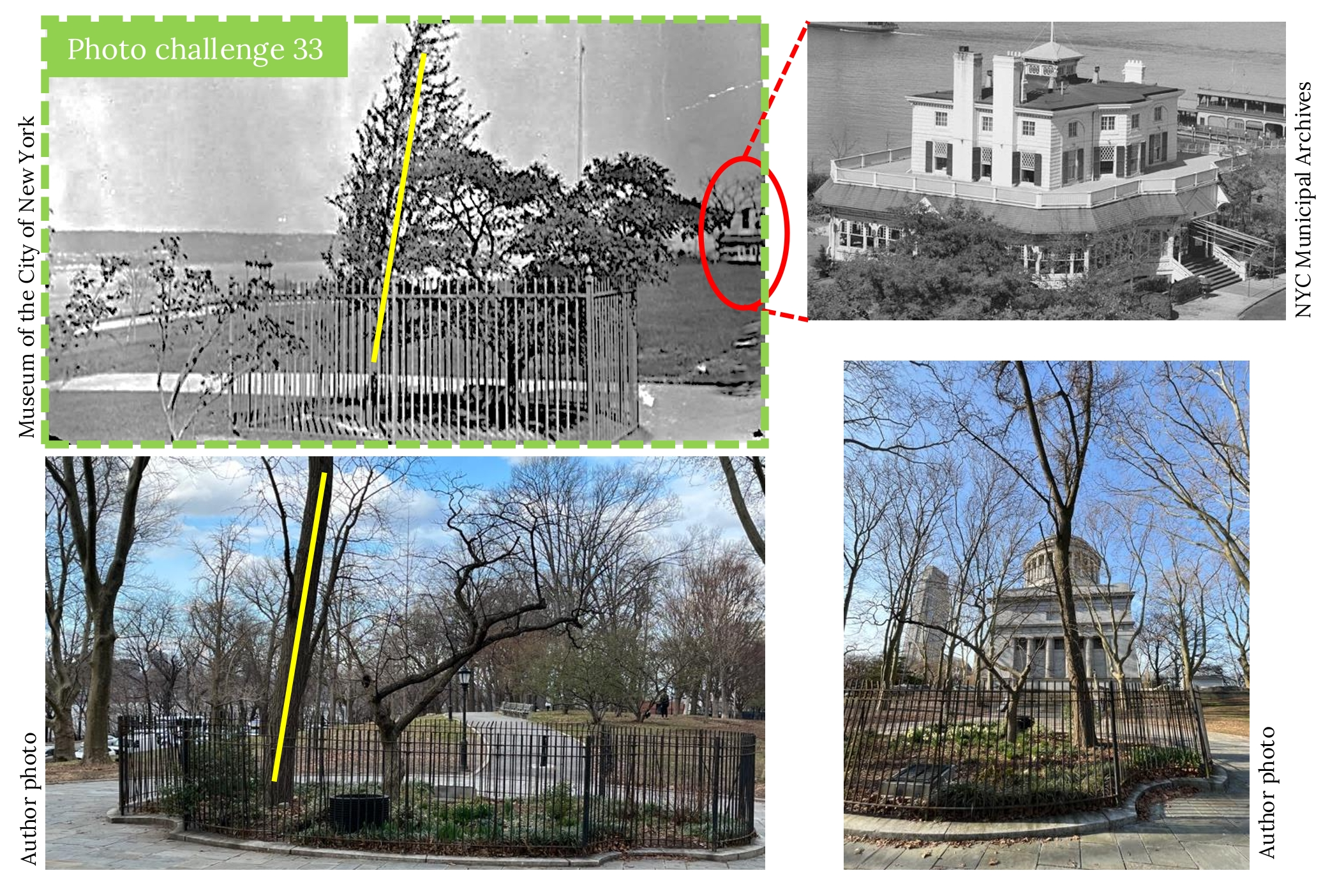
Subject: Ginkgo planted to honor Ulysses S. Grant
Location: Behind Grant’s Tomb on Riverside Drive
Date: early 1900s
Image Source: Museum of the City of New York
Clues: Hudson River—check. Glimpse of the long-since-demolished Claremont Inn on the right—check. So, we’re looking north from about 120th Street and either Grant’s Tomb hasn’t been built or it’s out of sight just behind the camera. Why, this is the ginkgo tree with the plaque that we’ve all walked by—and indeed, it’s immediately behind Grant’s Tomb. It leaned a bit to the east when it was planted nearly 130 years ago, and it leaneth still. It’s just a couple of hundred steps from the Amiable Chlld memorial that some of you guessed.
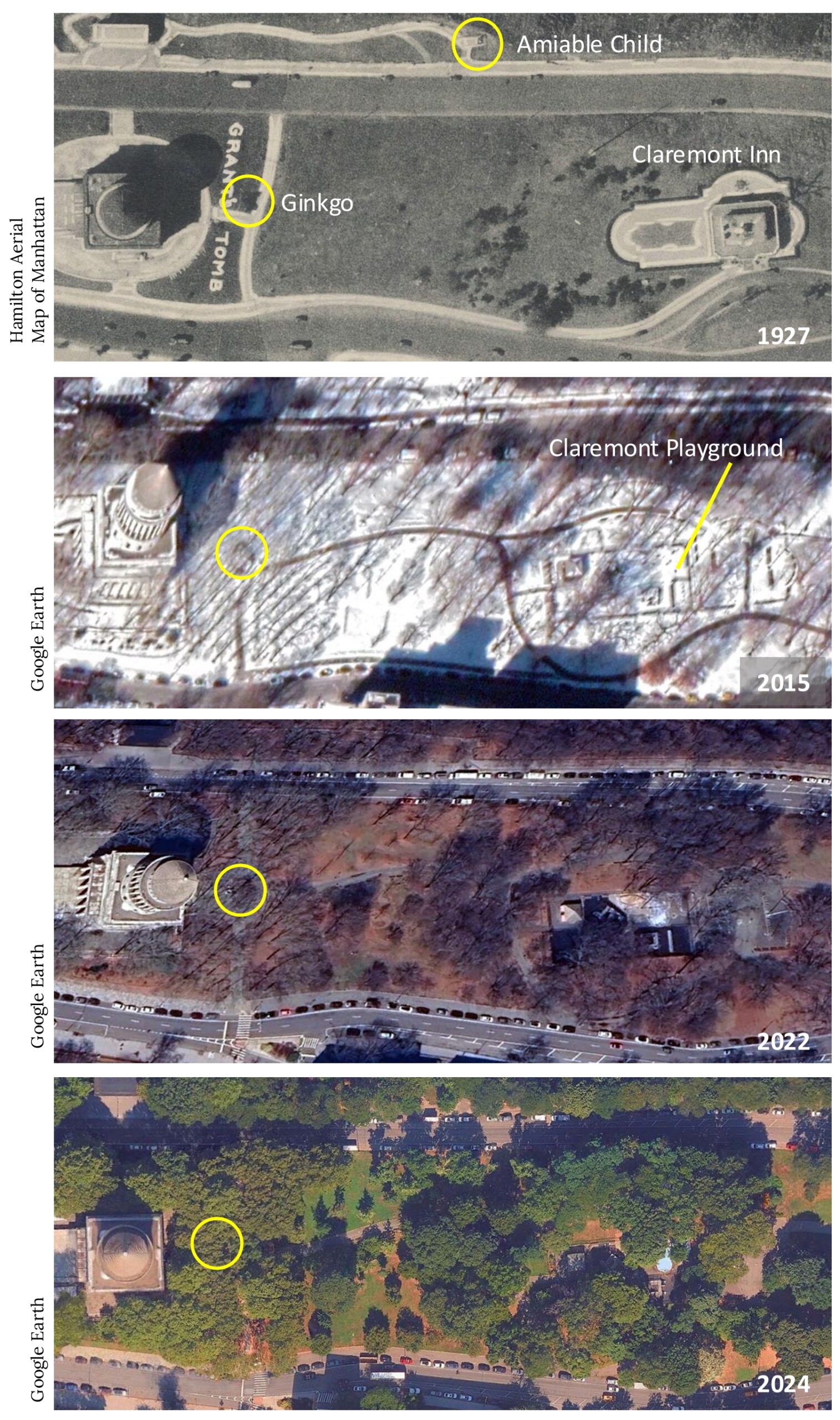
The rest of the story: When Ulysses Grant left the presidency in 1877, he was in his mid-50s, vigorous, and perhaps the most famous living American. He and Julia Grant embarked on a 2½ year trip around the world, meeting heads of state and promoting peaceful solutions to conflict. In China, Grant met with Li Hongzhang, a prominent general and statesman, who asked Grant to intervene with Japan in a dispute over the Ryukyu Islands. Grant did so, in an early example of American influence in international affairs that predated by a quarter century Theodore Roosevelt’s Nobel Peace Prize-winning involvement in ending the Russo-Japanese War. Li Hongzhang remembered Grant’s gesture, and when Li visited the United States in August 1896, he paid his respects at Grant’s temporary tomb in Riverside Park. When Grant’s permanent tomb was completed less than a year later, Chinese minister Yang Yu planted a ginkgo tree behind the tomb with a bronze plaque dedicating the tree in Li Hongzhang’s name. The plaque and the tree are still there. According to a contemporary newspaper account, the ginkgo was transplanted by the Parks Department from Morningside Park. The tree next to the ginkgo is of interest as well: It is a “companion tree” in accordance with Chinese tradition. It is a Phellodendron, a species with medicinal properties commonly known as the Amur Cork Tree.
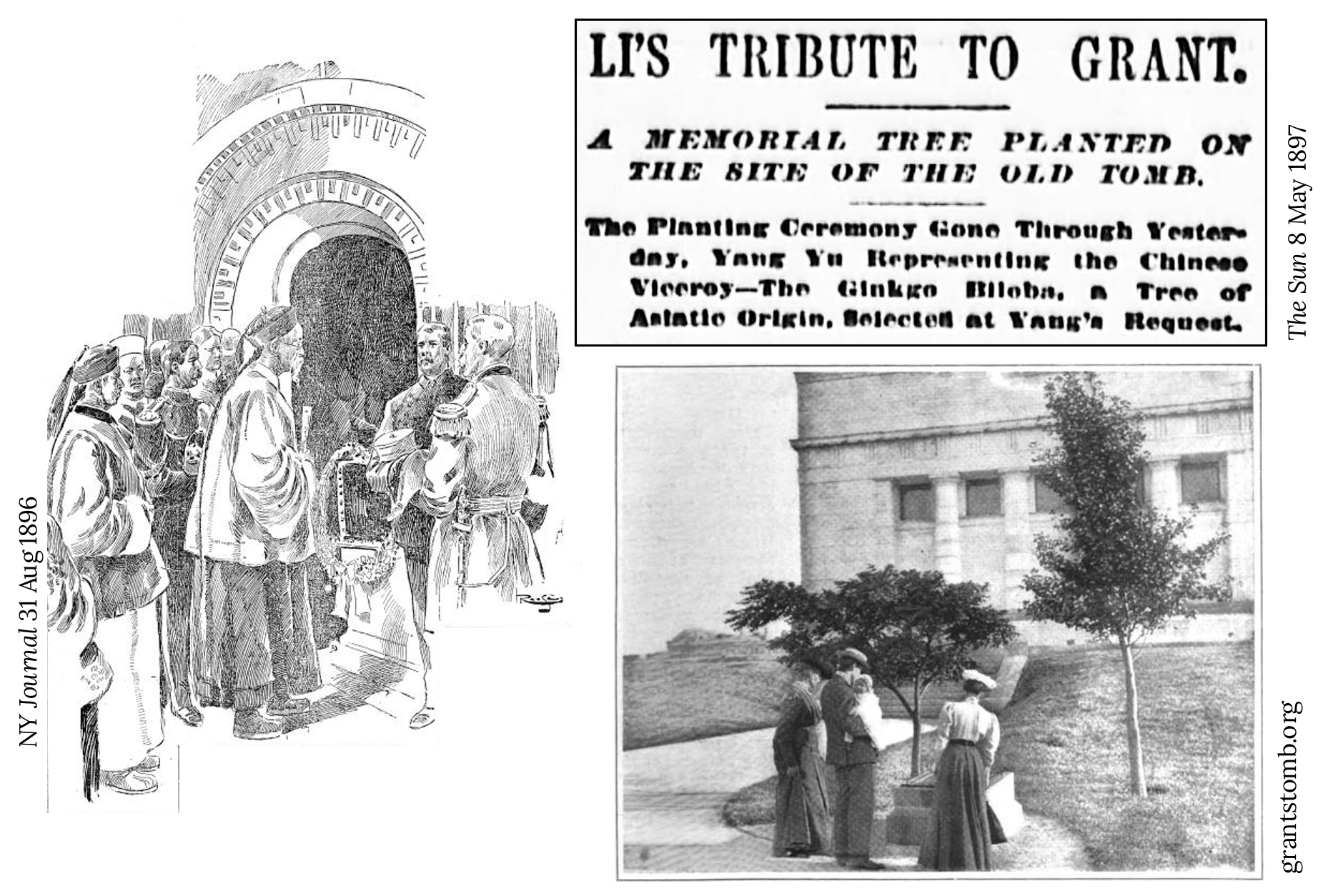
…and that’s the story behind the image in the last challenge. Now scroll back to the top of the column and take on your next one, Sherlockians! If you’ve missed any pictures in this series, you can find the complete set on my author page. All photos in the Upper West Side Historical Photo Challenges used with permission.
About the author: Rob Garber has lived on the Upper West Side since the late 20th century and is a member of the Bloomingdale Neighborhood History Group. To learn more, visit their website at upperwestsidehistory.org.
Subscribe to West Side Rag’s FREE email newsletter here. And you can Support the Rag here.





I don’t know but what’s up with the ramp? Was Evel Knievel in town?
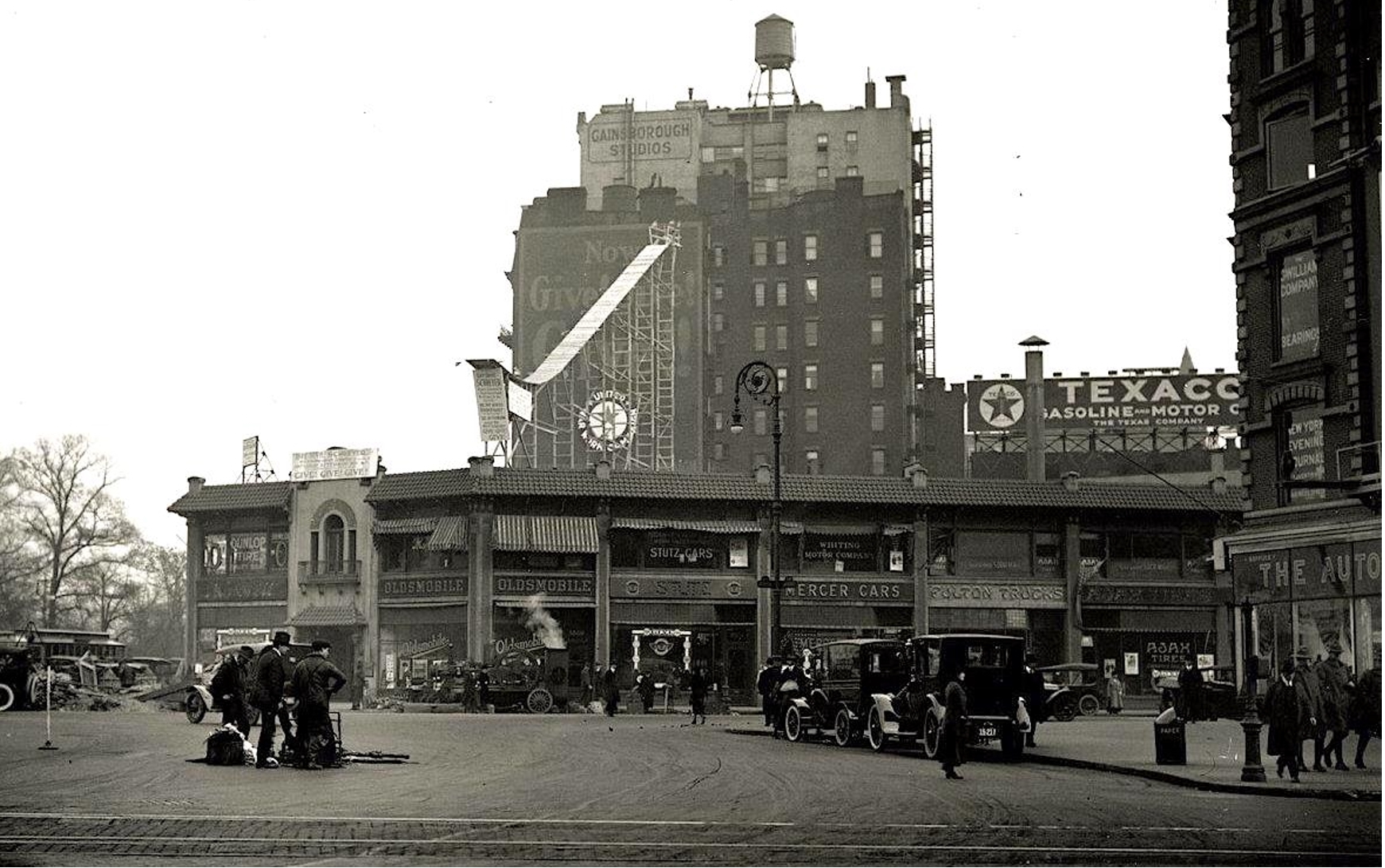
Columbus circle area 58th/59th CPW/BWY circa 1920s
Present-day Columbus Circle looking East, ca. 1918 (WWI “War Campaign” billboards)
Columbus Circle looking almost straight crosstown to the east as seen from where the Deutsche Bank Center is now. Gainsborough Studios is the big giveaway.
I have an old photo of Columbus Circle oriented the same way, but from a higher vantage point taken in the 1920’s. Bought it from the Essex House Hotel when it was being refurbished in the early 1990’s.
This is Columbus Circle, looking east, circa 1922
Columbus Circle
9th Avenue el at W 110th St
Above: 155 and Broadway?
S/E Corner of Columbus Circle around 1933
Columbus Circle looking East toward Central Park South , date? 1920s?
Columbus Circle, looking east. On the far right was a building that was home to the Evening Journal. The trolley car tracks in foreground are probably the Broadway line, the stretch of trees on the left is Central Park South.
Columbus Circle c. 1920
Looks like Columbus Circle (though what’s with the ramp????)
Picture #34 is Columbus Circle at 59Th St with a piece of Central Park and the building housing the Gainsborough Studios on Central Park South
Seems like every storefront sells cars? Was Columbus Circle like the “car district” of its day?
240 West 59th Street
#34 looks to me like Columbus Circle facing south. Central Park and Central Park South off to the left. Eighth Ave in the foreground, right, with trolley tracks. Broadway in the middle with the Mercer Cars sign.
I meant facing East!
Columbus Circle and Broadway, a bit of Central Park visible at left
Columbus Circle SE corner, now 240 CPS. Gainsborough Studios is still there, with its enormous windows offering spectacular views of Central Park.
Circa 1915-1920 judging from the cars. The area was then the city’s automobile center, as can be seen from all the auto-related businesses.
Interesting to see the window of the NY Evening-Journal, a Hearst paper that later became the Journal-American. My favorite paper as a kid because it was the only one that had color comics not only on Sunday but also on Saturday.
What a beautiful memory! Thank you for sharing.
Thank you for the background info on the Ginko’s connection to international relations-you never know the meaning behind things right in front of you.
This one is Columbus Circle-early car era so maybe the teens.
On Central Park South. The Gainsborough apts are still there.
That ramp appears to be one of Dare Devil Kid Schreyer’s. He died doing another version of the stunt not long after: https://en.wikipedia.org/wiki/A._M._Schreyer
wow, great find! Here’s a photo of the same place right before or after, complete with tank of water and crowds in attendance: https://www.facebook.com/groups/ManhattanBefore1990/posts/1635262526580033/
The bicycle (German Fahrrad), the automobile, the tank, the war
How insane this athleticism appears.
Erik Weisz (Harry Houdini) was far more sophisticated but suffered from the same delusions of grandeur.
The era Max Schreyer lived in—spanning from the late 1890s through the 1910s—is often considered the original “Age of Extreme Sports” or the Golden Age of Vaudeville Daredevils.
https://share.google/aimode/fEUdf1ecFKgR0sGOJ
Columbus Circle. Gainsborough Studios, named after English painter Thomas Gainsborough, was located at 222 Central Park South.
Columbus Circle, looking east, November 11-18, 1918, week of the United War Work campaign.
These are great, Rob. Thanks for helping me look closely.
The new photo looks to be columbus circle looking east. Broadway is going to the right and you can see the 8th Ave streetcar tracks in the foreground. As for the date I’d say 20s, given the vehicles and all the manufacturers’ names. But the United War Work Campaign, visible behind the scaffolding on top of the building on Broadway, was 1918. Maybe it was left up for a spell?
That’s Columbus Circle, the intersection of Broadway and Central Park South, the upper end of what was once known as Automobile Row. Circa 1920 or thereabouts.
Now it’s apartment buildings.
Fun Mysteries!
The New York Evening Journal printing office was on Broadway between 64th and 65th Streets but Gainsborough Studios was on Central Park South so those trees on the left are the park and the window advertising the Journal could have been just an advertisement. The wartime effort would have placed the signage at 1918 but it wouldn’t have had to have been removed in 1919, so the photo was not earlier than 1919. The Mercer marquee was no longer manufactured after 1912, but the storefront name could have remained.
Thank you, thank you for these bits and pieces that don’t make it into the books. Treasures!
automobile row broadway about 50’s to 60’s.
Mercer Auto went out of business in 1925, so the photo probably dates from the early 1920s.
Southeast side of Columbus Circle
I just wanted to comment that the historical photo challenge is my favorite feature in the West Side Rag.
Many got the location right but didn’t quite nail the date.
Automobile row.
Columbus Circle.
I think I remember a FISK tire ad there way back when I was a little girl
The photo is showing us the south side of Columbus Circle facing east toward Central Park South and the Gainsborough Studios building. Also, the building in the near right in this photo is currently the Museum of Art and Design, at 2 Columbus Circle at the crossing of Broadway and 8th Avenue.
Part of the photo shows a 12 story building, built in 1908, the Gainsborough Studios at 222 Central Park South. Named for the 18th century British painter: Thomas Gainsborough, the facade contains a bust of Gainsborough above the main entrance; a bas-relief across the third floor and was designed by Isidore Konti. Tile murals by Henry Chapman Mercer’s Moravian Pottery and Tile Works are visible at the top stories. Originally designed as artist’s cooperative housing situated in a 12 story building, some studios have 18-foot ceilings with double-height spaces, while others are smaller units that occupy part of a single floor. Artists generally rented the studios as a combination residence and working space. The photo shows the alternative use of the building’s flat Bauhaus style roof lines where a U.S. Olympic ski jump ramp can be seen pitched down from the edge in the off season. During winter, seasonal snow allowed it to be utilized by skiers to practice for the Ski Jump competition in the 3rd Olympic Winter Games in Lake Placid, NY in 1932.
“Mercer Cars” gives it away: Columbus Circle, circa 1915. And I think there was an Automat in that area as well. It was also the “starting point” for a succession of car dealerships that stretched along Broadway b/w 59th and 66th.
Southeast corner of Columbus Circle looking east prior to 1925. The Gainsborough Studios is a giveaway and then then Central Park can be seen on the left. The Gainsborough building exists today. Mercer cars ceased production in 1925. The cars look like ~ 1920’s models.
This photo is of Automobile Row around Columbus Circle next to the Gainsborough Studios on Central Park South during the early 1900’s.