


Sponsored Content
Here are the takeaways from the following:
- January 5th is the critical deadline: Pied-à-terre owners who do not close before the annual assessment date could face another year of substantial non-primary-residence surcharge costs. Closing in time may be difficult: Co-op board approvals, lender requirements, managing-agent coordination, and holiday slowdowns mean sellers need to act well before the fall contract season.
- A potential buyer opportunity: More deadline-driven listings and motivated sellers could raise secondary-home inventory and put downward pressure on prices—creating favorable conditions for well-positioned buyers.
- Click the above image to hear my thoughts.
Since August is one of the slowest times of the year, I wanted to take a moment to discuss the potential forever-impact of the “Pied-à-Terre Tax” (PAT) on our Fall market. Sorry, it’s not the PAT; it’s actually the “City ‘Surcharge’ on Property That Does Not Serve as a Primary Residence.”… tax. Yes, there are a myriad of issues to discuss about this topic, but I want to focus on its effect on the Fall market. History has shown us that deadline-driven taxes and regulations create a rush to transact before they take effect.
We saw it before July 1, 2019, when New York State increased the transfer taxes and introduced a progressive mansion tax. As a result, buyers rushed to close before the new fees applied. More recently, rental activity surged ahead of the June 11, 2025 implementation of the FARE Act, which barred landlords from requiring tenants to pay fees for landlord-hired brokers. Renters feared landlords would build those costs into base rents…and, unsurprisingly, rents have since reached record highs while vacancy sits at just 1.49%. But that’s a conversation for another day.
 Now, we have January 5th. This will be the critical annual date for determining a property’s exposure to the new surcharge. It is an arbitrary annual test date used to determine a property’s usage, whether primary or secondary. And note, the bills are meaningful. I have clients facing charges of $40,000 and others as high as $220,000 per year.
Interestingly, although the announcement that the tax had passed was back in April, the secondary-home market continued, for the most part, as business as usual. Deal volume was substantial. But, as I predicted, the backlash wouldn’t be felt until the actual bills arrived in the mail and we had owners saying, “Wait…I owe what?” Sure enough, deal activity in this segment has slowed considerably; that said, August seasonality is certainly a factor.
The question is, will owners of pieds-a-terre valued above $5 million simply absorb the new costs? Some will. But others won’t…and may decide to cut the cord. For sellers hoping to avoid another year of the surcharge, securing a buyer is not enough. They must actually close before January 5th. Miss that date, and another annual charge may be assessed to the property. Note, it’s a fee charged to the property, not the individual. So again, if that date is missed, that expense will need to be absorbed by the seller…or negotiated with the buyer.
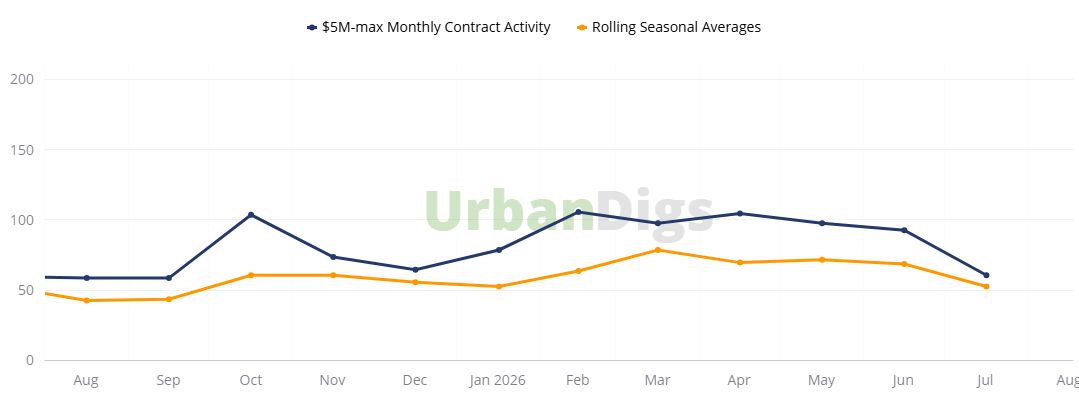
And this is not middle-America; it’s New York City, where we have co-ops…lots of them. Co-ops account for more than 60% of our housing stock and require board approval; this takes a minimum of 60 to 90 days. Sellers therefore need to secure buyers well in advance of January 5th if they hope to close in time.
This is where I see potential pain ahead. Consider this: A seller finds a buyer by mid-October, a time when most contracts are signed in this cycle. Seems plausible and the seller probably feels pretty good at this point…but that’s already late. The parties have a compressed timeline with which to navigate a co-op board package, manage a review process, obtain a board interview, get approved, satisfy all the lender requirements, coordinate attorneys, a managing agent, and all the plethora of other closing logistics…all during the busiest holiday period of the year. Imagine managing agents facing a higher volume of time-sensitive transactions. Board members will be distracted with the holidays, travel, and year-end commitments. Even scheduling a board interview could become all too elusive. I would say that getting an interview in December would be an overwhelming success, but that’s not guaranteed.
So if an owner obtains board approval by mid-to-late December, they have a chance to secure a closing prior to January 5 th. But again, many people will be trying to beat that same date and get on the Managing Agent’s calendar during late December, when virtually nothing gets done. Coordinating the managing agent, attorneys, lenders, buyers, sellers, and ironing out all building requirements before January 5 th will not be easy. Stressful?…YES! And this year, January 5 th falls on the second business day back for many people. This scenario assumes the seller has a buyer by mid-October. If you are a pied-à-terre owner who wants to avoid another year of this surcharge, the time to act is now.
Another caveat for this particular Fall must be noted: two additional factors will compress this time frame even further. 1) September is notoriously the slowest month of the year, and it always takes several weeks for people to get settled in with back-to-school and the like. This year, Labor Day is as late in the calendar as possible (on the 7th), which will delay activity even more. 2) The Jewish Holidays (Rosh Hashanah and Yom Kippur) always create a hiccup in the market momentum in the Fall. This year, they begin the weekend immediately following Labor Day. This may further kick back the “real” start of the Fall market. Be sure to price right… and well…happy selling.
The larger question is what this could do to the market. If owners rush to list, we could see a meaningful increase in inventory for secondary homes. More supply, coupled with highly motivated sellers trying to beat a hard deadline, could put downward pressure on prices/values; this could potentially be a 5% to 10% downward move for this segment.
And because January 5 th is an annual trigger, the rush to beat it could become an annual Event.
For sellers inclined to avoid that surcharge and move on from a secondary residence, acting sooner rather than later is advised. For buyers, however, this could create a compelling opportunity…particularly for those looking to upgrade into a primary home.
Which leads me to what I always say:
Let’s Go Shopping! ®
Anyone interested in buying or selling should be rolling up their sleeves to determine whether the time is right to sell or if there’s a home/investment property out there for them. Who represents you matters…your best investment is often in the broker you choose; find someone with experience, who you feel you can trust.