

 By Rob Garber for the Bloomingdale Neighborhood History Group
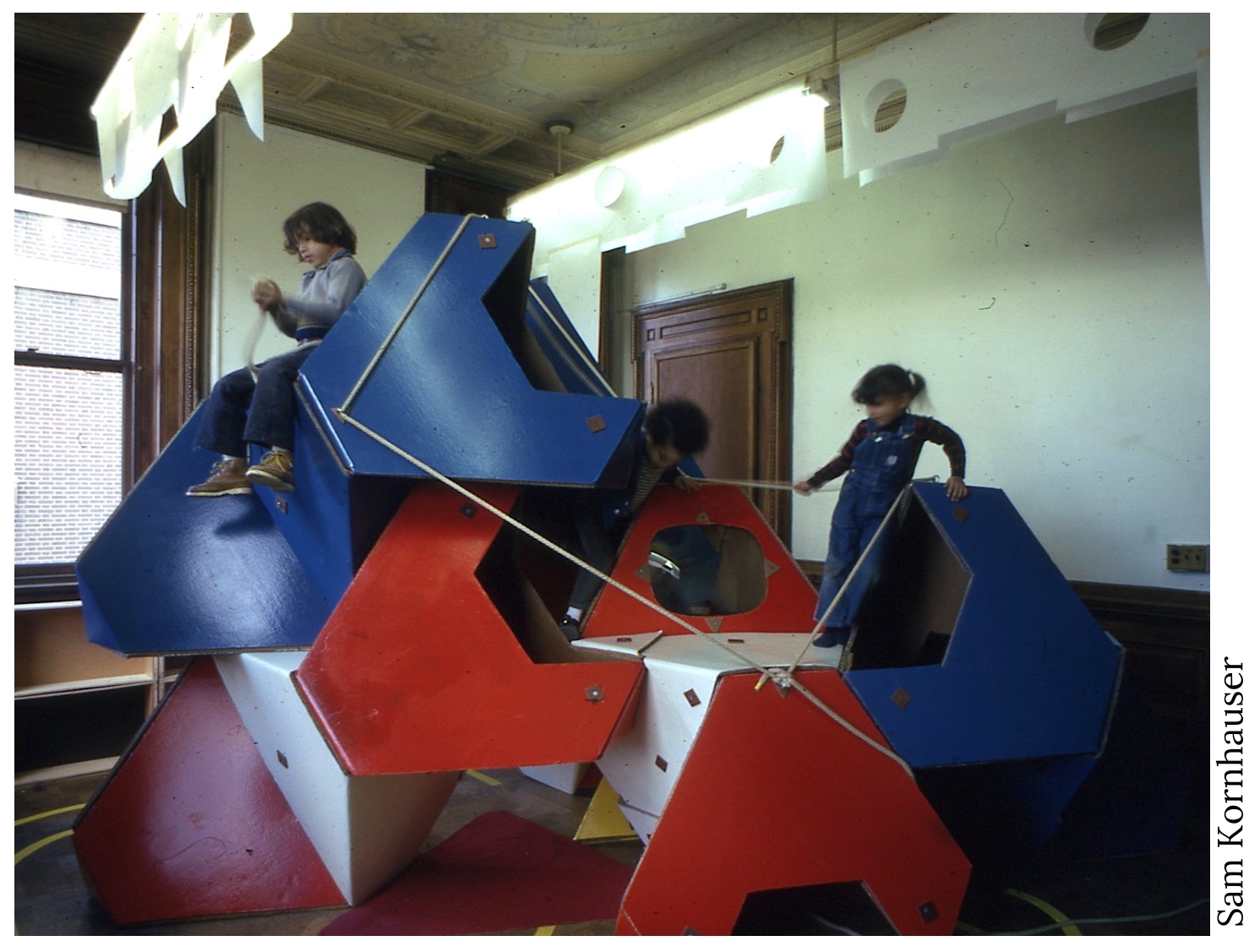
Welcome to another installment in the Rag’s Historical Photo Challenge. This week’s mystery photo may be a tough one, so here is a second photo as an additional clue. See if it looks familiar–you’ve probably walked by it a hundred times…
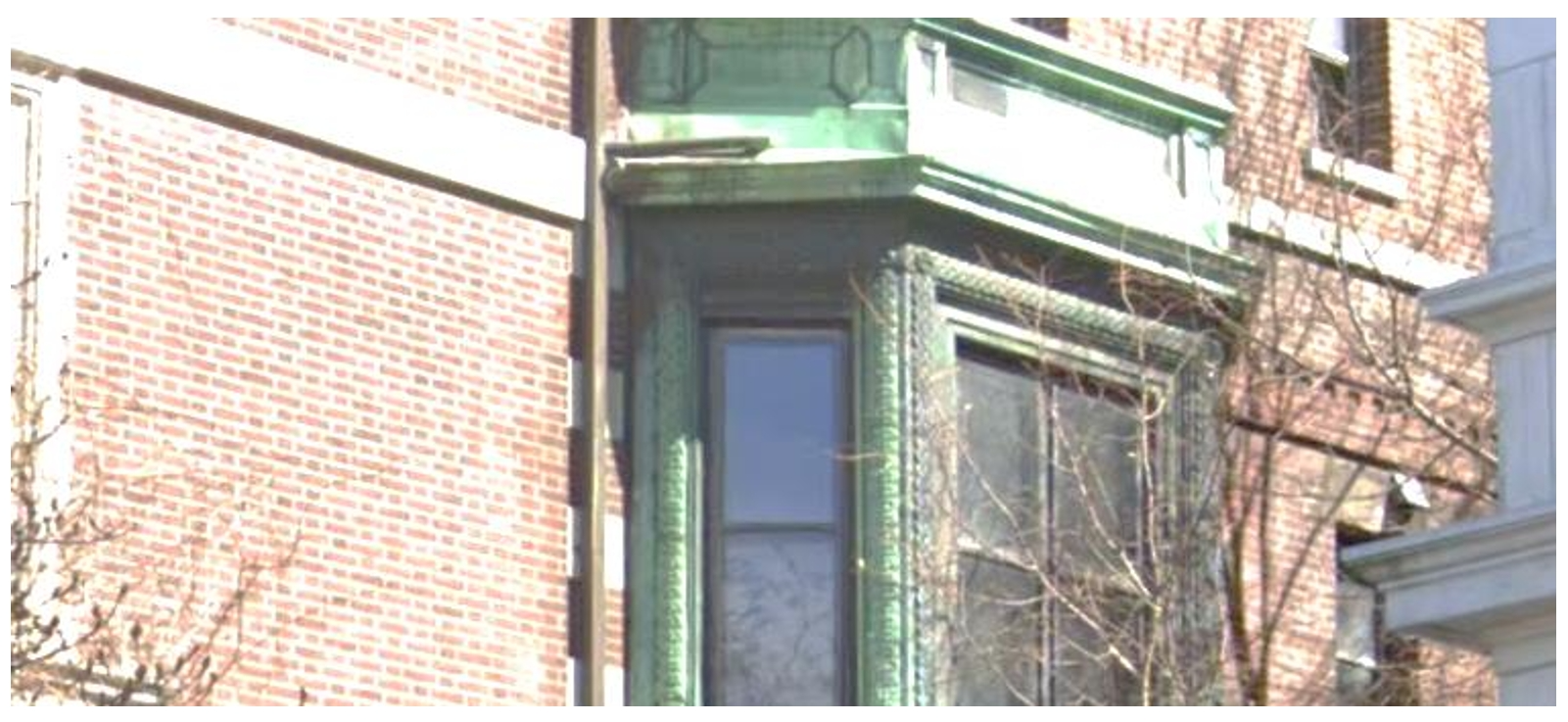
As always, both photos were taken somewhere on the Upper West Side, sometime in the past. Can you figure out where, when, and what they show? Look closely; this week’s challenge photos, like the others in the series, include clues that will help you identify the scene, if you’re a dedicated UWS history sleuth. And even if you don’t recognize the pictures—not to worry! Come back in two weeks and I’ll decode them, show you the clues that help identify them, and—best of all—tell you a story the images unlock, because this column isn’t just a test of your neighborhood knowledge; it’s also a rolling celebration of the people, buildings and events that wove the tapestry of the Upper West Side.
Ready? If you think you know where and when the photo was taken and what it shows, post your answer as a comment on this column.
Solution to Historical Photo Challenge #28
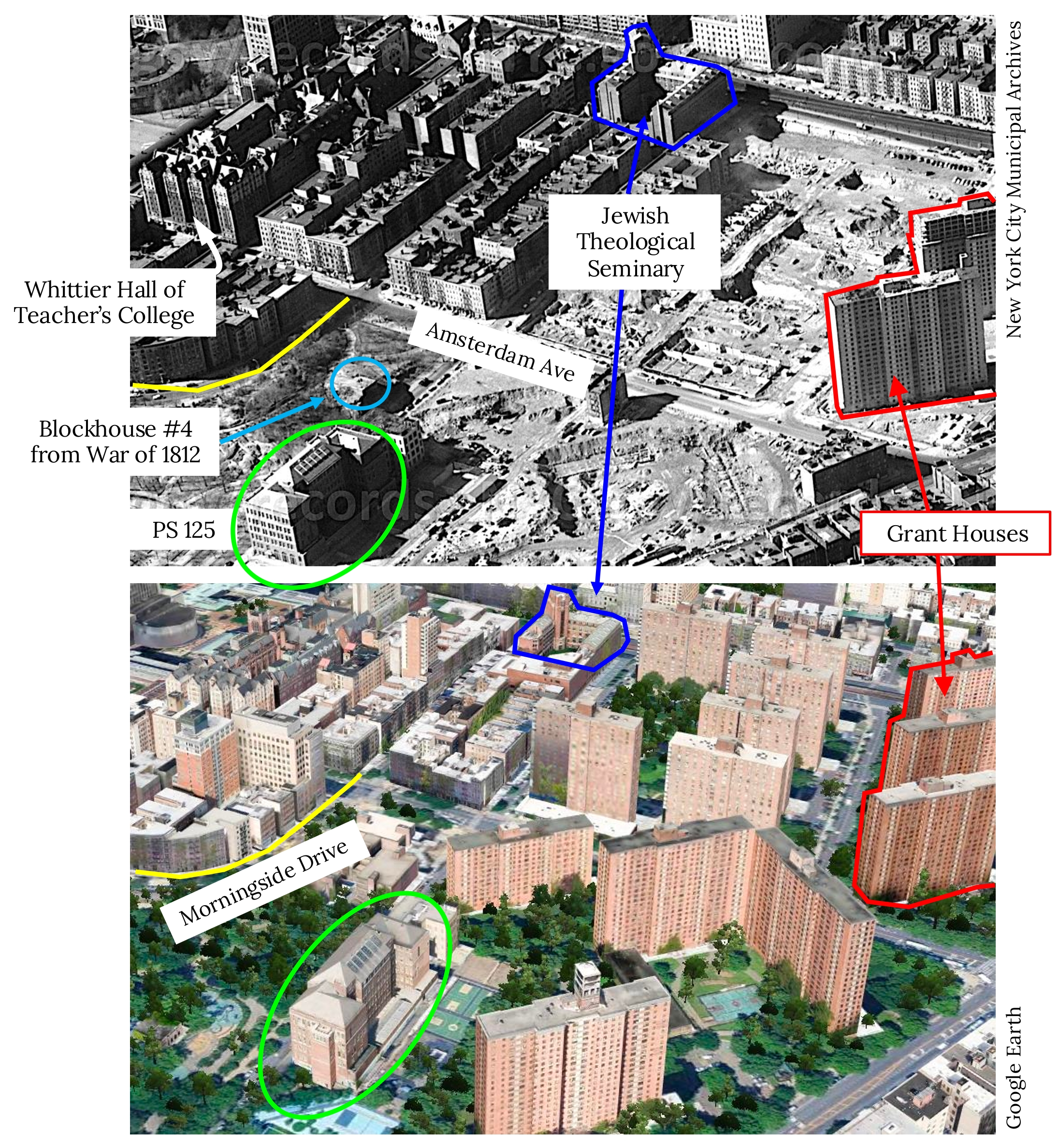
Subject: “Urban Renewal” in 1950s Morningside Heights and Harlem
Location: Amsterdam Avenue from West 121st to 125th Streets
Date: March 1956
Image Source: New York City Municipal Archives
Clues: Several large buildings in this field of view are still standing, nearly 70 years later—but may not look familiar from this angle and elevation. Also, the absence of the “missing” buildings at Grant Houses and Morningside Gardens, which were just about to be constructed on the large cleared expanse is disorienting.
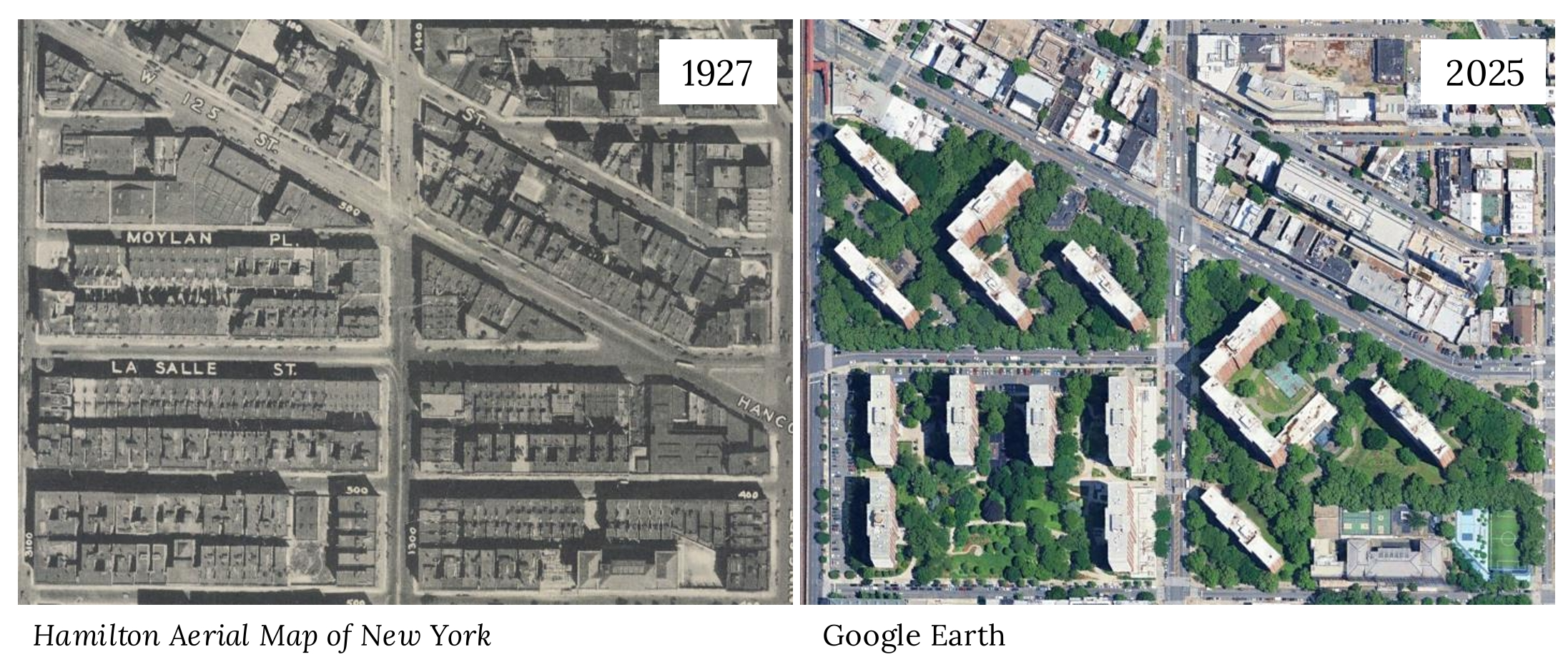
The rest of the story: The 1950s were Robert Moses’s peak years of power. Not content to reshape New York City’s highway and bridge systems to enhance automobile access, he also embraced the so-called “urban renewal” ethos as well as the federal funds that flowed after World War II to support it. Moses got himself appointed chairman of the less-euphemistically named Committee on Slum Clearance, and got to work. The stories of the destruction of the San Juan Hill neighborhood for what is now Lincoln Center, and of the Black community at 99th and 100th Streets near Central Park West, are well-known; less so the deestruction and reconstruction that went on in the 37-acre trapezoid between 123rd and 125th Streets from Broadway to Morningside Avenue.
The area was targeted by a consortium of Morningside Heights educational and religious institutions led by David Rockefeller, whose family had funded the construction of Riverside Church. The result is apparent from satellite photos: a wall of apartment towers effectively separating West Harlem from Morningside Heights. A second feature of the project was the construction of six residential buildings, each 21 stories high and collectively containing almost 1,000 apartments. These were designed to provide middle-income housing for Columbia and Barnard staff. A 1958 New York Post article put it bluntly: “Columbia University got a 70-30 split among whites and Negroes for its Morningside Gardens cooperative.” A 1976 retrospective look at Morningside Gardens in the Amsterdam News claimed that “Housing experts believed that integration was best achieved (and maintained) in a development when Blacks and Puerto Ricans together constitute no more than 25 percent of the tenants.” The photograph caught the moment when the “slum” had been cleared and Moylan Place eradicated, but Morningside Gardens had not yet been erected.
…and that’s the story behind the mystery image. Scroll back to the top of the column and take on your next challenge, Sherlockians! If you’ve missed any pictures in this series, you can find the complete set on my author page. All photos used with permission.
About the author: Rob Garber has lived on the Upper West Side since the late 20th century and is a member of the Bloomingdale Neighborhood History Group. To learn more, visit their website at upperwestsidehistory.org. All photos in Upper West Side Historical Photo Challenge are used by permission.
Subscribe to West Side Rag’s FREE email newsletter here. And you can Support the Rag here.



For Challenge 28 solution, that bottom photo can’t be from 2025. (Missing new JTS buildings and the large condo tower that paid for them.)
Would this be G.A.M.E. ? (Which Stood For Something)
Which I remember was in a large sort of townhouse on West 86th Street.
It was some kind of program that the public schools were affiliated with.
Classes would go there during the school day for a time and do crafts and music.
c.1975.
Ah, I think this is the Schinasi mansion at 107th & Riverside, in the early 60s when it was briefly a daycare. The second photo looks to be its northern neighbor, 352 Riverside Drive. (If I’m right, what fun to be a kid in that house!)
Schinasi Mansion at W 107 St & Riverside Drive. I’ve lived nearby for many years and recognize the elaborate white marble facade just visible in the second picture. Also note the ornate molding in the plaster ceiling above the children in the first picture. It was occupied by St Hilda’s & St Hugh’s in the 1960s and by a Columbia University daycare center in the 1970s . The first picture could be from either period.
It’s the Schinasi House at 315 Riverside Drive. There was a daycare center there maybe starting in the 1960s. I have photos of it in the early 70s somewhere in my collection. Not sure when this photo was taken.