
By Saul Dennis
Artists. Politicians. Actors. Chefs. Philosophers. Captains of industry, commerce and finance. Notable individuals have called the Upper West Side home since, surely, the opening of The Dakota, in 1884. (And well before that, when the area was dotted with the country estates of wealthy New Yorkers.)
Past or present, these folks had at least one thing in common: They had neighbors. People they said hello to on the street. Nodded to each other in the lobby. Shared small talk at the building Christmas party.
You have to imagine there are and were occasions when these accomplished individuals casually shared their talent and expertise, neighbor to neighbor:
Mr. Seinfeld, can you spare a joke? I need an icebreaker for a meeting.
Miles Davis recommends a playlist for a dinner party.
Chef Bill Telepan passes along his tuna tartare recipe.
Ms. Arendt, how should I deal with the awful couple across the hall?
The upcoming midterm elections got me thinking about this phenomenon. The connection?
In a few weeks, a piece of paper will slip under my apartment door. On it, information and insights about candidates in my district, as well as concise, plain-English explanations of ballot referendums. (Just wait. On election day, these same referendums invariably read like Orwellian Doublespeak.)
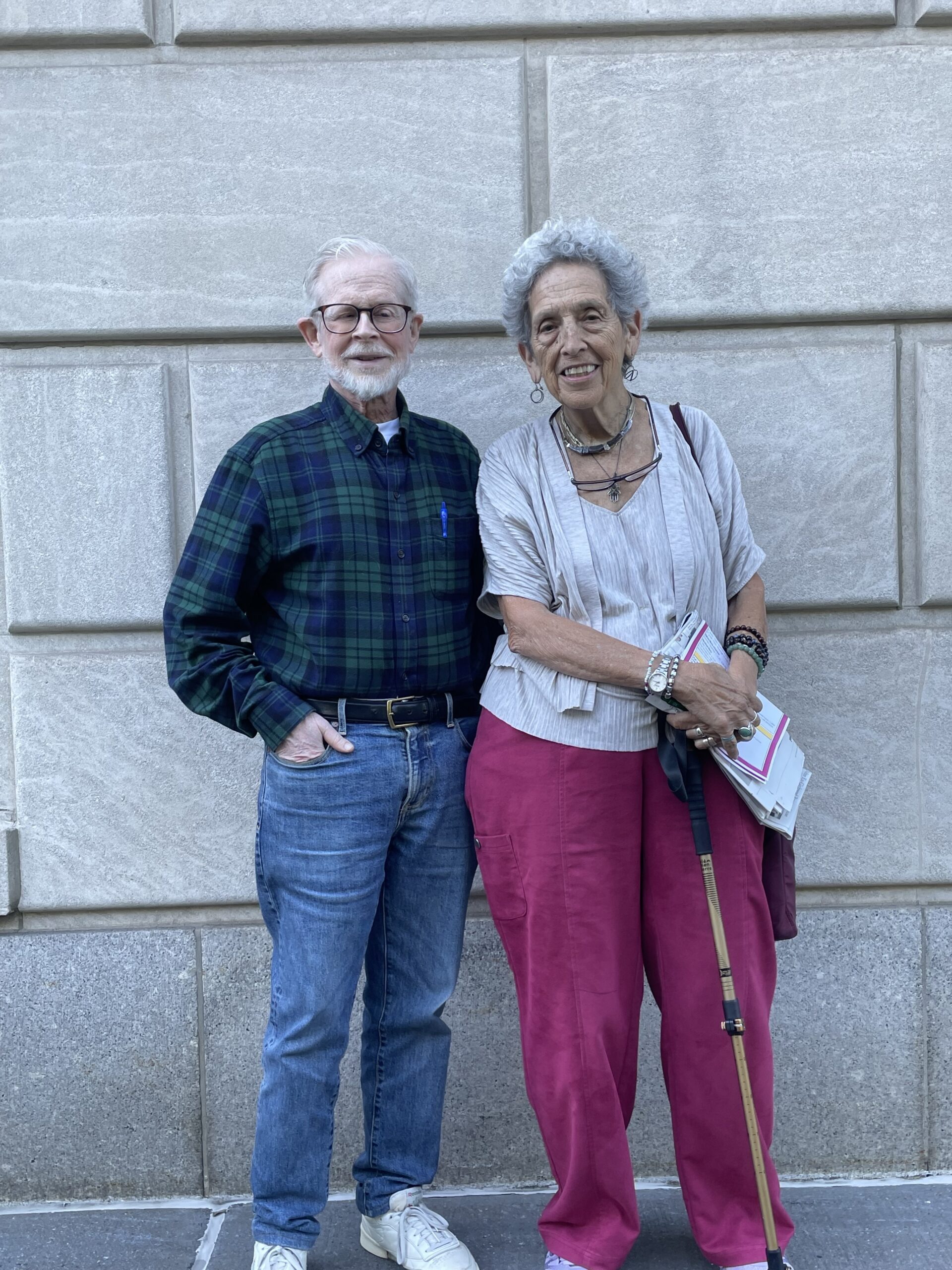
This simple sheet of paper is the invaluable output of nothing less than a political brain trust. And I have access to it for one reason only: Ruth Messinger and Dick Gottfried are neighbors. That. Is. It.
Ruth Messinger, who represented the West Side on the City Council for many years; so popular she ran for mayor. Dick Gottfried, the longest serving member of the New York State Assembly, ever.
Two leading lights of UWS politics, icons of public service sharing their knowledge with me, owed only to the vagaries of Upper West Side real estate.
Enough. After years of relying on Ruth and Dick’s election newsletter, it’s time to stop marveling and start understanding the why, what and how. Time to talk to Ruth & Dick. Fortunately, both really like cookies from Épices, the great UWS bakery.
Thank you both. To start, does this sheet of paper have an official name? I call it the election newsletter.
DICK: It’s called a Dear Neighbor letter. It’s a long-standing institution in New York apartment buildings — and politics.
RUTH: Yes. It’s definitely a Dear Neighbor letter…a stalwart of West Side campaigning.
Whew. Now I know what to call it. So, what are you trying to achieve with the Dear Neighbor letter?
DICK: Two things: We want to promote the candidates we’re supporting. If you’re active in politics, that’s what you do. Persuade friends and neighbors they should vote for who you’re supporting.
Well, you did serve in the New York State Legislature for 52-years — a record — and once got 82% of the vote. So, yes, winning is important.
DICK: It’s not just persuasion. I consider it a constituent service. Helping people with the mechanics, particularly when early voting started in New York. People need to be reminded of dates, hours and where we go.
RUTH: I see it as the quintessential effort to keep people connected in a pretty crazy world. Here’s a fantastic piece of public information, from a trusted source, your state assemblyman or borough president who just happens to live in the building. Then, we add our endorsement. You don’t need to take our recommendations.
How long have you been putting together our building’s Dear Neighbor letter?
DICK: I may well have been doing it back in the 70’s.
RUTH: Right after I moved in, 1994. Part of the reason is it’s gotten harder and harder for volunteers to get into buildings and leaflet. That, and the density of New York City makes it hard for elected officials, for candidates, for campaigns to reach constituents. That’s why we all ended up spending a lot of time in the subways.
Talk a bit about beginnings, how you started working together.
RUTH: Richard sent me a note that said, ‘The good news is, we’re probably for the same candidates. Here’s a draft of a Dear Neighbor letter. Would you be willing to sign it and then we can distribute it in the building.’
DICK: People used to say find a 12-year-old in the building and he’ll stuff them under the doors. But our building doesn’t have any 12-year-olds.
Let’s talk about process: How is the work divided? How long does it take?
DICK: After procrastinating, I sit down a week or so before the election—
RUTH: —Dick keeps a much better calendar than me.
DICK: Now that the city sends out a brochure with the dates and times of early voting, that simplifies the process. Writing a letter takes an hour or two. I run it by Ruth, back and forth—
RUTH: — we poke at each other’s sentences a bit.
DICK: Then I take it to the copy shop, get copies made and we put them under doors, early enough so people can digest. Our deadline is week before election day, when people start early voting.
Have you ever disagreed on a candidate endorsement?
RUTH: I don’t think that’s ever happened.
DICK: Once, we didn’t agree on a state assembly race. I had this chill, like are we going to write two different paragraphs? Then we realized it was two assembly districts to the north. We weren’t going to write about it all, which was a great relief.
Over the years, what’s been the reaction to the Dear Neighbor letters?
DICK: Every comment I’ve ever heard, from people in the building, people who are not it has always been positive. ‘Oh, it’s so great to have your letter every year…Gee it’s almost election day, when’s your letter coming out?’
RUTH: People love it. Somebody will say in the elevator, ‘Thank you very much.’ And if you don’t like it, wrap your fish in it, put it in the compost bin.
Following up on something Dick mentioned, on people who aren’t your neighbors really appreciating the letter — any thoughts?
RUTH: I love it. It feels like a way of weighing in on something that matters to people. But I do think it goes to how The New York Times abdicated its responsibility on city elections. It’s a disgrace. (The Times announced in August 2024 that it would no longer offer endorsements in local elections.)
DICK: People who worked with my wife years ago will call and say, ‘When can you get us a copy of Dick’s letter?’
You both have had long careers in public service. You share a progressive, humanist, hopeful way of looking at the world. What of your values is reflected in the Dear Neighbor letters?
RUTH: I hope all of it.
There you have it — the Dear Neighbor letter, explained. Like the name says, a very neighborly example of Ruth Messinger and Dick Gottfried’s dedication to civic engagement and giving back. And yet another neat thing about living on the Upper West Side.
Got your own example of notable neighbors sharing their talent or expertise? Tell us all about it in the comments.
Oh, one last thing: On election day, Ms. Messinger urges us all to turn over our ballots and vote on referendums. Evidently, voters across the city often fail to do so.
We’re on it.
Subscribe to West Side Rag’s FREE email newsletter here. And you can Support the Rag here.





Dear Neighbor, please stop sending me your Dear Neighbor letters.
I heard Yankee Shortstop Anthony Volpe lives there too..
How can we access the Dear Neighbors letter? It sounds excellent.
Can we get a copy if we don’t live in your building?
Perhaps Ruth and Dick would be willing to share Dear Neighbor in the Rag?
That’s a really good idea
Not really, if, as Dick Gottfried says, the letter is meant to “promote the candidates we’re supporting. active in politics, that’s what you do. Persuade friends and neighbors they should vote for who you’re supporting.”
I’d prefer that the Rag maintain journalistic neutrality.
Could the Rag publish the Dear Neighbor letter?
Hope not. We don’t want objective reporting become a political tool regardless whose interests they present. The article itself was already too far.
“Brain” trust is the overstatement of the year. Thanks for providing a laugh.
I’m glad that Ruth reminded readers to turn the ballot over to vote on the questions and propositions. The text is usually quite detailed and involved, bringing one’s own critical thinking into play. The time to do that is well before you cast your ballot.
A truly effective “Dear Neighbor “ letter is signed by several neighbors with their apartment numbers and is slipped under doors. It’s custom-written to explain the writers’ testament to the quality of the candidates and where they stand and what they’ve done about the issues directly affecting that particular block or neighborhood – lack of a supermarket, rickety subway stairs, school playgrounds, etc. with a bit of the bigger picture added, of course. To get one, contact a campaign or local political club and ask them to send you a document you can edit to hyper localize it. Then get a few neighbors to sign it with you. Do it soon. Early voting is just around the corner. Your neighbors who weren’t aware will thank you on the elevator.
I’m grateful this js not permitted in my building.
Is this an April Fool’s day joke ?