By Rob Garber for the Bloomingdale Neighborhood History Group
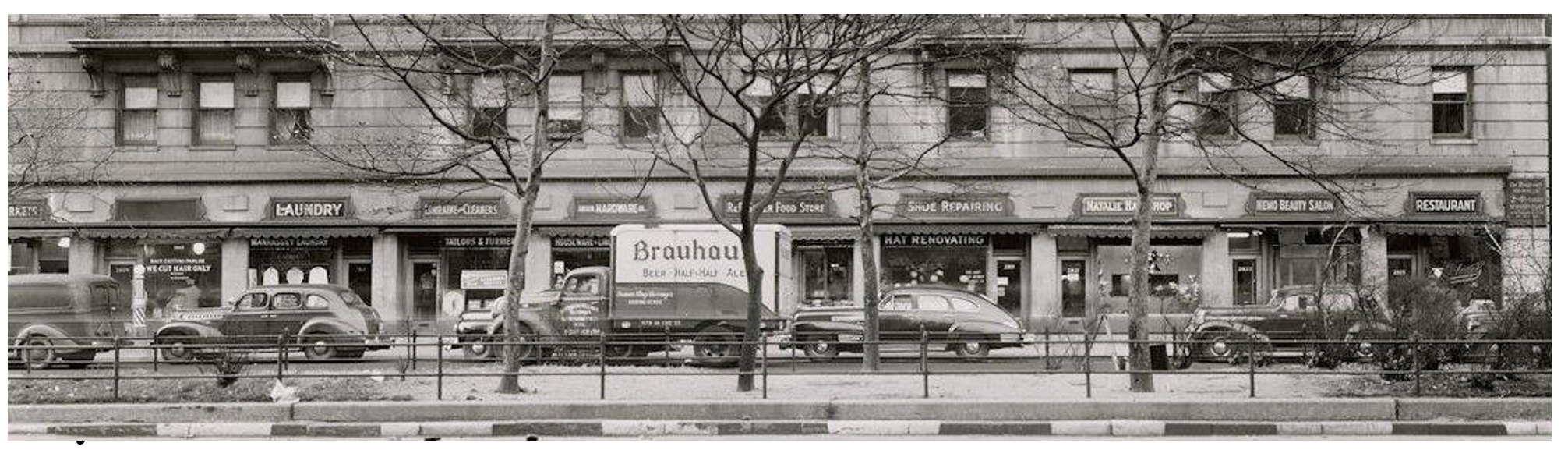
Welcome to another installment in the Rag’s Historical Photo Challenge. The image above was taken somewhere on the Upper West Side, sometime in the past. Can you figure out where, when, and what it shows? Look closely; this week’s challenge photo, like the others in the series, includes clues that will help you identify the scene, if you’re a dedicated UWS history sleuth. And even if you don’t recognize the picture—not to worry! Come back in two weeks and I’ll decode it, show you the clues that help identify it, and—best of all—tell you a story the image unlocks, because this column isn’t just a test of your neighborhood knowledge; it’s also a rolling celebration of the people, buildings and events that wove the tapestry of the Upper West Side.
Ready? If you think you know where and when the photo was taken and what it shows, post your answer as a comment on this column.
Solution to Historical Photo Challenge #36
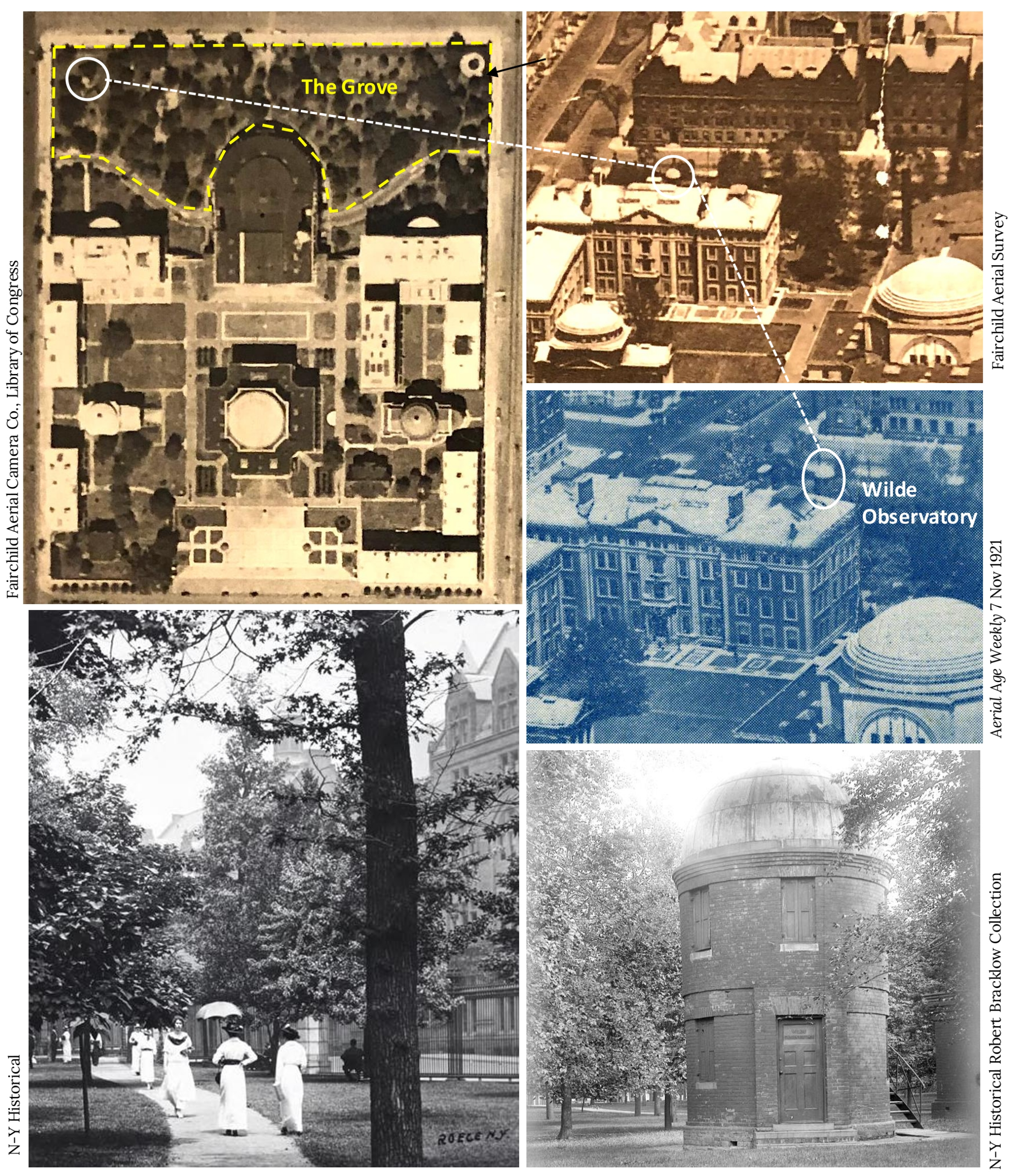
Subject: Wilde Observatory
Location: Columbia University campus, east of Broadway at 120th Street
Date: early 20th century, probably 1907-1912
Image Source: wikicu.com
Clues: If you recognized the domed round building as an observatory, your thoughts probably turned to Columbia—where else on the UWS was there likely to be an astronomical observatory? Then, notice the row of buildings beyond the fence. That’s the distinctive red brick façade of Teachers College, which still lines the north side of West 120th Street between Broadway and Amsterdam Avenue.
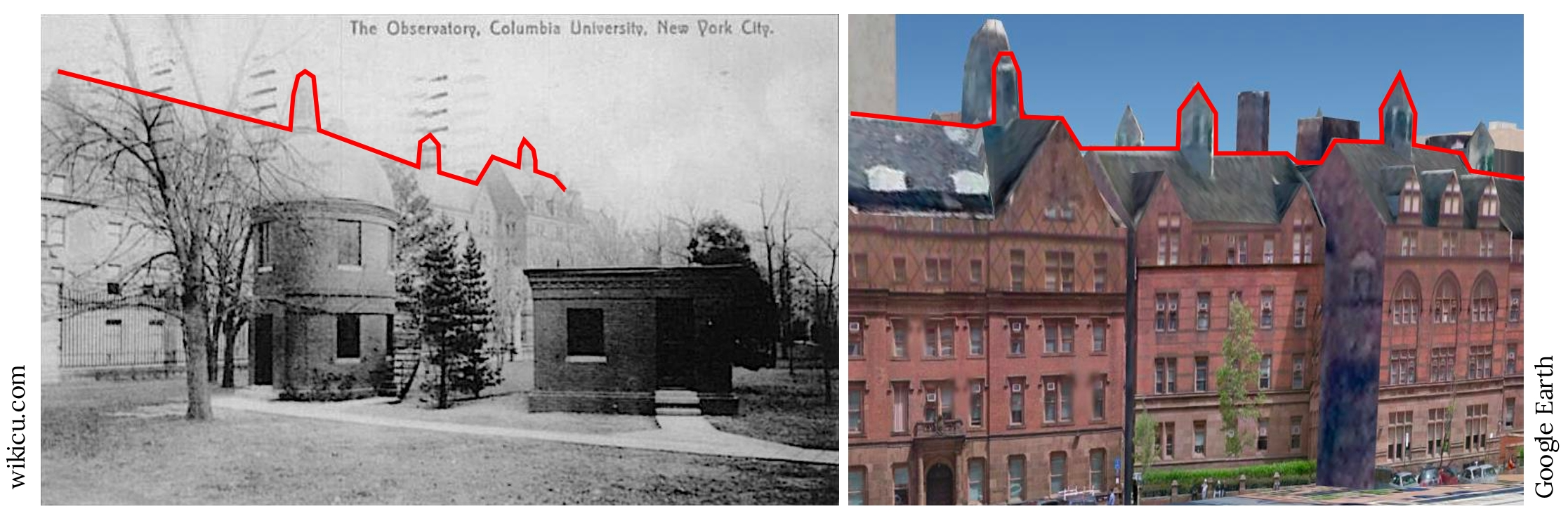
The rest of the story: When Mrs. Samuel Wilde of Montclair, N.J., donated her late husband’s telescope, with an impressive six-inch-diameter lens, to Barnard and followed it up in 1906 with a $2,000 bequest to build a structure to house the telescope, this modest-looking observatory was the result. According to the Barnard Bulletin, it was placed on Columbia’s campus rather than Barnard’s “to repay its debt to Columbia for the use of the library”! The observatory was built next to one of the oldest buildings on Columbia’s campus, a small square “transit house” that was used to observe the occasional passage (or “transit”) of a planet in front of the sun. The chairman of Columbia’s astronomy department acknowledged that the “street lights on Broadway … were annoying when the telescope was pointed in their direction.” Nonetheless, the Wilde Observatory was used to teach astronomy students for 20 years. In the late 1920s, massive Pupin Hall was built next door, with a telescope perched on Pupin’s 14th floor roof. Wilde Observatory was dismantled shortly after Pupin’s completion. The construction of Pupin and other buildings on the so-called Upper Campus resulted in the deaths of the beautiful chestnut trees that were the heart of The Grove, the name given to the uptown border of Columbia’s Morningside campus along 120th Street.
…and that’s the story behind the mystery image in the last challenge. Now scroll back to the top of the column and take on your next one, Sherlockians! If you’ve missed any pictures in this series, you can find the complete set on my author page. All photos in the Upper West Side Historical Photo Challenges used with permission.
About the author: Rob Garber has lived on the Upper West Side since the late 20th century and is a member of the Bloomingdale Neighborhood History Group. To learn more, visit their website at upperwestsidehistory.org.
Subscribe to West Side Rag’s FREE email newsletter here. And you can Support the Rag here.


2811-2823 Broadway, South West corner of 109th. Winter, by the trees, about 1940, by the fenders.
AI gave me this info too. Eager to find out if it was right!
No AI for me. I noticed the median and assumed the building was on Broadway; looked at the shadows and thought that south was to the left; and then started with Google maps Street View and followed it north until I found the matching first two floors. It only took a few minutes, but if the building had been torn down I’d have been lost.
it is ok to admit you used AI Jay.
Correct. The giveaway is the Nemo signage: the Nemo theater was on the next block.
Broadway between 75 and 76 – West Side
The Manhasset, Broadway between 108th & 109th on the west side of the street.
Too bad normal New Yorkers can’t walk on Columbia’s campus anymore…
I grew up on that campus, it was a great space to run around. I could run inside the fountains (when they were dry) in a slant and my shoes woukd stick to the stone .
If they live in the neighborhood they certainly can.
That’s what happens when a few malcontents can’t control themselves! They ruin it for everyone else. Now back to the relevant comments
The Manhasset for sure, but the picture would need to be in the late 1930s before the shop fronts were remodeled in 1939.
If I was Mrs. Wilde, I would’ve been mad! Talk about disregarding wishes!
The photos in this feature are always so well chosen to provoke conversation.
This is west side of Broadway between 108th and 109th, closer to the 109th Street corner.
The only clue I have is that Brauhaus only used delivery trucks from the 1910s to the 1940s. But I can’t tell what block it is.
The Brahaus trucks are inexpensive diecast collector’s items
A block-length building on Broadway that I’d guess is the Manhasset btw 108 and 109 because one of the shops is the Nemo Beauty Salon. The Nemo Theater was nearby on SE corner of Broadway and Cathedral Parkway. Date probably mid1940s based on auto models.
The northern part of Columbia’s campus is still referred to as the Grove.
Broadway Malls, W108 – W109! Best park in all of NYC!
The Manhasset – west side of Broadway between 108th and 109th streets??
Manhasset apartments on Broadway between 108-109 St.
Somewhere between 75-84th and Bway? I am curious how it was all incorporated. Love the big stone building.