
By Bonnie Eissner
The American Museum of Natural History, with its halls of fossilized and taxidermied creatures, can seem full of life, especially after hours when the hordes of human visitors have departed.
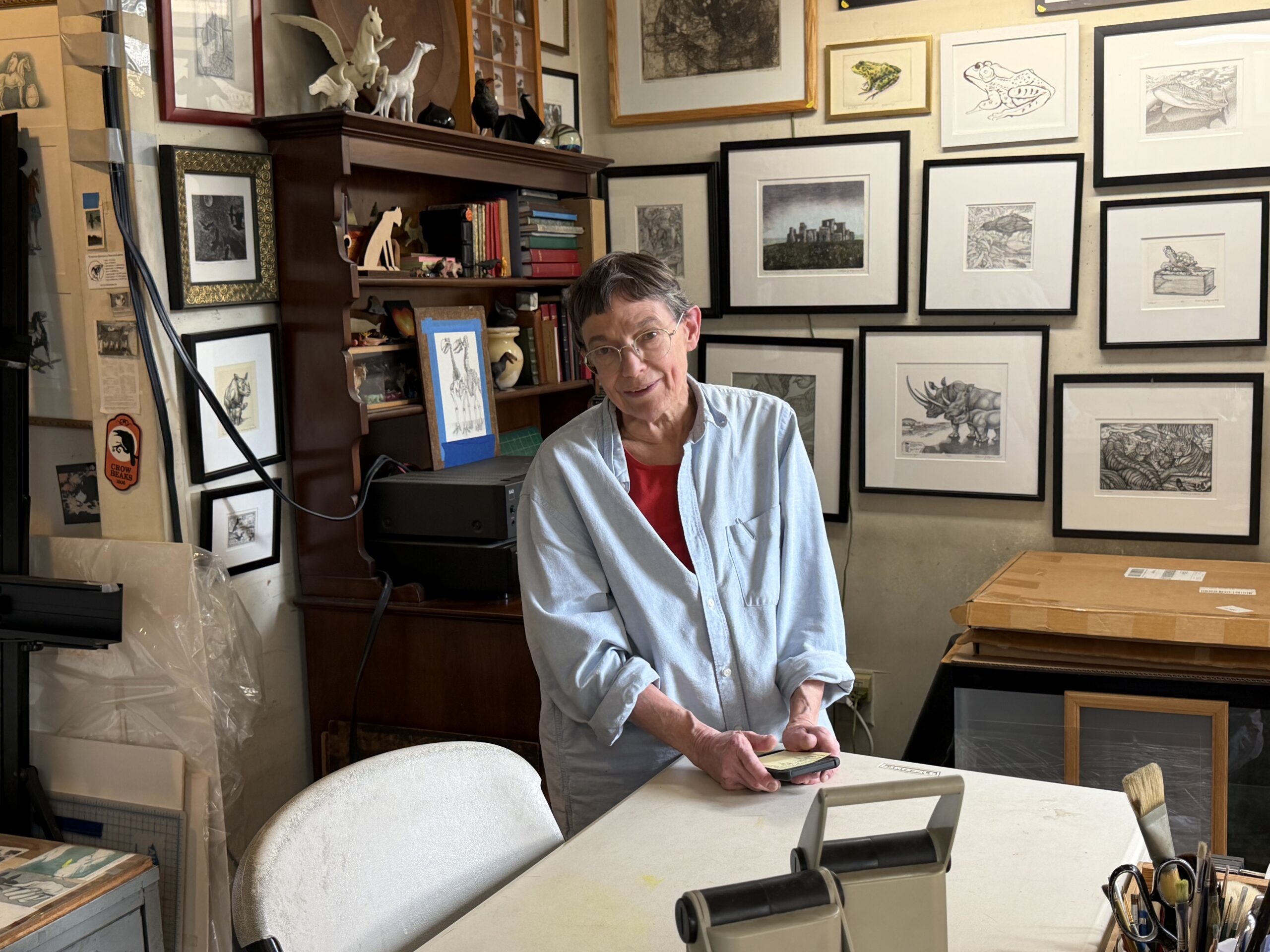
For science illustrator and artist Patricia J. Wynne, who was drawing there with fellow artists on a recent Friday night, it was Eden.
“I just think it’s magic when I come, and especially when it’s empty,” Wynne said as she sat drawing in the darkened mezzanine of the cavernous Akeley Hall of African Mammals. “It’s not, to me, a place where you sense death at all, even though it’s full of dead animals. You feel the sense of life.”
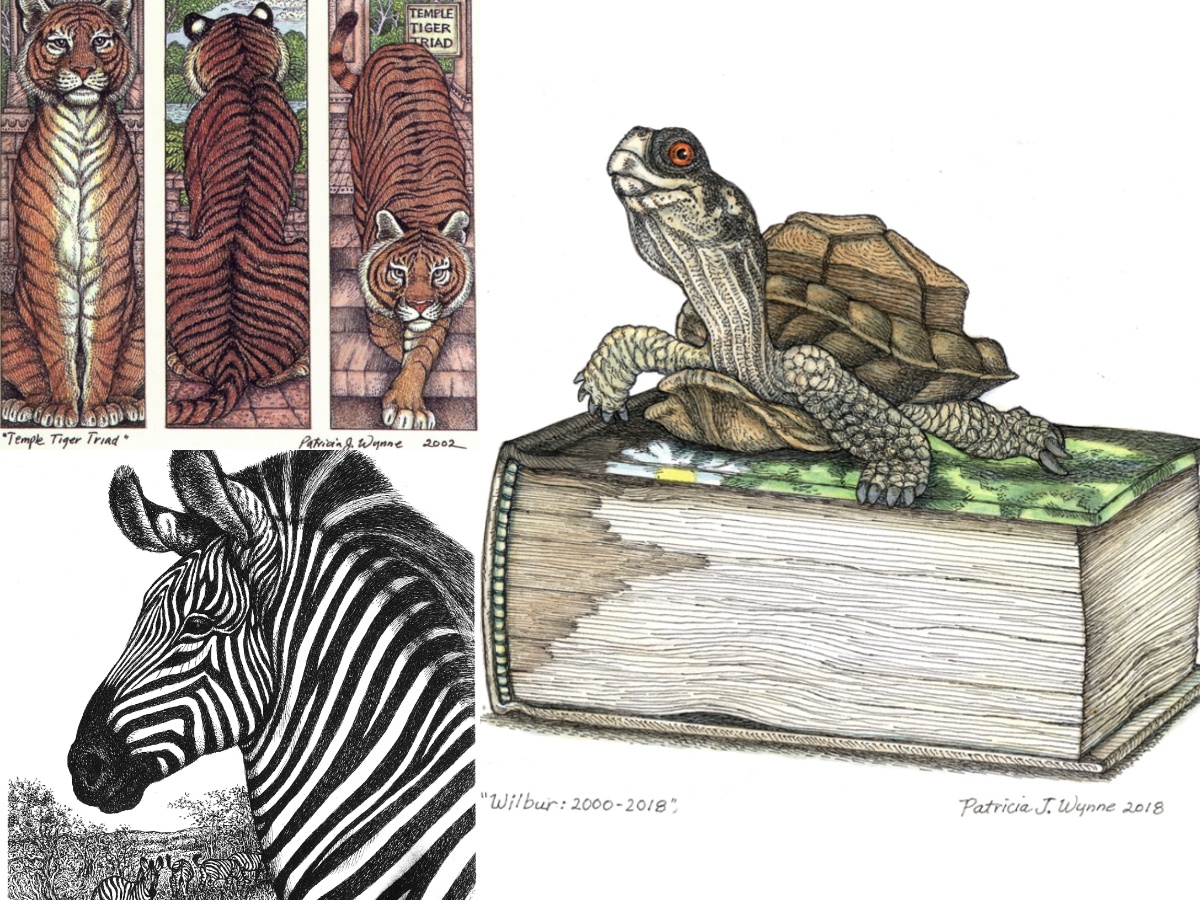
Against long odds and in the face of ever more sophisticated technology, Wynne has carved a livelihood as a prolific freelance scientific illustrator. She served for decades as an artist-in-residence at the museum and has created largely hand-drawn art for nearly 300 books for adults and children, as well as for media, including The New York Times, The Wall Street Journal, and Scientific American.
While far from a household name, she has left a vast imprint. Many visitors to the American Museum of Natural History have seen, or even stepped on, her art without realizing it. And she has made an indelible impression on the artists and scientists who do know her.
She began freelancing for the museum in 1974, when she moved to New York from Michigan, where she and her husband, the artist Maceo Mitchell, had full-time academic jobs. Married after meeting at the University of Iowa’s prestigious M.F.A. in printmaking, she became the senior staff artist at the University of Michigan Museum of Zoology; he was a professor at Macomb County Community College.
“We were getting too comfortable,” Wynne said. She was restless and realized, she recalled, “If we don’t move now, we’ll never move. We’ll have a house. We’ll have a backyard, and we won’t move.”
They landed first in a loft on the Bowery with their pet cat and some fish, but soon sought a quieter part of town. They found an affordable apartment in a building on Central Park West in the low 100s. By combining that apartment with a neighboring one, they have since made room for two studios, the art they’ve accumulated from friends and dealers, and their pets — currently 11 lizards, three finches, three canaries, a cat, and about 25 fish.
“I’ve always been drawn to animals,” Wynne said. She grew up about 20 miles west of Chicago, when the area was still largely farmland. In New York, she realized there was just one problem: “There’s not enough animals,” she remembers telling Mitchell.
When Wynne approached the natural history museum that first year in the city, she was told there was no money. “That was the answer to everything,” she said. But she didn’t buy it. “I have never given up in my whole life. I just kept pushing, and that’s where I ended up.”
She became an artist-in-residence in the Department of Mammalogy and has since drawn thousands of illustrations for scientific and educational publications as well as for permanent exhibitions.
Between 2011 and 2012, when the museum restored the 43 dioramas in its renowned Bernard Family Hall of North American Mammals, where an Alaska brown bear stands on its hind legs, bison roam, and armadillos gather, Wynne created art for the new displays. Her drawings of the dioramas and of the flora and fauna inside grace the backlit panels that accompany each scene.
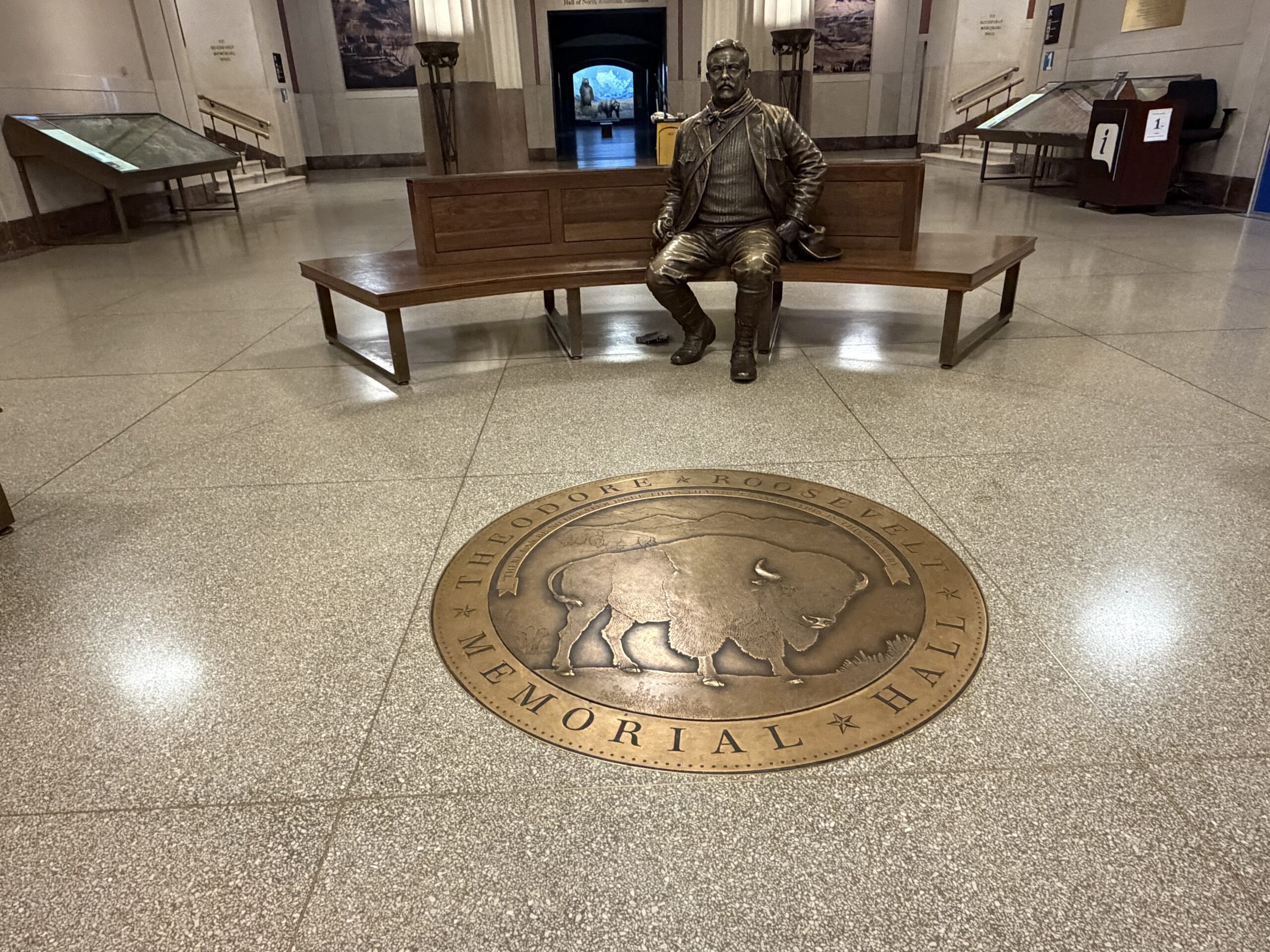
Wynne also put her touch on the museum’s adjacent Theodore Roosevelt Memorial Hall, which was renovated at the same time. She designed the large bronze medallion, emblazoned with bison, that’s embedded on the floor in front of the life-size sculpture of Roosevelt — a popular photo spot.
Soon after, museum zoologists named a new bat species in her honor — Thyroptera wynneae. “Exceptional for clarity, elegant rendering, and meticulous attention to relevant detail, Patricia’s work is immediately recognizable and inimitable,” the researchers wrote in the 2014 publication, fittingly illustrated by Wynne, that describes the species, commonly known as Patricia’s disk-winged bat.
Wynne is as adept at whimsy as she is at realism, as evidenced by the hundreds of books that bear her art. Her illustrations appear in dozens of coloring books, activity books, and picture books, including the Theodor Seuss Geisel Award-winning “Hello, Bumblebee Bat.” She has also collaborated with scientists and authors such as zoologist Bill Schutt, whose books include the praised “Cannibalism: A Perfectly Natural History,” a lighthearted look at ways animals and humans feast on their own kind. It includes more than 30 illustrations by Wynne; most are of animals.
Beginning in the late 1970s, Wynne worked with George Lucas on several activity book tie-ins to “Star Wars” and “The Empire Strikes Back.”
Wynne remembers her agent asking her if she’d like to work on books for a hot movie that featured a robot. She said yes and ran out to catch “Star Wars.” Now collectors’ items, her books include “Chewbacca’s Activity Book” and “The Empire Strikes Back: A Pop-Up Book.”
Wynne wrote one instructional book, “Cats: Secrets of Observational Drawing.” In it, she shares her twin passions: art and animals.
“I come from a family who loved felines, all felines,” she writes, “and I have drawn cats my whole life. Inspiration comes from living with creatures at home and visiting them in zoos, from piles of photos, from videos, from taxidermy, and from museum works. Sketching repeatedly from any and all of these sources will improve your work.”
For about 10 years, Wynne taught an animal anatomy drawing class at the American Museum of Natural History. When COVID hit, the class ended. But a few years ago, Wynne got permission to invite former students and other interested artists to join her at the museum on Friday nights to draw.
Artist Koren Christofides came to draw dinosaurs on a recent Friday night. “It’s so special,” she said of being at the museum after hours. “I loved it when I first showed up.” She volunteers in the museum’s busy Discovery Room on Saturday afternoons and called the evening sessions her reward. “Patricia’s the real deal because she’s a superb scientific illustrator,” Christofides added.
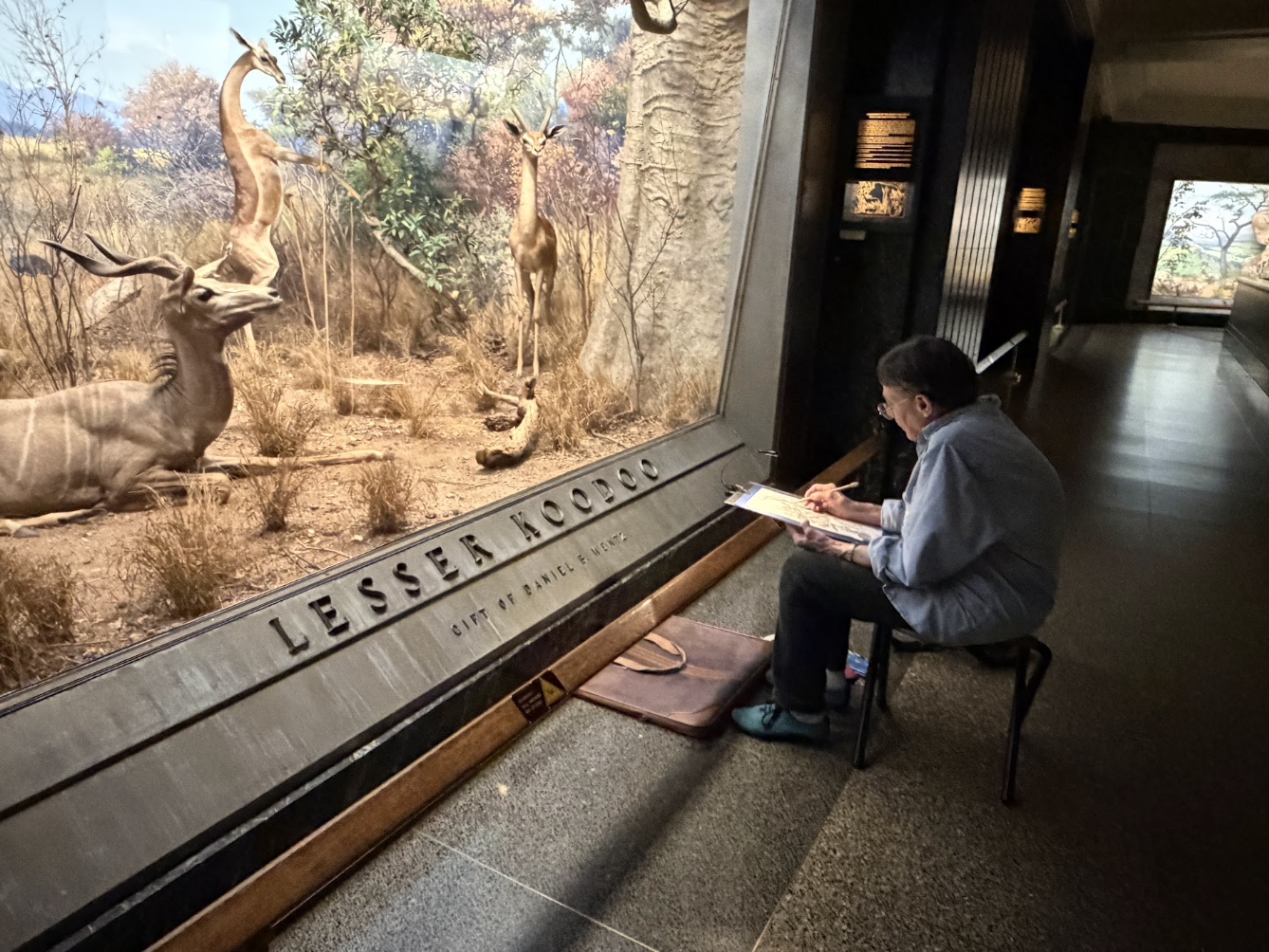
Wynne spent her evening in the Hall of African Mammals adding bush to her drawing of yellow-billed hornbills and impala, which she had seen on safari in South Africa. She liked the trees, shrubs, and grasses of a nearby diorama and over a couple of hours drew them into her own artwork. Having arrived just before 5:30 p.m., she left the museum after 9 p.m.
Asked at the end of the night if she’d ever retire, she quoted sculptor Henry Moore: “Artists don’t retire. They die.”
Subscribe to West Side Rag’s FREE email newsletter here. And you can Support the Rag here.




I joined one of Patricia’s after-hours series several years ago. Not only was it magical to be in the museum at night, it was wonderful to have Patricia’s quiet expertise guiding me. She was generous with her praise and her suggestions, never making this newbie feel unwelcome or inadequate.
How exciting it would be to have a bat named after you!
What a cool peak under the hood at the museum!! Thanks for sharing
Ok net her a few times through the years, I supplied photography of specimens in the mammalogy department for over 30 years. It was a great place to work both as a staff member and a freelance.
Fascinating, both the woman and her work.
Thanks for a great read, Bonnie.
It’s been a thrill to have worked with Patricia for over 30 years. And I can’t wait for our next literary and artistic adventure.
What a lovely life she’s had. An uplifting story. Buying her cat book so I can begin draw in my retirement.
Wonderful article.
As a former Art Director at Scientific American magazine, I’ve collaborated with Pat many, many times. In addition to being one of the great illustrators of science, she’s also an absolute delight and fun to work with.
What a wonderful article! I shall have to look at lots more of her work.