
By Gus Saltonstall
Bill Hyman and Craig Cloutier had a routine. A simple one at that.
In 2022, as the world was opening back up from the COVID Pandemic, they would each get a refreshment from Black Press Coffee on Columbus Avenue, between West 72nd and 73rd streets, and then spend hours on the benches outside of the storefront talking to each other and whoever else might stop by.
“Bill and I just started to become friends. I didn’t have any projects going on and was in transition, so we would hang out for four or five hours a day at the coffee shop,” Cloutier told West Side Rag during a recent interview at the West Side Rag offices. “The community began to grow. We realized there were all these people with so many different types of stories.”
The Black Press community continued to grow and gatherings began to take place separate from the coffee shop as acquaintances became friends.
One of those people part of the community was Shiv Dattagupta, a classically trained musician who suggested hosting Upper West Side artists at his neighborhood apartment.
“He wanted to bring musicians together,” Cloutier said.
Dattagupta hosted music salons where people from the community would come over and perform.
“And then, it got to a point in the summer of 2023, where Bill and I were feeling bad because we had to begin curating the invite list for these living room performances, and we knew that wasn’t the spirit of what we were doing in building community,” Cloutier said.
They needed more space.
The pair decided to get in touch with the ownership of the Triad Theater on West 72nd Street, between Columbus and Amsterdam. The Triad liked the sound of their idea.
“We then set a date 10 days away for a one-night show to give all of the artists to not only perform and be paid, but also to actually get to know their community,” Cloutier said.
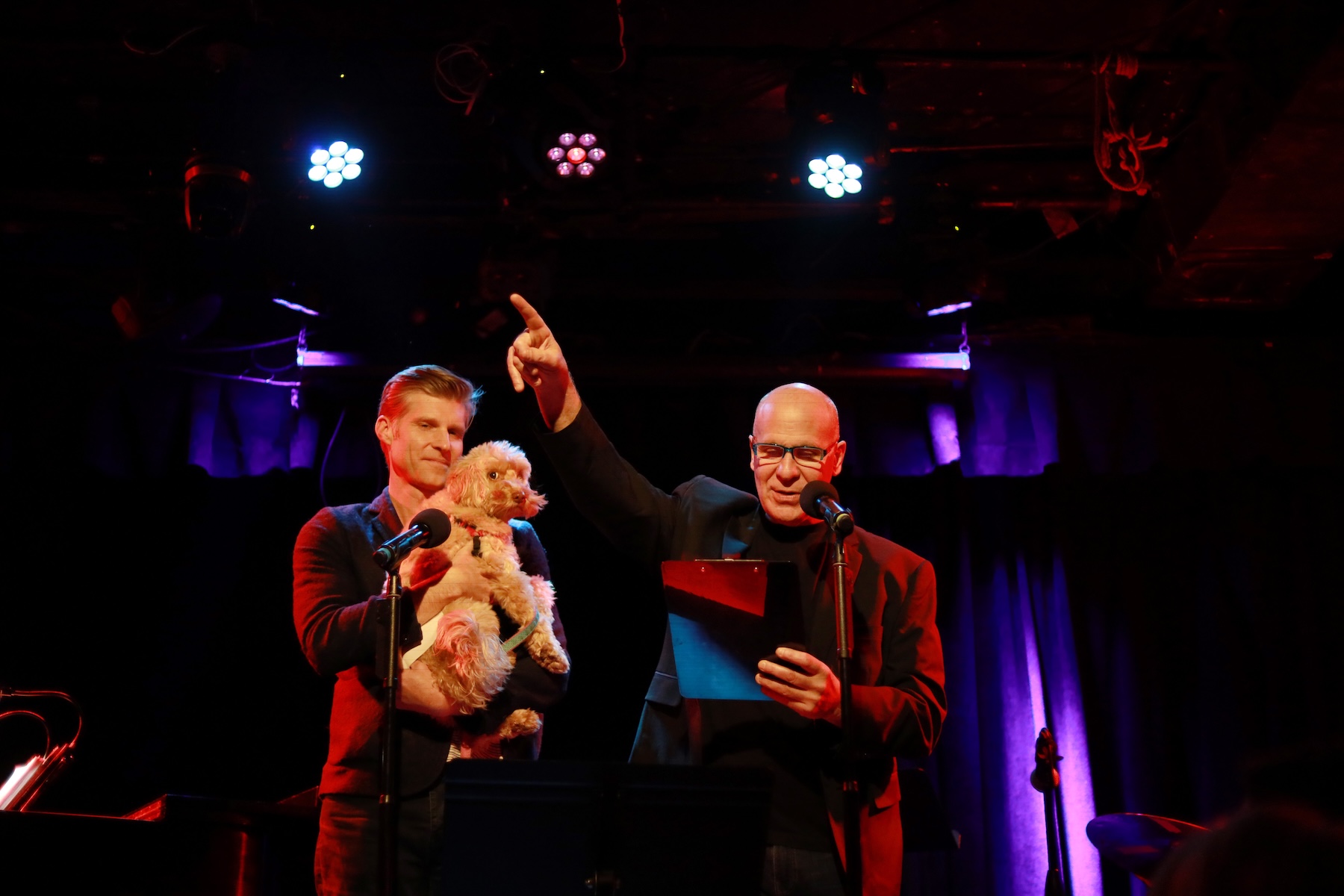
A young pianist named Antongiulio Foti took on the role of music director, and the first show in the summer of 2023 had around 10 artists perform. At one point during that show, Foti was joined on stage by another pianist named Matt Baker, and the pair performed with four hands on the piano during an improv portion of the night.
“It was magic,” Cloutier added.
And just like that. The community that began outside the Upper West Side coffee shop had a name — Four Hands Collective.
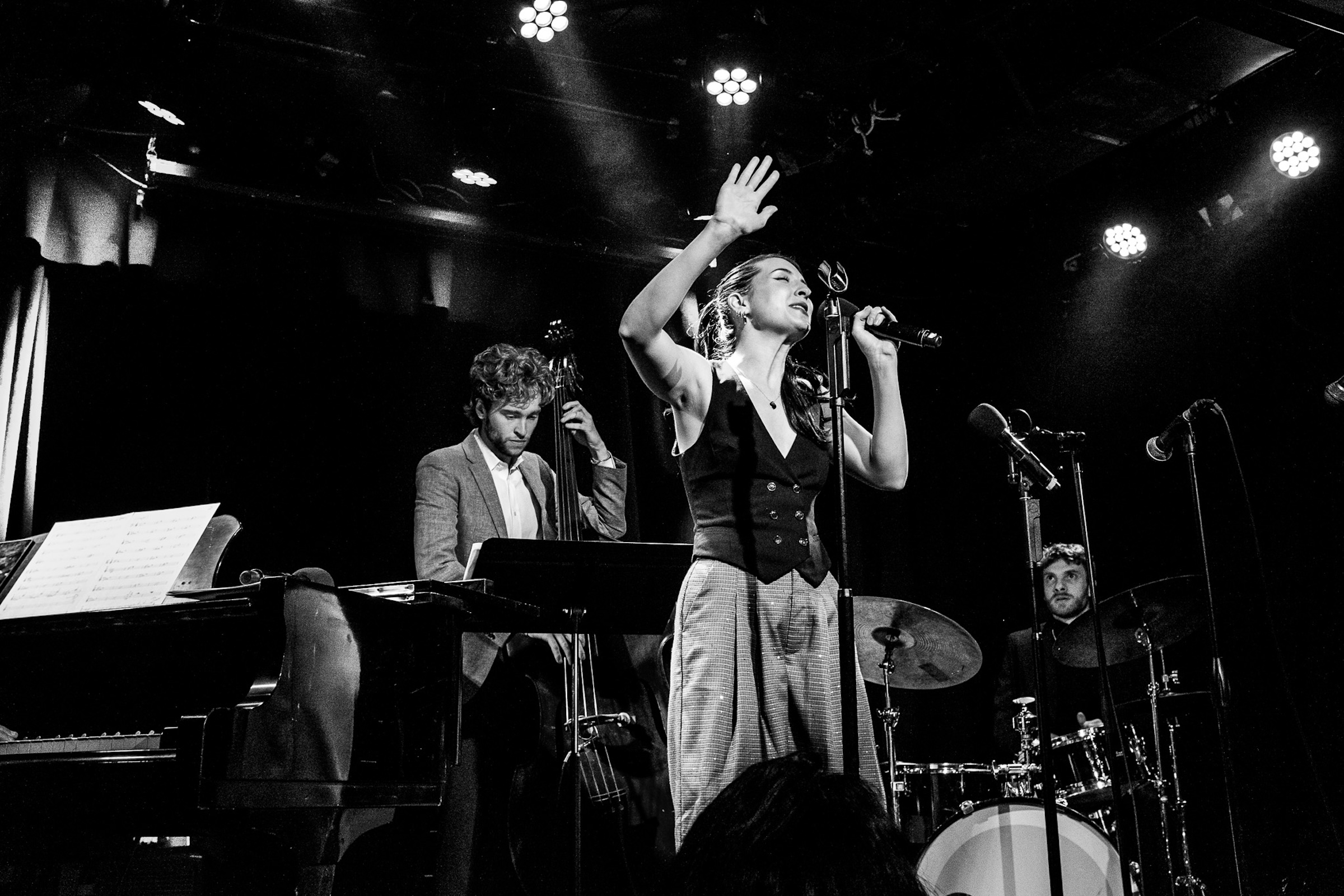
Since that night, Four Hands Collective has held nine sold-out shows at the Triad Theater, where more than 65 different artists have performed. Musicians from the organization perform all over the Upper West Side, including at the Columbus Avenue Open Street and places like The Wallace Hotel.
Foti and Baker remain in their roles as the music directors.
“The Four Hands Collective helps performing artists thrive in New York City,” reads a description of of the organization, which recently received its nonprofit status, on its website. “Paying them fairly, promoting their work, and building the neighborhood community that sustains them. Because a city is only as alive as its artists, and artists can only keep giving when their community shows up.”
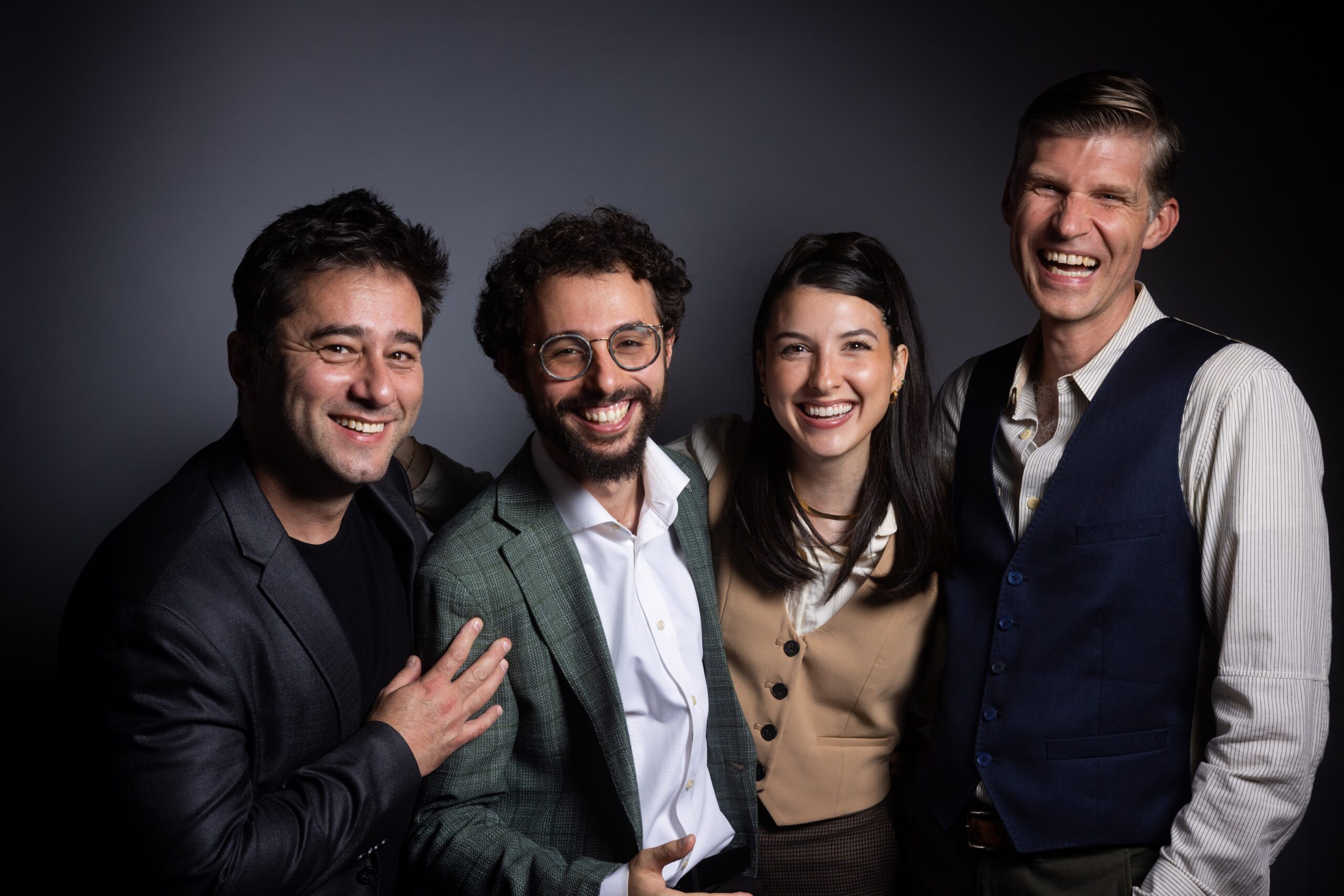
WSR recently spoke with Cloutier, along with Four Hands Collective’s co-executive director Hannah Celeste, about the arts organization. Hyman remains the co-founder of the organization, and while he doesn’t hold an official title in the day-to-day operation, he is a constant presence at its shows and gatherings.
WSR: How would you describe Four Hands Collective’s work today?
Celeste: We’re about building community and supporting artists.
WSR: And are artists members of the organization?
Cloutier: That has been a tricky thing. It’s very organic. It’s a community. We do different events, including our big showcases, which we do about four times a year at the Triad. But, we also do Open Mic Nights, and that’s the place where somebody can come and meet everyone. It’s not a try out, but come to the Open Mic, meet us, sing a song, and we can go from there.
Celeste: I always say the same thing, start coming to our events, even our picnics, meet us and start becoming part of the community because that’s really what it’s all about.
Four Hands Collective also keeps a running calendar where it advertises smaller shows of artists who have performed in their showcases.
WSR: How else would you describe the purpose of the organization?
Cloutier: What I saw as we were building is this is a fundamental gap between the artists living in the community and the non artists. The non-artists I would talk to had a few mistaken assumptions. One of those being that the art scene was thriving. And then I would hear from the musicians about how 10 venues have closed since the pandemic. The scene didn’t seem to be thriving.
Cloutier, along with his role as co-executive director of Four Hands Collective, has a professional background in graphic design, and while he doesn’t call himself a musician, is learning how to play the guitar and ukulele. He also practices Zen Buddhism and recently completed a nine-month course in contemplative care, which focuses on being at the bedside of people in the hospital.
The other assumption that people seemed to have is that all of these musicians were trying to be the next Taylor Swift. But, that’s the other thing that I learned, that there are just so many working musicians in New York City. All of the bass players and the drummers and everyone else, they’re trying to make a living and make great music. That is such a part of the fabric of the city and so easy to take for granted. You can’t tell people what to do, but what we can do is start to build something that makes it easy for someone who is living on the Upper West Side to go and support local musicians.
Celeste: I’d add that it’s also just so easy to sit in our apartments and watch streaming platforms and scroll on our phones. Four Hands Collective is a great reminder to get out. There’s so much art to support.
WSR: The social aspect between the musicians is clearly an important part of the Four Hands Collective mission; why have you put such a focus on that?
Cloutier: I had a friend tell me they have a lot of musician friends who they love to hang out with, but it’s weird because they have to sort of compete for the same gigs. Ultimately, he said he feels kind of lonely as a musician and that really set it for me. Of course, it’s complex, and of course there are lots of musicians who have great musician friends, but I do feel there is a bit of an undertone there that a lot of people face. We want to work against that.
Celeste: With social media, a lot of artists are encouraged to stay in our rooms and record ourselves singing, and that can be very isolating. So, getting to talk to other musicians and artists through our organization and discuss what we are going through is really important. In a space where we feel safe to do so, because as Craig mentioned, there might be a little bit of an underlying competition, but I’ve never subscribed to that. We all want to be in a space where we feel like we aren’t going to be judged and everyone understands each other.
We inspire each other and actually seeing each other in person does a world of difference than just watching from afar through Instagram.
Celeste is a singer and a performer who is also one of the managers at the Triad Theater.
WSR: How do you see Four Hands Collective continuing to grow?
Cloutier: The first priority is to get some funding so we can build out more events. That includes more gatherings, but also the creation of programs that would provide emergency funds for artists experiencing emergencies.
Celeste: Music lessons and working with kids is also a goal.
WSR: Throughout all of this, how much of the organization still comes back to the Upper West Side, and the specialness of the neighborhood?
Cloutier: I recently went to a jazz club on the Lower East Side with my friend. Afterward, my friend who is visiting said all the people were super nice, but he felt like he wasn’t cool enough. Like he was not part of the scene. It just made me look at what we have up here on the Upper West Side, and I just don’t feel that at all. These musicians are unbelievably talented. It’s people just trying to do the best music they can and share that gift. On the other end, it’s just all the time people who we meet at Black Press Coffee, it’s something about the Upper West Side where you kind of can just say hello to someone and build a community.
Celeste: The Upper West Side definitely has more of a neighborhood type of vibe than most places in New York City. We’ll always be central to the Upper West Side, but we do remind artists you don’t have to live in the neighborhood to be part of the community.
You can learn more about Four Hands Collective on its website — HERE. Pre-sale tickets are also available for its next show at the Triad Theater on September 18.
Subscribe to West Side Rag’s FREE email newsletter here. And you can Support the Rag here.



Thank you Gus and the West Side Rag. We enjoyed chatting, and we’re so excited to see this thoughtful and informative article about the work were doing. So very much appreciated.
I am so grateful to belong to this wonderful UWS community. As one of the “non-artists” who deeply appreciates artists, I’ve loved being part of this journey since the early days, when Bill, Craig, and Shiv began bringing people together outside Black Press Coffee on Columbus Avenue. I still have wonderful memories of Shiv’s salons.
It has been amazing to watch those gatherings grow into Four Hands Collective, with Antongiulio, Matt, and Hannah helping shape what it is today.
I am also delighted to introduce my French friends in New York to this unique artistic experience and proud of their unwavering support since the first show at the Triad. We are now a large group of French New Yorkers who have been coming ever since to applaud these incredible artists.
This is exactly why I love living on the UWS.