

By Daniel Katzive
On a mild winter Wednesday evening in January 2023, 74-year-old Upper West Sider Maria Hernandez returned to her home on West 83rd Street after attending a matinee performance of “Funny Girl” with her sister, using tickets provided by a nearby senior center.
Less than 5 hours later, Hernandez was found dead in her one-bedroom apartment, the victim of a brutal assault and murder.
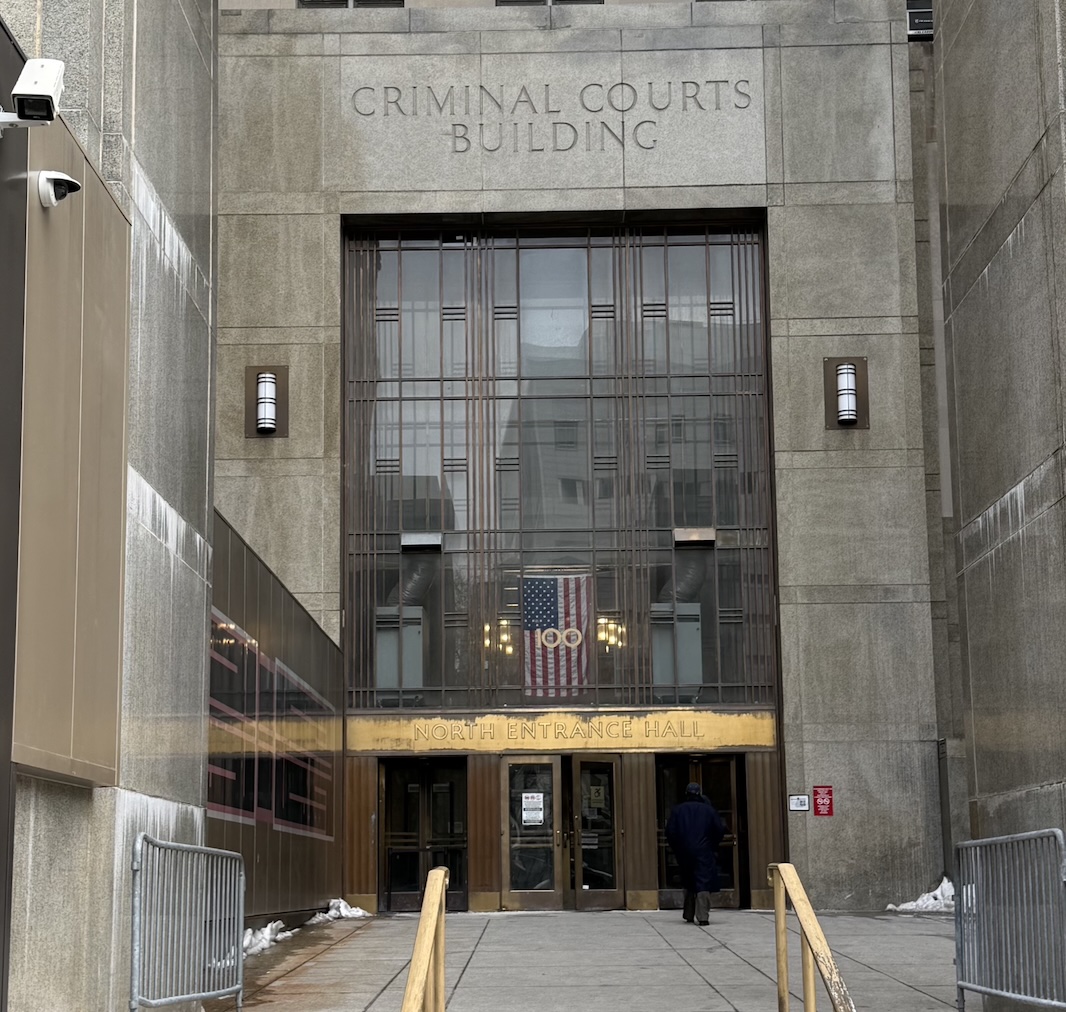
On Tuesday, a little over three years later, a Manhattan jury found the man whom police arrested for the crime guilty of second degree murder, two counts of burglary, and one count each of robbery, sexual abuse, and felony murder.
Lashawn Mackey, a former temporary superintendent in Hernandez’s building, was convicted after the jury deliberated for about two-and-a-half days. The 51-year-old is now scheduled to be sentenced on July 14. His conviction on all counts means he could face the rest of his life in state prison.
The five-week trial went considerably more smoothly than the state’s previous effort to convict Mackey. That trial, which began in February, ended in a mistrial after a series of failures by the prosecution to provide the defense adequate disclosure of discovery materials. The prosecution bolstered its bench for this second trial, adding a third senior assistant district attorney to what had been a two-person team in the first proceeding.
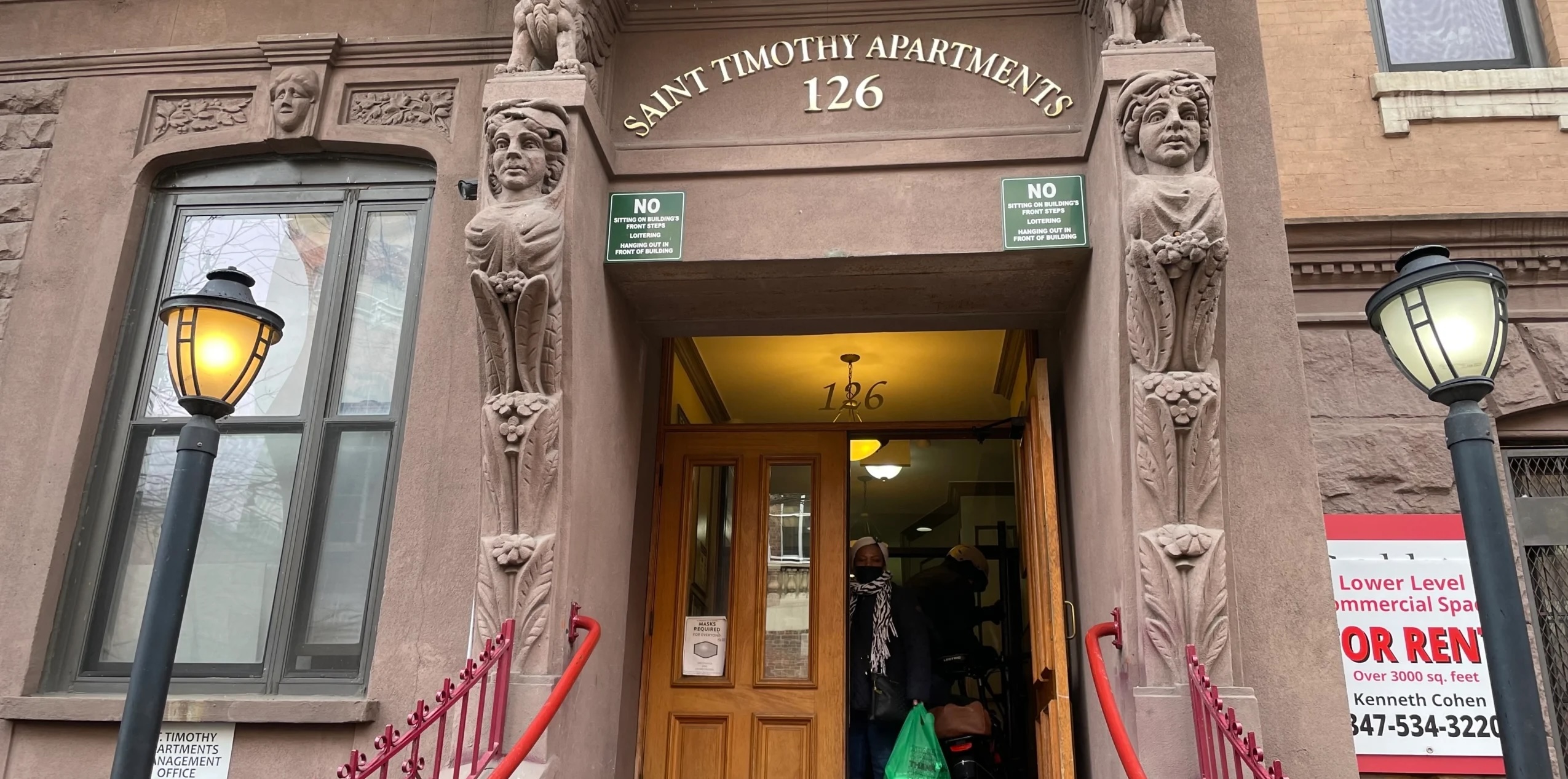
Jurors in the case learned that police officers from the 20th Precinct raced to 126 West 83rd Street around 10 p.m. on the evening of January 18, 2023, in response to a frantic 911 call. Maria Hernandez’s sister had gone to check on her after the victim’s daughter was unable to reach her on the phone. The sister reported that Hernandez had been attacked and was unconscious and might be dead. Fearing the attacker might still be in the apartment, the sister had left the unit to call for help.
Officers entered apartment 3K about eight minutes later and found the place ransacked. In the bedroom, the victim’s bound feet were barely visible emerging from a pile of clothing on the floor. Maria Hernandez was tied up, face down, and gagged. They removed the rope and a cloth from her mouth, cleared some space in the room, and were joined by EMTs who began CPR. After about half an hour of extensive efforts by paramedics to revive her, Maria Hernandez was declared dead.
A short time later, officers went with the building’s superintendent to the basement to access footage from security cameras. There, they discovered that the management office had been broken into, and the DVD device which recorded video footage had been removed.
A break in the case came the next morning when a resident on the second floor provided footage from a Ring camera on her door showing two men speaking with a neighbor the evening of the attack. The building’s full-time super identified one of those men as Lashawn Mackey, who had worked as a temporary super in the building the summer before and who had previously served time for an assault conviction, though the jury was not made aware of his criminal history.
The resident to whom Mackey was speaking said that he had made comments and a gesture implying he had taken action to disable the security cameras and to respond to issues he had with the building super who had accused him of stealing tools. Other residents reported seeing men matching the description of those on the Ring camera in the basement near the management office earlier that evening and hearing construction noises at that time.
Detectives found video footage from neighboring buildings showing the two men entering 126 West 83rd Street at around 5:50 p.m. and leaving almost three hours later. When leaving, about an hour after they appeared on the second-floor Ring camera, they had rolling shopping bags and a large garbage bag, which they did not have on the way in.
One of Maria Hernandez’s daughters identified the shopping bags as identical to bags that belonged to her mother and which were no longer in the apartment. On the way to the subway on Broadway, Mackey was seen on video stopping to count out money which he gave to the other man, having also apparently disposed of the garbage bag somewhere else along the way.
Late the following night, police executed a search warrant at the NYCHA apartment in Brooklyn where Mackey lived with his girlfriend and several dogs. There, they found rope of the same type and color as was found binding Hernandez’s hands and feet. They also found nine one hundred dollar bills in Mackey’s wallet. They did not find the bags, Hernandez’s missing wallet or phone, the building’s DVR recorder, or any other property that could be definitively tied to the crimes.
Mackey was brought to the 20th Precinct for questioning and arrested early the next day, about two and a half days after the incident. His apparent accomplice, Terrence Moore, was identified by video squad detectives and arrested a few days later outside the shelter in Brooklyn where he resided. Moore died in custody in early 2025, succumbing to a medical incident in a holding cell while awaiting a court hearing.
An autopsy by the city medical examiner found that Hernandez had been strangled and suffocated. Internal injuries were also found to be consistent with a foreign object having been inserted in her rectum. DNA recovered from underneath one of her fingernails and from the outside rear waistband of her underwear was found to meet thresholds for a match with a sample taken from Mackey.
Mackey’s legal team argued that prosecutors had failed to prove their case beyond a reasonable doubt. The defense did not dispute that Mackey had been in the building during the hours in which the attack occurred but said that detectives had quickly settled on him as their easiest answer to a crime they were under pressure to solve quickly. Investigators did not pursue other leads but instead looked only for evidence to support a conclusion they had already reached, Mackey’s team argued.
The defense pointed out that no witnesses had seen the defendant on the building’s third floor where Hernandez resided. The DNA that was recovered, they argued, could have been transferred to the scene by the numerous police officers who were visible without gloves in body camera footage recorded in the first half hour after her discovery. The crime scene was heavily contaminated, they said, and the gag which was pulled from Hernandez’s mouth was never found by the crime scene investigators.
As for the rope, the defense argued this was not a unique product and could not be proved to be part of the exact same rope found at Mackey’s residence. The shopping bags were also not unique and could not be definitively linked to Hernandez, the defense claimed. The cash which Mackey had in his wallet could also not be tied back to Hernandez, according to the attorneys.
Lastly, the defense pointed out, the prosecution had not explained how Mackey could have gained entry to Hernandez’s apartment, as there were no signs of forced entry. A key which opened her door, which detectives said in their initial complaint that they found in Mackey’s residence, did not make it through the pre-trial review process and jurors did not hear about it.
The defense also sought to highlight missteps during the investigative process. The evidence envelope containing rope found at Mackey’s residence was incorrectly labeled as coming from the crime scene due to either a clerical mistake by a clerk at the 20th Precinct or an error by the detective squad’s supervisor there.It also came out in the trial that, more than a year after the crime, the lead detective on the case from the 20th Precinct had developed a personal friendship with the victim’s sister, a key witness because she had been the first to discover Hernandez’s body.
During its deliberations, the jury sent multiple requests to review testimony and evidence regarding the crime scene, identification of the suspect, the rope and the bags, suggesting that the defense’s efforts to create reasonable doubt might have resonated with at least some jurors. But in the end, the weight of the circumstantial evidence appears to have been overwhelming.
The prosecution was careful to emphasize that the jury did not have to determine what the motive was – only that Mackey had acted intentionally. But evidence did show that he had interacted with Hernandez during his time as super, attempting unsuccessfully to change a lock. Perhaps, the DA’s team suggested, he harbored some resentment from this interaction, or he could have observed that Hernandez kept cash in her apartment.
Maria Hernandez’s family, who had been in attendance every day for the past five weeks as well as for several weeks in the abortive February trial, were visibly overcome by emotion, weeping and embracing as the verdict was delivered.
One of Ms. Hernandez’s three daughters, Lucia Devargas told West Side Rag the family was pleased with the outcome of the trial. “Hopefully, he never sees daylight out of jail so he can’t hurt anyone else,” she said. “The worst part is thinking about all the pain my mother went through,” she said, adding that those thoughts make it difficult to focus on happy memories of her mother. She has not been able to visit West 83rd Street, where her aunt still lives, since the crime.
In a statement provided to West Side Rag after the verdict, District Attorney Alvin Bragg said “the final hours of Ms. Hernandez’s life were utterly horrific, and the manner of her death shocks the conscience. Thanks to the compelling evidence presented by our prosecutors and powerful witness testimony, including from Ms. Hernandez’s family, Mr. Mackey will be held accountable.”
Mackey, who had been attentive throughout the trial, showed little reaction as the verdict was read, watching the jury intently but with no visible facial expression before being handcuffed and led away by court officers.
Subscribe to West Side Rag’s FREE email newsletter here. And you can Support the Rag here.





Thank you for this in-depth reporting over the course of this horrific case and trial. May Maria’s family find peace now that justice has been served.
I’m glad the prosecution did a better job of it this time, by which I don’t mean obtaining the conviction, but rather not screwing up procedurally (and violating the Constitution) before the jury could make its decision.
I’m a leftist (duh), but this is the kind of case that makes me not a full abolitionist. Someone who could do this–a planned crime, not an impulse; gratuitous torture of a highly vulnerable person, instead of just a property crime; no real provocation, nor major mental health issues–is not someone I want walking around the streets, ever. Maybe when he’s 75 and too feeble to hurt anyone.
I appreciated all of your words until you got to “when he’s 75 and too feeble….” I’m not being flippant, but this is derogatory to those of us in our 70’s! Not your intention, but we all need to be aware that this is part of what makes people dismiss the elderly as “feeble”, not worthy of recognition, etc. I’m 77, engage in a full range of activities in NYC, play ball with my young grandkids and would kick the ass of someone attempting to mess with me. Probably not successfully, but most certainly I’m still a force to be reconned with.
Again, I’m not aiming to put you down, just remind folks that ageism is easy to perpetuate
Thanks- agree with you- had same reaction to that ageist statement. Maybe he will learn.
statement
Kathleen, I appreciate your point. Spending an extended term in prison is tremendously hard on one’s physical health and ages most people rapidly. Someone being released after more than twenty years in prison at age 75 will most likely be in the physical condition of someone ten to fifteen years older.
There are some very, very strong incarcerated people. Kathleen made a valid point. Just own your (very gently corrected) mistake.
I really think you should look into what people look like when they’re released in their 70s after significant terms. I assure you they don’t look like Kathleen (or my mom, who is about Kathleen’s age and probably not as vigorous as her, but not frail, either). I’m not just being stubborn here. Since the primary defensible justification in my mind for incarceration is incapacitation, it becomes important to recognize when people are very unlikely to be able to perpetrate significant harm. Here are a couple of reports you can start with:
https://www.americanbar.org/groups/law_aging/publications/bifocal/vol44/bifocal-vol-44-issue3/broken-and-underutilized-understanding-compassionate-release/ (citing the 10-15 year figure I mentioned)
https://www.aclu.org/press-releases/new-aclu-report-reveals-humanitarian-crisis-of-rapidly-aging-prison-population
https://publichealth.jhu.edu/2025/aging-behind-bars-study-highlights-rising-disability-rates-among-older-adults-in-prisons
Anything less than life in prison with no possibility of parole will be a miscarriage of justice. Also, this should not have taken 3+ years.
What an absolute tragedy. Not just what happened to poor Maria Hernandez, but the fact that these monsters roam among us, waiting to prey on the innocent.
What about the management company who hired such a person to be a super and have access to the apartments? Don’t they have some sort of responsibility?
I hope the family is considering filing a civil suit against several people/entities in this case. It appears that, according to NY law, there is still time to do so.
Was thinking the exact same thing. This could have been prevented.
Hard to imagine the nature and mentality of a person to commit a crime like this. They should be removed from the world we live in. As a resident of this neighborhood for decades, I never consider myself immune to attack. The UWS seems to have returned to the dangerous state of the drug era. It needs to be marked for increased police protection.
Should yes- but I see no increase anywhere.
A January 2023 NY Post story had this information at the time of the defendant’s arrest:
“Mackey is a career criminal who was sentenced to up to 23 years in prison in 2000 on a first-degree assault conviction and served nearly 20 years before his release in 2019.
Rosenthal said in court Sunday that the victim in that case was stabbed 15 times and left lying in the middle of a Brooklyn street with “his intestines hanging out of his body.”
It is entirely appropriate that the jury in the murder trial not be informed of Mr. Mackey’s prior, horrific crime. But I think Mr. Mackey’s being a career criminal is highly relevant for the general public, after the verdict, to understand why this crime happened.
I disagree. Past convictions (i.e. being found guilty) should be disclosed in trials. They are veyr relevant. And, more importantly, they should be factored into sentencing. Repeat offenders should have more severe sentences than first timers. Seems like a no-brainer to me.
Sentencing is the time where the judge, in this case, will consider Mackey’s past criminal history. Hopefully, he is sentenced to the maximum time allowed by law – with no eligibility for parole.
…do you actually think prior convictions aren’t taken into account in sentencing?
I was on the grand jury that indicted Mr. Mackey and his accomplice. We were presented with enough evidence to indict very quickly; we would have charged them with first degree murder if that had been an option. I live in the neighborhood. Every time I visit the post office across the street, I think of Ms. Hernandez and her family. I also think of the building’s super, who was absolutely devastated by the crime. (He had been on medical leave when Mr. Mackey worked in the building.) I remember every detail of the evidence that was presented to us, and I’m not sorry to have played a small part in convicting this defendant.
Why was this monster with a record given access to people’s apartments? Shouldn’t the management company be liable?
WSR, could you please investigate this angle?
This could be a very good issue for investigative journalism.
I think I read somewhere that the management hired those criminals via some program that had financial incentive for them.
Great job by the NYPD.
For those asking whether responsibility should extend beyond the individual tragedy at 126 West 83rd Street to include the broader ecosystem of oversight, management, and ownership, the answer is yes. Scrutiny should extend to Shinda Management, former owner St. Matthew’s–St. Timothy’s Church, and superintendent Oscar Sanchez.
Reports and tenant accounts describe long-standing concerns regarding building conditions, maintenance failures, safety issues, and the treatment of rent-stabilized tenants. Shinda Management and St. Matthew’s–St. Timothy’s are cited in connection with alleged stewardship failures, financial distress, and the building’s transition into city receivership. Oscar Sanchez has been the subject of repeated tenant complaints involving alleged harassment, intimidation, and misuse of authority, which residents say warrants independent investigation.
Tenants also raise broader concerns about transparency, accountability, and communication from Shinda Management and former ownership St. Matthew’s–St. Timothy’s, particularly regarding who knew what, when, and how conditions deteriorated.
Ultimately, residents argue the central issue remains the lived reality inside the building today and whether meaningful accountability will ever be addressed.