
By Yvonne Vávra
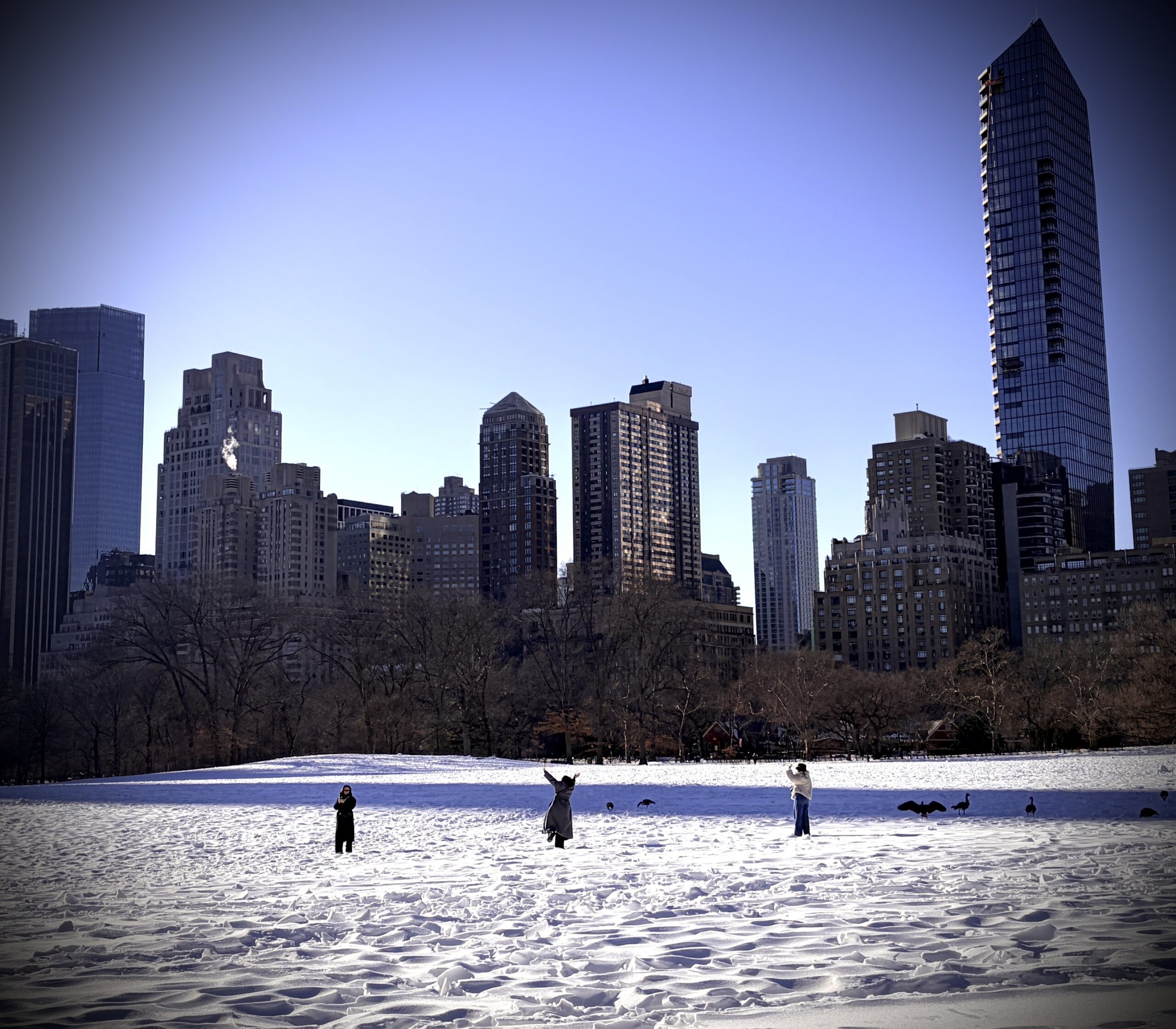
My body wants out. Escape, go under covers, be still. Leave me alone, world, you’re too cold. Winter shrinks life to one block, one errand, one quick trip out and back. Is it too late to cancel?
But staying still only works for so long. After a while, a different kind of cold sneaks in, creeping into your mind.
So you move. Not just to get warm, but to stay connected. After all, it’s not North Pole cold.
At least one Upper West Sider wouldn’t have even blinked at a polar-level freeze. “So?” she would have said, already heading out the door.
When it came to adventure, nothing could stop Barbara Hillary. Born in 1931 in San Juan Hill, now the Lincoln Square neighborhood, she worked 55 years as a nurse and survived two cancer diagnoses before deciding she wanted to see polar bears and go dog sledding in Canada.
Along the way, she learned that no Black woman had ever been to the North Pole. The game was on.
The fact that she had no money, no formal training, had never been on skis before, and was living with a 25 percent reduction in breathing capacity after lung cancer surgery? In her book, just details. She took cross-country skiing lessons, worked out, raised money, and, as she later told The New Yorker, ate more vegetables. In April 2007, at age 75, Barbara Hillary reached the North Pole.
She was on top of the world. But that wasn’t far enough for a woman like her. A few years later, at 79, she set out for the South Pole—again, the first African-American woman to do so. That made her the first Black woman to stand on both poles.
Beyond the ice, Hillary became a climate-change activist, work that took her as far as Mongolia shortly before she died at 88 in 2019.
And here I am, whining about the extra-mean wind whipping through 86th Street.
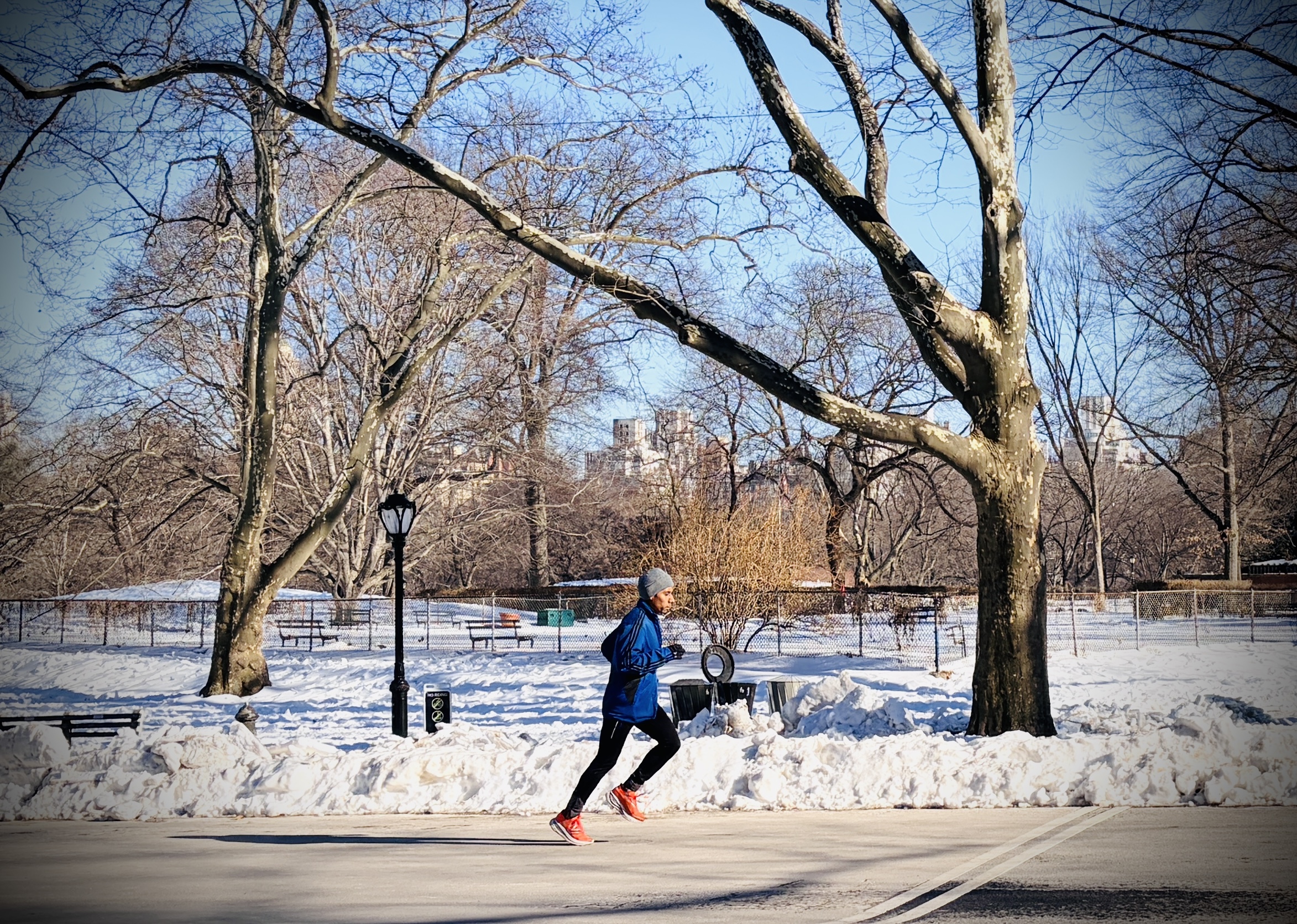
To follow Hillary’s courage, I might not need to trek to the ends of the earth. For now, a run around the Central Park loop will do just fine. Six miles of biting wind, but it will warm me with a pulse and a story.
Did you know the loop has a name? In February 2021, in honor of Black History Month, Central Park officially named it after Ted Corbitt, the legendary long-distance runner. Over his lifetime, Corbitt ran across the finish line of 223 marathons and ultramarathons, winning many. He co-founded the New York Road Runners and served as its first president. At 33, he became the first Black runner to represent the United States at the Olympic Games in Helsinki, and in 1970, he wore bib No. 1 at the very first New York City Marathon.
Corbitt made Central Park a running community open to everyone. He fought to get more women into the sport, inspired older runners to keep competing, and paved the way for Black athletes in long-distance running, a discipline that had long been predominantly white. He understood the power of a visible role model: As a Black man running long distances, he had faced countless encounters with the police, being stopped hundreds of times while training. He didn’t just bring movement to the city, he brought it to the way things were.
Legend has it he went out for two runs every day for 13 years straight—until an unfortunate encounter with a dog in Upper Manhattan interrupted the streak. He ran loops around Manhattan, tackled 24-hour races, and ran to and from work, just a quick 20 miles each way, no matter the season. Corbitt continued competing into his 80s, and by the time he died in 2007, he had run more than 170,000 miles. That’s more than 28,000 Central Park loops.
If running or skiing isn’t your thing, maybe the moves of another Upper West Sider will get you on your feet. Elizabeth Welch, like Barbara Hillary a San Juan Hill–born kid, was the first to perform the Charleston song in the 1923 hit show Runnin’ Wild. Her charisma on stage at The New Colonial Theater, on 62nd Street and Broadway, unleashed a national dance craze, carrying her from just around the corner from her family’s apartment to international stardom. Over a career that spanned seven decades, Welch dazzled audiences on stage, on screen, and on the airwaves, becoming the first Black woman to have her own BBC radio series.
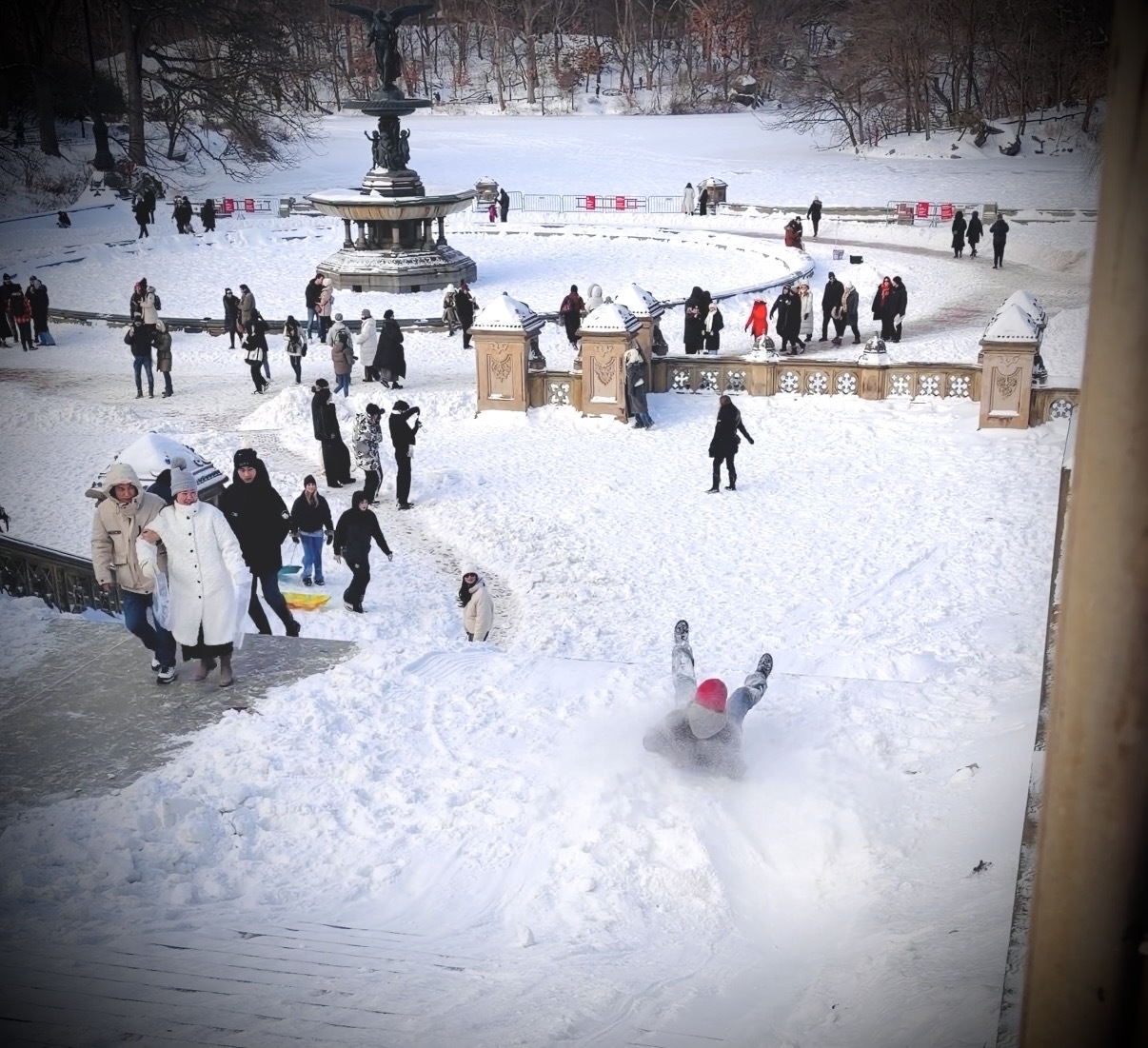
Black History Month shines a spotlight, but the example set by Hillary, Corbitt, and Welch reaches far beyond February. They moved through life by barreling through every obstacle—barriers of race and culture, of age and fear, of discipline, discomfort, and impossible odds. They didn’t just write Black history; they also wrote Upper West Side history, making room for the rest of us to move more freely. Which, when winter is doing its best to stop us, feels like a very good reason to step out, go where we’re headed, and bite back at the wind.
Yvonne Vávra is a magazine writer and author of the German book 111 Gründe New York zu lieben (111 Reasons to Love New York). Born a Berliner but an aspiring Upper West Sider since the 1990s (thanks, Nora Ephron), she came to New York in 2010 and seven years later made her Upper West Side dreams come true. She’s been obsessively walking the neighborhood ever since.
Subscribe to West Side Rag’s FREE email newsletter here. And you can Support the Rag here.




Beautiful piece, as always, Yvonne. Love your prose and your perspective— curious and open. An example to us all. Thank you!
NOTE: Ted Corbitt, as great a runner as he was, was not the first Black runner to represent the USA in the Olympic Games, but was the first Black runner to represent the USA in the Marathon event at the Olympic Games.
Jesse Owens? Ran in the Olympics many years before Ted Corbitt? Please help me understand. Thanks.
Thanks, Yvonne,
this is a beautiful piece celebrating Hillary, Corbitt, and Welch.
I enjoy reading your columns. This is one of your best.
This is lovely. Thank you.
As always very beautifully written, and going to the North Pole at 75 is olo inspirational.
but what does “At 33, he became the first Black runner to represent the United States at the Olympic Games in Helsinki,” mean? Black runners had represented the US in the Olympics before.. Does this mean he was the first black long-distance runner to represent the US?
Also that Corbett “paved the way for Black athletes in long-distance running.”? Maybe without him, African runners wouldn’t have come to the NYC Marathon. But based on everything I have read, long-distance running has always been a huge thing in certain parts of Africa, before Corbett was even alive. Maybe he paved the way for African-Americans in long-distance running?
I really enjoyed this—it made the cold feel manageable and gave real meaning to just getting out the door.
Nice article, but please note: it’s Elisabeth (with an s) Welch, not Elizabeth. My mother was an Elisabeth with an s, so I feel strongly about the proper spelling of that name.
Great story and the first I’ve read without those nagging, telltale errors in syntax which smell of Ai. (Lower case i is intended. I don’t think Ai is all that intelligent)