

By Saul Dennis
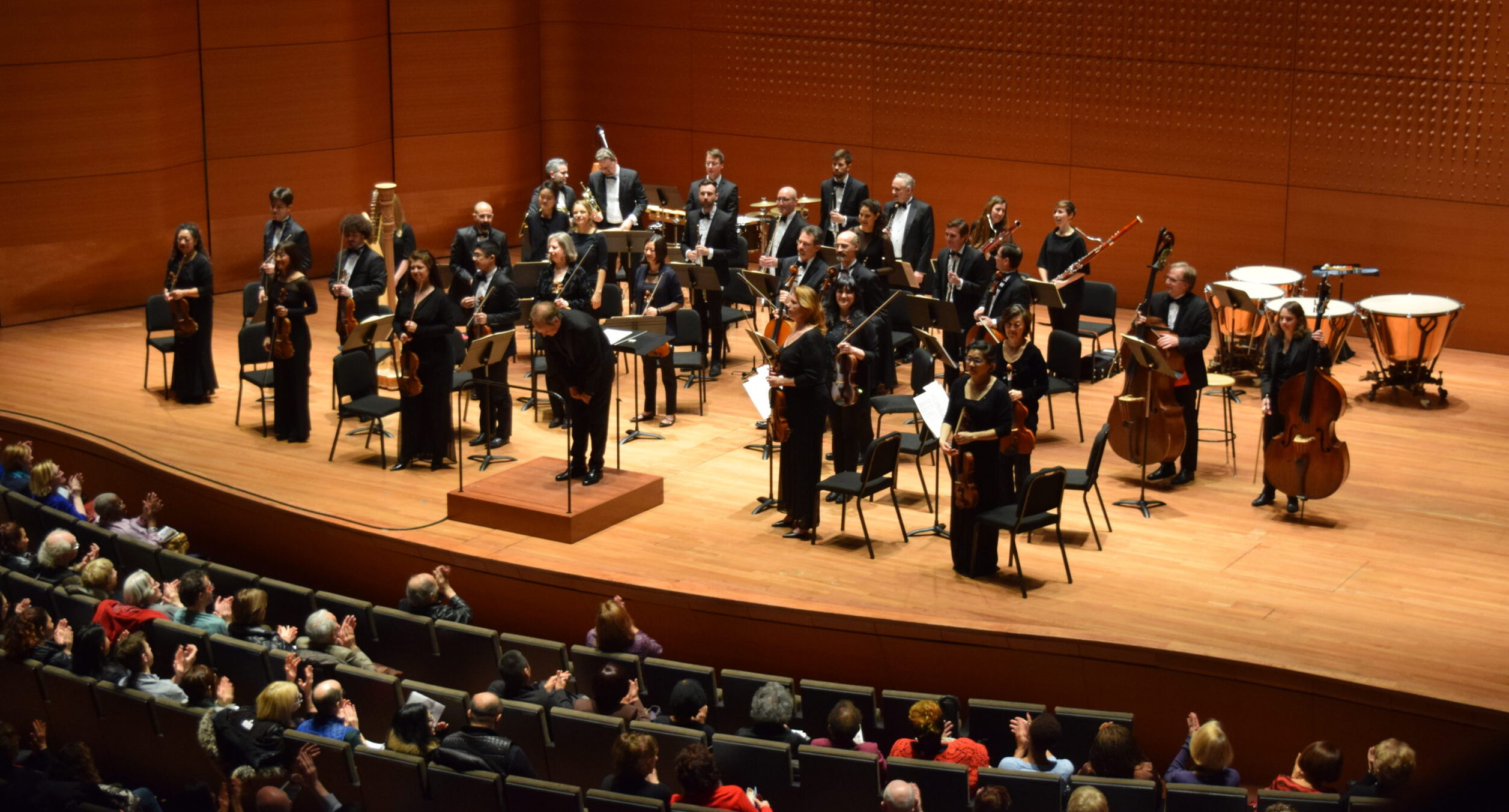
“Miraculous, magical. A work of blinding genius.” That’s Anthony Korf, the Riverside Symphony’s co-founder and composer-in-residence, talking about the symphony’s upcoming production, Saturday February 7, of “Peter and the Wolf.”
At first glance, this popular, decidedly mainstream piece may appear to run counter to Riverside’s reputation for exposing audiences to lesser-known and new works in the classical canon.
Yet “Peter and the Wolf” is emblematic of another, deeply held tenet of Riverside’s mission: Educating young people to the joys of classical music.
“That the orchestra can capture a character, make an oboe sound like a duck, a flute like a bird, horns, the wolf – for the young listener it’s so immediate, wow,” enthused George Rothman, the symphony’s fellow co-founder and conductor.
The Rag caught up with the symphony’s leaders in Rothman’s sunny Upper West Side apartment. In addition to music education, the Riverside Symphony is known for artistic excellence, innovative programming, and a dedication to something the founders call Musical Discovery. So, along with hearing more about the upcoming production, we wanted to get a richer sense of the role Riverside has played in the lives of Upper West Side classical musical lovers for nearly 45 years.
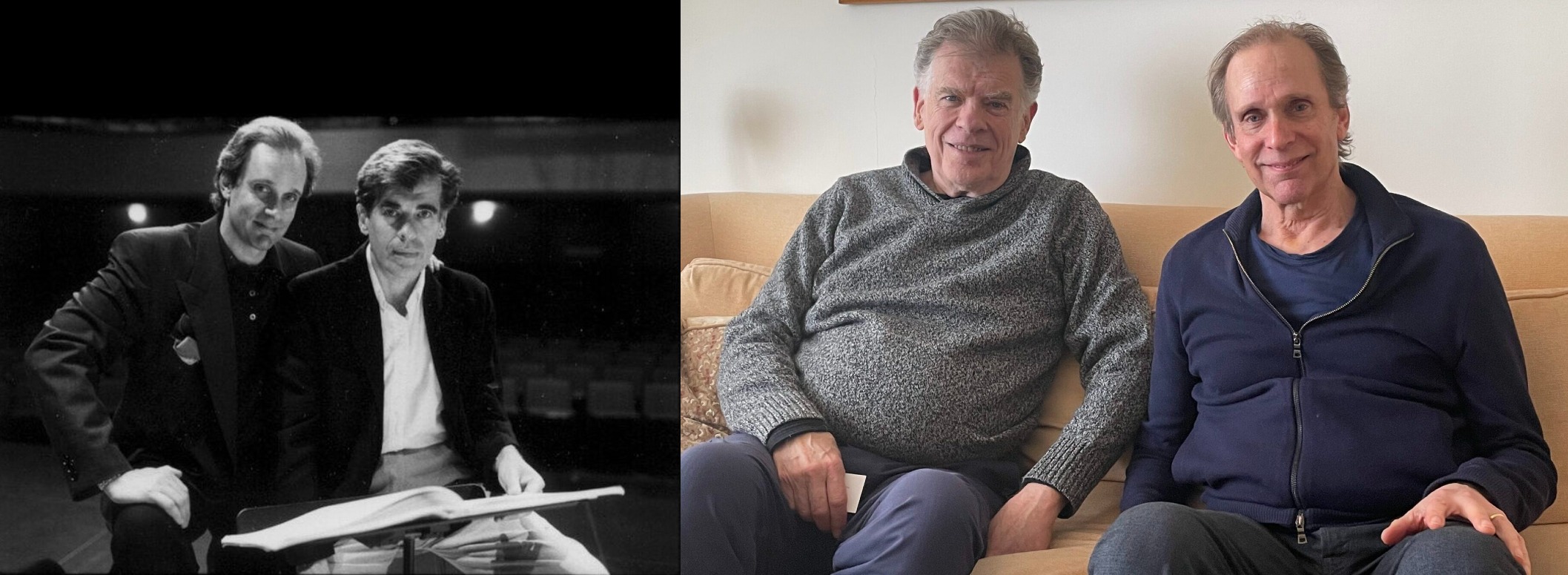
Co-founders George Rothman and Anthony Korf met as students at the Manhattan School of Music in the late 1970’s. As Korf put it, “We had uncannily similar taste,” meaning, he said, that each found “someone who hears music the way you do.”
“We had a love for classical but also loved jazz and sort of off-beat, popular music,” remembered Rothman.
Of those early years, Korf said: “After graduation, George and I were pursuing careers in classical music. George was a conductor looking for an instrument, we call the orchestra an instrument.” And Korf, a self-described “up-and-coming composer,” had his own contemporary music ensemble.
Coming together to found the symphony involved a combination of chutzpah and happenstance.
“You could do that sort of thing in those days,” said Korf, referring to the economic challenges of starting out in New York in the early 1980’s versus today. “We didn’t think [about] ten years from now, we just took it one year at a time. That was the magic of it.”
Still, even magic needs its moment. Through connections, they heard Riverside Church — another longtime UWS neighbor — was looking for what can best be described as a house band. Korf and Rothman agreed to supply it, in return for a place to rehearse and perform with their budding symphony. (Though they played Alice Tully Hall for many years, the symphony now calls W83 Ministry Center, on West 83rd Street, home.)
From the start, the pair was determined to do things differently. As Korf put it, “With American orchestras, 90% of the repertoire is the same 40 pieces. We refer to it as the Top 40. We’ll do a Top 40 piece, but you’re also going to hear pieces you’re not going to hear elsewhere.”
As an example, the symphony’s co-founders recalled a Riverside concert from last year: Two rarely heard — perhaps never heard, at least in New York — symphonies by Haydn. Humorously, the two debated how many symphonies Joseph Haydn had composed. 104 or…?
“There’s a subset of classical music fans who don’t just want to hear the same programs,” said Korf.
Giving opportunities to young composers, emerging talent and soloists is another pillar of the founders’ vision. “It’s like the Olympics,” said conductor Rothman, “People want to see a young person. It’s exciting — are they going to make [it]?”
Four decades later, the pair say their formula has been copied by more than a few orchestras around the world. With wry smiles, they assure the Rag they’re only mildly chagrined. Far more meaningful is the fact that Riverside’s way of doing things has resonated closer to home.
How close? Well, right in the orchestra, for starters.
Here’s Alan Kay, the Riverside Symphony’s principal clarinetist and, at 43 years, the longest serving member of the orchestra. “Featuring new works or works off the beaten path allows me to get the full picture of what a composer is all about. It’s much more interesting,” said Kay. Playing with young, aspiring soloists is also, “very exciting, satisfying.”
Kay also hints at why the UWS is, in Korf’s words, “very hospitable” to Riverside’s vision. “The Upper West Side audience is intrepid, not afraid, more curious,” said Kay.
“They trust us to pick pieces that are more interesting. We’re like curators,” Rothman said of the UWS audiences. “If we’re enthusiastic, others will be, too.”
Outreach and education have also long been central to Riverside’s mission. The symphony regularly provides free and discounted admission to a variety of community, philanthropic, and social organizations.
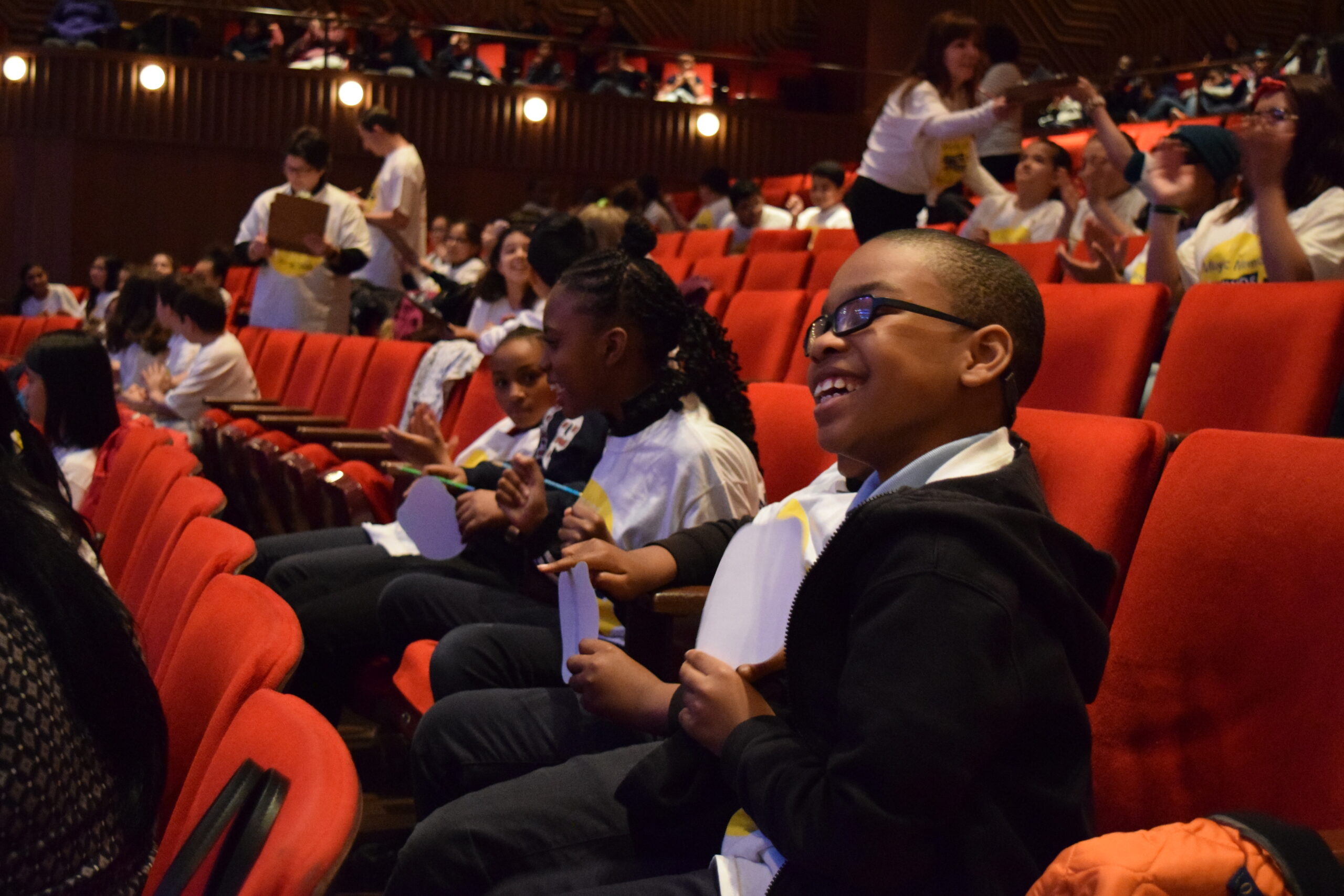
For nearly 25 years, Riverside’s Music Memory program brought music education and appreciation to 4th to 6th graders throughout public schools in the five boroughs.
“We trained teachers how to teach students to listen,” says Rothman. Students would listen to classical recordings, guided and engaged by illustrated music maps, depicting instruments and sounds. Every year, schools took part in the Citywide Finals, a Name That Tune-type competition where Riverside Symphony played pieces that the students competed to identify correctly.
Like many arts initiatives, Music Memory fell victim to the pandemic. Still, the spirit of the program lives on. “Peter and the Wolf” is the first in Riverside’s new Family Concert Series. “This came out of the Music Memory project,” said Korf. “We’re pivoting to have more control.”
The Saturday afternoon performance features Rothman at the baton and local TV journalist and WABC anchor Bill Ritter as the narrator. Alexandra Joan will solo at the piano. (Ms. Joan is a sought-after soloist in the Europe and the US. If you don’t know her, well, that’s kind of the point.)
The upcoming show is geared for ages 8 and above. According to Korf, “We want interest to spill over in the household. To remind adults ‘I want this to be a part of my life’.”
Or, as an old Riverside Symphony tagline says, What you don’t know just might thrill you.
Find details on Riverside Symphony’s February 7 concert of Peter and the Wolf — HERE.
Subscribe to West Side Rag’s FREE email newsletter here. And you can Support the Rag here.





When I was an infant and early toddler, Peter and the Wolf was my favorite record. My mom used to play it for me, and I would hum or sing the melodies (as best as I could). It always made me smile.
I was also something of a musical prodigy (but that went south too soon). By 2 or 3 years old, I would go to the piano and was able to “pick out” some of the melodies of the piece, as well as melodies of other pieces I heard on the radio (classical) that my mom always had playing in the kitchen.
But the moment that stunned my mother – and had her send me to early child music classes – was when (remember, this is according to her), I was sitting in my high chair, probably 3 years old, and a piece came on the radio. I listened closely and apparently said something like: “That sounds like Peter and the Wolf. I know it’s NOT Peter and the Wolf, but it sounds like it.” Sure enough, it was another piece by Prokofiev. I had recognized the style of a composer at 3 years old. (I was apparently able to do this with a few other composers as well, particularly Beethoven.)
I began early childhood musical training (in a small group with a private teacher) within a few weeks. And while I remained something of a prodigy through my single digits, and remained a musician my entire life, I “lost” my prodigy abilities before I made it to 5th grade. Oh well. It was fun while it lasted. Oh, and I still love Peter and the Wolf.
In the 1970s, I updated the narrative to reflect modern times. It became “Peter and the Pusher”.
LOL.