

By Daniel Katzive
The Upper West Side will soon lose three dedicated ambulances and their staff, potentially resulting in longer response times for 911 calls here.
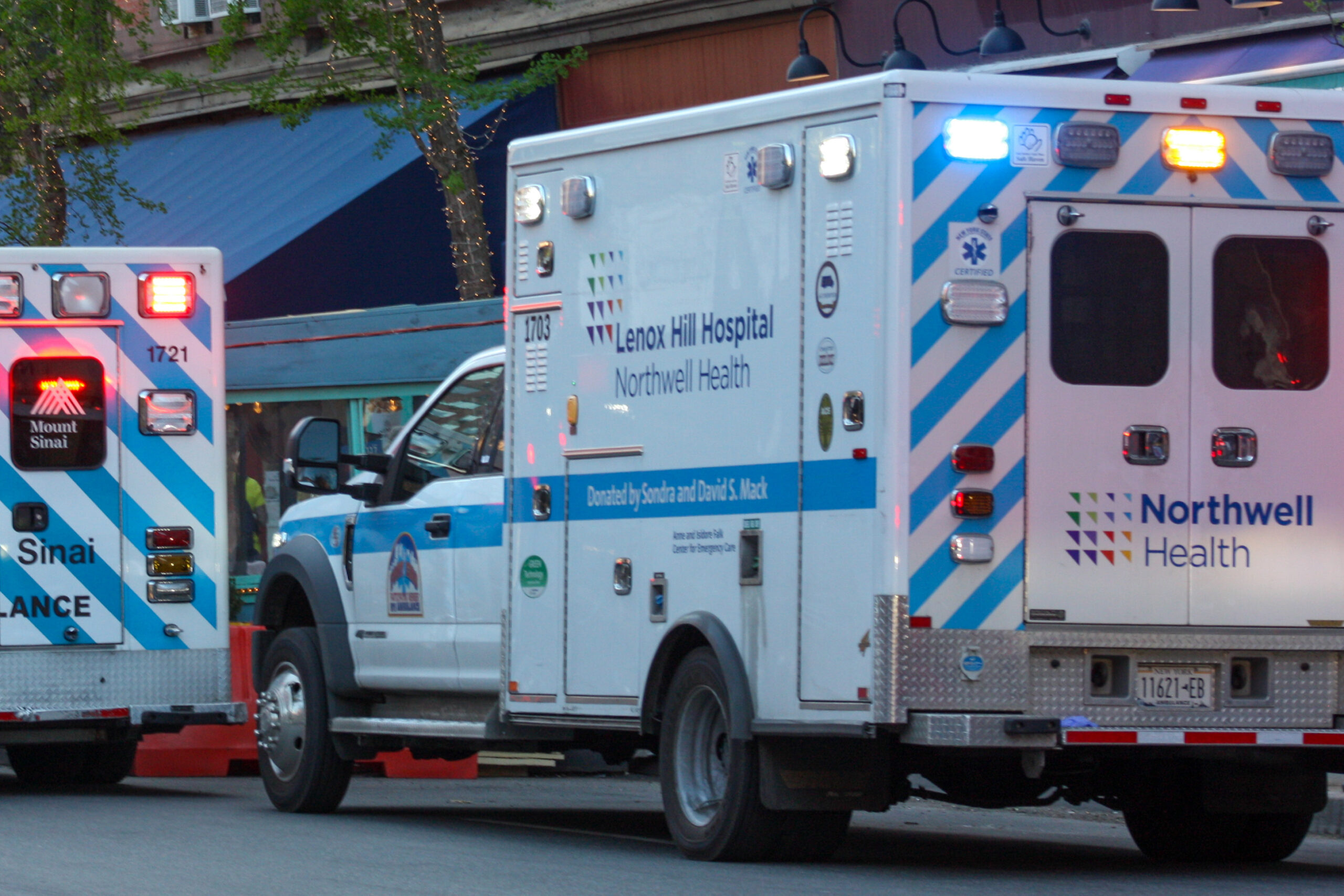
Northwell Health’s Lenox Hill Hospital is laying off or reassigning 18 staff members and shutting down two advanced life support and one basic life support ambulances, covering the Upper West Side up to Washington Heights, according to the Emergency Medical Service Public Advisory Council (EMSPAC), a nonprofit supporting the 15,500 municipal and privately employed EMS workers in New York City.
The trio of removed ambulances units from the Upper West Side were previously stationed at Columbus Avenue and West 72nd Street, Columbus Avenue Avenue and West 85th Street, and a third near the American Museum of Natural History, according to New York City Councilmember Gale Brewer, who penned a letter on Friday to Northwell Health, protesting their removal.
The three units are capable of responding to approximately 60 calls per day, estimates Walter Adler, EMSPAC’s president and a paramedic and union delegate working at another private hospital system in the city. “Is it gonna break the system overnight? Absolutely not. But it is a problematic variable in how New Yorkers get emergency care over time. The city doesn’t really want to pay its employees, and the hospitals are absolutely looking at the ambulances from the perspective of finances,” says Adler.
The gap will be bridged by FDNY ambulances or units from other hospitals such as Mount Sinai, Columbia Presbyterian, and NYU, but the system is already stretched. The Mayor’s Management Report, released in September, showed a rise in average EMS response times across the city in the last fiscal year, and data collected by WSR from the city’s OpenData portal shows response times have also risen on the Upper West Side.
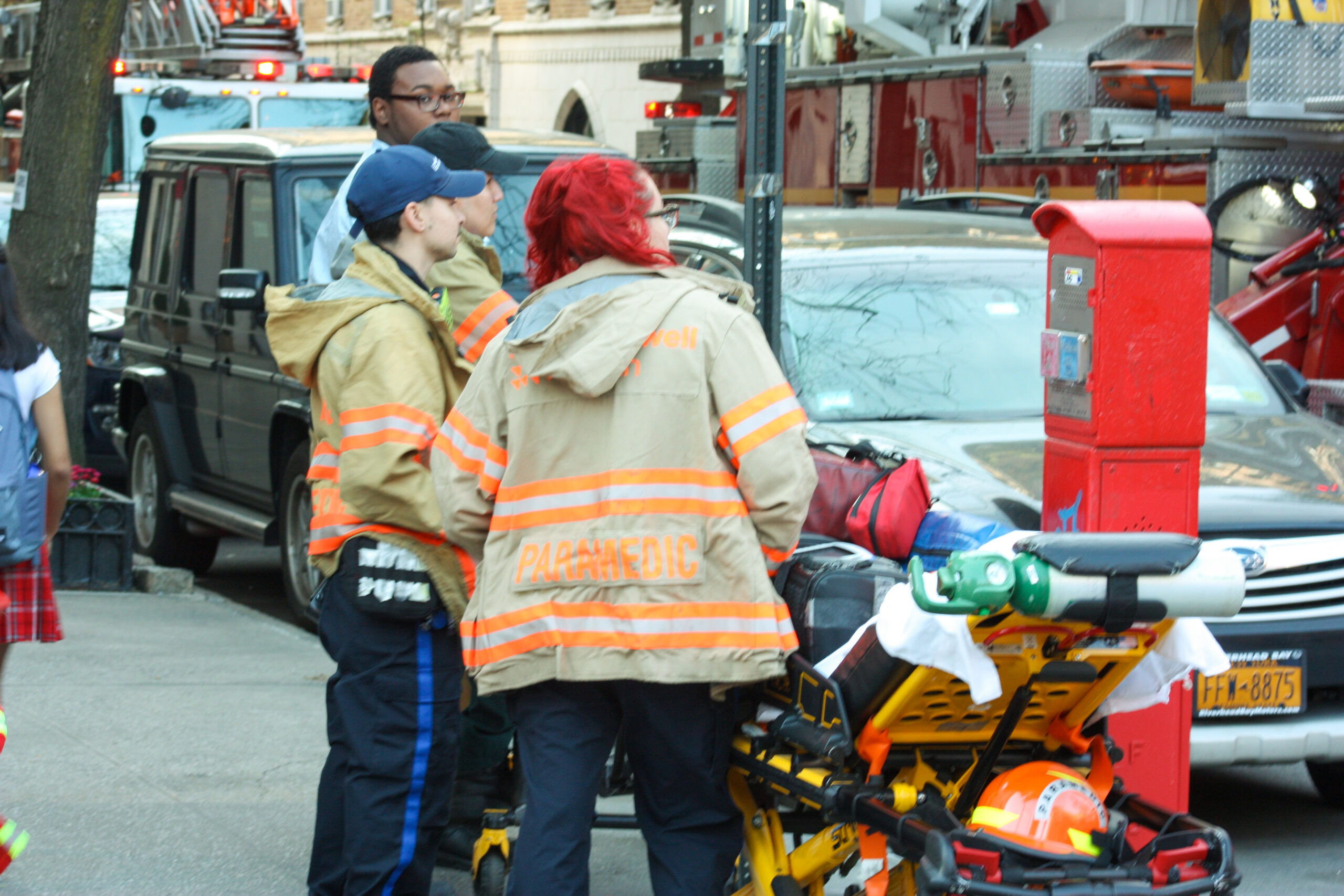
The FDNY is primarily responsible for emergency medical services in New York City. However, the department alone is not able to provide sufficient numbers of ambulances or medics to cover the city’s needs, and so it contracts with private hospitals to provide additional units. This hybrid system dates back to the time before the FDNY took over the EMS system from the city’s Health and Hospitals Corporation in the 1990s. EMSPAC estimates that the so-called “private hospital” ambulances currently provide about one-third of the ambulances operating in the city.
Regardless of which type of ambulance ultimately responds, all medical emergency calls to 911 in the city are first routed to an FDNY dispatcher. The dispatcher will assess the call and dispatch the closest available resources to the incident, whether that is an FDNY ambulance or a private hospital ambulance. The dispatcher also determines whether a basic life support ambulance staffed by emergency medical technicians or an advanced life support unit staffed by paramedics is warranted.
Once a patient is stabilized and ready for transport to a hospital, a decision on where to go is based mainly on geography. Private hospital ambulances are not allowed to favor their own emergency rooms over closer available facilities.
The care standards for equivalent types of private and municipal ambulances are the same. But compensation and benefits are better for privately employed EMS, according to EMSPAC. FDNY EMS also regularly loses medics to FDNY firefighter jobs, where pay is also better and the union representing municipal EMS employees has been pushing for better wages for years.
Northwell Health told West Side Rag in an email statement that it is making changes “to further optimize the efficiency and effectiveness of our operations within the greater New York metropolitan community, while reinforcing our continued position as one of the largest and most reliable providers of emergency medical services in the region.”
In the latest Mayor’s Management Report released last month, the FDNY says it has a strategic plan in place to get help to medical emergencies faster. Key elements of the plan include efforts to reduce the amount of time ambulances spend at hospitals between calls, and introducing more non-ambulance Paramedic Response Units, which can respond to more calls because they provide advanced life support without transporting patients. The department is also exploring alternative transport arrangements and telehealth capabilities for less serious calls.
West Side Rag has reached out to the FDNY for more information about how the loss of Northwell units will impact response times. We will update this article if they respond.
Subscribe to West Side Rag’s FREE email newsletter here. And you can Support the Rag here.




At least the UWS still has the Hatzolah!
A great resource to the community. But a volunteer agency is not a substitute for a municipally-provided essential service. It is up to the city to ensure that the 911 system has enough ambulances to cover the city’s residents without relying on benevolent volunteers.
How does that benefit everyone?
The three ambulances were stationed pretty close together. Do the other companies have different territories? Wouldn’t it be better if each ambulance from one company is based in a different area, north, south, CPW, Riverside or West End. This way, a specific area now has less coverage.
It doesn’t really matter where we are stationed at this point. As soon as we log on to the 911 system, we are already playing catch up getting dispatched to calls that have been holding for hours. The only time we see our Cross Street Location is when we are driving past it to the next emergency. The loss of these units will definitely hurt, but the real damage has already been done by the fire department “promoting” EMS personnel to the fire side. The system is so screwed that as a “Manhattan” unit, we end up responding to queens or Brooklyn emergencies because there aren’t any available crews.
BILLIONS spent on illegal migrants but not enough money for hard working EMS or ambulances. Disgraceful.
Oh, for Pete’s sake, give it up. The funding streams for the two things are completely different. One has NOTHING to do with the other. you might want to try actually learning something one day.
That’s pretty mean. I am sure this will not be posted.
How so ?
NYC has a budget where funds are allocated.
It was a choice to fund some services more than others.
The increase of funding for illegal migrants would take more of the budget, leaving less for other services.
The funding streams are different? Really? I thought the government was funded by one stream: Taxes!
reply to Bill Williams: there are multiple funding streams: local taxes, state support, federal support, fees… and many of them are dedicated to this or that program. Please make an effort to understand how govt works before disparaging,
“to further optimize the efficiency and effectiveness of our operations within the greater New York metropolitan community, while reinforcing our continued position as one of the largest and most reliable providers of emergency medical services in the region.”
translation: we can’t afford it
The silver lining is that people who need to rush to the hospital will be able to take a free bus.
You win! Best comment I’ve read on WSR in ages. You eviscerated both our city leadership and the urbanist transplants in one sentence. Well done.
Why doesn’t MT. Sinai buy those ambulances and take up Northwell’s slack???
Ambulance contracts are a little more complicated than that, unfortunately…They involve everyone from the NYS DOH to the FDNY. If only it was that simple.
What the article did not discuss was the root cause for the affordability problem. What changed?
Ambulance service, despite the hefty list prices, doesn’t come anywhere near making money. Then again, neither do other municipal agencies such as police or, pretty relevant here, the firefigthing portion of FDNY.
The contracted units are operated by the hospitals (and, in some instances, subcontracted…) for a combination of good will, public spiritedness, advertising, and… although they’ll deny it, helping to bring patients to their “home” hospital.
Note that ONE THIRD of EMS 911 calls are turfed over to these contract units. This has been the case ever since the establishment of the citywide EMS system in the 1970’s (the percentage of municipal : contract has varied over the years).
The FDNY EMS union has been without a contract for three years. They are underpaid not only compared to private ambulance drivers but also compared to FDNY firefighters, despite the fact that they go into the same burning buildings and other hazardous situations. FDNY EMS, including highly trained paramedics, need fair pay. No wonder the EMS is short-handed.
These ambulances in particular were particularly problematic. A problematic ambulance you might ask? One of the ambulances that provided more advanced life support was notorious for intentionally blocking side streets and abusing local residents. Rather than pull around a corner to park and attend to the issue, they would intentionally slow-walk calls to the frustration of the vehicles behind them. Imagine if someone was rushing to an emergency and now being forced to wait for over an hour due to the egomaniacal EMS staff on that van. A contact I have had in the EMS-world was aware o this behavior and noted that essentially these workers are actually and truly “Above the law”. The private hospitals as a whole use these EMS vans as mobile advertising. Recall during the peak of COVID – Mount Sinai intentionally used very loud “French” sirens and would intentionally blast it while cruising down the major avenues at 3AM. Finally finances have caught up with this industry and the abuses will be reduced.
LOL…the “ French sirens” are because the UES residents wanted the less annoying sirens!
I find this particularly and personally sad because Northwell Health has been the best, most efficient and effective provider of health care services to me since I started needing such services about a dozen years ago. And I tried a few others before them, so I have a basis on which to compare.
Almost all my doctors are Northwell Health specialists, and are excellent doctors. Indeed, my “health care team” (the various specialists to whom I go) are among the best doctors I have ever used. As well, if and when I need an ER, I will go across town to Lenox Hill rather than straight down to Mt. Sinai West on West 59th, because the difference between them couldn’t be starker. MSW is among the worst, most badly run ERs in Manhattan: loud, chaotic, slow, etc. The Lenox Hill ER is the polar opposite: quiet (mostly), well-managed, and comparatively quick. And the ER doctors and other personnel at Lenox Hill are simply better and more effective.
I always wondered why I received fundraising letters from hospitals; I had always thought that they didn’t need public funding. But then I found out that, not only are they underfunded, but that ERs get the LEAST amount of funding in all hospitals, so I have been making small annual donations to the LHER.
But ANY decrease in emergency services is sad, and worrisome.
I totally agree with everything you’ve pointed out! .. Having personally experience the appalling non-existing help you get at Mt Sinai West Emergency on 59th.. I believe it’s independently funded and not part of Mt Sinai.. I waited more than two hours to see a doctor while stuck in a freezing room in a thin robe. I finally walked out having seen no one! The worst ever.
Columbia needs to come back and take over the Upper West Side as well as St Luke’s. Mount Sinai on Northwell doing a terrible job. They only care about the East side.
Hopefully this will eventually restore residents’ hearing.
Is this the same medical center that’s been closing their urgent care locations? What happened to the funding and all the private donations?