

By Yvonne Vávra
The Channel had been trying to throw her out for more than half a day. Waves tugged, currents dragged, cold bit—the elements pulling every string to make her turn back. Jellyfish and rain joined in, adding their voices to one relentless chorus: This is not your place. Go home. Home to West 65th Street.
But Gertrude Ederle, daughter of a butcher with a shop at 108 Amsterdam Avenue, wasn’t listening. Not this time.
She’d been here before—same English Channel, same dream. A year earlier, in 1925, her coach had pulled her out because he didn’t believe she could make it. But now she had a new coach, had slathered herself in grease to guard against jellyfish stings, and cut up her one-piece swimsuit into a tighter, more aerodynamic two-piece. A bold move in an era when women often still wore dresses to the beach. But nothing could stop Gertrude—not the sea, not the odds, not old rules about how a woman should dress, move, or dream.
And so, on August 6, 1926, twenty-year-old Gertrude Ederle made history as the first woman—and the first American—to swim the English Channel, from France to the British shore. She crossed in fourteen-and-a-half hours, nearly two hours faster than the previous record, held by a man.
Back in New York, two million people celebrated her with a ticker-tape parade, and thousands of Upper West Siders threw a block party around the butcher shop at 65th Street and Amsterdam. That was 99 years ago, almost exactly to the day.
The country loved her, President Calvin Coolidge even calling her “America’s Best Girl.” She toured the vaudeville circuit, and for a second there, she was the most famous woman in the world. And then, the second was over. Gertrude, who had lost most of her hearing to childhood measles and all that time in the water, spent much of her life teaching deaf children how to swim. She died at 98 in a nursing home.
How many of us know her name today? Well, it graces the entrance of the Gertrude Ederle Recreation Center on 60th Street, so there’s that. Our city has a short memory and always somewhere else to be. It loves a moment, loves a parade, but loves the next thing most of all. Let’s be rebels and linger—just long enough to cast a tiny, random flicker toward other Upper West Side women who once left the shore of the old ways to do things their way.

Take Sophia Kremer, for instance, who lived at 233 West 83rd Street. A decade before Gertrude’s big swim, the leading New York suffragist believed women deserved two basic rights: the right to vote, and the right to know what was in their food. In 1913, she made national headlines by tackling both issues at once, opening the “Votes for Women Grocery Store” at the corner of Broadway and 95th Street. It stocked only transparently labeled products approved by the Pure Food Movement, plus plenty of reminders to support women’s rights—suffrage brochures tucked into every bag. The profits went straight to the cause.
Kremer remained an active fighter and was, as the New York Herald called her in 1914, “among these defiant and almost militant suffragists.” But not long after, she slipped from the public eye. The Bloomingdale Neighborhood History Group notes the last trace of her comes from August 1917, when she was reportedly on her way to picket the White House.

Another woman—New York’s original It girl—was Audrey Munson. Chances are you walk by her all the time without realizing it. Born in 1891, Munson came to the city as a teenager with dreams of becoming an actress. She was soon discovered and became the muse for dozens of sculptors who immortalized her all over the city. That’s her, arms outstretched at the USS Maine Monument at Columbus Circle. Her again, holding a firefighter on the north side and a boy on the south side of the Firemen’s Memorial at 100th Street and Riverside. The reclining figure in Straus Park at 106th and Broadway? Also her. And yes, the Alma Mater at Columbia by Daniel Chester French—Audrey again.
Munson wasn’t a silent muse. She contributed to the works she posed for, championed women’s rights in the arts, and fought to close the pay gap between men and women. Munson made herself visible when women were expected to stay covered, quiet, and in the background. She stood her ground in a sexist, conservative society, demanding recognition and agency. She deserves a statue with her name on it.
But what little remains of her story tends to focus on the “fallen star” narrative. Controversy swirled around her nude modeling, and in 1919, while living at 164 West 65th Street, she was drawn into a scandal: the building’s owner fell in love with her and killed his wife. Fleeing the city with police seeking her for questioning, Munson denied any romantic involvement. Still, her career faltered, she fell into depression, and in 1922 she attempted suicide. At 40, her mother admitted her to a psychiatric facility upstate, where she lived for the next 65 years until her death at 104. It would be two decades before a headstone was placed on her grave.
All of these lives are parade-worthy. In fact, parades for all of us! For our honorary 100-year-old UWS mayor, our tireless activists, our overcomers. And while we’re at it, for ourselves, too. We forget our own accomplishments so easily—standing scared in front of new challenges like we’ve never been bold before. But we all have broken molds and made moves that mattered, in our own lives or even in the lives of others. The game changers of the past and the history-makers within us deserve to be celebrated. Confetti, anyone?

Yvonne Vávra is a magazine writer and author of the German book 111 Gründe New York zu lieben (111 Reasons to Love New York). Born a Berliner but an aspiring Upper West Sider since the 1990s (thanks, Nora Ephron), she came to New York in 2010 and seven years later made her Upper West Side dreams come true. She’s been obsessively walking the neighborhood ever since.
Subscribe to West Side Rag’s FREE email newsletter here. And you can Support the Rag here.




Thank you for bringing to light these talented and courageous women.
Yvonne – I gladly will line up on a parade route for you. Thank you for this wonderful article and all of your other amazing essays.
Wonderful wonderful history work. Thank you for encouraging us to support and appreciate ourselves as well as others.
Great article. I had no idea!!!
Great article!
A new perspective—thank you! Beautifully written.
Your essays are so welcome. I hope you will ….someday…put them together in a book. Thank you for the wide scope of your research….. and your splendid sentences.
One of my favorite NYC writers EVER. Bravo and thank you for your service, ma’am!
Thank you for helping us celebrate these amazing women who stood up for the rest of us when doing so put them at risk. Let’s not forget where we would still be had it not been for such courageous women. Another important and beautifully written article by Yvonne, a very talented UWSer.
One of your most enlightening articles!!! Who knew “Alma” and “Mrs Strauss” were the same person? Now I’ll have to look more closely. Thank you!!!!
Wonderful. Thank you
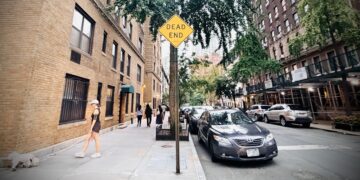
Thank you for the words – and great photo at the end
Really enjoyed this!
Truly enlightening . . . fascinating. Thank you!
Great article, Yvonne. Love your contributions to the Rag and our lives!
The story of Munson is terribly tragic. I’m almost sorry I read it.
Makes you wonder if she was truly insane or just inconvenient because of the scandal.
Great article but I have one correction. Alma Mater was designed in 1901 and installed in 1903, when Audrey Munson was still a child and before she arrived in the city (1909). The actual model is believed to be Mary Lawton, an actress and friend of French.
Yet another beautiful essay Yvonne! I always look forward to your contributions. I love how you connect history and your experiences (both past and present) to a meaningful value for us to consider. Much love and appreciation!
I really enjoyed the article. I had no idea about these women, except for Audrey Munson.
Fiona Davis wrote a novel, The Magnolia Palace, whose main character is based on Audrey Munson. It’s set in the Frick Museum and goes back and forth between New York in the 1920s and 1960s.