

It never fails: The writer or subject of a Rag story is praised profusely in the comments; the accolades are universal — almost. There’s always one commenter who likes to “poke holes,” as Alton Johnson, 73, puts it. And that’s the one that gets focused on.
So it was with Alton’s story about his childhood in the Amsterdam Houses, the NYCHA project between W. 61st and W. 64th Streets, Amsterdam and West End Avenues, in the 1950s and 60s, right after they opened in 1947. The projects were new and untarnished then; Lincoln Center was just being built. Al remembers the time as idyllic in Part One of his story.
But it didn’t last, and Alton witnessed — lived — the reason why: heroin. Part Two describes the deadly plague that swept through and took down the Amsterdam Houses, the Johnson family, and nearly Alton himself.
I am not overly impressed by this story. Living near the crossroads of the world and having two parents did not not prove sufficient to stop the disaster that befell this family. There most be more than meets the eye.
Alton could have just let the comment go, surrounded as it was by expressions of support and admiration. But it bugged him, he said. So, he wrote Part Three.
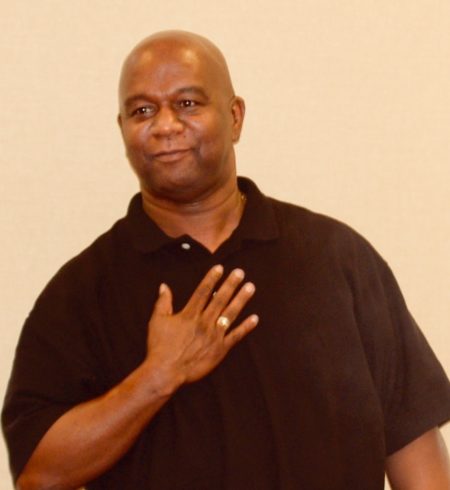
By Alton Johnson
My parents were born in 1920 in the deep South and suffered through the harsh segregation that existed down there. My father lost a brother at an early age when he was stopped for a traffic violation and later that day killed in a police station. This incident did not even make the newspaper and no explanation was given to my grandmother. I mention this because, yes, there was always a lot going on in my family, from day one.
My parents were married down South and they moved to NYC to escape the racism and segregation of the South. My father worked as a tailor but wound up in the military. He fought in World War 2 and was wounded in the segregated Black army. He stated that in Europe he was treated better by the white Europeans than his fellow soldiers.
Upon returning from the war my folks lived in quonset huts, which were temporary housing for WW 2 vets. That is where I was born. From there, in 1950, we moved to the Amsterdam Houses and my father began working for the U.S. post office, which he retired from in the 1980s. My dad bought a car and, while young, we drove to New Orleans regularly. This meant that we were routinely stopped and searched in the southern states.
My experiences in the South were mixed. It was wonderful to see my aunts, uncles and cousins and my grandmother. But, my brothers and I got to see racism firsthand. Separate bathrooms, water fountains and movie entrances for Blacks. And the big rule, which was no eye contact with any white folks.
On one of our trips my older brother made the mistake of breaking the eye contact rule, which resulted in us being chased to my grandmother’s home by a mob of white folks. What saved us was that one of my uncles knew some of them and was able to explain that we were visiting from up north and the crowd dispersed. Back up north and to the Amsterdam Houses where life was peaceful and safe and the area was mixed, black, white and hispanic.
My father always treated my mother like a queen. In my house, racism was not taught. My parents believed that all people were equal. I had black, white and hispanic friends. The Amsterdam Houses were completely insulated from racism. It clearly did exist in NYC, but not in the projects. My Mom went to school in the late 1950s and became a Licensed Practical Nurse in the early 1960s, which she did until she retired in the 1980s.
When the heroin hit the projects everything changed rather quickly at the Amsterdam Houses. Crime increased and safety decreased. Thus began the rapid decline of the projects and my family. My parents went to the church for help but there was no help to be had. There was also no help from the police — other than the beginning of mass arrests in the neighborhood. My family and many other families were hit hard by the onslaught.
So to those who imply there must have been more going on in my family, I agree. It’s called life, which is extremely complicated and can take many turns. My family did the best that they could under the circumstances. The heroin took a huge toll and along with crack, cocaine and other drugs continues to be extremely destructive throughout America.
So, yes, there was indeed a whole lot going on in the Johnson family.

What a moving story! My Dad told me that if I didn’t believe racism existed he would be happy to drive me down south so I can see it. Later on I did and saw water fountains for white and “colored” people and it blew my mind.
Charles sounds like a real gem. I’m sorry about his comment. I did like reading Part 3 but feel awful reading about the racism your family endured.
Great series Alton. I live nearby and did not know the story of the Amsterdam Houses. Thanks
God bless you and your family Mr. Johnson. These stories are important and show why it’s vital to have a neighborhood with folks from all different backgrounds so we can challenge one another and show that perspective is subjective. Unfortunately Charles represents another side of our neighborhood which thankfully doesn’t speak for all of us. The West Side rag has grown from a small neighborhood news outlet to one that showcases brilliant stories like this one. Thank you for allowing the discourse and showcasing everyone from the area. I look forward to more pieces like these in the future.
Nice additional writing but really – there was no need to bother with an answer to the one comment that was not positive.
Sometimes it’s best to just leave it alone.
“sometimes it’s best to just leave it alone.” Please take your ow advice!
Thank you for sharing your story, Mr. Johnson.
Was this comment necessary? Mr. Johnson felt the need to respond. So why do you feel it’s your right to give him advice on an issue that is obviously very important to him, namely, his family and upbringing? In any event, Part 3 is illuminating and beautifully written. Thanks for writing it Mr. Johnson, even it it was in response to Charles who was “was not overly impressed.” I am, and it sounds like I’m in good company.
Thank you for writing Parts 1, 2, and 3, Mr. Johnson. Your words are wise. Life is indeed complicated, and drugs are destructive to all kinds of strong families and individuals. This is valuable history you have shared and I’m grateful.
While many of us would like to feel that it’s in our control to avoid such problems as substance abuse and crime, it’s also very much a factor of luck and circumstance.
The reality is that, as a returning veteran, Mr. Johnson should have been able to purchase a nice suburban home and get on the “ladder to prosperity” enjoyed by many of his fellow white servicemen. Instead, because of how the GI bill was crafted, black servicemen were mostly denied its benefits, forcing the Johnsons and many like them into lower income rental projects. That combined with lax / racist policing (which ignored crime in black neighborhoods) created a much more challenging environment for families like the Johnsons. Success was still possible, but the deck was stacked.
I admire the author’s view that “racism didn’t exist in the Amsterdam Houses” and congratulate his parents for raising him in an environment where he felt empowered. The reality, though, was that racism was alive and well in the NYC area, and was a material factor in this family’s lives.
For more on the GI Bill, see here:
https://www.history.com/news/gi-bill-black-wwii-veterans-benefits
https://veteranscholars.com/2016/12/01/a-brief-history-of-wounded-veterans-in-america-part-2/
This this this. Everyone should read Richard Rothstein’s The Color of Law to see how blacks were *legally* discriminated against, in housing in particular, throughout almost the *entire* twentieth century.
I agree, he should have been able to move to the upper west side into a nice house. We forget that the upper west side was a thriving black community, before the government stole the land ” San Juan Hill” from black people.
I’m sorry you were made to feel you had to defend your family and your humanity after being so kind as to share your story with us, Mr. Johnson. There are, unfortunately, some hateful, bitter people who frequent this site.
I’ve lived in the neighborhood for fifty years and didn’t know the history of the Amsterdam Houses, which was so interesting and beautifully written. Of course, what was so moving was that it was all wrapped around Mr. Johnson’s personal story. And he was very honest and gracious to share it with us. Though not surprising, it was important to read and learn about the painful acts of discrimination that were part of his family’s journey described in the third installment. The main takeaway for me is that Mr. Johnson is a great triumph over adversary story. Bravo!!!
Thank you for sharing in such detail what you and your loved ones’ expriences…and worked hard to succeed. So easy for loose comments by The Satisfied.
Powerful story. Great series. Thanks for writing all of it, Mr. Johnson.
Heart warming story, unforuntately it is a very common story for African Americans. When I was a child my mom took me south to visit my great grand mom, she would give us terriost training in case the Klan came. One day the klan did come, and all of the children did as taught and into the woods. When we were on our way back. We all saw a man lynched on a tree, that was the last time I went south. Please ignore negative comments on your story, this is the same mentality that is banning the book Beloved. I am so proud of you and all African Americans that have found a way to survive and thrive after 400 years of systematic oppression in this country. Maybe each one of us should tell our family story.
Family stories are treasures. (Even if they include tragedy or horror.) They offer ground truth to those who come after.
Nobody mentions the “Amsterdam houses” of today. The living conditions there must seem like living in a third world country. Whatever the city is doing has been going on for over 4 years. The windows are covered in many places but nobody seems to be working or caring. The grounds are nonexistent. I tried to research the project but have never found any info. What gives?
I sometimes have occasion to walk through this project when I pass between Amsterdam Ave. and West End Ave., where I live. Walking through is difficult because it has been under renovation as it seems, since “forever” and you have to zig-zag through the project to find an opening to a north-south avenue. Regarding your comment, “The grounds are nonexistent.”, this is true but people living here do have close access to 2 beautiful open areas, The Lincoln Center Campus and the new developing Riverside South Park, one of most beautiful new park developments in NYC.
This brave story underscores why it is so important to work against Republican Party efforts to roll back voting rights and stack the Supreme Court and Congress with right wing extremists. Racism is alive and well and must be confronted.
Heroin was invented in the late 1800’s. It was completely illegal in the USA since 1924. By 1964 everybody in New York City knew how bad it was. One thing that would be interesting to know would be if the author and his 2 brothers were in all kinds of trouble before they became addicted. It is written as though everything was just wonderful and then heroin appeared in the project.
Thank you Stevie for the history lessons on the history of heroin. The War on Drugs has been going on for centuries.
https://history.state.gov/milestones/1830-1860/china-1
And yes, supply creates demand (not the other way) for some who are unfortunately easily addicted (teenagers, and others who have a compromised sense of self). It also affects people who are not at the socioeconomic bottom.
https://khn.org/morning-breakout/landmark-26-billion-opioid-deal-finalized-with-jj-distributors/#:~:text=After%20three%20years%20of%20negotiations,many%20states%20and%20local%20governments.
CVS and DR aren’t taking over the brick and mortar stores because they sell Oreos and shampoo. It’s just a much more effective and orderly delivery system.
Heroin was never “invented”. It is a natural product extracted from the flower bud of the opium poppy, as are also opium, codeine, heroin, and morphine. These are called opiates. Similar opium-like drugs (like fentanyl) have been “invented” (actually designed) by organic chemists and are called opioids as opposed to the natural plant-extracted opiates.
Wow, you’re really doubling down, huh. That sting you felt reading this post was your conscience, and you’d be well-advised to listen to it rather than try to distract yourself with further nastiness.
neither me or my brothers had trouble with the law before heroin. Neither did 99% of the residents in the projects.
Bravo for sharing your story. We all have stories to tell.
Thank you for helping us understand a bit more about life at the Amsterdam Houses and the South. I am so sorry that drugs took such on horrific toll on your community.
Mr. Johnson’s comment about the coming of heroin to NYC ring true. In the 1970 documentary about the UWS, Summer in the City (available on Kanopy), two drug addicts are interviewed while shooting up (one white and one probably Hispanic). One of the addicts started on heroin as a middle schooler. Someone came to the school playground and said to him, “Do you want to feel something wonderful?” and gave them some heroin. This continued until many of the school kids were hooked, and then the pushers started charging for the heroin instead of giving it away. A sad, but true story. I suspect this is what happened to Mr. Johnson’s brothers.
Don’t forget one of the first starring roles of the young Al Pacino was The Panic in Needle Park. An interesting film on youthful drug addiction which included many exterior shots of UWS’s TxSq at W72/Bway/Amsterdam back in the 60s/70s when you could get a whole brownstone just off CP for <$100K.
Of course we have the modern day victims of drug abuse behind closed doors. Real life GREAT talents and artists like Philip Seymour Hoffman (heroin), Heath Ledger, Prince and many more from prescription drugs. That's not including all the alcohol related deaths. No class is spared.
Thank you, Mr. Johnson.
Thank you Al for a historical view of our neighborhood and family life. Challenges to families were not so different whether you grew up in the Amsterdam houses or a suburban home. Heroin and alchohol reached everywhwere, were insidious and destroyed lives. Your parents instilled you with core values, and you had happy experiences to remind you that life can be good. Thank you very much for your story
This is an important story to be told. Thank you Mr. Johnson for sharing. I live close by and didn’t know the history of Amsterdam House.
More thanks to Mr. Johnson for his stories. Even if one knows a little about the history of the country, the GI Bill, the FHA loan programs (also discriminatory), post war public housing for vets, and the horrifying spread and impact of heroin – a personal story like this brings the history of a place to life. And the history of a truly American family.