

By Gus Saltonstall
“They sold mangos,” the man said to me.
His voice sat somewhere between exasperated and sorrowful.
The man had come up to me 10 minutes before at West 116th Street and Broadway and taken a print edition of West Side Rag that we had been handing out on the corner. He kindly noted he was a reader and went on his way.
And then suddenly, he was back in front of me.
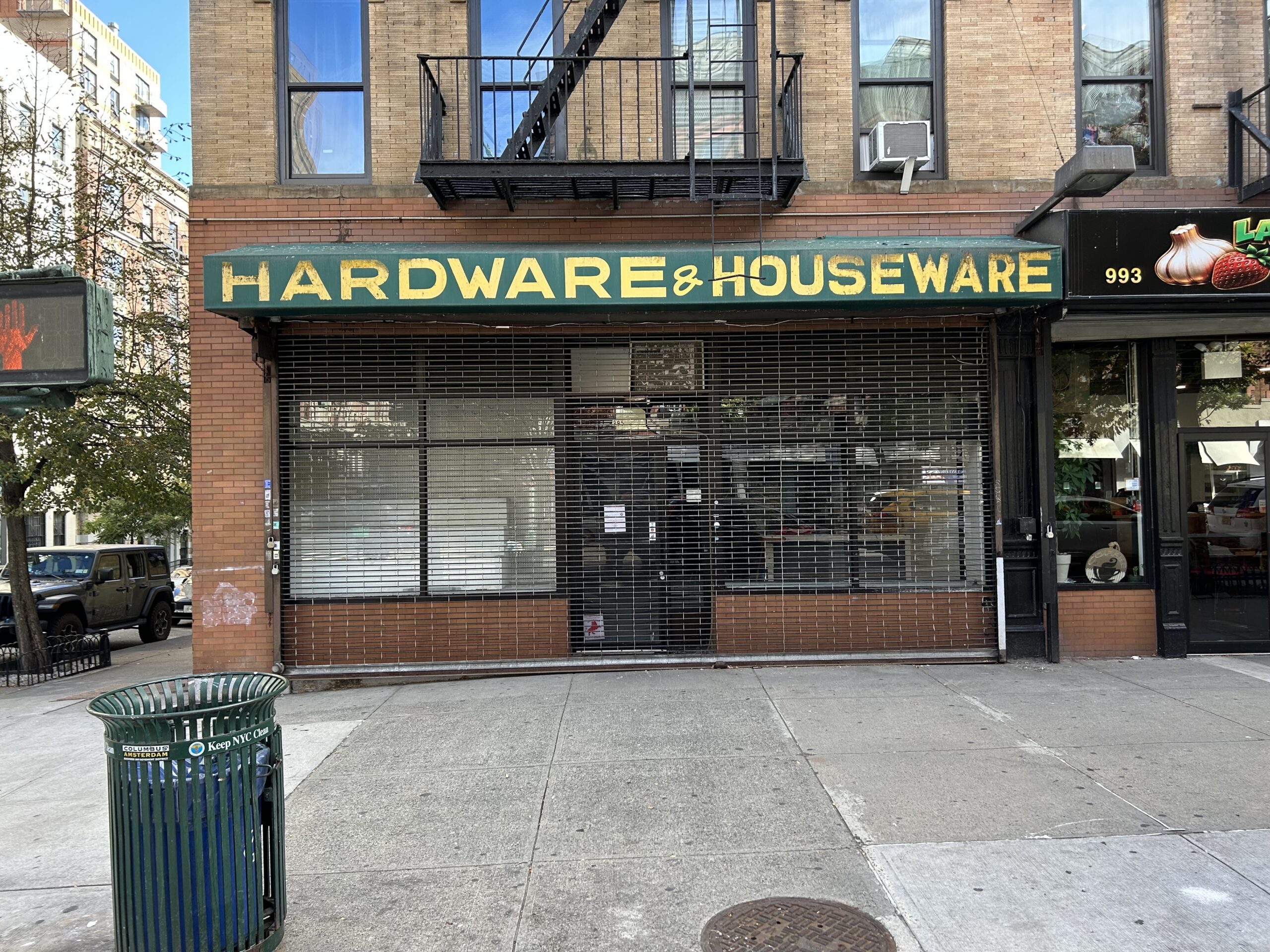
“I decided to come back. I’ve got a tip, actually. Garcia Hardware Store near me at 109th and Columbus closed abruptly after more than 30 years. Did you know?”
“I did not.”
“They sold mangos.”
He paused and once again walked away.
I did not know that Garcia Hardware & Houseware at 995 Columbus Avenue had closed, a family business of more than three decades. But I did know about the mangos.
I lived for a period of time on the corner of West 108th Street and Amsterdam Avenue, and would walk past Garcia Hardware & Houseware frequently. And, on occasion and unexpectedly, you would indeed find mangos for sale at the front of the shop.
A hardware store selling mangos.
There was no pattern to when the mangos were available. No rhyme or reason. No website you could check. No consultant telling them to do it. The family that ran a store full of hammers, locks, tape, paint, lamps, and electrical supplies simply sometimes wanted to offer their customers mangos.
The mangos tasted great.
And, as that man who had taken the time to walk back and tell me about the closure disappeared from sight, I was struck squarely in the chest by the realization that, above all else, when he spoke about a business that served a community for more than 30 years, that clearly meant something to him, the man expressed his poignant sadness with those three words — “They sold mangos.”
It is the unique aspects of a business that, in many cases, make them beloved and memorable.
The quirky oddities that generally only exist in small businesses that you come to learn if you frequent them.
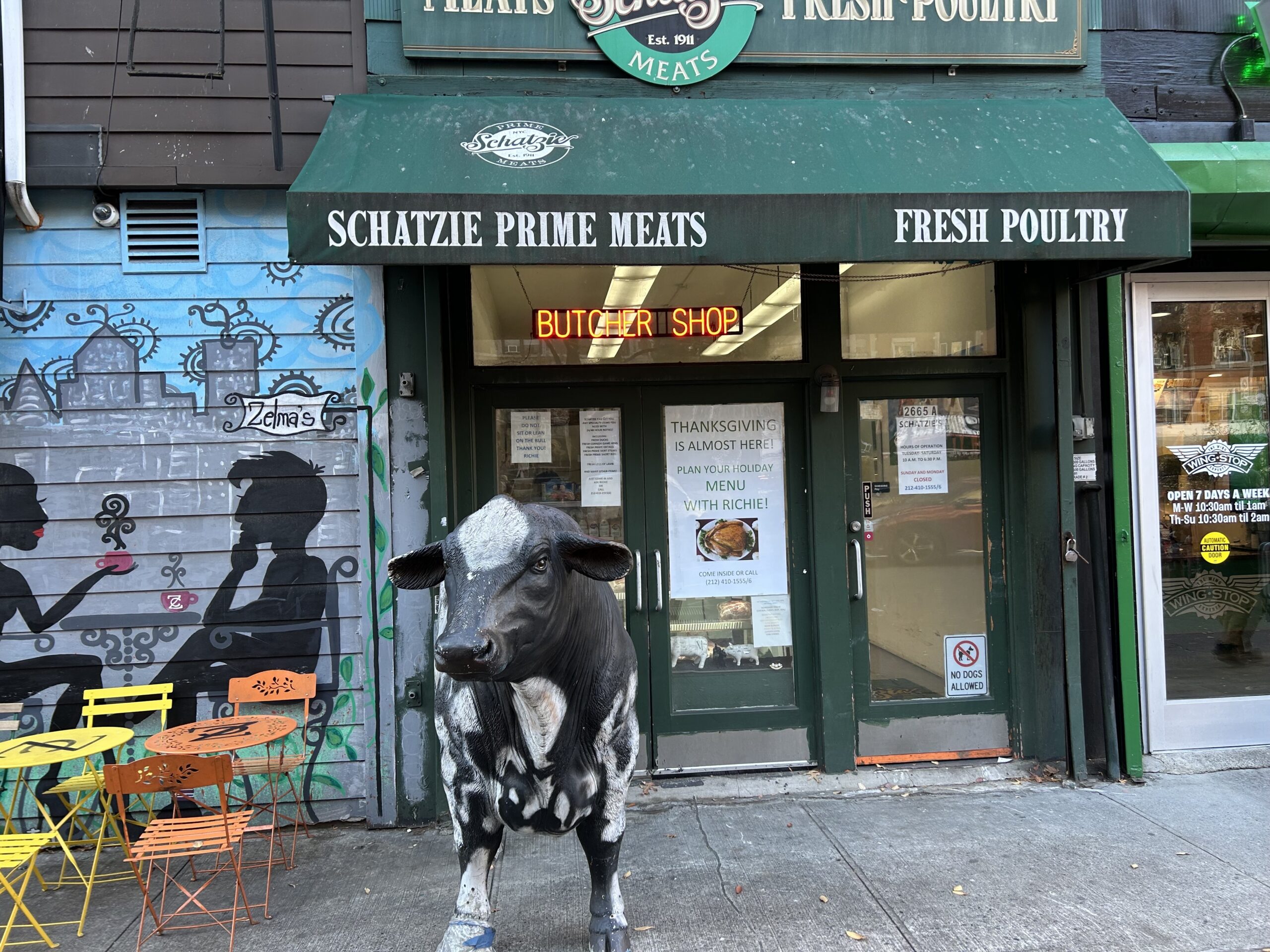
An Amish farmer from Pennsylvania sells dairy products in a store on West 97th Street and Broadway. There is a cow in front of Schatzie Prime Meats near West 101st Street. A divorced couple sells handmade jewelry from a boutique at West 70th Street and Columbus. Walk into West Side Judaica & Bookstore on Broadway, between 88th and 89th streets, and find a store like no other.
It is challenging as one person to list examples of these unique businesses in our neighborhood or any strangeness one might have, but I’d guess that some of you reading this have an example come to mind.
A small business or mom-and-pop store that holds a special place in your Upper West Side heart. A place where the oddities become endearing. A place where you feel that only you and a select group of others completely understand.
More recently, as I walked the entirety of Broadway on the Upper West Side and took in the storefronts, along with the news that the 99-year-old Zingone Brothers shop was headed to closure at the end of the month, I couldn’t help but feel worried about the same-ification of the Upper West Side.
Chain store. Coffee shop. Nail salon. Restaurant. Deli. Smoke shop. Repeat again.
Of course, many of the above listed businesses and restaurants are fantastic, and the market will dictate what type of place succeeds in the current economy. This is also by no means unique to the Upper West Side, as same-ification is a pervasive force throughout New York City.
It is a force that makes different neighborhoods look more and more like one another.
Recently, the same-ification concept is connected to those establishments that are backed by private equity money and thus have the ability to open location after location, such as Blank Street Coffee, Pop Up Bagels, Van Leeuwen, Sweet Green, along with those larger chains like Dunkin’, Subway, Starbucks, and others.
My mind does go to the soul of the Upper West Side. The importance of the mom-and-pop shops. The essential-ness of the oddities that small businesses offer.
And the line that I cannot get out of my head.
“They sold mangos.”
Subscribe to West Side Rag’s FREE email newsletter here. And you can Support the Rag here.