
By Gus Saltonstall
Progress.
A West Side Rag survey conducted at the end of October of ground-floor vacant commercial storefronts revealed there are fewer empty shops than the Rag found a year ago along the length of Broadway on the Upper West Side.
Overall, while walking from West 59th to 110th streets on Broadway during the last week of October, 2026, WSR counted 71 vacant storefronts, which is nine fewer than the 80 vacant storefronts we found along the same stretch in 2025.
While the trend is positive over the past year, the number of vacancies still equates to more than one per block along Broadway on the Upper West Side, or 1.39 empty storefronts for each block on the avenue in the neighborhood.
As is the case for all of our vacant storefront counts, we do not count storefronts as empty if there is signage up on the facade that makes it clear a business is opening soon. We do, though, count a business as vacant even if it is leased, when there is no signage or indication that the business will be opening in the near future and no plans have been announced to the public.
Here is how the total number has changed since the fall of 2019, when I started counting the vacant Broadway storefronts on the Upper West Side. I didn’t complete the count in 2020 as too many businesses sat in limbo due to the COVID-19 pandemic, and I missed out in 2022 as I was momentarily taken off the Upper West Side beat.
- 2019: 64 vacancies
- 2021: 92 vacancies
- 2023: 85 vacancies
- 2024: 75 vacancies
- 2025: 80 vacancies
- 2026: 71 vacancies
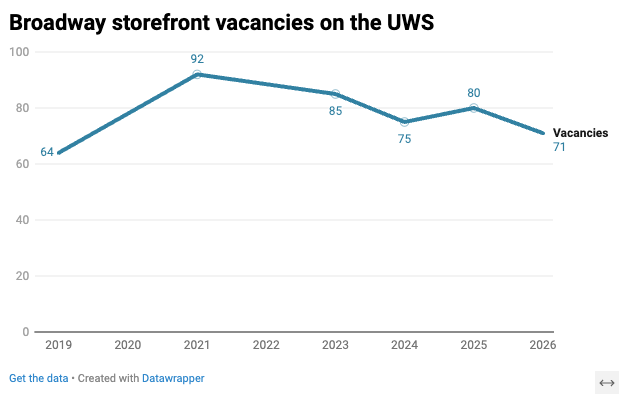 The numbers paint a picture that many might expect.
The COVID-19 pandemic in 2020 shuttered commercial businesses in the neighborhood, and while there has been fluctuation in the years since, in part due to the number of illegal smoke shops that abruptly opened and closed from 2023 to 2024, the most recent count shows the Upper West Side has regained 21 storefront tenants since 2021.
Below is a map of the Broadway commercial vacancies from 59th to 110th streets in 2026.
The Upper West Side Areas with the Most Commercial Vacancies
Where are the ground-floor commercial vacancies in the neighborhood?
- 60th-69th: 11 vacancies (11 vacancies in 2025)
- 70th-79th: 6 vacancies (11 vacancies in 2025)
- 80th-89th: 19 vacancies (17 vacancies in 2025)
- 90th-99th: 22 vacancies (21 vacancies in 2025)
- 100th-110th: 13 vacancies (20 vacancies in 2025)
Many of the vacancy totals were similar to the count in 2025, as the number of commercial vacancies on Broadway from 60th to 69th streets didn’t change at all, and the vacancies in the 80s and 90s changed by two and one, respectively.
Where the neighborhood saw the most improvement in commercial vacancies was in the 70s and 100s. Broadway from 70th Street to 79th Street regained five vacant storefronts, while Broadway from 100th Street to 110th Street filled up seven previously empty spots.
Impressively, West Side Rag did not find a single vacant storefront this year on the east side of Broadway in the 70s.
The Broadway openings within those sets of blocks since the Rag’s 2025 vacant storefront count include Auntie Anne’s/Carvel at West 109th Street, Taco Bell at West 109th Street, Aunt Jenny at West 108th Street, 2788 Bagels between West 107th and 108th streets, Carrot between 76th and 77th streets, and Pho Broadway between 70th and 71st streets.
Vacancy Clusters
There are clusters of vacancies on certain Upper West Side blocks that make the blight particularly noticeable.
On the east side of Broadway between West 101st and 102nd streets, there are three empty storefronts: a former tax-service business, a nail salon, and an illegal smoke shop dubbed “Mr. Exotix.” If you continue walking downtown, there are seven vacant storefronts on the east side of Broadway, from West 92nd to 94th streets.
That includes a former Starbucks on the corner of West 93rd Street and Broadway that has sat empty for nearly six years.
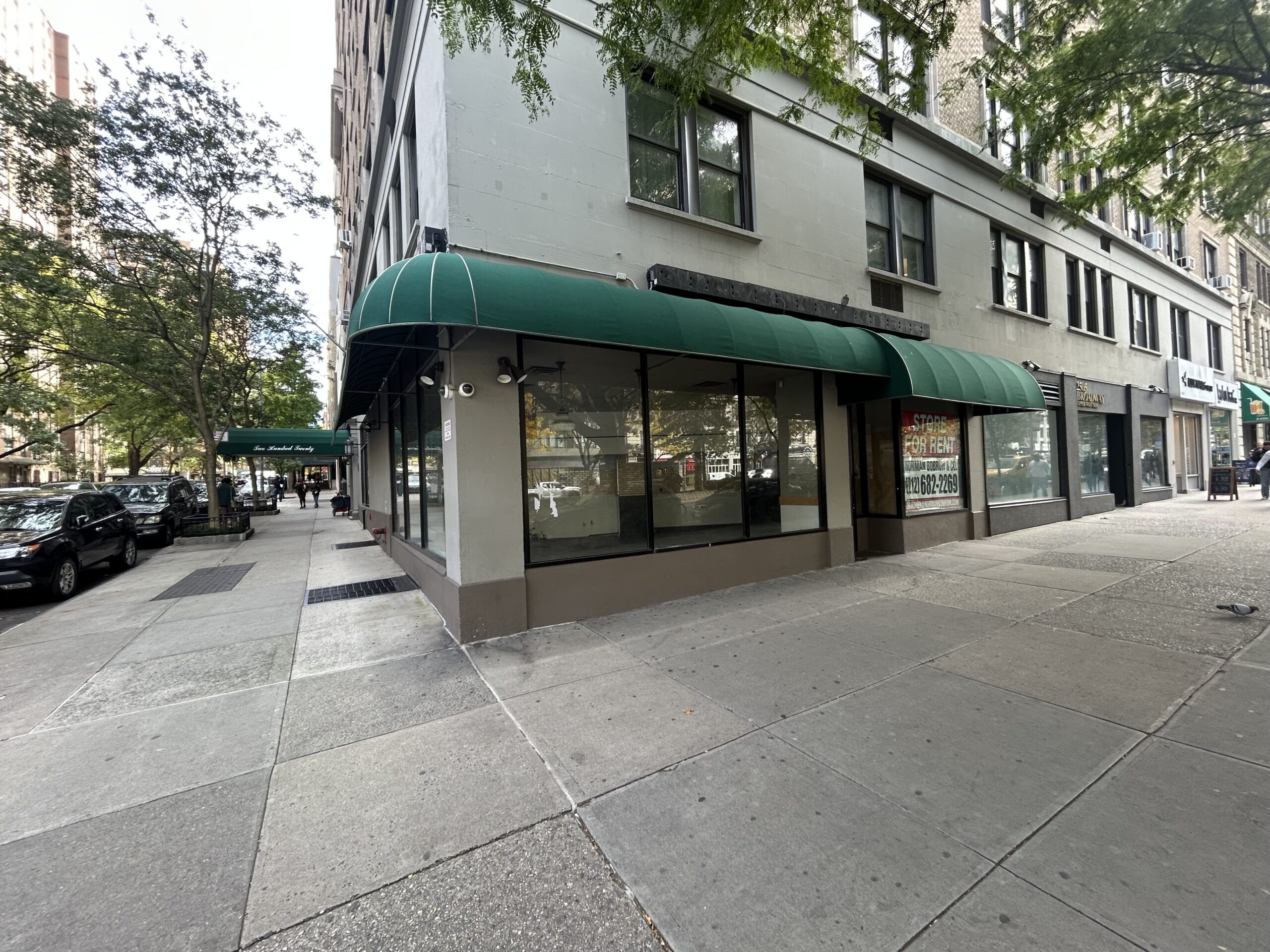
There are vacancy clusters on the west side of Broadway, as well.
There are six vacancies on the west side of the avenue from West 96th to 99th streets, and 11 vacancies from West 85th to 91st streets. This stretch of 11 vacancies in six blocks is punctuated by the recent loss of Barzini’s at 2451 Broadway.
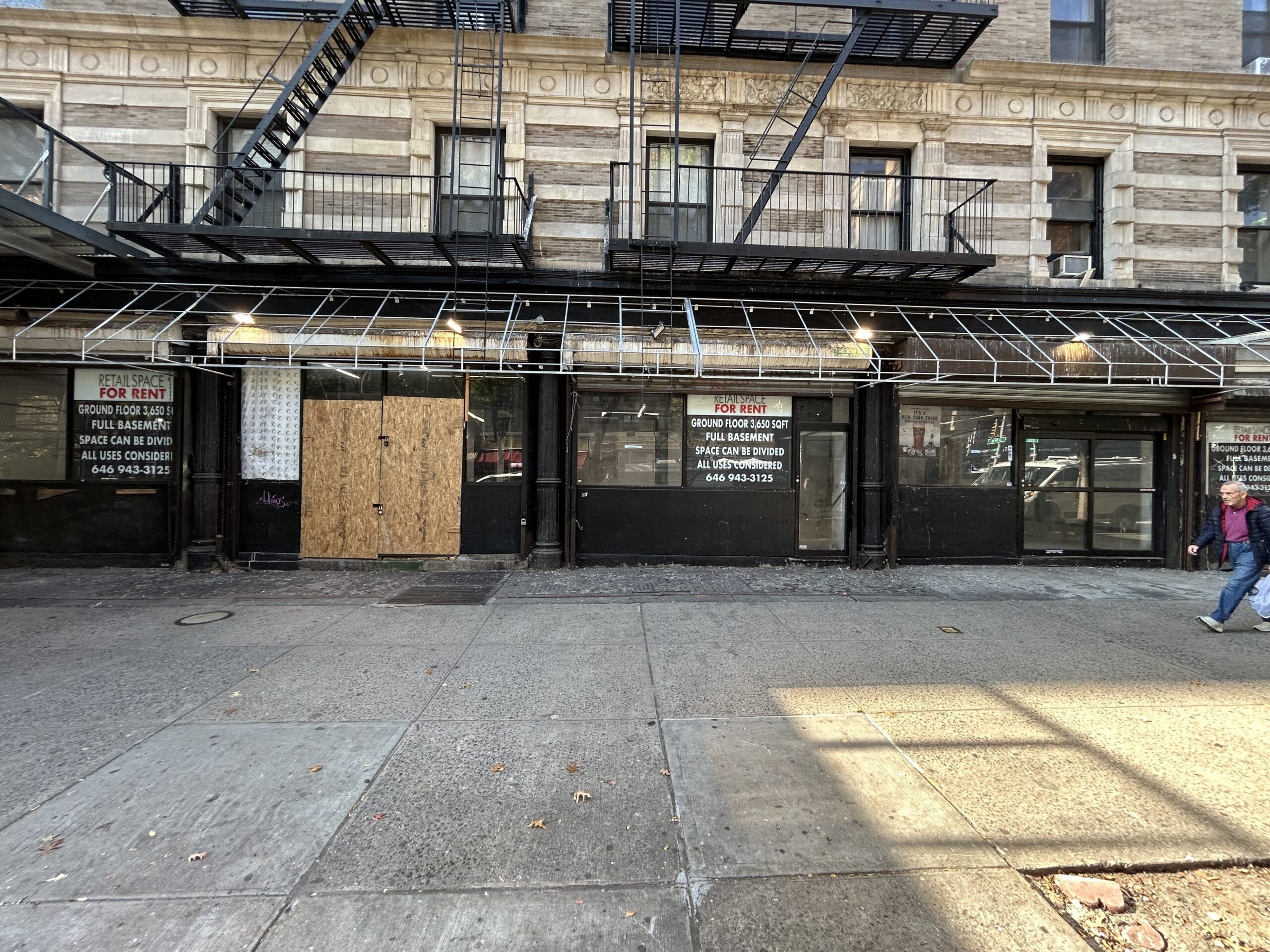
Pigeon droppings cover the ground immediately in front of the corpse of Barzini’s, and readers sent complaints into the Rag long after the closing to complain about the smell emanating from the vacant storefront.
The shuttered grocer brings to mind other large vacancies on Broadway in the neighborhood, which include the recently closed Cheesy Pizza storefront at the corner of West 100th Street, the shuttered Duane Reade and CVS locations near West 70th, 93rd, and 106th streets, the former Face Values & Beyond between West 89th and 90th streets, and the old P.C. Richard & Son outpost between West 86th and 87th streets.
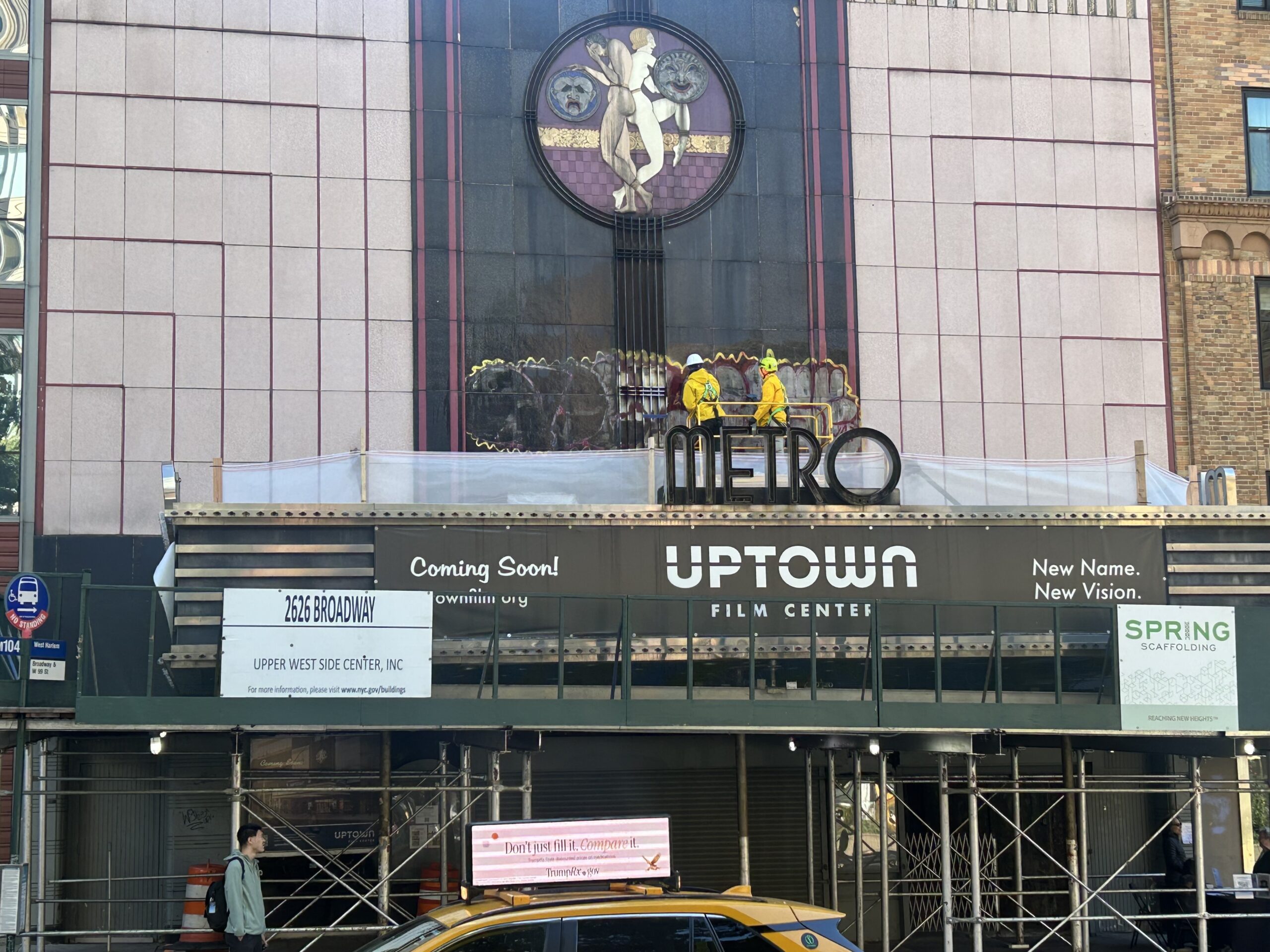
In some positive news on the larger vacant storefront front, the former Metro Theater continues its journey to reopen as the Uptown Film Center, and Crunch Fitness is on its way to opening in the former Marshall’s space at 2182 Broadway.
As is the case each year, the southernmost section of the Upper West Side, which includes major areas with no commercial businesses, consistently has the lowest number of storefront vacancies. Larger buildings and structures, such as Lincoln Center, Dante Park, Columbus Circle, and the 72nd Street train station, take up long stretches of Broadway.
Why do Storefronts Remain Vacant and What is Being Done?
There is no one answer to why a storefront can sit vacant for so long in New York City.
Let’s start with this widely asked question.
Do landlords get a tax benefit from having an empty commercial space?
As outlined by the late and great Bobby Tannenhauser, who, along with owning West Side Rag, was both an Upper West Side landlord and tax attorney, the short answer is no.
A landlord receives no direct tax break in New York City for leaving a retail space vacant. However, since they receive less income from the property, they do pay less in taxes. But that’s similar to a person taking a salary cut in order to pay less in taxes.
Tannenhauser penned in 2019, “When a space is vacant the landlord not only loses the rental income and the contribution by the tenant to his/her real estate taxes, but also incurs the broker fees and renovation costs when the space rents. The landlord can petition for a reduction in real estate taxes because of an alleged diminution in the value of the property due to loss of commercial rental income, however that will not offset the economic loss suffered as a result of vacant space.”
Importantly, owners of a building cannot write off rent on a commercial space that they never collected.
Some experts do say that the optimization of a building’s property value can factor into a commercial space remaining vacant, though.
“In commercial real estate, the value of a building isn’t just determined by market conditions — it’s also based on its potential rental income,” reads a Medium post on the subject. “Even if a space is empty, landlords can claim it’s worth, say, $20,000 a month, rather than signing a lease for $10,000 and resetting expectations lower.”
A larger projected property value allows a building owner to borrow more money from banks for refinancing or other investments.
Perhaps the most straightforward reason a commercial property remains empty for years is that the landlord is holding out for the highest monthly rent they can get, which many times only large chains can pay.
“One driving factor of vacancy in many affluent neighborhoods is landlords holding out longer for the highest rent they can get,” reads a City Limits article about the vacant storefront issue in the city. “Okada [a commercial real-estate and investment company] says it’s a function of the thriving economy. When the market is doing well, people are getting greedier, and rents go up and they’re willing to wait.”
What is being done in the state legislature to counteract the number of vacancies?
The conversation starts with Senate Bill S8319, otherwise known as the New York City Small Business Rent Stabilization Act.
This bill, which currently sits in a State Senate committee and must work its way through the full Senate to the Governor’s office, would create a “Commercial Rent Guidelines Board” that would cap how fast commercial rents can rise, and also create additional lease-renewal options for small businesses that are eligible.
The framework would be similar to that of the current Rent Guidelines Board, which votes on and oversees increases for rent-stabilized residential tenants in the five boroughs.
A second piece of legislation connected to the commercial vacancy issue is Assembly Bill A669 — otherwise known as — The Commercial Vacancy Tax Act.
This bill, introduced in 2025 by the Upper West Side’s own Assemblymember Linda Rosenthal, would impose an annual tax equal to 1 percent of the assessed property value of commercial storefronts that are vacant or abandoned for more than six months.
The bill is in an Assembly committee and would also have to be passed by the full Assembly and signed by the Governor.
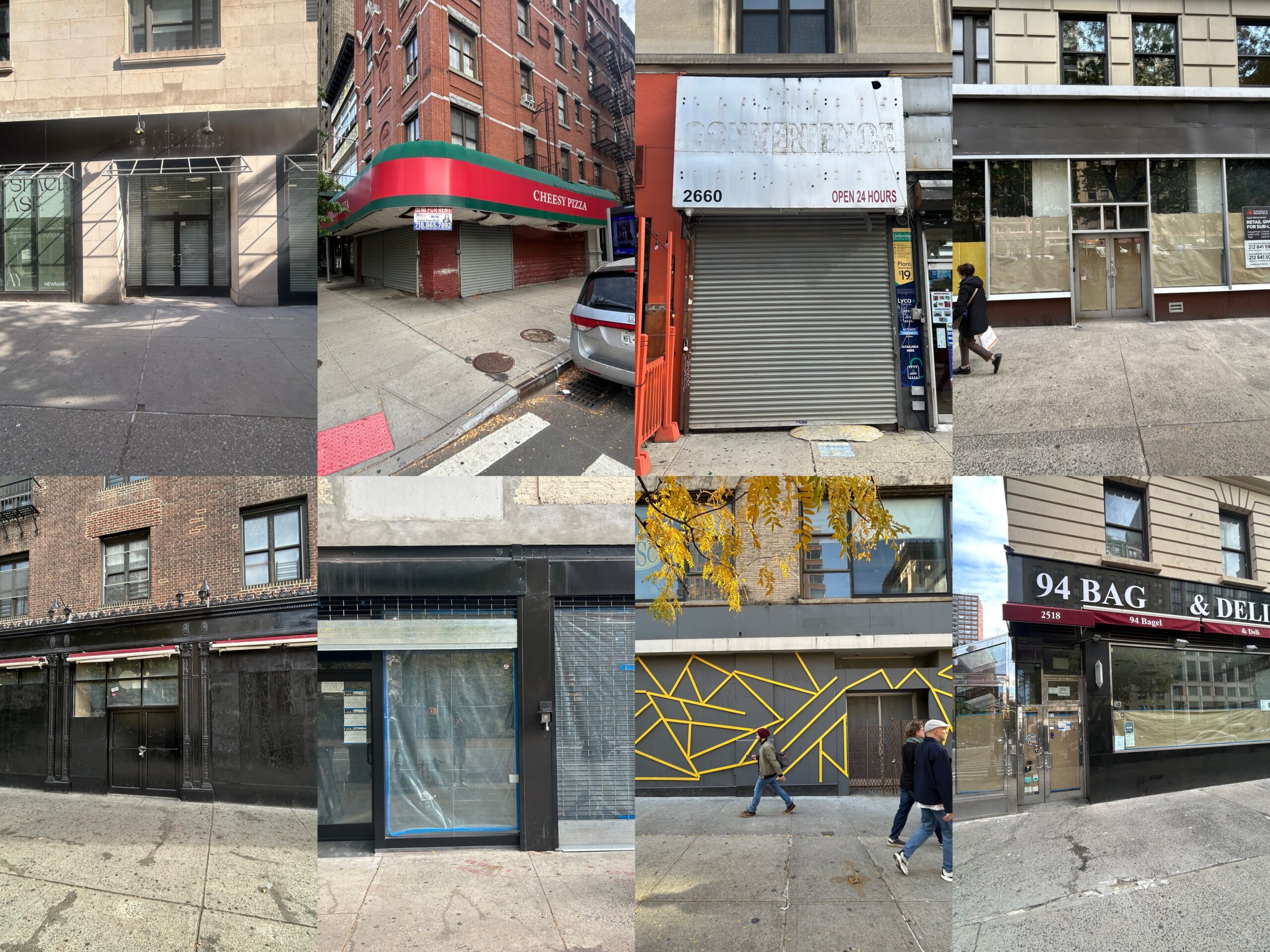
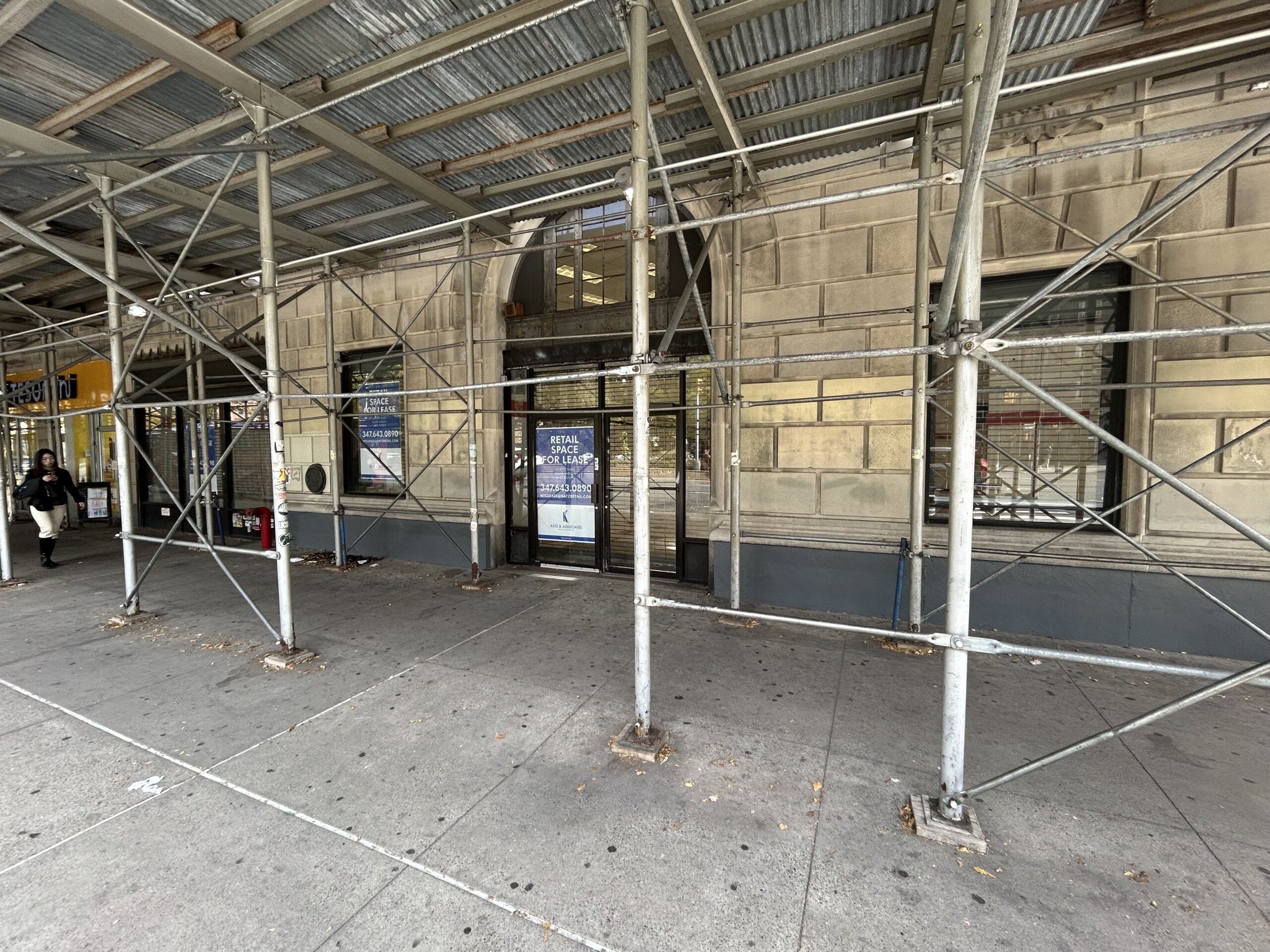
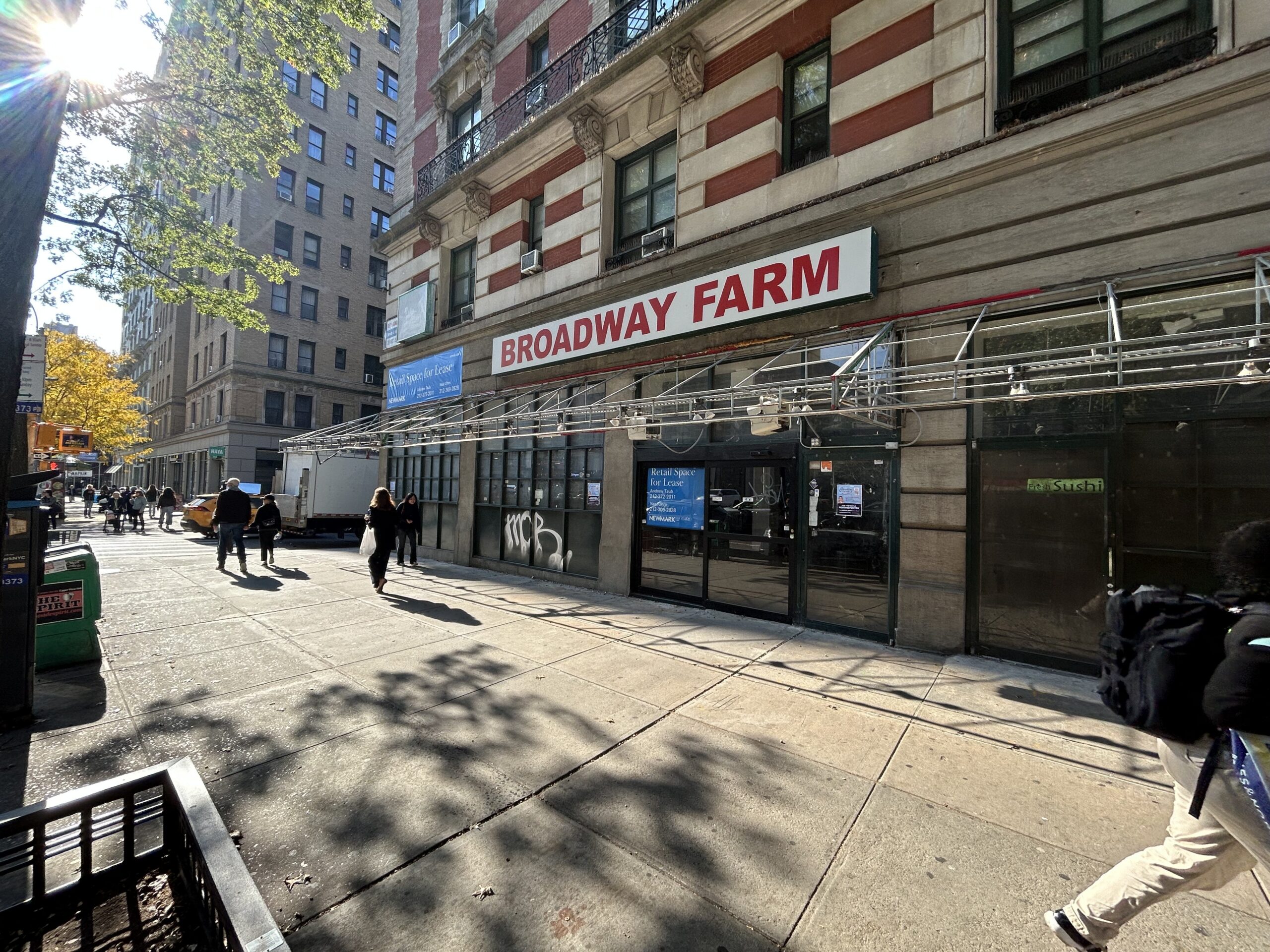
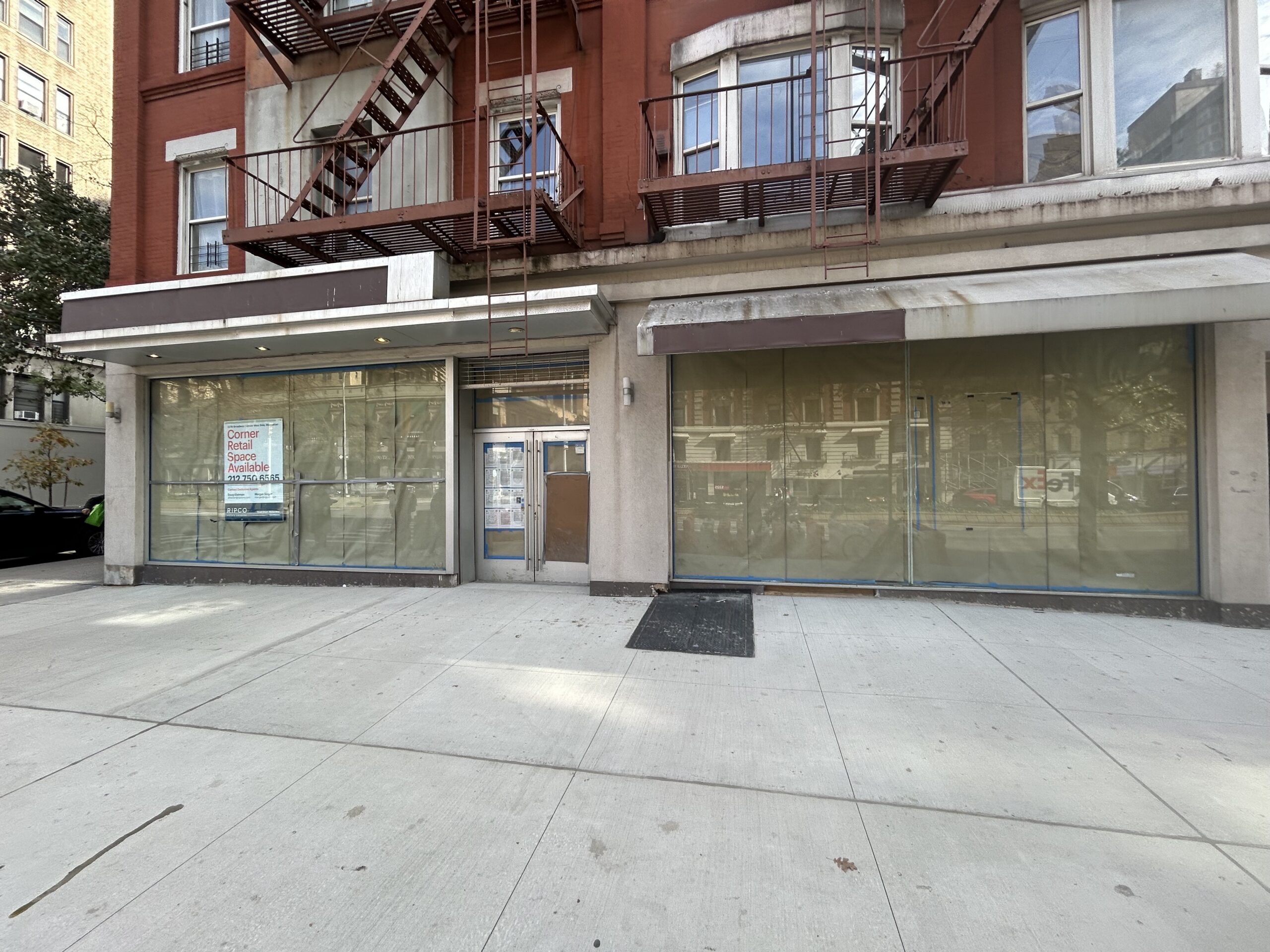
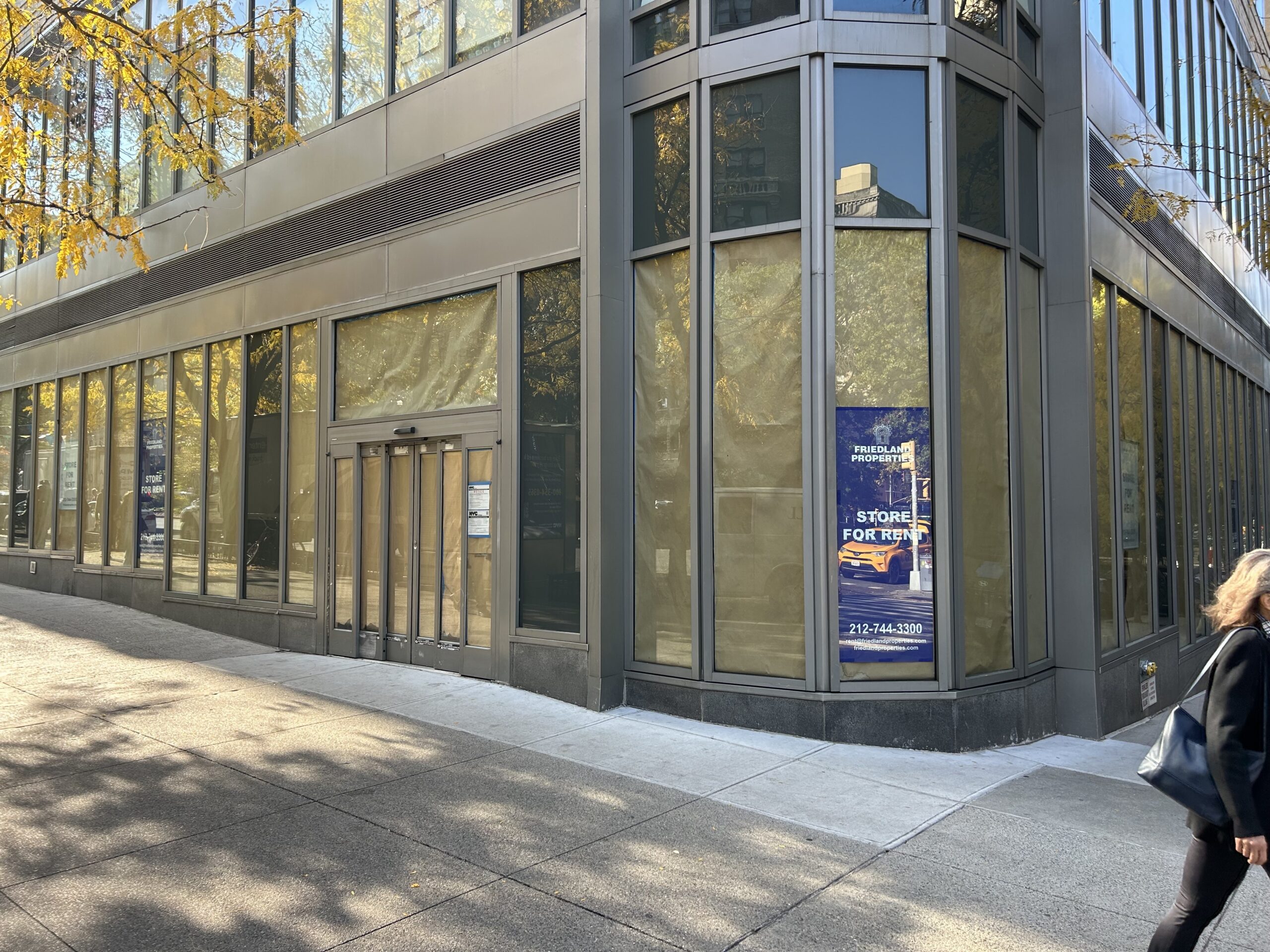
Here’s a look at some of the additional vacant storefronts on the Upper West Side.
Subscribe to West Side Rag’s FREE email newsletter here. And you can Support the Rag here.