

By West Side Rag and Jeff French Segall
By this point, Upper West Siders know about Spotted Lanternflies.
The gray, red, and black-spotted insects first appeared in Pennsylvania in 2014, and then in New York City in July 2020. Since that arrival, the invasive species has returned each year to the five boroughs.
Most Upper West Siders will also be familiar with the guidance surrounding the Spotted Lanternflies.
“You should kill any Spotted Lanternfly you see by stepping on or crushing it,” says the New York State Department of Environmental Conservation.
Spotted Lanternflies are an invasive species and damage plants and crops by drinking their sap. They also multiply at a particularly fast rate.
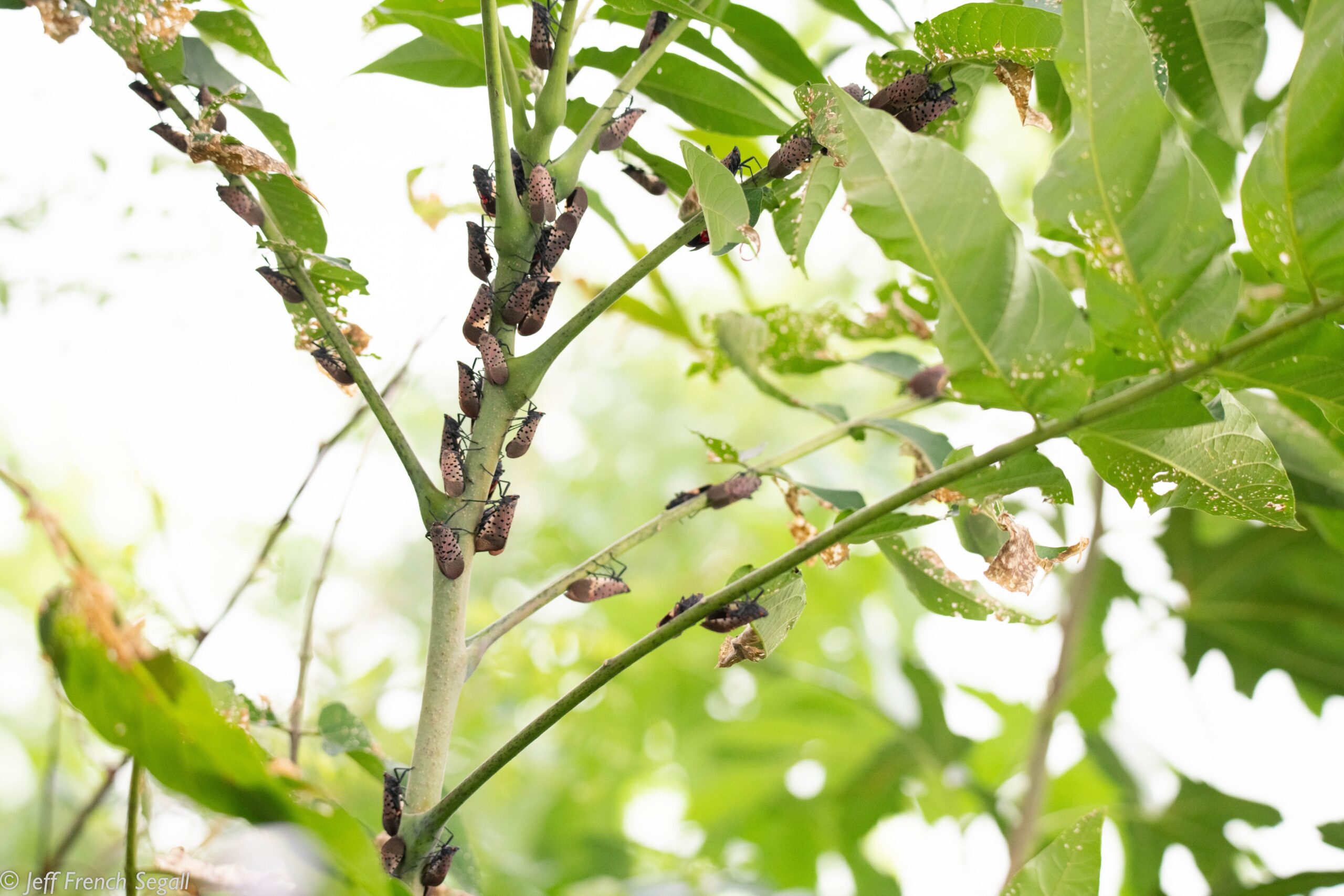
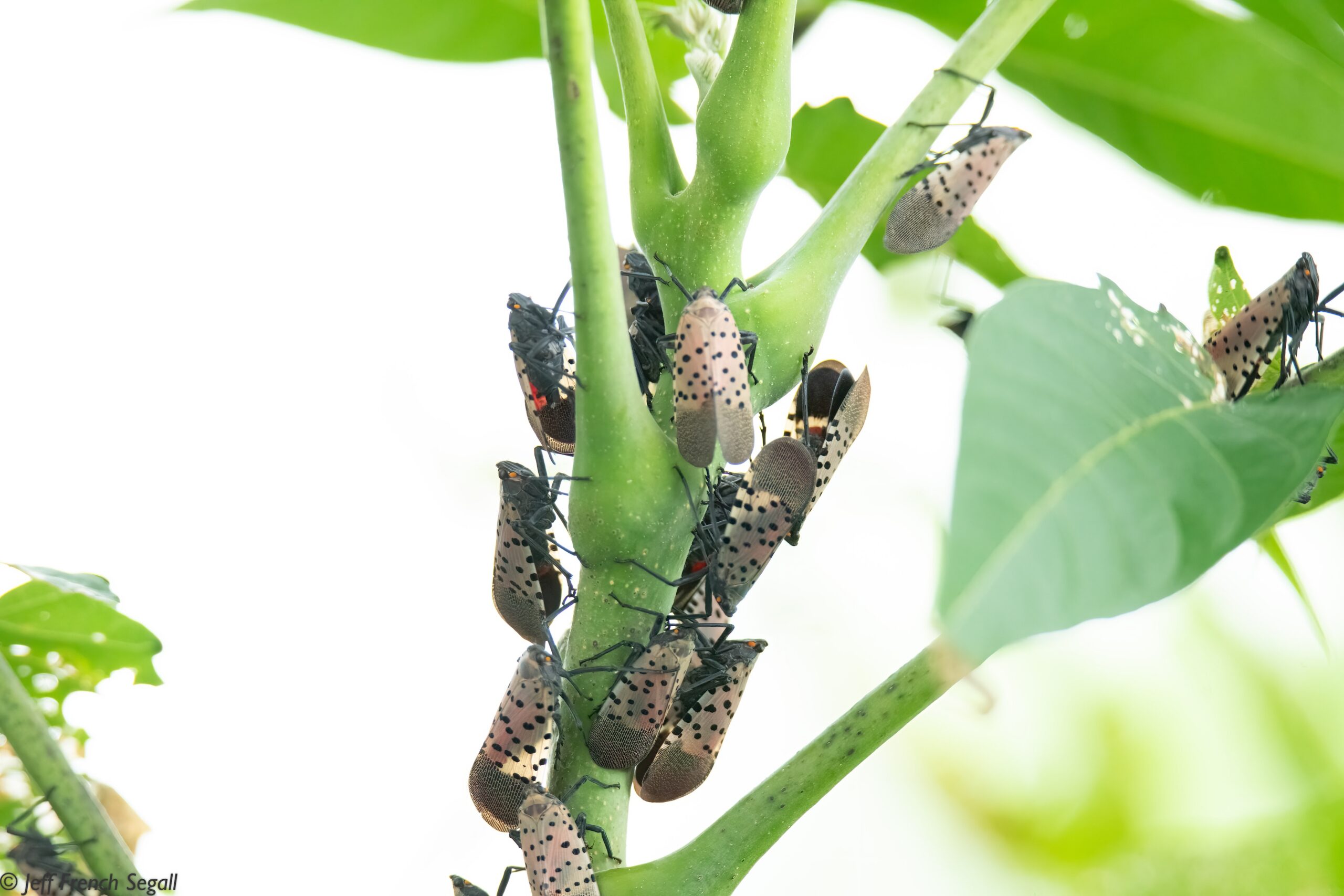
This week, longtime West Side Rag contributor and photographer Jeff French Segall was walking in Central Park when he came across an infestation of the Spotted Lanternflies at the west edge of the Jacqueline Kennedy Onassis Reservoir at about 88th Street.
“They were amassed there. I’d have stayed longer but the rain suddenly came pouring down,” Segall wrote. “I returned drenched to the skin. But it was worth it!”
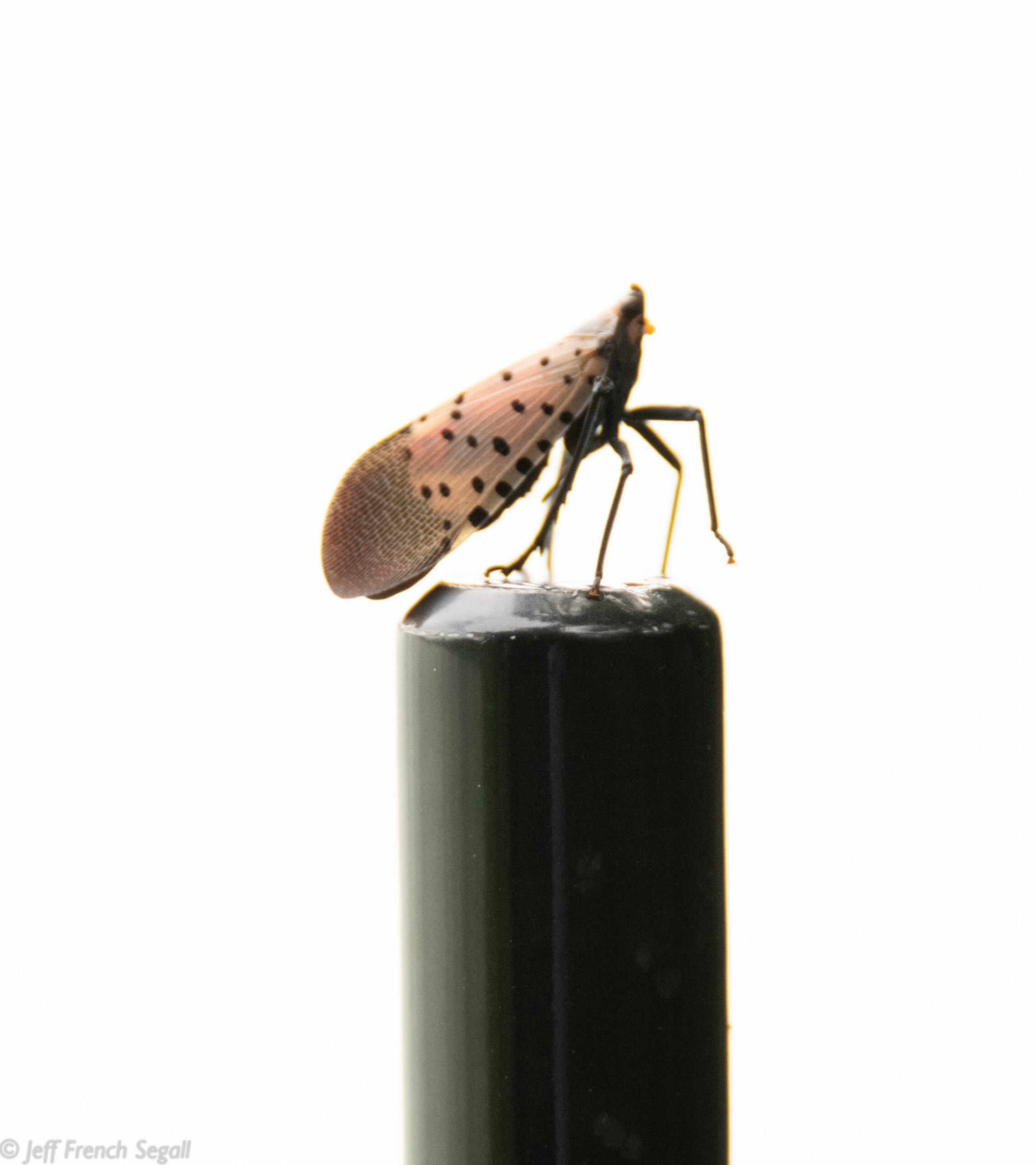
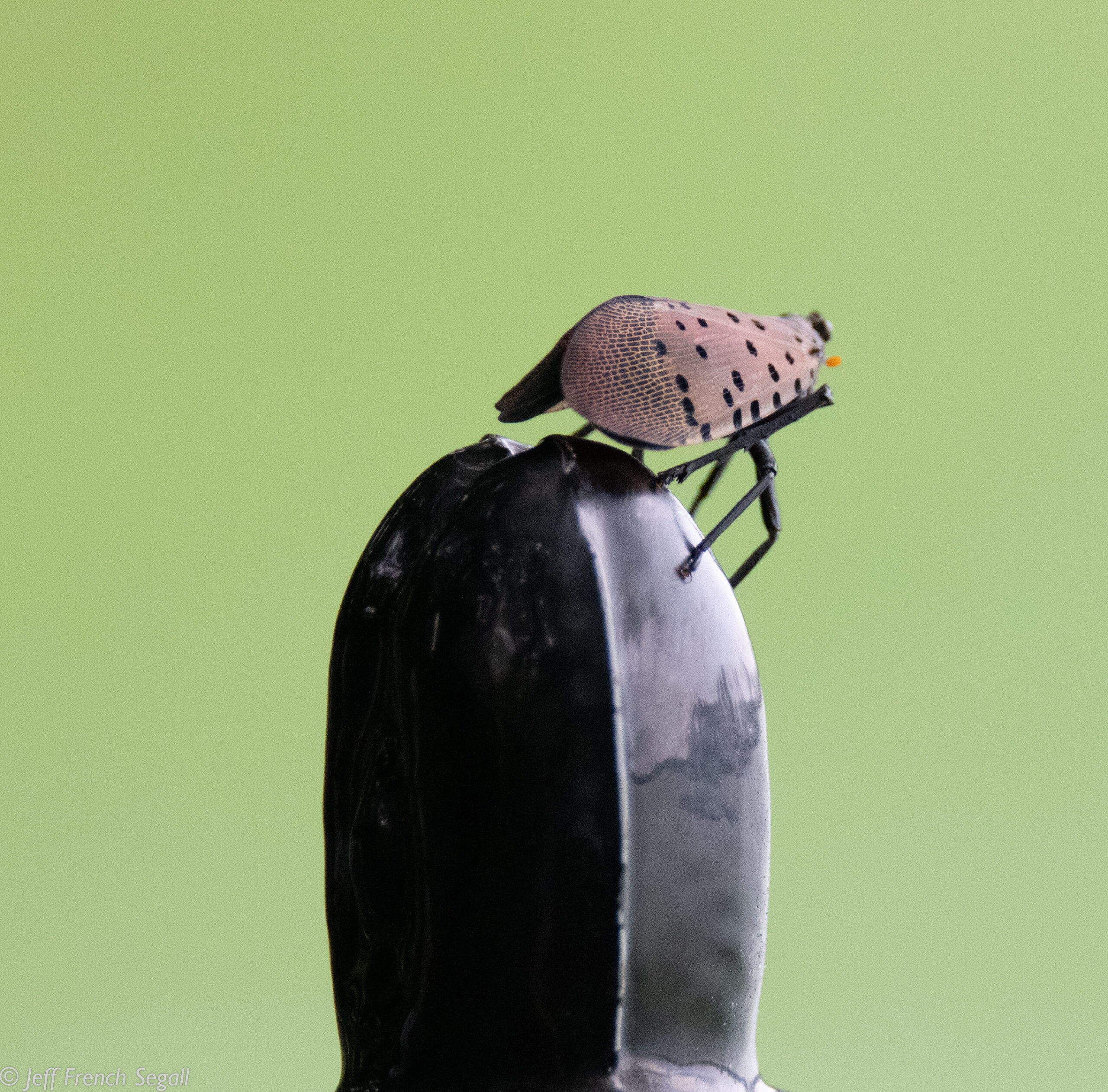
And worth it was, for the following photos.
Subscribe to West Side Rag’s FREE email newsletter here. And you can Support the Rag here.





Well, if the Central Park Conservancy puts up signs saying “Spotted Lanternflies Not Allowed,” or even better, signs with big red circles and lines through them under pictures of SLFs, that will make the flies go away.
Hoping the birds find them an attractive feast! Amazing photos, thank you Jeff.
They’re ba-a-a-ack! 😉
So…did you kill any of them, or just take photos?
Even though I know they can cause significant damage, both physically and financially, I simply cannot bring myself to kill them. First, I find them quite beautiful. Second, I try not to kill ANY insect (except mosquitoes), animal, etc. (I am something of a Jainist in that regard, though I don’t carry a whisk broom with me.)
To which I reply: remember Cher’s famous scene in Moonstruck, when she slaps Nicolas Cage after he tells her he’s madly in love with her, and she says “Get over it!”
Lanternflies are like Invasion of the Body Snatchers – except they’re bugs. Get over it and kill them.
If you kill mosquitoes, then take the plunge and kill spotted lantern flies. BTW don’t stop killing mosquitoes.
They ARE lovely. I can’t do it either. I’d rather squash people who lead their proxies to eliminate putrid waste on trees and flower beds. That’s deliberate.
Ian, get over yourself and kill them when you can. They can destroy useful native plants and have a harmful impact on the food chain. This is an INVASION.
I agree they are quite beautiful, but they are also quite damaging to plants and trees.
Can anyone identify the plant they’re on? The problem with these things is, yes, they’re very pretty, and they are also very destructive to plants/trees. Sorry folks, but they will damage our parks and trees if we just ignore them.
It looks like a tree of heaven, which is just as invasive as the lanternflies and one of their favorite food sources. It could be sumac though.
THIS WORKS: Fill a spray bottle with water and dishwashing liquid and spray. It takes a few squirts but it works.
Yes, use Dawn works like a charm!
Hi Chris, am no expert, but I’ve asked in the past and my understanding was that the dishwashing liquid is not recommended, as it can damage the plants and does not really get rid of the lantern fly (as this is not a pesticide). Instead, it may be better to spray insecticidal soap (like the ones used to clean produce from … well … bugs) as that is less harmful to plants and more harmful to the lantern fly and its larvae.
I wonder if the collective Colleges of Agriculture in the impacted states are looking into the pests of the lanternflies themselves? Years back when I was a student in one of the land grant school’s colleges of ag, this was a project for a similarly invasive beetle that was destroying broadleaf trees used widely as street trees…..in a few years, it was discovered that there was a natural enemy, and that this enemy was not itself going to be a pest if “encouraged” to expand . Students at the time got a great glimpse of the process, the lab work employed, the students getting to play a role in this control effort and the success of the endeavor.
I always wondered if one of the side-impacts of the original pest – the sooty mold that grew on the sap that dripped after the pests had invaded street trees, covered parked cars, kids toys, etc, with a sticky sooty mess – was the impetus to get the control insect study going. All those professors were sick and tired of having their cars and yards ruined!
Ah, ’tis the season of the satisfying crunch of exoskeletons under foot. Splat!
Oh man, I was just thinking I haven’t seen any yet this year.
I found two on my ninth floor Terrace at the corner of 97th and Columbus! Killed one, the other flu away.
Flu away? Or Cyclosporiasis away?