
By Bonnie Eissner
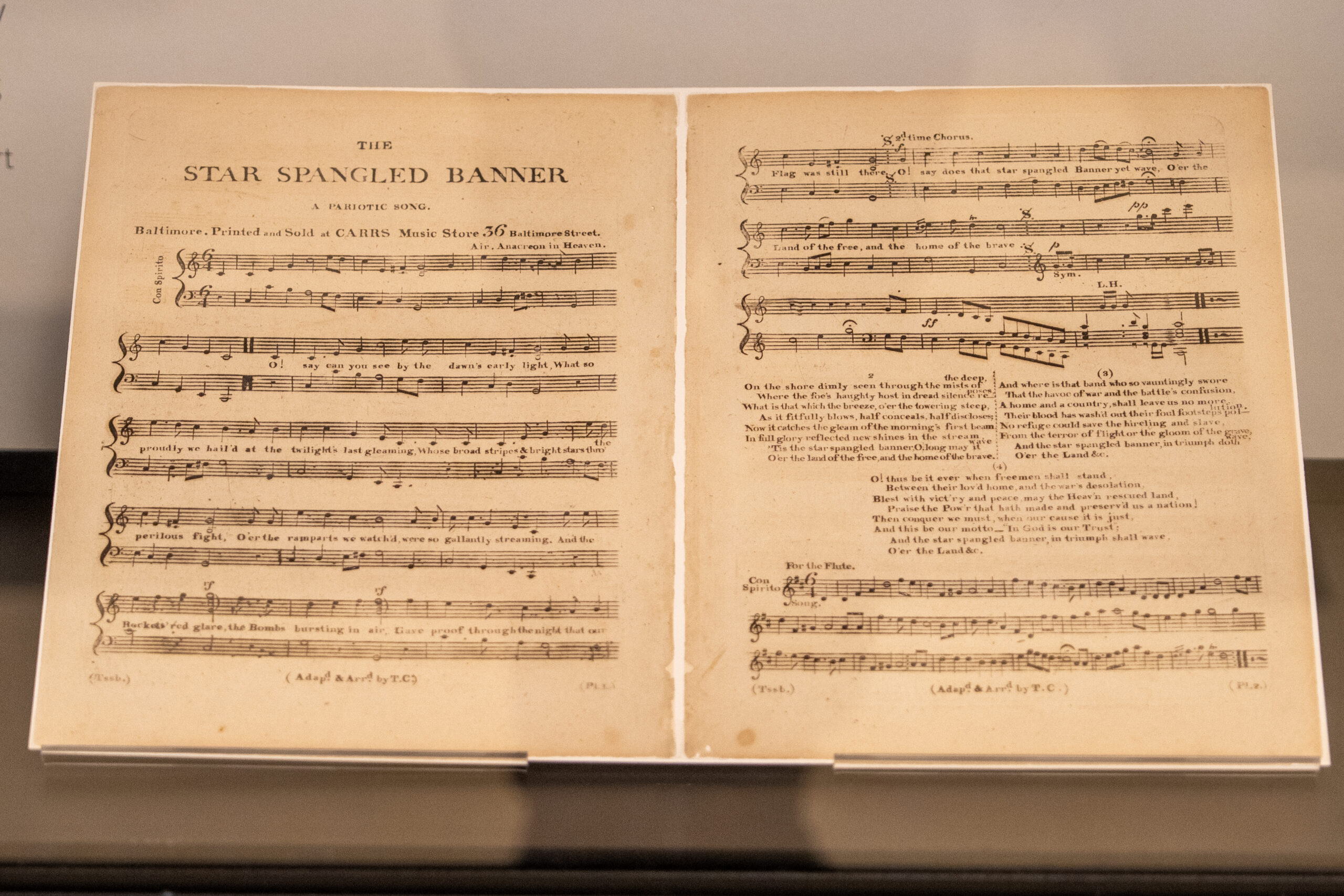
No publisher likes a typo, and Thomas Carr, who printed the first sheet music of “The Star-Spangled Banner” in 1814, must have regretted the one his engraver made in the song that would become the country’s national anthem.
The song stirred patriotic sentiment from the moment its lyrics circulated, days after Francis Scott Key penned them in September 1814 at a turning point in the War of 1812.
The piece, originally titled “Defence of Fort McHenry,” spread across newspapers from Vermont to Mississippi. In its rush to capitalize on the fervor by pumping out the sheet music, Carr’s Music Store, ironically, misspelled “Patriotic” in the subtitle, dubbing it instead a “Pariotic” song.
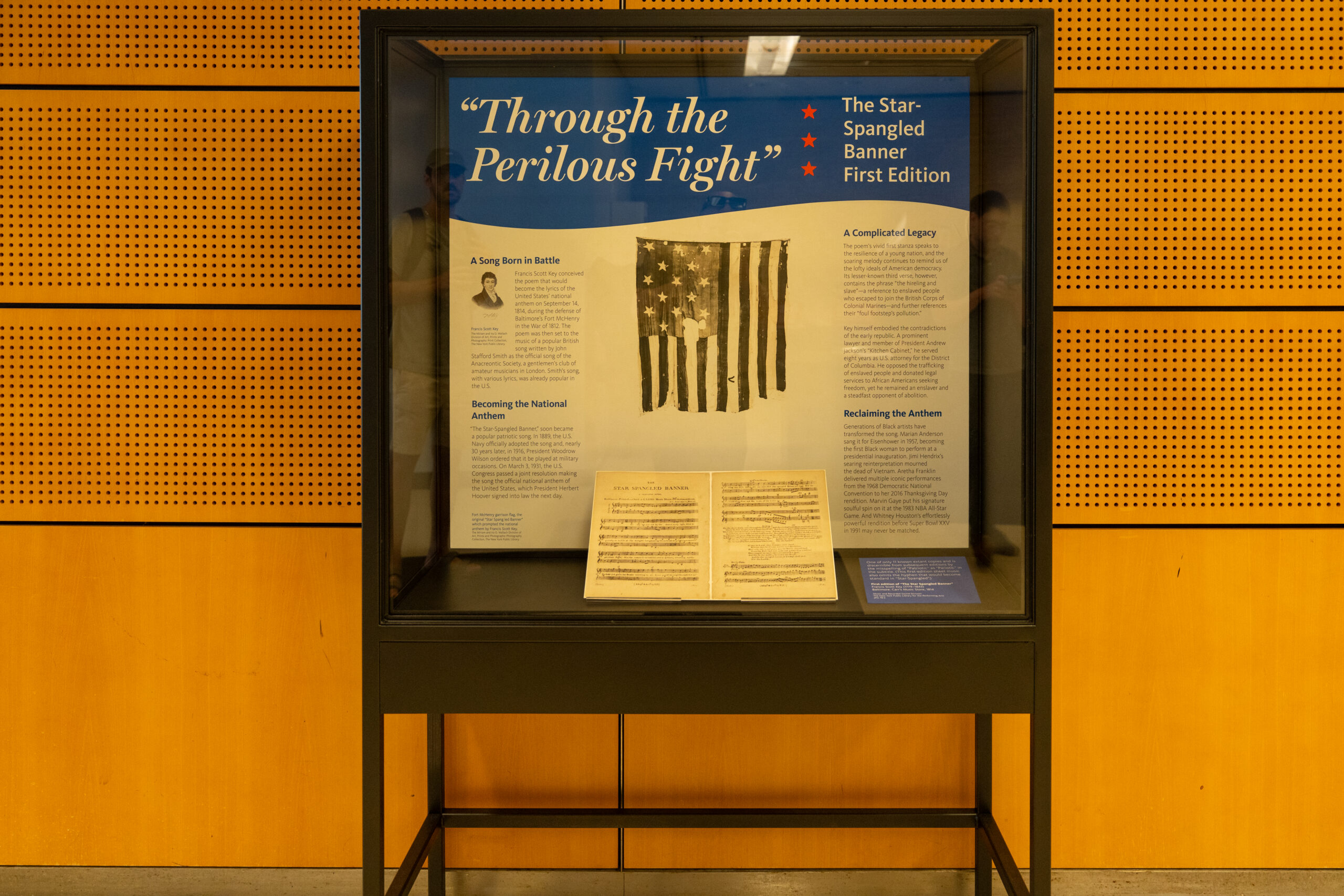
That sheet music, one of only 11 surviving copies, is on view at The New York Public Library for the Performing Arts on the Lincoln Center campus, part of the library’s celebration of America’s 250th anniversary.
Sitting in a glass case across from the library’s circulation desk, the two-page score is easy to miss, but merits contemplation. It offers a window into America’s enduring hopes and tensions.
Key was a prominent 35-year-old Washington lawyer when he wrote the song. He, like many, opposed going to war with Britain in 1812, preferring diplomacy. But after seeing his country attacked by the British, he joined the Georgetown militia.
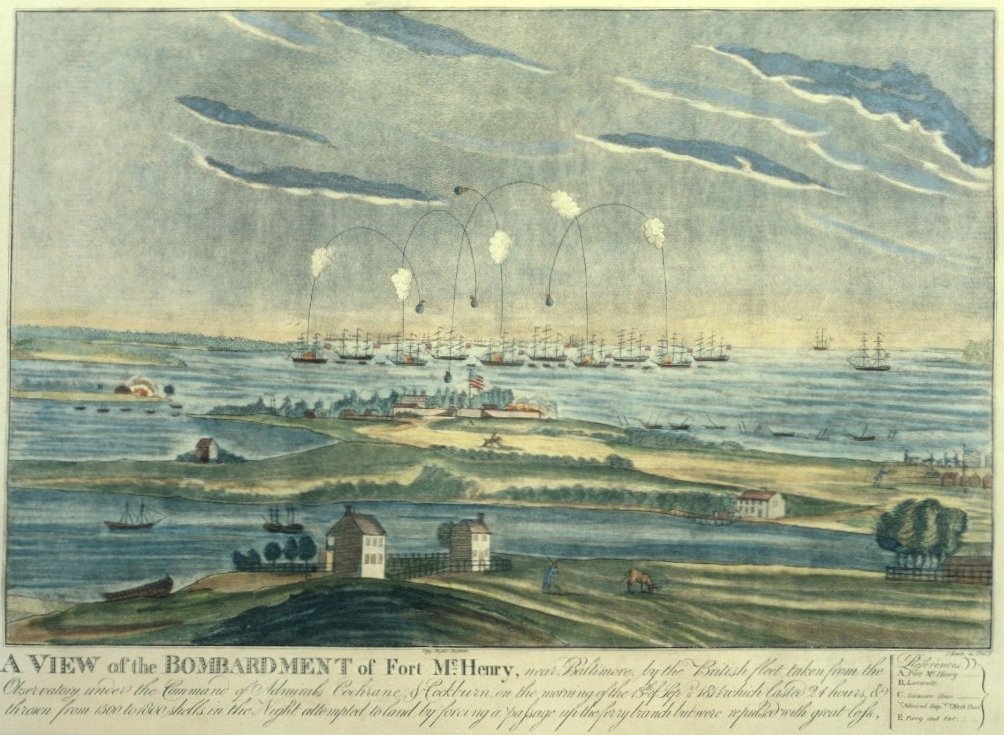
He was under British surveillance on an American vessel near Baltimore, having negotiated for the release of an imprisoned American doctor, on September 13, 1814, when the British began a 25-hour bombardment of Fort McHenry, which guarded the city’s harbor.
Key had been in Washington three weeks earlier when the British set the city ablaze, and he feared for the fate of Baltimore, home to his sister-in-law and many friends. The pride he felt when he saw the American flag flying over the fort on September 14 was poured into his now iconic song.
The first verse, the one sung as the national anthem, is the only one scored in the sheet music. It’s set, as Key intended, to the tune of a popular song originally written for a society of amateur musicians in London. It expresses the drama of the battle and longed-for victory, symbolized by the flag.
The three remaining verses convey Key’s anxiety and relief as he strained to see the banner amid the “dread silence” at dawn, his disgust with Britain’s plans to burn Baltimore, and his gratitude for America’s preservation and hope that the nation would conquer “when our cause is just” with a motto that would later become familiar: “in god is our trust.”
Key’s song helped transform the “stars and stripes” from a mere battle flag into a sacred symbol of national pride.
The song’s prominence also invited questions. The hundreds of thousands of Black people enslaved in the country at the time of its composition belied the claim of the nation as the “home of the free.”
Key himself owned more than a dozen slaves, although he freed at least seven of them while he was alive and the remaining ones upon his death. While he helped 58 former slaves gain freedom through petitions, he opposed abolition, favoring the repatriation of Blacks to Africa.
His song became potent material for abolitionists. In 1844, Edwin Augustus Atlee, an agent of the underground railway, wrote the powerful and publicized “Oh Say, Do You Hear?” It mocked the original lyrics, closing the fourth verse with imagery of the star-spangled banner waving at half-mast “O’er the death-bed of Freedom — the home of the Slave.”
The third verse of “The Star Spangled Banner” has fueled controversy for its reference to “the hireling and the slave” who was not spared the “terror of flight or the gloom of the grave.” Some argue that “slave” referred to Blacks who sought freedom by fighting for the British. The text that accompanies the library’s display adopts this view.
Other historians assert that Key was referring to Britain’s mercenary soldiers.
The song’s popularity grew along with the country. Its lyrics were invoked during the Mexican-American War, and it became an unofficial Union anthem during the Civil War.
The U.S. Navy adopted “The Star-Spangled Banner” for official use in 1889, and in 1916, President Woodrow Wilson ordered the song to be played at military events. It became the national anthem by an act of Congress in 1931, following a petition by the Veterans of Foreign Wars.
Since then, sung at sporting events, graduations, and presidential inaugurations, the anthem has become a symbol of America’s promise and failings. It reverberates in iconic performances, such as Jimi Hendrix’s 1969 Woodstock rendition, a commentary on the Vietnam War, and Whitney Houston’s 1991 impassioned Super Bowl performance against the backdrop of the First Gulf War.
NFL quarterback Colin Kaepernick’s taking a knee during the anthem in protest of police brutality against Black Americans in 2016 drew national attention. Tellingly, his forthcoming memoir, due out in September, takes its title, “The Perilous Fight,” from Key’s lyrics.
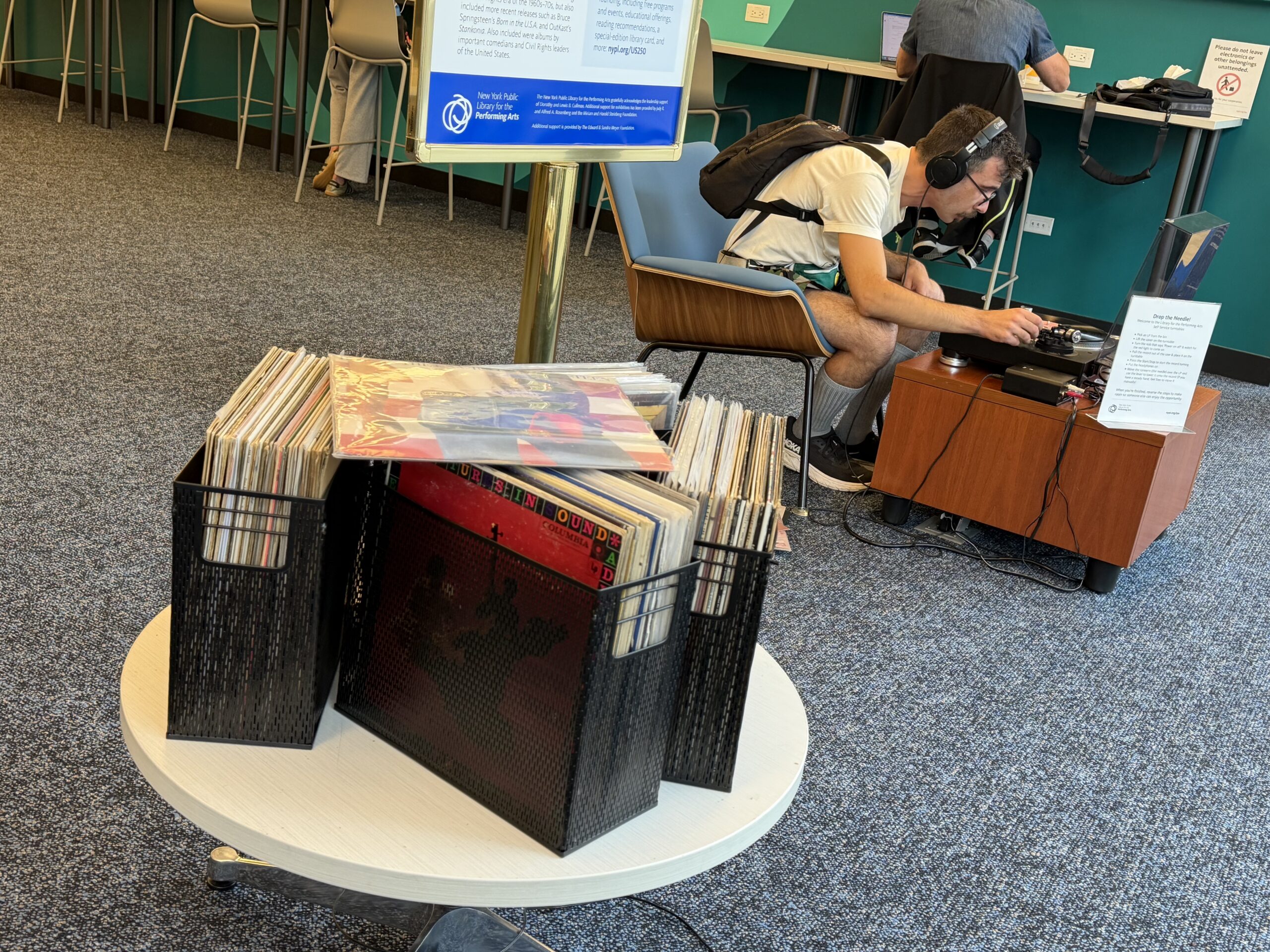
Around the corner from the anthem display, in the first-floor lounge, the library has curated a collection of 250 records that have influenced American music or engage with the ideas of the U.S.
Hendrix and Houston are represented, as are other American legends, from Charlie Parker to Public Enemy, Bob Dylan to Beyoncé.
At nearby turntables, visitors can pop on a recording and travel in time through music, proving the lasting importance of the arts to document and shape American history.
“Through the Perilous Fight”: The Star-Spangled Banner First Edition is on view at The New York Public Library for the Performing Arts, 40 Lincoln Center Plaza, through August 31.
Subscribe to West Side Rag’s FREE email newsletter here. And you can Support the Rag here.





Good piece full of history and useful information—thank you for bringing this to our attention!
Thanks for the background and historical detail. Very well done.
For those wanting to know the name of the original tune, it is The Anacreontic Song:
https://en.wikipedia.org/wiki/The_Anacreontic_Song
You can hear the Anacreontic Song sung here:
https://youtu.be/3eg7z0-6Nhc?si=kTC2pA8AiVyl4W0Z
“Key himself owned more than a dozen slaves, although he freed at least seven of them while he was alive and the remaining ones upon his death”
“Although” is doing some heavy lifting. Curious word choice.
Minor typo: Woodstock was 1969 (not 1968).
Thank you, fixed.