

Sponsored Content
By Bobby Panza
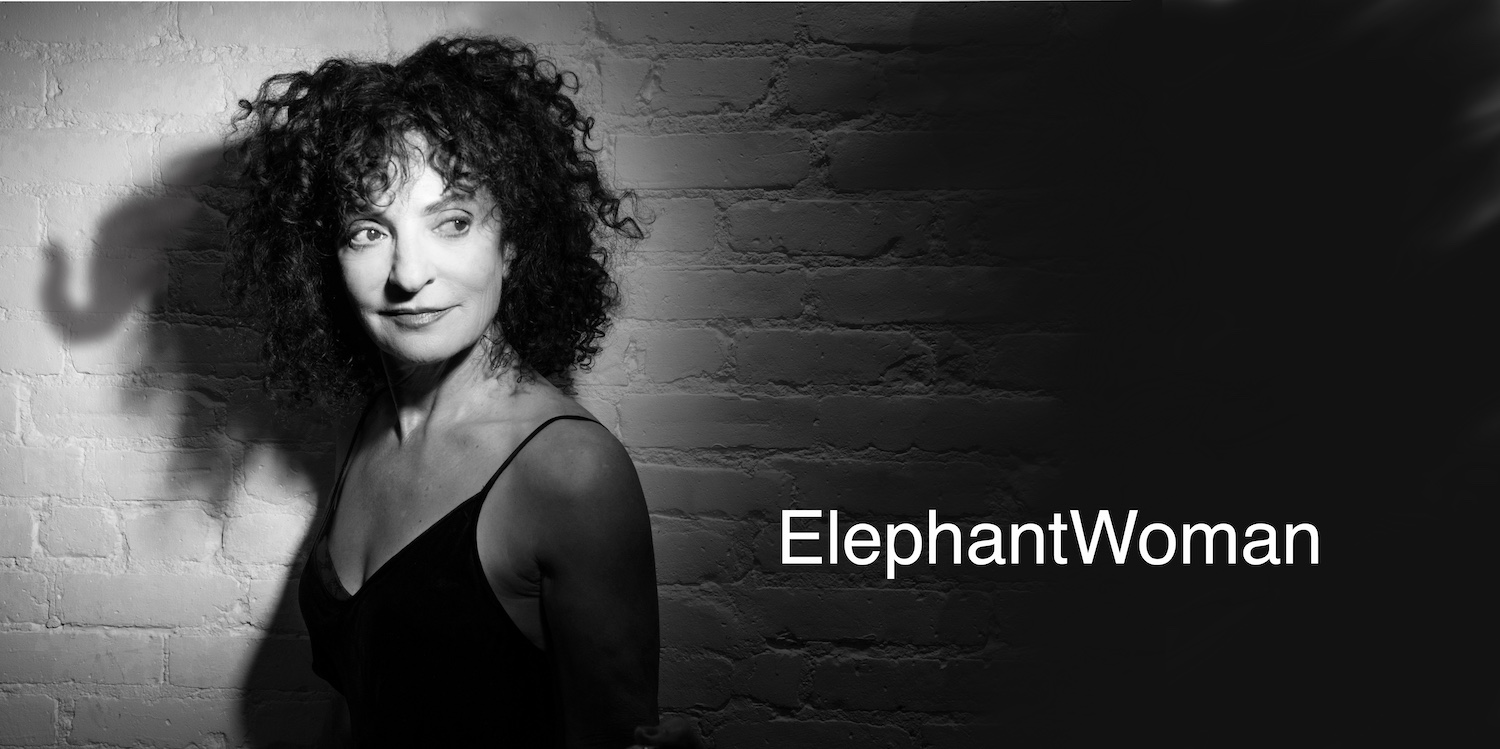
We welcome Elephant Woman to Rutgers Presbyterian Church for a single performance on January 27, transforming the sanctuary into an intimate theatrical space for a wild meditation on grief, memory, and the emotional lives of elephants. Metrikin walks the line between animal and woman, on a kind of bush walk, morphing between the two mid-show.
The piece, which runs under an hour, is being reimagined specifically for the church setting. “We’re kind of letting an elephant loose in the church,” Metrikin said. “I’m not sure what’s going to happen, but we’ll see.”
ElephantWoman began taking shape during the COVID-19 pandemic, when Metrikin, who grew up in South Africa, returned to her long-held fascination with elephants — majestic, sometimes dangerous, sentient beings that filled her childhood landscape, dreams, and fears. Her parents regularly took the family on safaris and camping trips to game reserves, where wildlife was never abstract but a constant, living presence.
Her father, Lennie Kruskal, a passionate photographer, documented those trips like a sage documentarian, often using a telephoto lens to capture animals in striking, grainy black-and- white images. One of his photographs — a framed lion — hangs in Metrikin’s home today, a quiet yet powerful reminder of that world and of her father himself.
During the pandemic, after her father died, the play shifted. What began as writing about elephants evolved into something more personal. “Somehow my father’s death got funneled through this play,” she said. “It became a poem and a meditation on elephants and grief. It’s really about my father, who was kind of an elephant in my mind.”
When I asked Metrikin if she believes in the collective unconscious — a shared, inherited reservoir of universal human experiences beneath the personal unconscious — she paused, then said, “I mean, it’s so weird that you’re asking me that question. It’s absolutely—that’s why we’re here.” About a third of her production explores the unconscious life of elephants and dreams. “And it’s sort of Freudian-Jungian.” Go figure: her husband is a psychiatrist.
The play tells the story of Nomi, a matriarch in an elephant herd slowly being hunted by poachers. Through Nomi’s story, the piece explores what Metrikin describes as “the humanness of elephants and the elephantness of humans,” examining love, loss, and the parts of ourselves that are increasingly endangered. “And this guy called Dr. Ian Thomas-Hamilton, who’s actually just died, he studied this. And there’s a proper land, there’s a sound, a rumble, for each thing that happens — and the fact that they’re being killed and poached at such an alarming rate,” she said. Tens of thousands of elephants are killed annually for ivory, with significant losses in areas like Central Africa.
Metrikin’s connection to elephants is rooted not only in admiration but also in fear. As a child, she was once charged by a bull elephant while riding in a camper van with her family, an experience she describes as terrifying and formative. The encounter fueled years of dreams and nightmares and reinforced a belief that elephants, famously, never forget. “They grieve. They cry. They have family structures, doctors, caregivers,” she said. Metrikin is deeply interested in the emotional and social lives of elephants, which she believes rival those of humans. “They have a language that’s been studied and notated. When they lose one of their own, they mourn.”
Since moving to New York, this will be Metrikin’s second solo production. Her first, Finding Fellini, explored the work of the iconic filmmaker, known for blurring the line between waking and dreaming and questioning reality — a sensibility that echoes Metrikin’s lifelong fascination with memory, imagination, and shared currents of experience. Finding Fellini won “Best Solo Show” at the Midtown International Theatre Festival and “Best Actress” at the United Solo Festival. “That sense of something ancient and shared is very much part of the piece,” Metrikin said, noting that elephants, like humans, carry emotional histories that extend beyond a single lifetime.
Visually and structurally, Elephant Woman embraces a dreamlike logic rather than a linear narrative. Fellini’s influence surfaces in the production through shifting identities, symbolic imagery, and moments that feel closer to a waking dream than conventional storytelling. The play does not present elephants simply as metaphor, nor does it anthropomorphize them for effect. Instead, it deliberately blurs the line between woman and animal. “You never quite know if I’m an elephant or a woman, or an elephant woman or a woman elephant,” Metrikin said. “That ambiguity is intentional.”
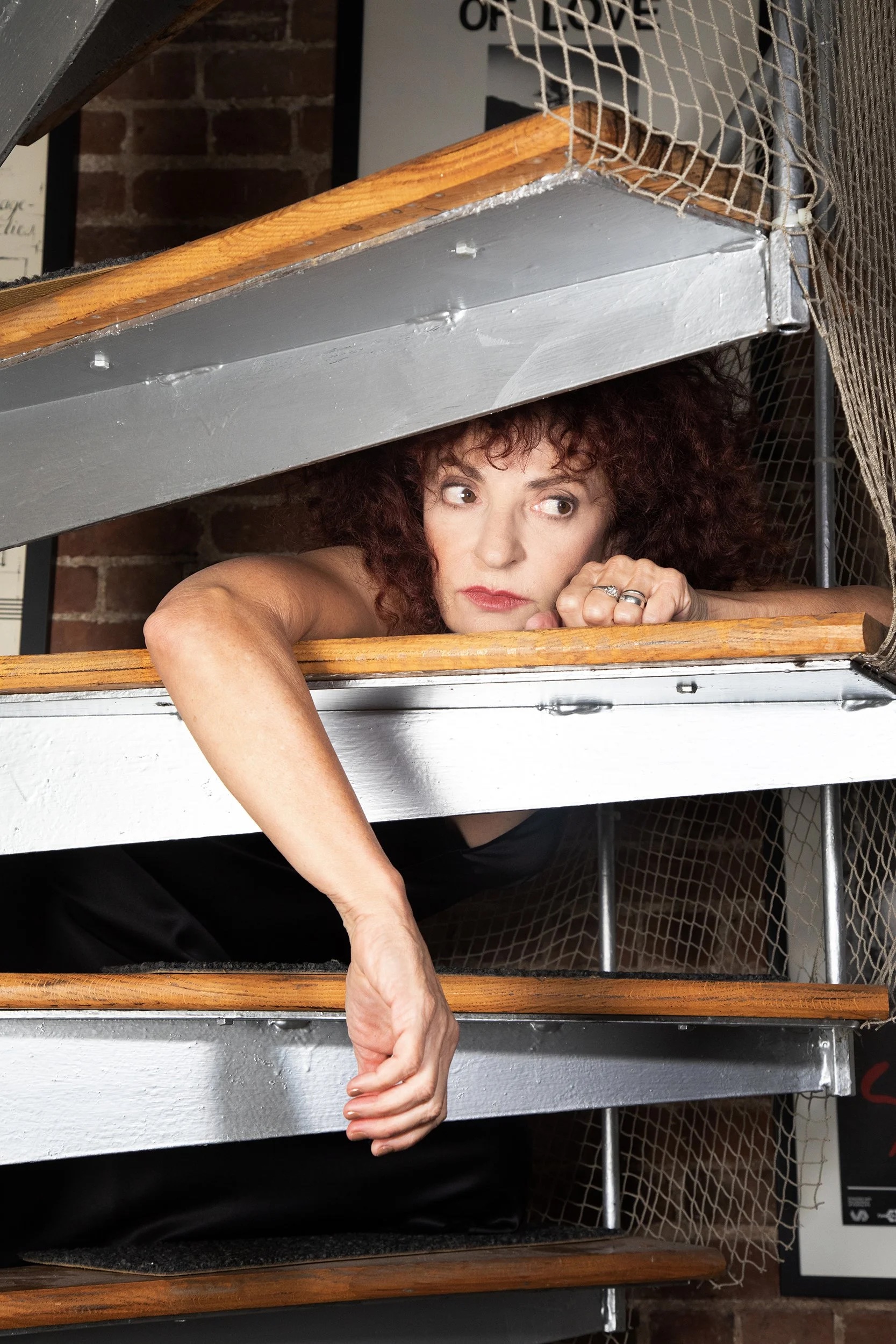
The production incorporates video and lighting design, and Metrikin is collaborating with a small creative team to shape the piece during an intensive rehearsal period leading up to the performance. Despite decades of experience in theater and film, she admits that solo work remains daunting. “Doing a solo show is always terrifying,” she said. “You’re alone up there.” Metrikin moved to the Upper West Side nearly 30 years ago, after spending time in the Village. She cites Riverside and Central Park as among her favorite parts of the neighborhood, along with its quieter, more family-oriented feel. She and her husband raised their two children amid this urban jungle.
Her connection to Rutgers Presbyterian Church comes through her theater company, Adult Film, and its relationship with the space, which has hosted several recent productions. Metrikin previously appeared there in translations of Chekhov’s The Seagull and The Cherry Orchard by the late John Christopher Jones. The Cherry Orchard became especially meaningful after Jones’s death during its run. “He was acting in the play with us, even after he was gone,” she recalled. “It was incredibly painful and beautiful at the same time.”
Elephant Woman will be performed once, on January 27, at Rutgers Presbyterian Church. One can imagine the powerful force imagination can have in sacred spaces, with Metrikin transforming the room — pews and all — into another world. This original rendition may include improvisational elements shaped by the energy of the audience. Tickets, with a suggested donation of $10, can be picked up here, or at the door. All proceeds will be split between Save the Elephants and Reteti Elephant Sanctuary.
Tickets, with a suggested donation of $10, can be picked up here, or at the door. All proceeds will be split between Save the Elephants and Reteti Elephant Sanctuary.




what time is this. would appreciate knowing
7 pm
https://www.eventbrite.com/e/elephantwoman-tickets-1979937863448