

 By Anya Schiffrin
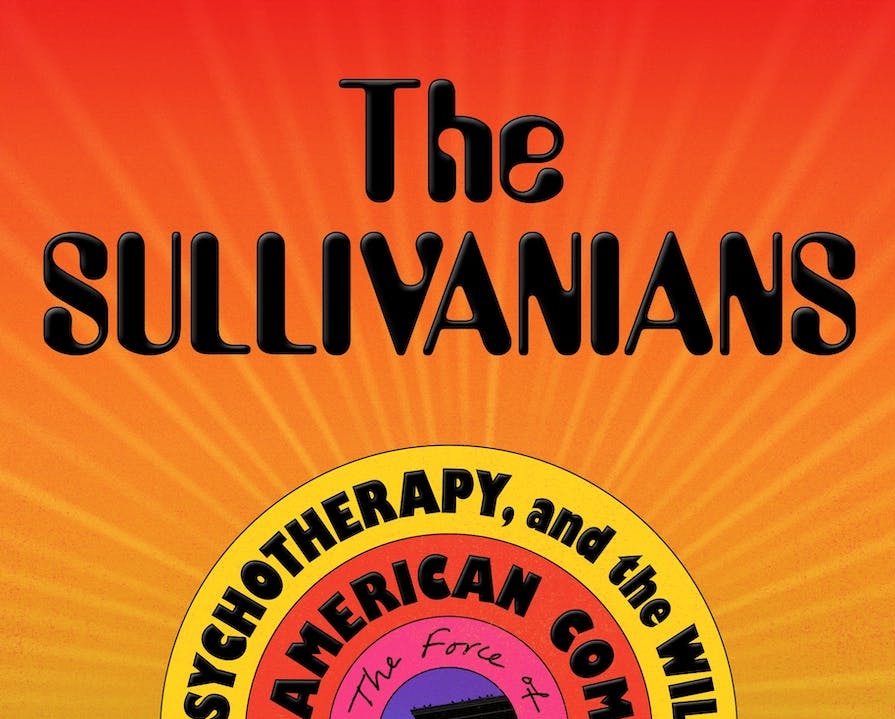
My first job as a teenager on the Upper West Side was scooping ice cream at Ferguson’s on West 86th Street at Broadway, which turned out to be owned by EST, a cult whose celebrity followers included Yoko Ono and Diana Ross, according to The New York Times. I knew nothing about cults back then. But I remember that during my childhood, our family had acquaintances with an unusual living arrangement: they shared a large apartment with others who were all in therapy together. Strange, yes, but just how strange, we didn’t know at the time. Our acquaintances were part of the Upper West Side’s very own 1970s cult, with hundreds of people living together in two buildings: one on 314 West 91st Street, the other on 100th and Broadway. Now, a new book, The Sullivanians: Sex, Psychotherapy, and the Wild Life of an American Commune, by Columbia Journalism School professor Alexander Stille, unlocks the secrets of that Upper West Side cult, sometimes known as the “Fourth Wall.”
The Sullivanians provides a startling, very detailed account of the damage wreaked by the group on many, particularly the children of cult members. Stille, who wrote for The New Yorker for many years, spent five years pursuing the Sullivanians, doing dozens of interviews and consulting thousands of pages of court records. His research on cults showed how they often begin as relatively harmless groups, until a powerful leader starts to demand more extreme behavior – such as encouraging men to have multiple affairs or to prey on younger women or girls. A recent New York example: the leader of the NXIVM cult marked his women followers with a brand, until he was arrested and convicted of a series of crimes, including sex trafficking.
The Sullivanian group was cofounded in New York in the 1950s by Saul Newton and his wife Jane Pearce. Pearce had been a student of neo-Freudian psychiatrist Harry Stack Sullivan, whose name became attached to the group even though he died in 1949 before it formed.
The Sullivanians were professional therapists who came together and performed therapy on each other. They spent summers together in the Hamptons and founded a theater company called the Fourth Wall, initially on 77 East 4th Street.
But as time passed, Newton began to push the idea that families were a destructive force, including families among the Sullivanians. He promoted divorce, free love, and an emphasis on personal growth over family values. Men had wide freedom to pursue sexual relations, while women were subordinated and pressured to send their children to boarding schools, as early as age three. Some ended up in abusive institutions. Yet the group’s leaders kept their own children in private schools in the city, with financing provided by the other cult members.
Below is a lightly edited email interview with Stille about the Sullivanians. Spoiler alert: the last part of the interview explains how the cult disintegrated.
Q: Can you explain how the Sullivanians became a cult? How did it evolve?
STILLE: The Sullivan Institute began as a maverick form of psychotherapy. Its founders, Jane Pearce and Saul Newton, believed that people grew from contact with a variety of other people, so traditional institutions like the nuclear family and monogamous marriage were antithetical to growth. By the 1960s, they were advising them to live in large group apartments on the Upper West Side: men with men and women with women, so that people would not form traditional family units but would have multiple sexual relationships.
Jane Pearce, who was both an M.D. and had extensive psychoanalytic training at the William Alanson White Institute, which Harry Stack Sullivan and other major neo-Freudians had founded in the 1940s, believed this approach was a path to human liberation. Pearce did not intend to found a cult. But her very “directive” form of therapy – telling patients what they should do and isolating them from past family and friends – were techniques straight out of the cult playbook.
Her husband, Saul Newton, (who later divorced Pearce and excluded her from the group), had no formal training in psychotherapy but quickly learned this approach gave him power over his patients. Even in the 1960s, being a Sullivanian patient meant being part of an exclusive community with clear rules that organized people’s lives. It became more cult-like in the 1970s. When members of the group formed a theater company, The Fourth Wall, the leadership realized that it could create a formal membership with people paying dues and undertaking large, collective projects. The theater was a great vehicle for power and control, and the leaders took it over.
Q: What do you think was the most pernicious part of their society?
STILLE: The most pernicious element of the group was the coercive nature of the therapy, therapists taking control over every aspect of their patients’ lives and convincing patients that if they didn’t go along with directives, that they would be kicked out of the group and that their lives would be ruined. Because patients had cut all ties with their families and past friends, the idea of ostracism became terrifying to them.
This meant, for example, that many patients who had small children were convinced to send their kids to boarding school – at ages of five, six, seven – with often catastrophic effect on the children – and the parents. The therapy also undermined people’s sense of self and agency, convincing them that their own natural inclinations and judgment could not be trusted because it had been shaped and corrupted by their terrible families and by a stultifying bourgeois society. Patients grew by doing things that made you anxious and that you resisted doing. So, if a woman didn’t want to have sex with someone, they should [anyway], precisely because you didn’t want to.
Q: Was this a hard book to write?
STILLE: The world of the Sullivanians was deeply private and somewhat hard to break into. At the same time, I found some remarkable people who were generous and open, which allowed me to make serious inroads into that community. I was able to contact and interview a larger swath of the former group members, track down the kids who had been sent away to boarding school. Some people who initially said they didn’t want to be interviewed wrote back six months later and asked if I was still interested in talking with them.
The group created a powerful culture of silence and mafia-like omertà around the group’s life, which is still quite real for many ex-members. Some people responded by saying, “[T]his was the most traumatic period of my life and I don’t want to talk about it.” For others there was quite a bit of guilt and shame around their experience. Many of them told me: “I still don’t quite understand how I could have gone along with all of this, allowed myself to be treated that way.” But a surprising number overcame that resistance and spoke with me with surprising candor. I liked most of the people I met, people who were, almost universally, smart, thoughtful and kind. The central mystery of this project, for me, is how the leadership was able to get so many smart and not-crazy people to turn their lives inside out, in ways that are hard to understand.
Q: How did it end?
STILLE: People who had joined in their early twenties got tired, by their mid-thirties, of having their relationships broken up by therapists who demanded they stop “focusing” on one person and instead maintain multiple relationships. Many left in order to marry and pursue a more traditional family life. There are dozens of ex-Sullivanian married couples.
Women members who joined in their twenties, by their mid-thirties wanted to have children and resented the group’s heavy-handed interference with parent-child relationships. In 1986, a 41-year-old woman named Marice Pappo kidnapped her own child off the street at Broadway and [West] 100th Street because her therapists had denied her access to her infant daughter for six months. She consulted a lawyer who told her that as a mother she had a right to her child and should hire a couple of bodyguards and snatch the child when she went out for a morning walk with her babysitter, who was the adult in charge of looking after the daughter. All this right in front of the building at 2643 Broadway where Marice and about 90 Sullivanians all lived.
This marked a turning point, setting off a legal battle. Two other parents who had left the group also sued for custody of their kids. These battles split the group, led to multiple defections, drained it of economic resources. And, at the same time, the founder, Saul Newton began to suffer from obvious signs of dementia in the late 1980s and died in 1991, the year in which the group formally disbanded and began to sell off its assets.
The Sullivanians: Sex, Pyschotherapy, and the Wild Life of an American Commune, by Alexander Stille, will be published by Farrar, Straus and Giroux June 20.
Anya Schiffrin is a lifelong Upper West Sider and senior lecturer at Columbia University’s School of International and Public Affairs.



One of the Sullivanian’s children went to Purple Circle in the late 70’s, when the group had purchased an apartment building on, I believe, 100/101 St & Broadway (or somewhere near there on Broadway). One of my daughters wanted a playdate with her, and so it was arranged with her caregiver – a man who brought and picked her to/from PC; I remember he had a beeper on his belt and wasn’t friendly or forthcoming about himself. When I took her to the playdate, I entered the communal living room, which I found quite strange, and I believe after the playdate she was brought back to our apartment. It was a quite spooky event, never repeated.
Wow. I’d never heard of this group before. That is going to be a fascinating albeit disturbing read!
I remember the Sullivanians (one of my teachers at City College was one and one of my next door neighbors was a former one). I also remember when the NY Post and (I believe it was) Hard Copy did stories about the cult.
I felt sorry for them. Even though I was young when they were around, they seemed like a group of broken people.
Looking forward to reading the book.
EST, a cult ?????
No one told me, or the many people who came to be life-long friends
after meeting at various EST events.
Good friends.
Yes EST was a cult. My mother was heavy into EST and I had a ringside seat to the destruction Werner Erhard wrought. Textbook cult indoctrination techniques – forcing people to go hours without food and water amid 6-day “training” seminars where people were subjected to cruel emotional confrontations against which they were powerless to respond.
It absolutely was/is a cult: https://culteducation.com/group/908-est/6122-whatever-happened-to-est.html. So is Landmark. Just because you don’t want to believe it, doesn’t make it true.
Nope. EST was not a cult. I took workshops and after so many years I still feel they helped me think for myself and escape clichéd thinking.
No, you are right, EST was not a cult but an interesting experience that was held on two successive weekends, and was popular with many people, including me. If it became more than that for a small number of the people who participated, it still should not be termed a cult.
That was Landmark Forum. I did it, too. It was terrific. They were simply too cheap to advertise. I don’t think it’s still around. My classes were at the WTC. Not exactly a cult!
Landmark Forum is still around, and going strong, including in NYC. They still have workshops. Not for the faint hearted but worth the journey.
Jane Peace did not have extensive psychoanalytic training at the William Allan Institute – a prestigious Psychoanalytic Institute on the UWS. They took a few ideas of Harry Stack Sullivan and distorted them.
Didn’t they also own some local businesses. Perhaps Penny Copy?
To Anya Schiffrin – I’m not aware that the EST program/movement was a cult – even though it’s been labeled as such over the years. You seem to state here that it definitely was.
Given your background and expertise your opinion is not to be taken lightly but having personally gone through the EST training in the 70’s I never thought of it as a cult – only as an exceedingly helpful tool among many in navigating one’s life.
In my mind it was an amalgam of several philosophies condensed for maximum impact in a short period of time. It saddens me that a program this powerful has to be eternally branded a cult – which has so many negative and scary connotations. But I’ve come to accept that many people are wary of anything confrontational and to merely be happy that I had the opportunity to experience ‘the training’ which has in my mind served me well throughout my life.
Like most things est was not for everyone but their goal was self-betterment, self fulfillment, breakthrough thinking, manifestation of true self and overall revealing that in the end love is all there is and ever was and ever will be. That’s just my interpretation- and some of what I took away.
I’m aware of myriad programs and books today that purport/teach similar messages to EST that are merely mainstream and have been societally co-opted.
In my opinion – the founder/s didn’t set out to control people but they did want peoples lives to be more satisfying and enjoyable. Maybe it just comes down to our individual definitions of what a cult is?
Thank you for your article. The UWS was and continues to be a fascinating place! Having lived on the UWS and now residing on the other coast I always enjoy reading about my old stomping grounds!
EST was most definitely a cult, as is Landmark. It fits every definition of a cult. I worked with an organization that was run by people who were into The Forum (Landmark) and it was awful, you had to participate in these very controlled sessions and were urged every day to sign up for “the course”. I also had a cousin who was a Sullivanian, and had a student whose father was in it. The pain those members caused to their immediate and extended families was just horrible.
Saul’s son moved into the apt next to me with his wife and kids as the culture was dissolving. Lots of people and kids went in and out at all times of the day and night. I think they moved after 2 years.
I’ve lived on the Upper West Side since 1971. I knew people in the Sullivanians, in Fred Newman’s cult (which had many names and still exists), and in other cults active in our neighborhood. For those interested in the Sullivanians, you might also take a look at Kaethe Cherney’s novel HAPPY AS LARRY. https://kaethecherney.co.uk/
They were in my building as well. But I didn’t see children. 240 West 98th Street. They seemed odd and depressed.
Yes! I lived in that building for almost 20 years. I never had a bad interaction with any of the Sullivanians, but one could usually tell who was one of them.
I forgot about them, but they were very big when I first came to New York. I remember going to a party and meeting this guy and the first thing he said was ‘You look uptight’. I thought it was a way of drawing me in and I left.
I did EST way back when and it was a major factor in my switching my orientation toward taking on challenges rather than assuming I would be defeated in anything I would try. I am grateful to it for that.
I was a member for 5 years I made a documentary of my personal story and then to the Sullivanian’s t that was on film freeway and selected for recognition
here is youtube lin::k https://youtu.be/kHJ0LyhfH9o
Wow! Looks great, thanks Shelley!
Very similar to Synanon which had their world headquarters at 35 Riverside Drive between 75/76 St at around the same time. They became one of the biggest landowners in the Los Angeles area before imploding much like the Sullivanians.