

By Anya Schiffrin
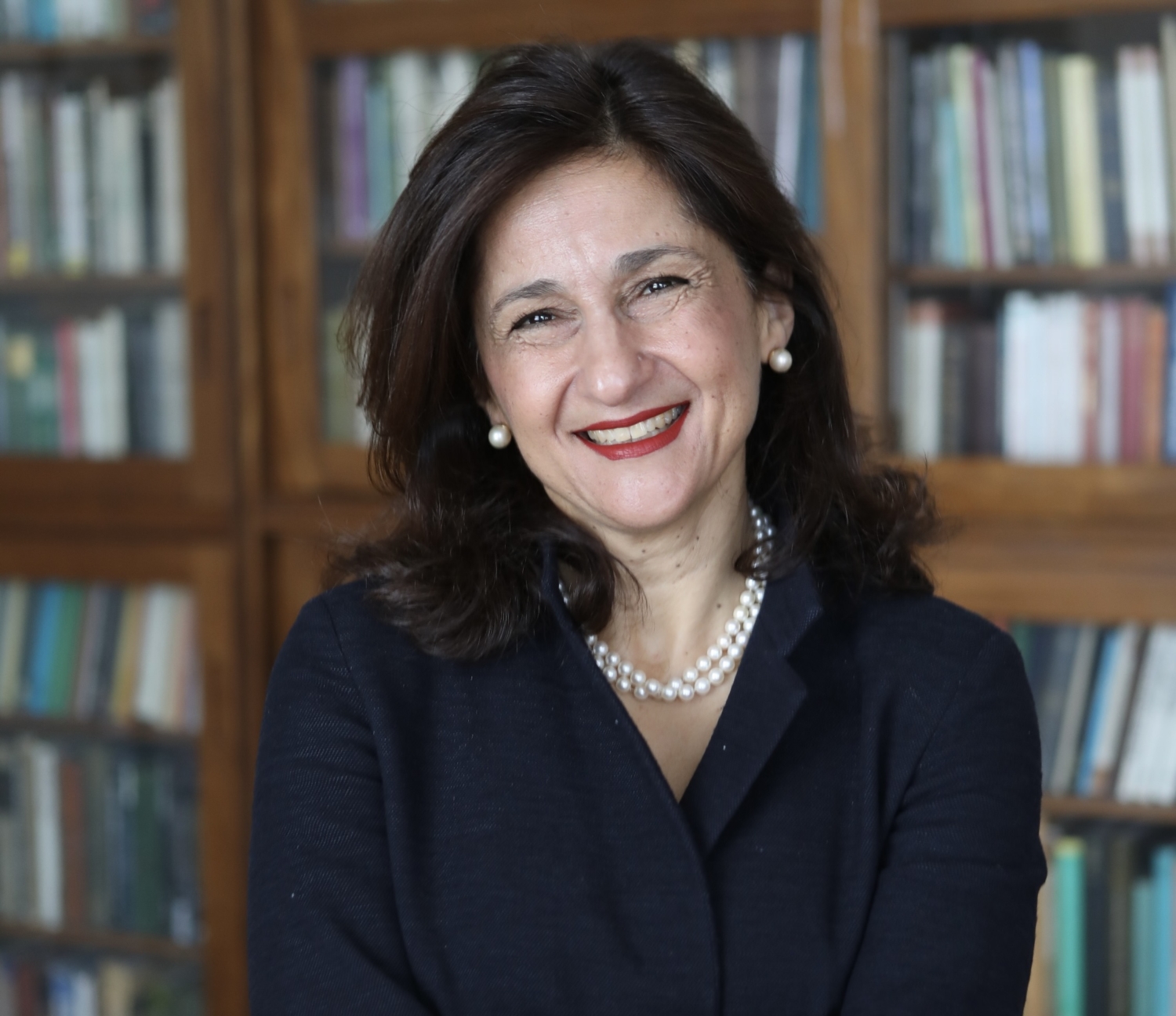
In July, Columbia University will get its first new leader in two decades, when President Lee Bollinger steps down and British-American economist Nemat “Minouche” Shafik takes office.
Shafik will be in charge of an Ivy League university with more than 35,000 students (as of fall 2021), 4,504 full-time faculty, 14,118 staff employees, and annual revenues of $5.2 billion. Columbia is also a major landowner in Upper Manhattan.
Shafik, 60, who was made a Dame Commander of the Order of the British Empire as part of the Queen’s Birthday Honours list in 2015, brings considerable management experience to her new role. At the World Bank, she rose through the ranks to become a vice president at age 36. Later she headed the Department for International Development, a UK government agency that distributes about $13.3 billion a year in foreign aid.
An economist who specializes in development and international finance, Shafik did her undergraduate studies at University of Massachusetts-Amherst, her master’s degree in economics from the London School of Economics, and has a DPHIL in economics from St Antony’s College, Oxford.
Shafik declined to speak to West Side Rag, saying she won’t do press interviews before starting work on July 1. But January’s announcement of her appointment prompted a flurry of notes on Twitter, offering congratulations from well beyond the Columbia campus, New York City, and even the United States.
“My dear Minouche, I am thrilled that you have been named @Columbia University’s first female president,” tweeted Christine Lagarde, president of the European Central Bank, one of many international figures who messaged their support. “Your inclusive leadership and your dedication to education as a global good and means for progress set you apart.”
“Wonderful news Minouche. You always do us proud,” tweeted Mohamed ElBaradei, former vice-president of Egypt (Shafik was born in Egypt).
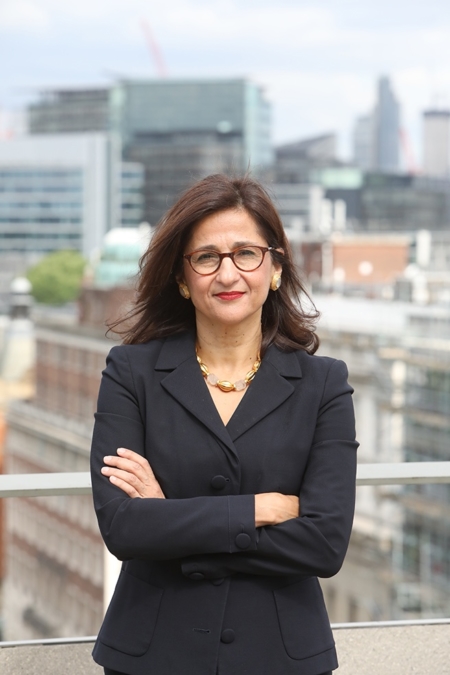
In a visit to campus in January, Shafik toured many of Columbia’s 20 schools, its medical center and Columbia’s scientific research center at the Lamont-Doherty Earth Observatory. In a walk-through at Columbia’s Butler Library, she got a standing ovation, according to Columbia’s public affairs office.
Though her family left Egypt when she was four, the fact that Shafik was born in Alexandria and has worked at internationally-focused organizations gives her a global background and outlook that appeals to many of Columbia’s staff and students. “Finally,” said one student, “Columbia has joined the 21st century.”
Former colleagues from the World Bank describe Shafik as a highly effective leader. “She’s extremely good at managing bureaucracy and knowing which way the wind is blowing,” one said.
From the UK development office, Shafik moved to the UK’s Central Bank, the Bank of England, in 2014, serving as deputy governor, until her appointment at the London School of Economics and Political Science, where she served as president from 2017 until her selection to the Columbia presidency. “She was beloved,” one UK-based academic said of her tenure at the prestigious LSE. “They had years of chaos and she put a stop to it.”
In 2021, Shafik published What We Owe Each Other: A New Social Contract for a Better Society, calling for better government policies against poverty and a social safety net that would provide higher wages and health care for all.
Bollinger’s 21-year tenure as president was highlighted by the university’s creation of globally-focused centers on the Columbia campus and in Istanbul, Mumbai, Amman, Nairobi, and several other world capitals. Regarded by many as a reclusive leader, Bollinger is also known for his deep commitment to free expression, bringing to campus projects such as the Knight First Amendment Institute. A few Bollinger initiatives, like the Knight Institute, have raised sufficient funding to be financially independent. But others are not self-sufficient. And since it’s not clear which Bollinger initiatives — if any — Shafik will choose to continue, directors of these initiatives are already jockeying to try to preserve their operations under Shafik.
But perhaps the biggest legacy of the Bollinger era is Columbia’s massive expansion into West Harlem (also known as “Manhattanville,” an area just north of the Upper West Side), where gleaming, glass-fronted, donor-named buildings have gone up to house Columbia’s Business School, The Forum (home to Columbia World Projects), the new Lenfest Center for the Arts, and a drop-in public space open to neighborhood residents.
Apart from strategizing about the future of the university and fundraising from Columbia’s powerful bench of donors, Shafik will have a long to-do list. Students often complain about the high cost of tuition (around $65,000 a year) and the lack of racial diversity on campus. Adjunct faculty are likely to try to unionize, as has happened already at the New School and New York University. And faculty and administrators would like to see the new president bring reforms to the university’s bureaucracy, considered by many to be sclerotic and mired in red tape that hinders productivity.
Shafik is married to Raffael Jovine, a research scientist with Brilliant Planet, a UK-based company that grows seaweed in Morocco and other places for carbon capture, which scientists believe is critical for helping to curb climate change. Jovine, who holds an Italian passport, will commute to his job overseas, and he and Shafik will move into the President’s house as soon as renovations are completed. A biking enthusiast, Jovine is looking forward to trying out the path along the Hudson and biking up to the Little Red Lighthouse.
Anya Schiffrin has taught at Columbia University’s School of International and Public Affairs for nearly 20 years and is the director of the school’s Technology, Media and Communications specialization.




I wish her the best of success and luck, and I hope she will be a big improvement of the last two presidents.
Huh? Bollinger was fantastic for Columbia. Tripled its endowment, build and renovated the campus, increased research and prestige.
Yes, Bollinger was very good at getting $$$ to the coffer, but he directed the university too much to the left side of the spectrum.
and has done nothing for people with disabilities beyond ADA compliance.
Great choice. Hopefully she will continue Columbias trajectory and make Columbia the best research university in the world.