
By Rob Garber for the Bloomingdale Neighborhood History Group
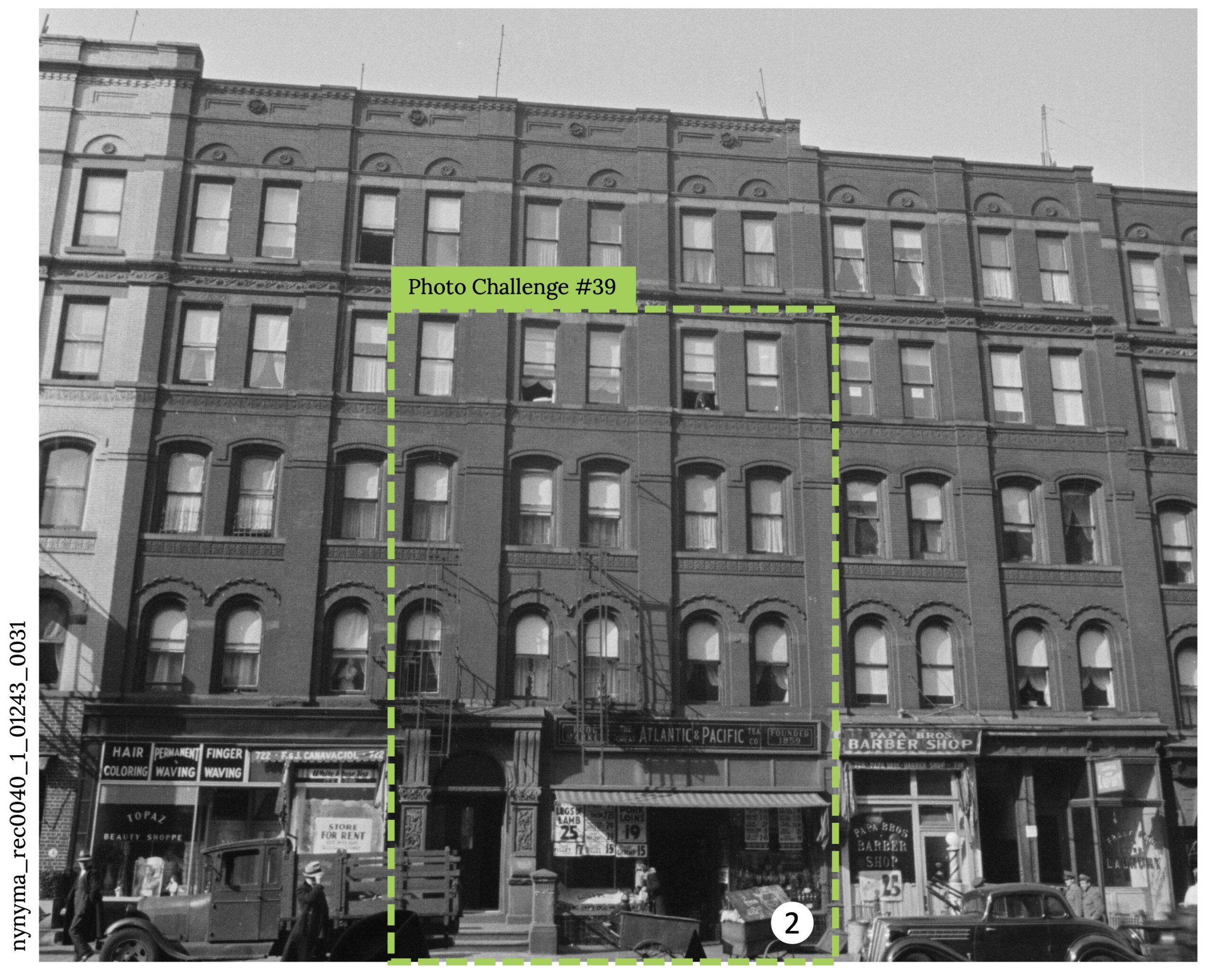
Welcome to another installment in the Rag’s Historical Photo Challenge. The image above was taken somewhere on the Upper West Side, sometime in the past. Can you figure out where, when, and what it shows? Look closely; this week’s challenge photo, like the others in the series, includes clues that will help you identify the scene, if you’re a dedicated UWS history sleuth. And even if you don’t recognize the picture—not to worry! Come back in two weeks and I’ll decode it, show you the clues that help identify it, and—best of all—tell you a story the image unlocks, because this column isn’t just a test of your neighborhood knowledge; it’s also a rolling celebration of the people, buildings and events that wove the tapestry of the Upper West Side.
Ready? If you think you know where and when the photo was taken and what it shows, post your answer as a comment on this column.
Solution to Historical Photo Challenge #39
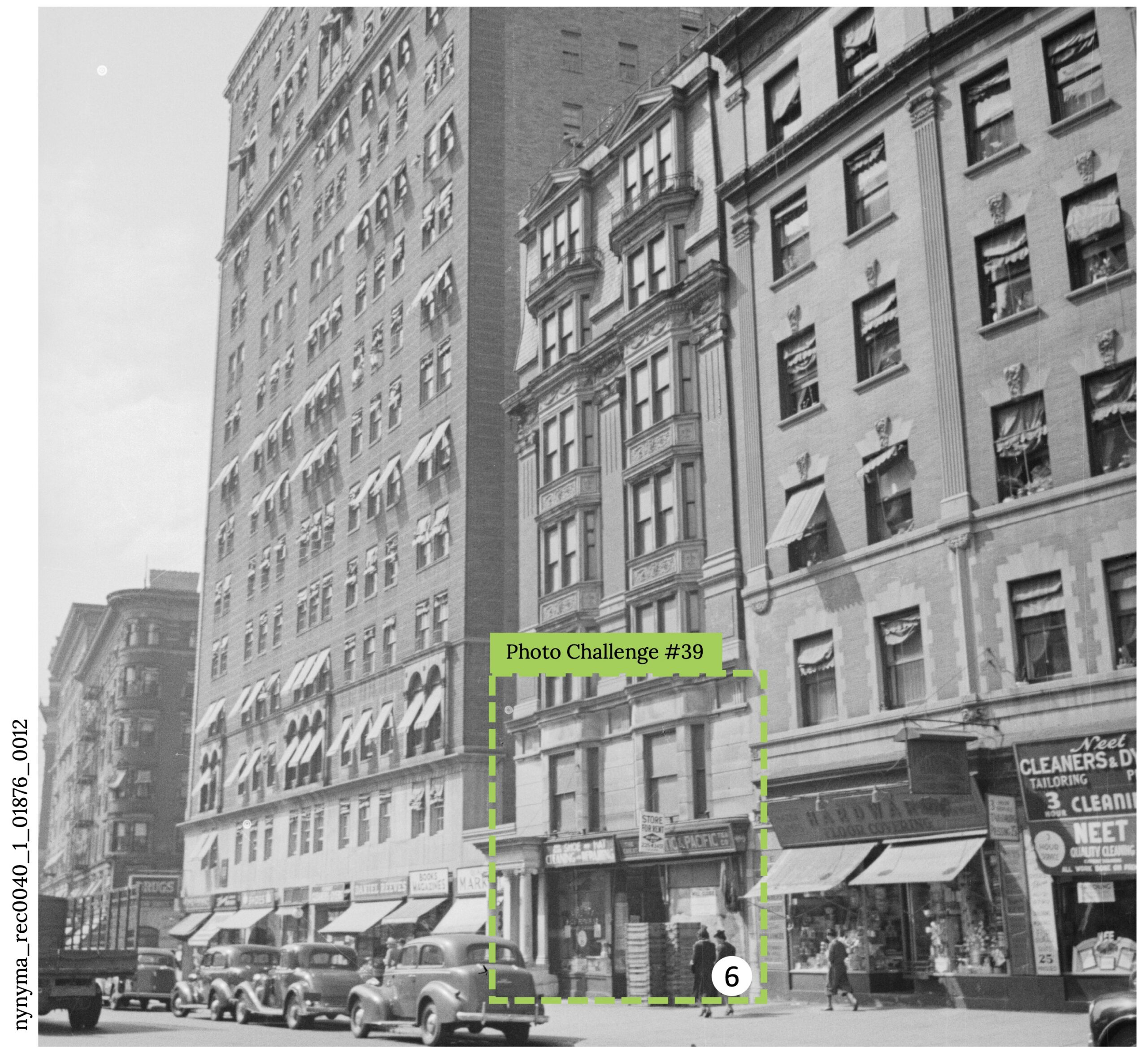
Subject: The Great Atlantic & Pacific Tea Company stores
Locations: Broadway and Amsterdam—see captions for exact locations
Year: 1940
Image Source: New York City Municipal Archives
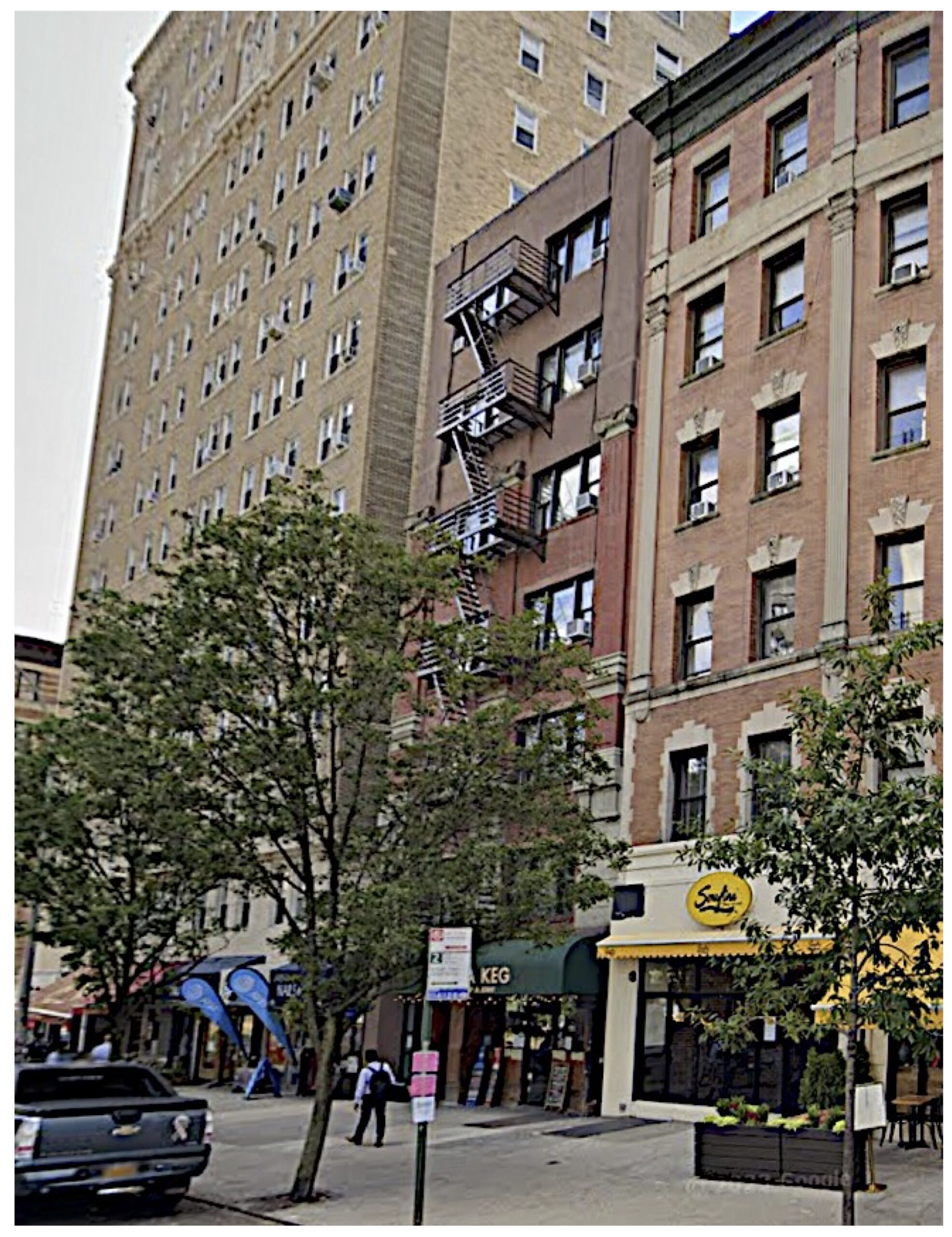
Clues: All these buildings are still standing, which is impressive because A&Ps were known for taking cheap, short-term leases in modest buildings and relocating as conditions warranted. Your clues were the distinctive moldings and ornamentation on these buildings, but recognizing them requires a deep familiarity with the remarkable number of UWS buildings that are at least 100 years old.
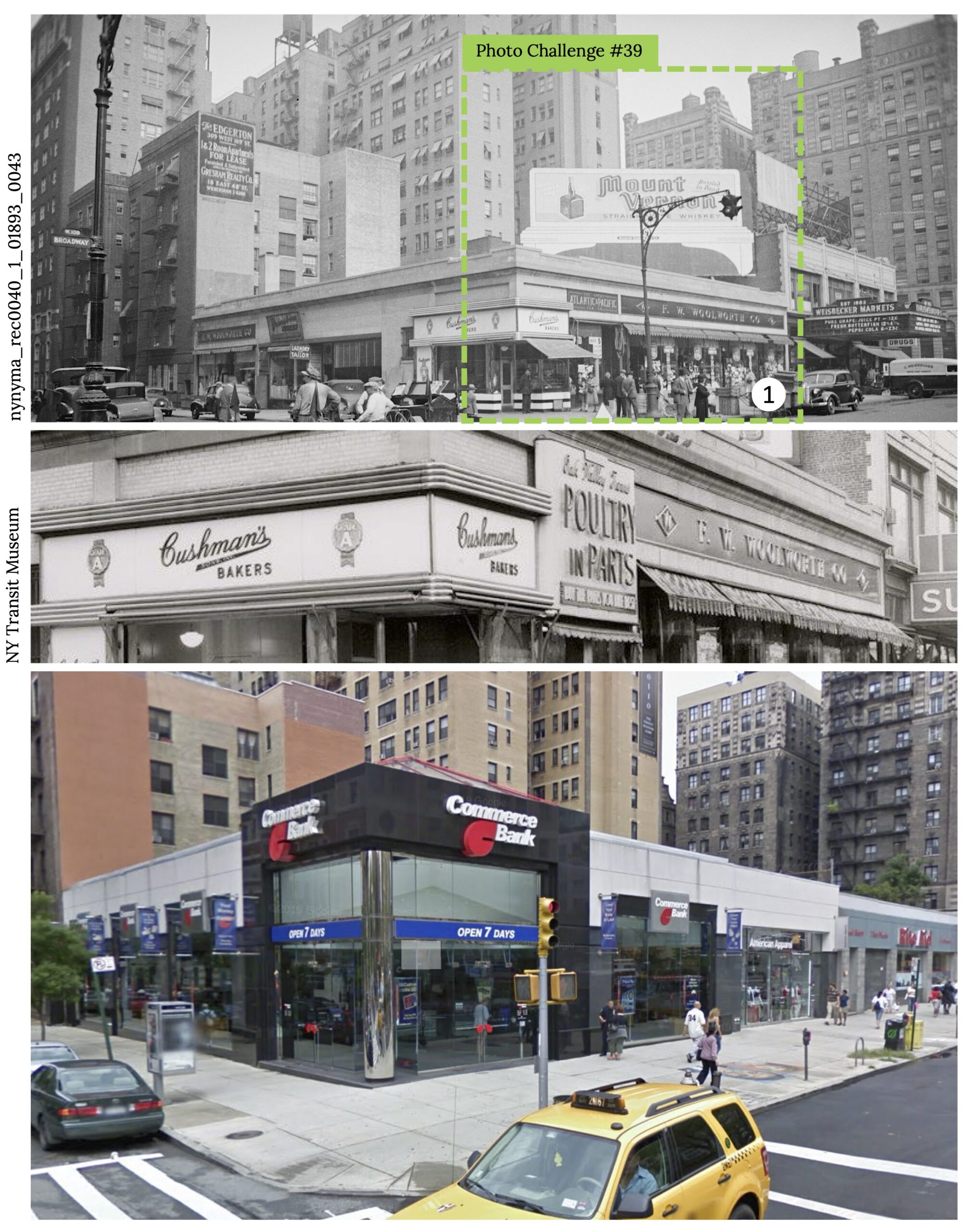
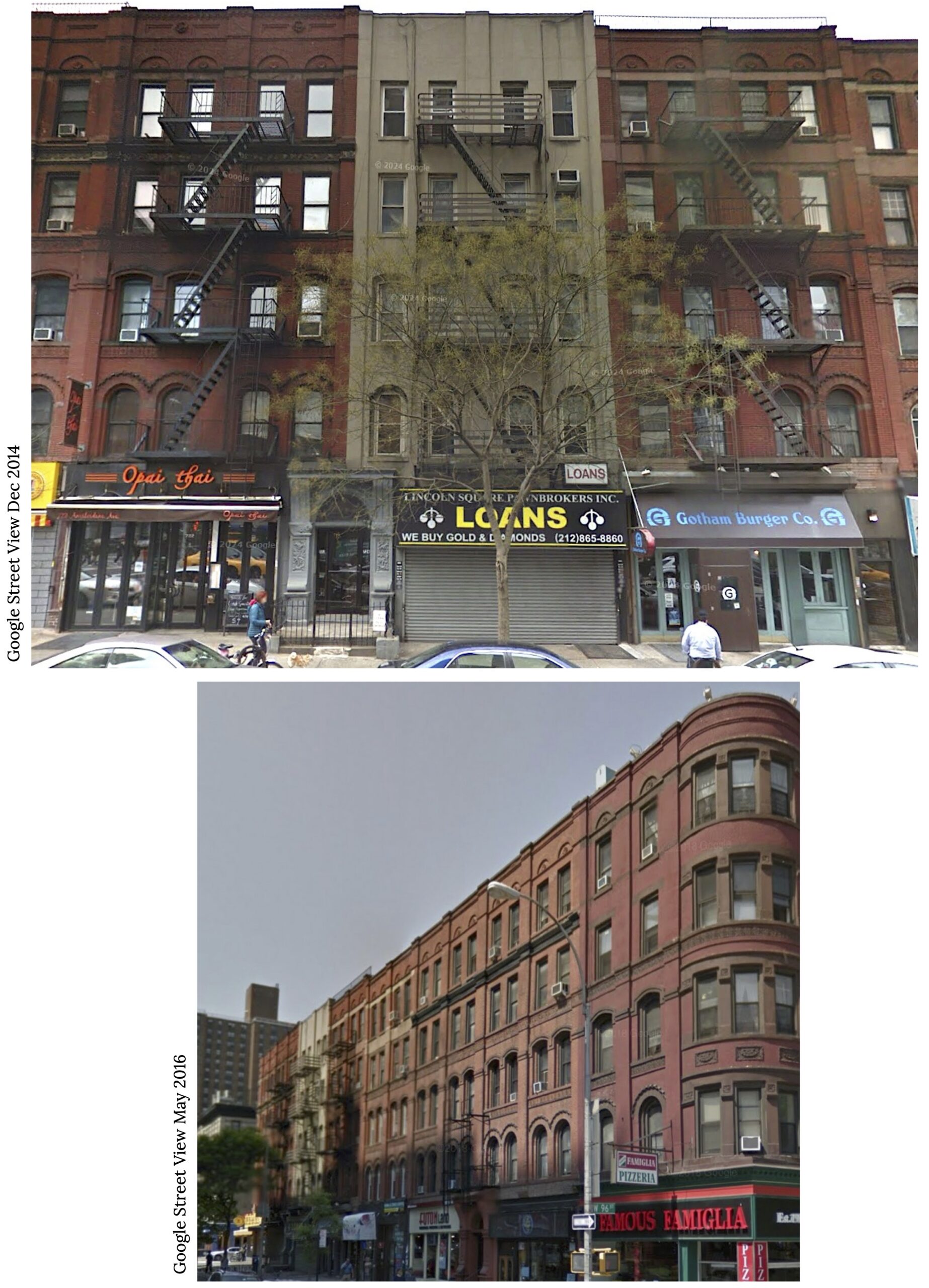
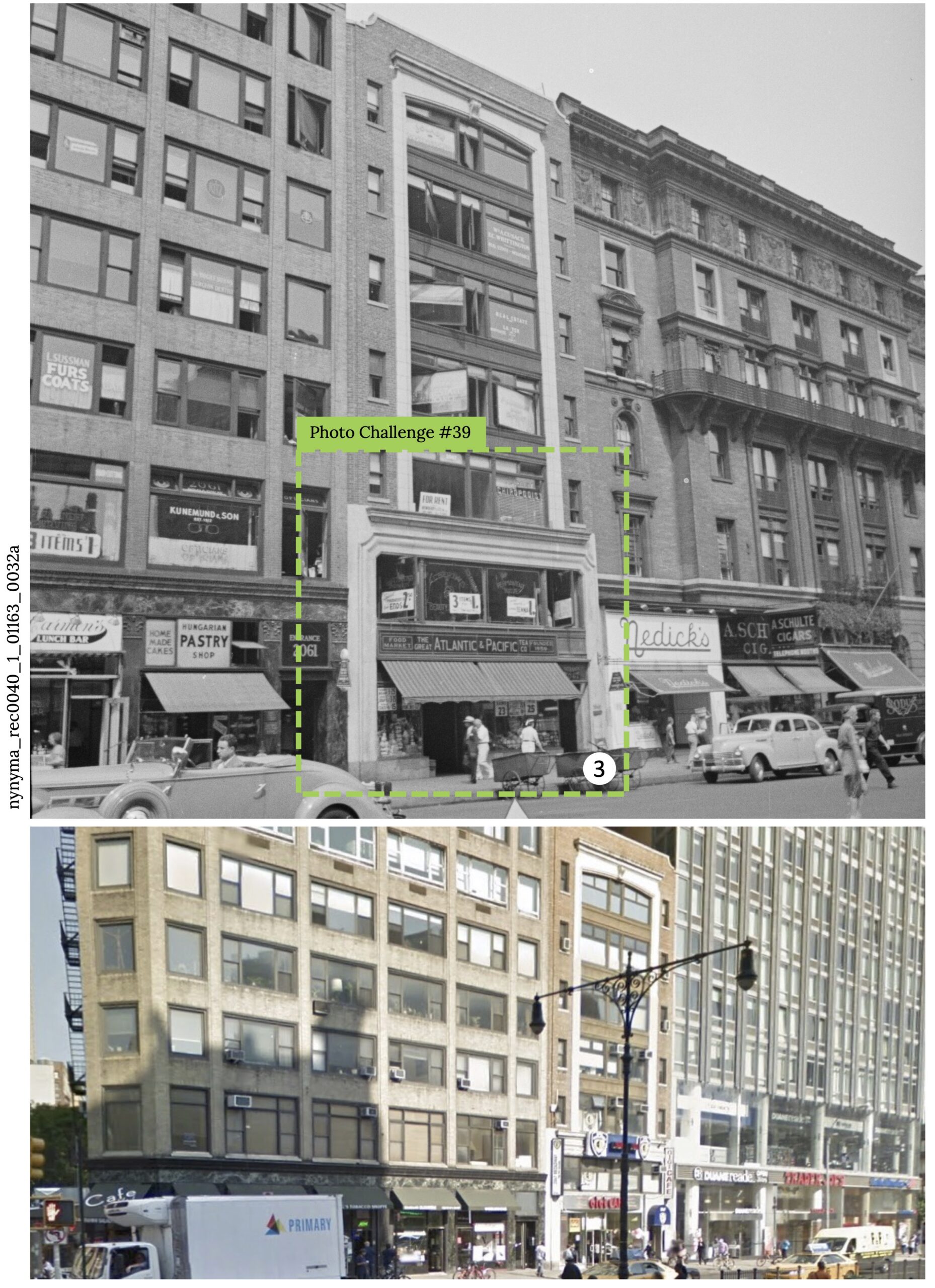
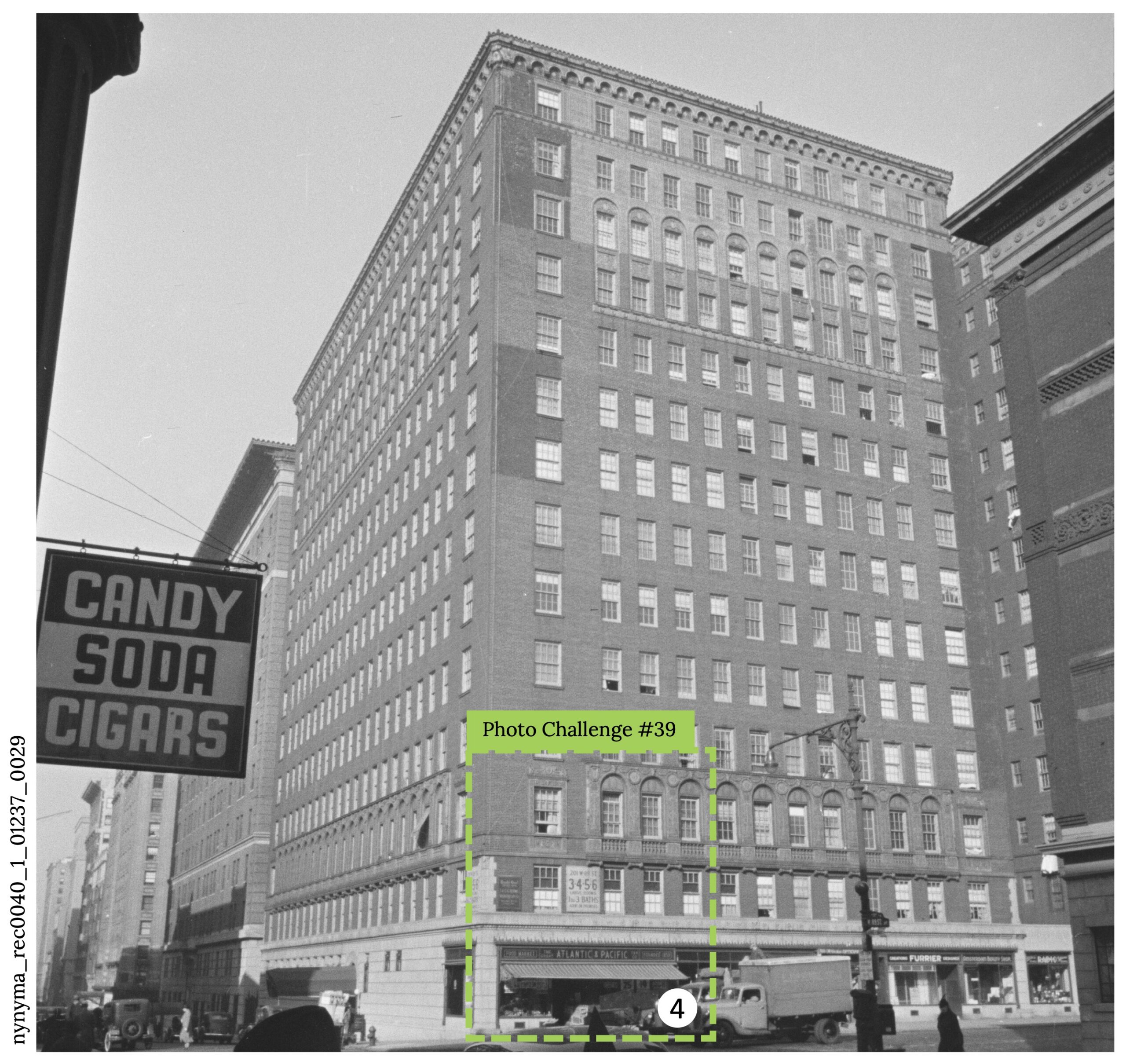
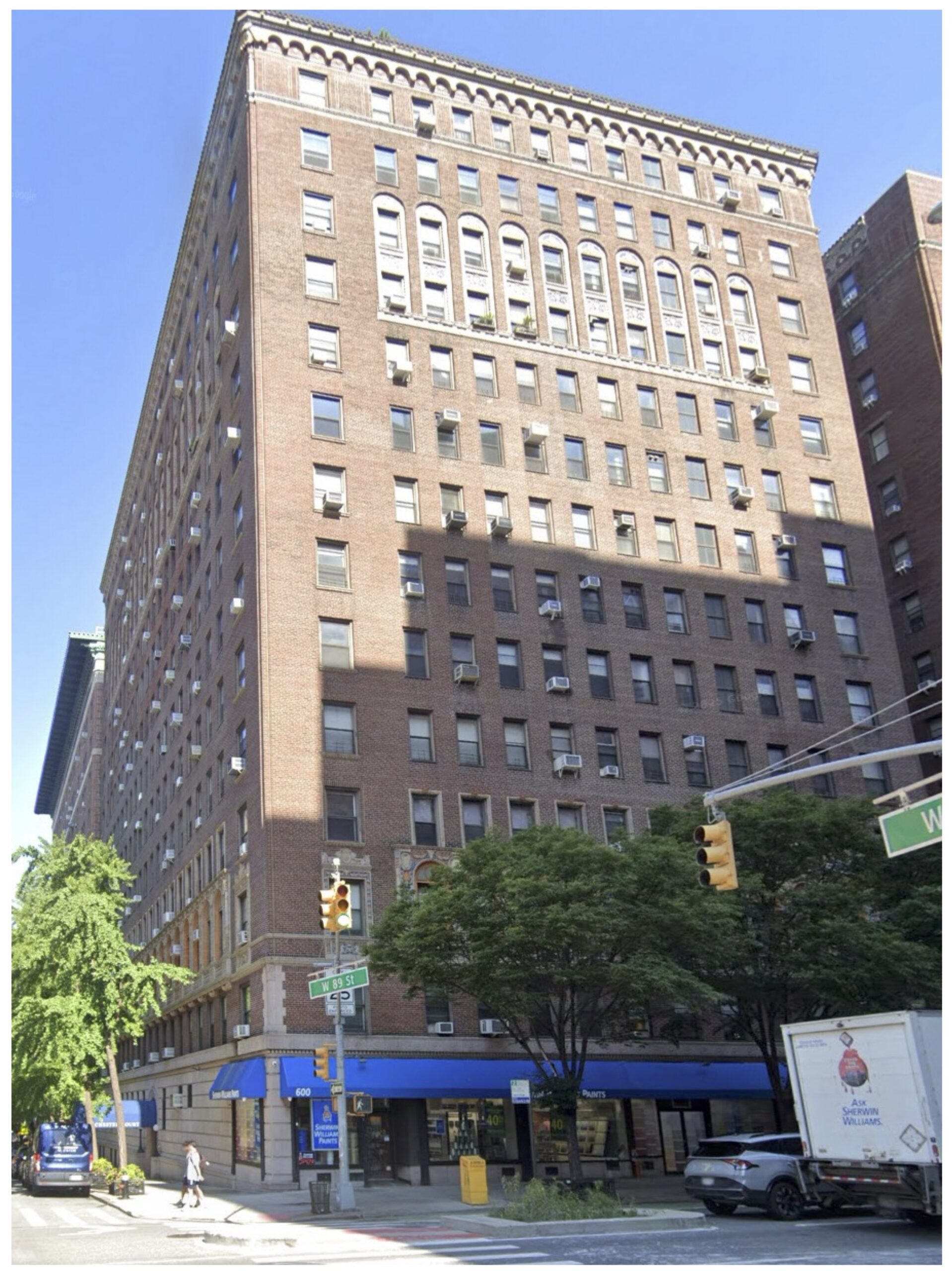
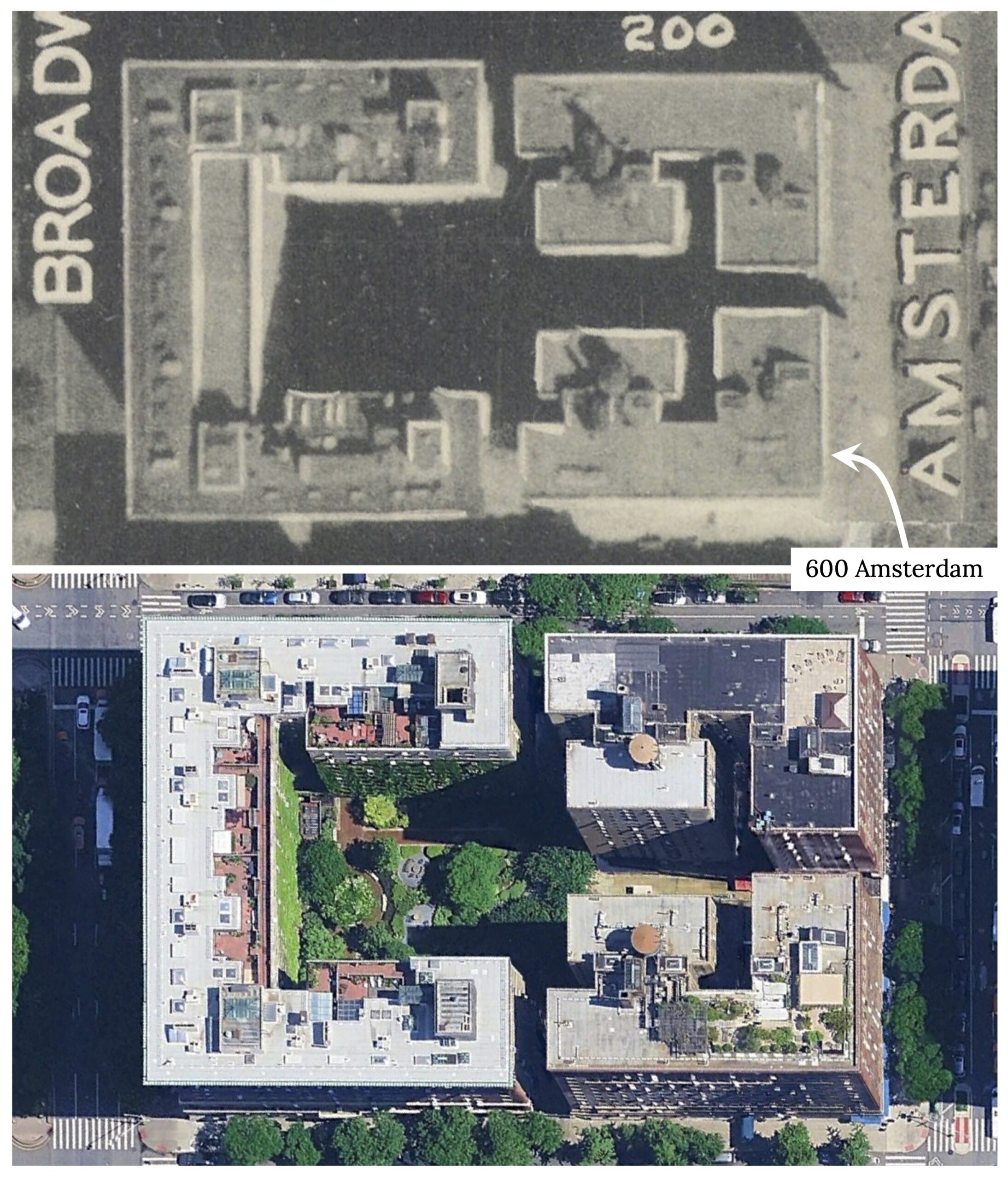
Retail establishments come and go, but this entire square block of the UWS has remained intact for a century. Compare these two aerial views from 1927 and 2025:
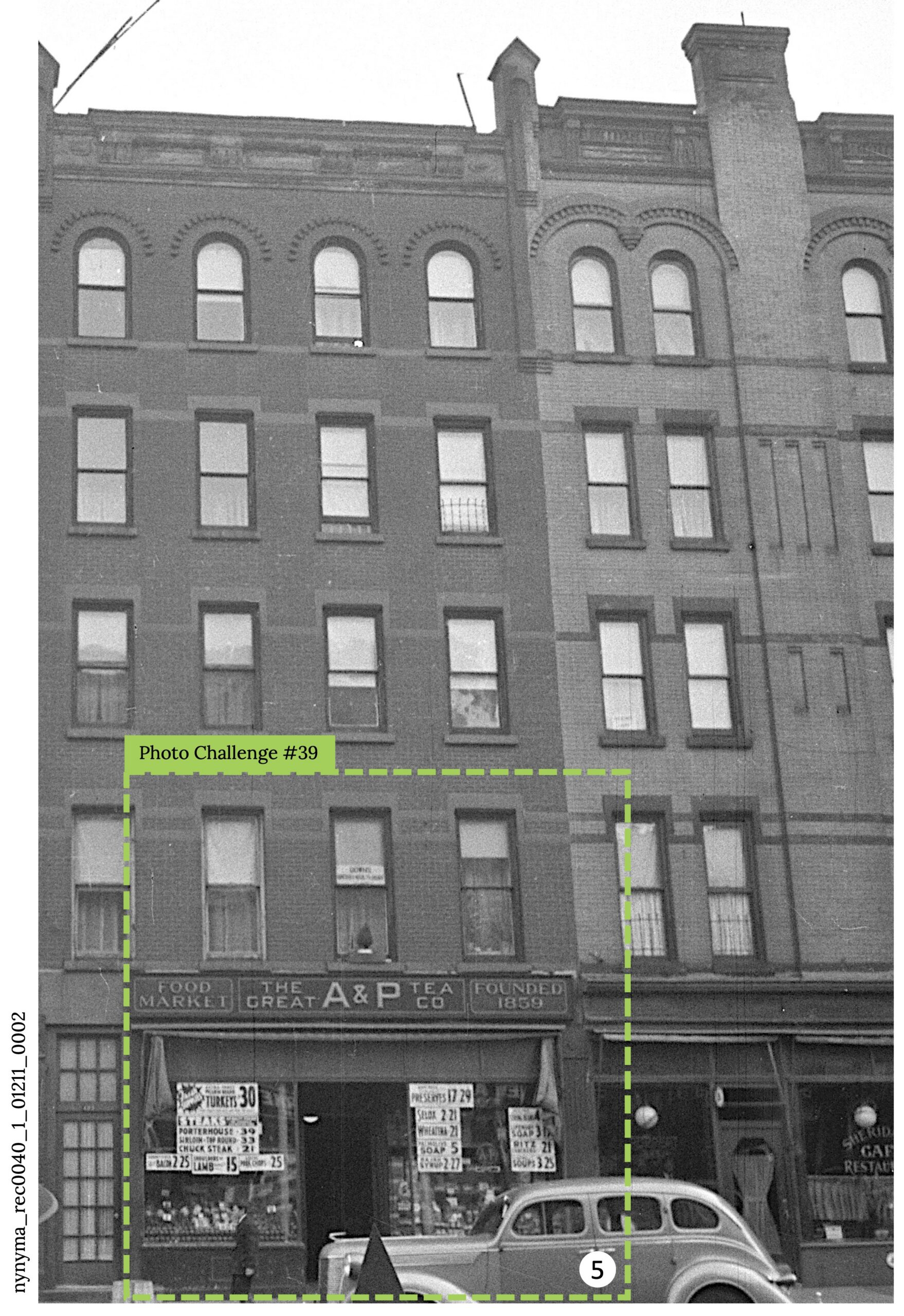
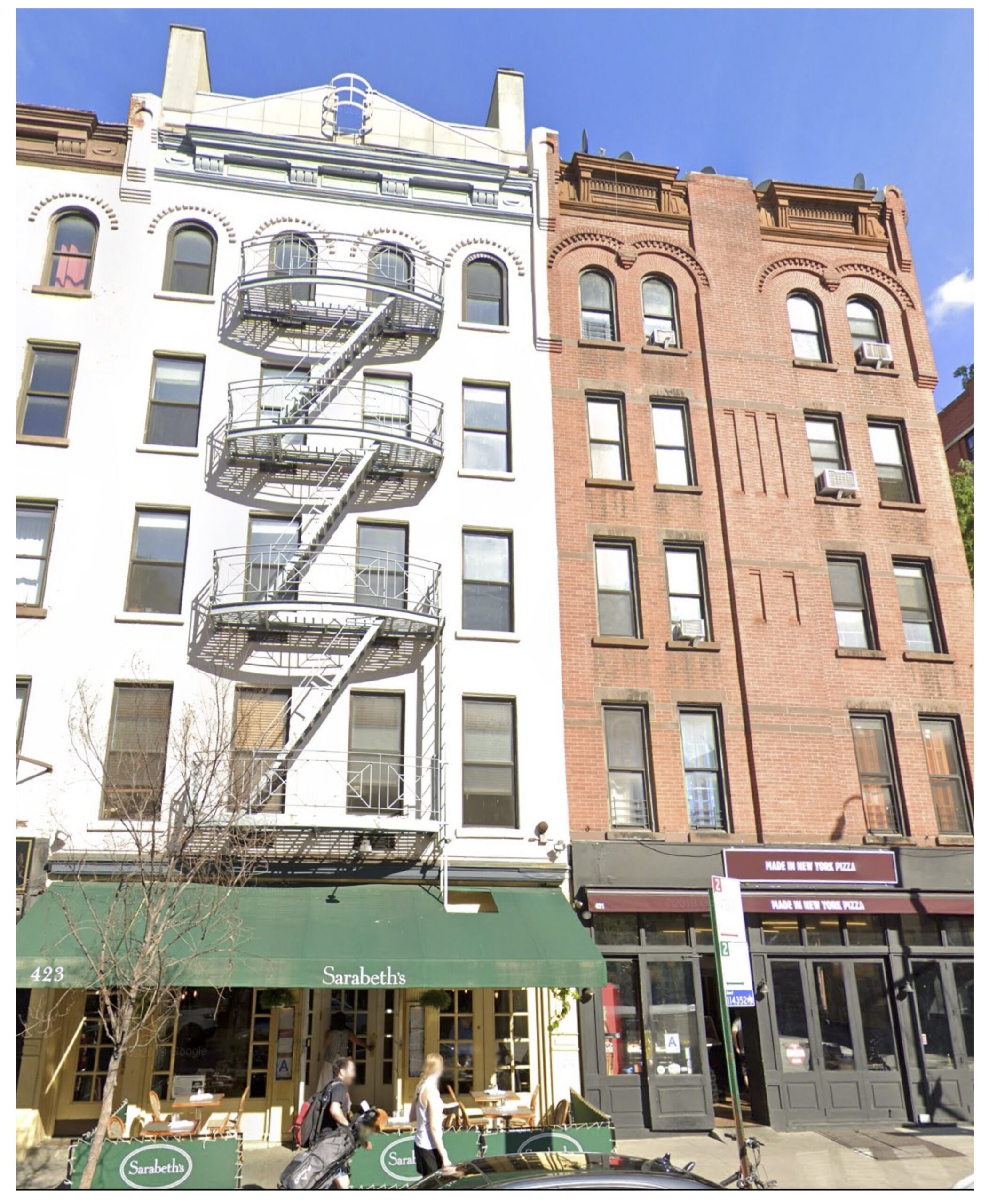
This Great Atlantic & Pacific Tea Co. storefront includes numerous prices. Let’s account for inflation and see how 1940 prices (some from the photo, some from an A&P ad in the Feb 15, 1940 Daily News) compare to 2026 actual prices (some from Fresh Direct, some from an AI survey):
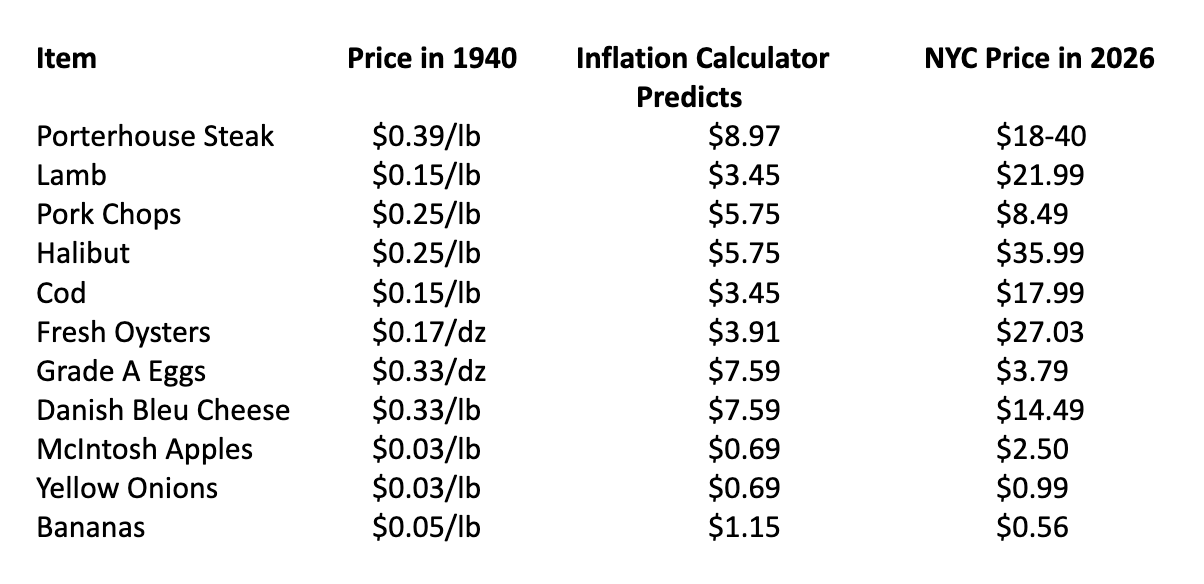
Such comparisons have their caveats, but overall fish, lamb and oysters were the biggest bargains in 1940 compared to today, whereas eggs and bananas are cheaper today, inflation-adjusted.
The rest of the story: Old photographs of Broadway and Amsterdam are notable for the abundance and diversity of the shops they depict, from the humblest corner store to mighty Zabar’s. However, even in the glory days of our neighborhood’s unique retail environment, there was always one ubiquitous chain. Before Woolworth or JCPenney, before Horn & Hardart or Chock full o’Nuts, there was the Great Atlantic & Pacific Tea Company.
Founded in 1859 on Gold Street in Lower Manhattan by George Gilman, a tanner who considered selling tea to be a more respectable line of work, the firm flourished under the business acumen of Gilman’s one-time employee George Huntington Hartford. A&P (an abbreviation established in the 1890s for its house brands—but note that the full name was still used on storefronts in these images from 1940) became a retail giant by its ruthless attention to the bottom line. That often meant leasing space in less-expensive locations: In 1921, for example, there were four A&Ps on Columbus between 83rd and 108th and five on Amsterdam between 59th and 106th—but none on Broadway below 126th Street.
A&P once captured 10% of all grocery dollars spent in the United States and had 15,000 locations. Eventually its tradition of innovation—such as the introduction of “cash & carry” in an era when shoppers were used to letting the grocer pull their purchases off the shelf for them—declined over time, and A&P was late to catch the supermarket trend and the automobile-centric suburban boom of the mid-20th century. These photos of their small UWS shops make the point: A strategy of numerous modest-sized locations worked in Manhattan’s dense urban environment, but A&P kept too many for too long. The company’s decline lasted decades—its last New York City store closed in Riverdale in 2015—and its DNA lives on in some of the brands it acquired and then spun off, such as Food Emporium. Does anyone have stories about patronizing their nearest Great Atlantic & Pacific Tea Company store on the UWS?
… and that’s the story behind the mystery image in the last challenge. Now scroll back to the top of the column and take on your next one, Sherlockians! If you’ve missed any pictures in this series, you can find the complete set on my author page. All photos in the Upper West Side Historical Photo Challenges used with permission.
About the author: Rob Garber has lived on the Upper West Side since the late 20th century and is a member of the Bloomingdale Neighborhood History Group. To learn more, visit their website at upperwestsidehistory.org.
Subscribe to West Side Rag’s FREE email newsletter here. And you can Support the Rag here.