

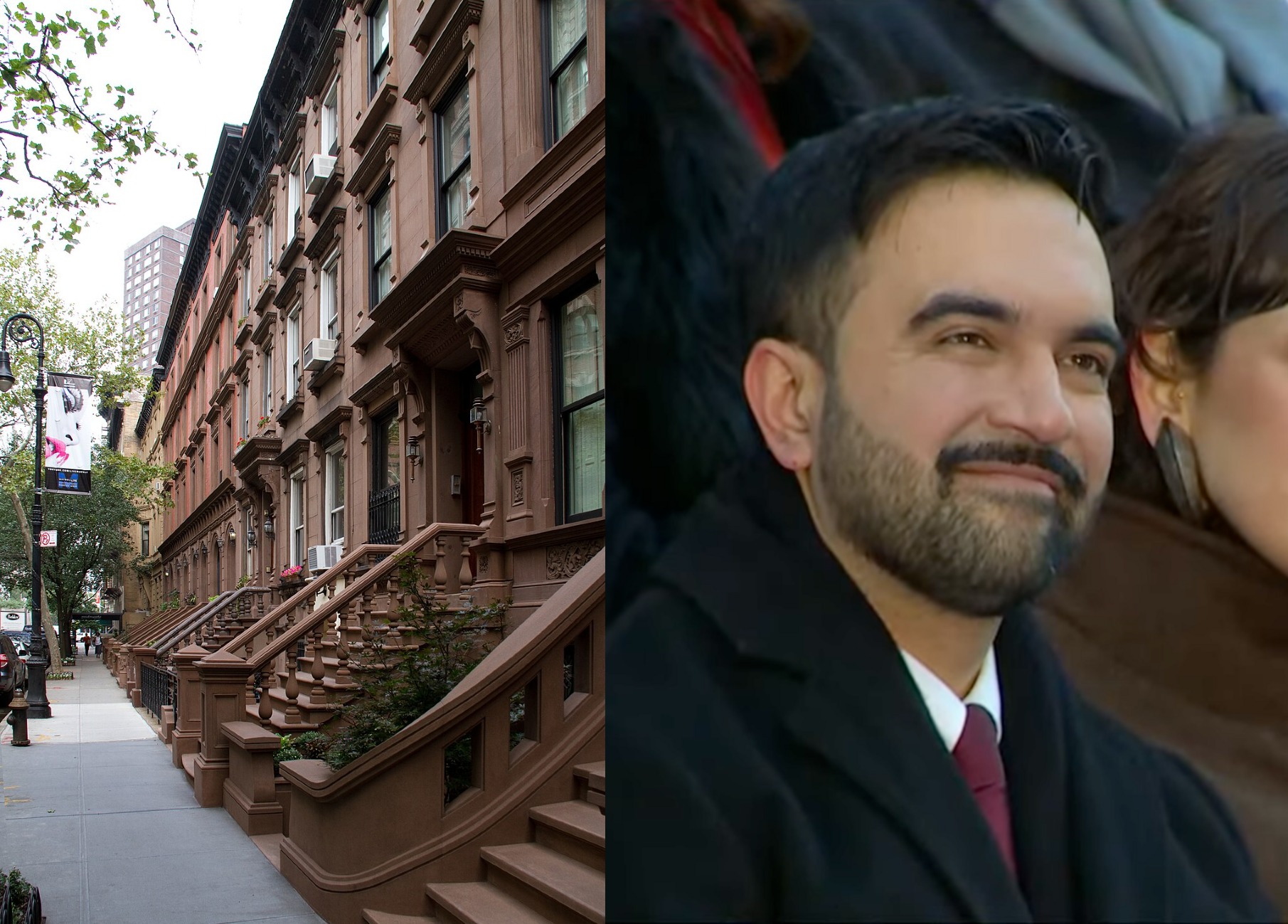
By Gus Saltonstall
Mayor Zohran Mamdani, along with the Department of City Planning Director Sideya Sherman, announced earlier this month that the Upper West Side would be one of 12 community districts in New York City where the affordable housing construction process would be fast-tracked.
The 12 community districts were selected based on the neighborhoods where the least amount of new affordable housing has been built in the past five years, which included the Upper West Side.
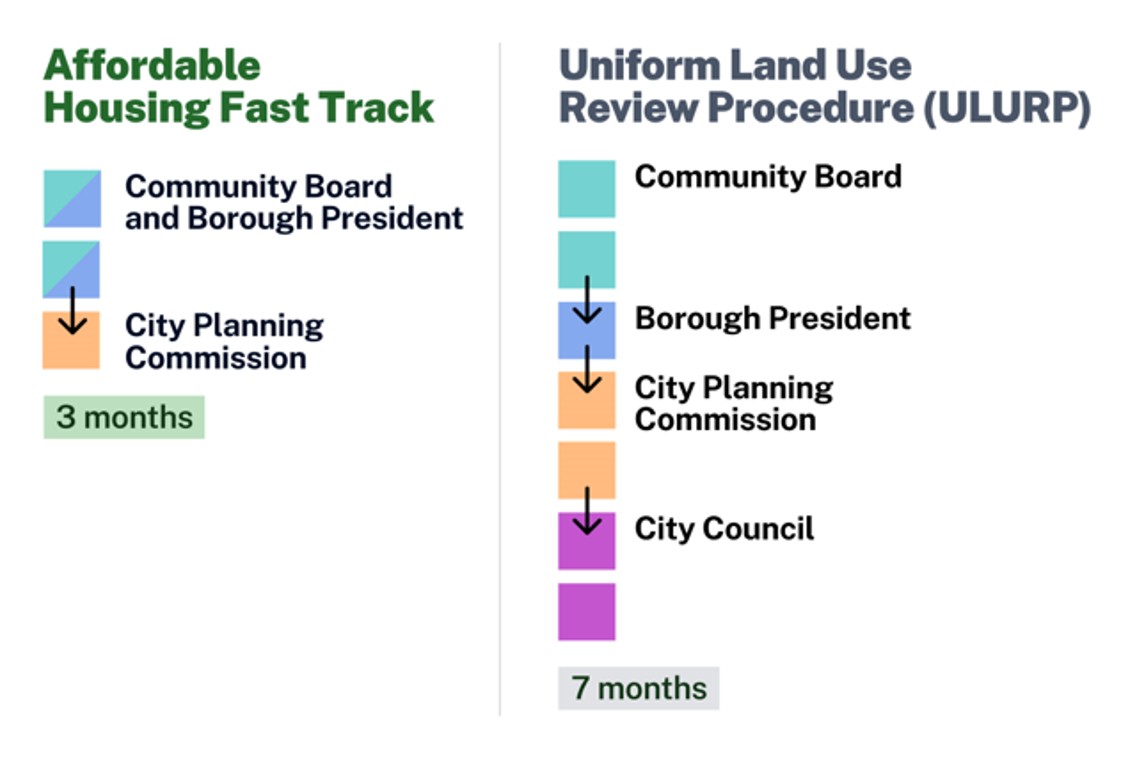
Fast-tracking new affordable housing means that beginning on January 1, 2027, a streamlined 90-day public review process will be implemented on the Upper West Side and in the 11 other community districts, as opposed to the previous seven-month Uniform Land Use Review Procedure known as ULURP.
The 12 fast-tracked districts represent around one-fifth of New York City’s 59 community districts but produced just 724 of 63,870 new affordable homes over the past five years, according to the city. In other words, 1.1 percent of the total.
The Upper West Side constructed 152 affordable units in the last five years, according to city data.
“New York’s housing crisis is not going to be solved by asking the same neighborhoods to do all the building,” Mamdani said in a news release. “Every New Yorker deserves a home they can afford, and every neighborhood must be part of delivering it.”
This modification to the affordable housing creation process comes after voters approved a ballot measure from the Adams Administration in November of 2025 to address uneven affordable housing creation in the five boroughs.
This new fast-tracked process will shorten the review timeline of projects and take the final decision away from the New York City Council and put it in the hands of the mayor-appointed City Planning Commission.
At least one prominent Upper West Side figure is strongly against this change to the affordable housing process:
Councilmember Gale Brewer.
“Community Board 7, the Upper West Side, is on that list—not because UWS residents don’t want affordable housing, but because developers here prefer to build as-of-right, market-rate developments without (what they view as) the time-consuming hassle of Community Board or City Planning or City Council approvals. They can make more money, faster, without that process,” Brewer wrote in a recent newsletter.
Brewer called the charter language that City Planning is implementing “purely quantitative” and noted that it only counted new housing built from scratch, as opposed to existing buildings converted or rehabbed into affordable units.
“Well guess what? There’s not that much vacant land on the Upper West Side, and thus our affordable housing metric, under these new rules, is in the basement,” Brewer wrote.
She continued, “City Planning’s designation oversimplifies and neglects the realities of affordable housing that does exist in our neighborhood: our many sites for temporary supportive housing, SROs on the market, formerly illegal hotels converted to safer housing, many NYCHA units, and hundreds of 421a subsidized units.”
There will be a City Council meeting on October 21 that includes the subject of the Fast-Track change to affordable housing where Brewer plans to raise her concerns.
“The effort to circumvent local leadership—in exchange for expediting the process by a meager 4 months—is the anti-democratic cherry on the sundae,” Brewer said of the affordable housing process change.
Subscribe to West Side Rag’s FREE email newsletter here. And you can Support the Rag here.



The phrase “affordable housing” has become something of a joke, since it is rarely “affordable” to those who actually need it. I gave up believing in “afforable housing” when I saw an “affordable housing” lottery that allowed people with six-figure incomes to enter the lottery.
The reason no developers want to – or ever will – build TRULY AFFORDBLE housing (no matter what is said otherwise) is because the costs of permits, construction, etc. are so high that it would be impossible to build (or renovate) a building to create TRULY affordable apartments, and still make a profit. In fact, doing so would almost certainly lead to a loss that would be ongoing.
This is the (sad) Catch-22 of “affordable” housing – and there doesn’t seeem to be any way around it.
Sorry if the wording doesn’t suit your concept BUT:
Affordable housing is not low income housing.
It is housing for social workers, nurses, EMTs, other civil servants, workers in stores and restaurants, cab drivers, etc. People who would otherwise be saddled with intolerable commutes and costs and who might otherwise leave the area.
We are already seeing this with EMTs and there aren’t enough of them to keep up with the City’s needs.
Are the units allocated optimally? I don’t think so, but that’s an entirely different issue.
Developers will charge max premium regardless of the permit cost. If there are people willing to pay the price there’s no incentive for them to sell it for less.
EXACTLY. Affordable housing is for people who could easily afford market rate in Washington Heights. It is not even for the middle class.
Most of the people doing the gentrifying in Harlem and Washington Heights really prefer to live on the UWS.
The difference is for-profit versus non-profit developers, and an argument for Community Opportunity to Purchase Act (COPA).
For-profit developers will generally include the minimum amount of units, at higher Area Median Income bands, to qualify for tax incentives while maximizing profit. Non-profit developers often target low and extremely low income AMI levels, and in larger percentages of units within the building (up to 100% affordable) because of their organizations’ missions to help people.
Huzzah!! I was skeptical at first but this is yet another Mandani W, he keeps churning them out!
Gale obviously can’t be trusted to allow for obvious new housing developments, see exhibit A and her ridiculous decades long obstruction of the redevelopment of West-Park Presbyterian
The redevelopment of West-Park Presbyterian, if & when it occurs, will be nothing but an undeserved financial windfall for a so-called “congregation” and yet another clone of the UWS upper-middle-class glass tower w/ token or no affordable housing. OTOH, as for Mamdani, you’re certainly right about that!
The money goes to the Presbyterian Church covering the entire area, not the congregation.
And that church has an excellent reputation for charitable work.
How much affordable housing does the church provide now?
How much affordable housing does the UWS need? How much luxury housing does the UWS need?
The YIMBY aligned members of CB7 have not introduced one resolution and forced an up down vote on a discussion as to whether removing historic district landmarking should be contemplated for the UWS.
Never heard of a team declaring a W because they looked at a calendar to begin planning to book the bus ride to the game.
Affordable units built today: 0.
This is a good point, it’s not truly a big win until the residents start moving in. But you have to start somewhere and clearing burdensome red tape to build more homes is one of the MANY small wins that are needed to get to the big win of actually seeing more housing get built.
Not true.
“During the first six months of Mayor Zohran Mamdani’s administration (January through June 2026), the city financed 12,491 affordable homes and produced 11,583 affordable units through the Department of Housing Preservation and Development (HPD) and the New York City Housing Authority (NYCHA).”
So he has saved over 12,000 afffordable units, and built another 11,000.
I would also point out that, in just the past six months, an unused NYPD parking lot in the East Village will become affordable housing, including a set-aside for formerly homeless. A former sanitation station on S.I. will become affordable housing and a public center. A former office building in the Financial District will become a 4,000-unit housing complex, with 1,000 units of affordable housing. And now a firehouse in Brooklyn will become a music education center for children.
In this regard, this mayor is almost unquestionably the most creative thinker with regard to the re-use of property that this City has ever had. Bravo!
The developer of the new super-tall on W. 66 St., now demolishing old ABC buildings, has indicated that he plans to build affordable housing on land he owns on W. 67 St.
Jersey street project on SI along with most of others mentioned were proposed/done under Adams administration….
This is because he’s the first mayor who is not on the take.
In addition to having very little to do with my point (rushing to celebrate a small step), the reality of what you’re talking about is quite different. Nothing against the effort here, but “unquestionably the most creative thinker” is a bit much, given the numbers below…
https://citylimits.org/citys-affordable-housing-production-ticked-down-in-first-half-of-2026-and-what-else-happened-this-week/
This is incorrect and misleading. All this is largely in financed/approved stage and the number is not as impressive as it sounds:
“ The total sounds substantial until it is placed beside two revealing comparisons. The city financed 15,380 affordable homes during Mayor Eric Adams’s final six months, and a new draft report estimates that New York may need 700,000 additional residences over the next decade.
These figures raise an important question about NYC affordable housing production: How can financing more than 12,000 homes represent progress, a decline and only a fraction of what New York may require?”
https://blog.themobilebroker.net/2026/08/22/nyc-affordable-housing-production-gap/
For good or ill, units produced in the first six months of a Mayor’s administration are the responsibility of the prior Mayor. City of Yes was a proposal of the Adams administration. And a lot of creative re-use of city property was also an Adams initiative.
The initial earmarking and funding of the DeGraw firehouse for the Noel Pointer Foundation was a project of Borough President Adams. (Though its good that he followed through on Adams vision.)
Mamdani does deserve credit for the other three projects you mention, however. Definitely not yet even close to worthy of the accolades you’re giving him, but its still early.
Of course. The notion that any building in this city went from scratch on Jan 1 to completion today is absurd.
I will never understand the bloodthirsty desire to destroy a 19th century landmark church and replace it with condo boxes.
It is hardly “bloodthirtsy.” Neither the church itself nor anyone else has been able to raise even the minimal amount of money needed to repair even just the exterior (to say nothing of the interior, which is also faling apart). The LPC’s own engineer put the minimal amount to repair the exterior (and remove the sidewalk shed) at $7-$9 million. The mega-millionaires supporting the Center (now at St. Paul & St. Andrew) have not come up with more than $5 million. And the church itself does not have the $.
While it is true that the developer will be building a “normal” building (i.e., not “affordable housing” ), they have promised to provide the church enough space for a new sanctuary, and ample space for programs and other needs. I think the total comes to two or three entire floors (likely the bottom two plus a large part of the basement).
This way, the congregation can not only return, but grow (since no one wants to join a crumbling church), and maintain its many programs.
The LPC has apparently finally realized that the building cannot be saved. A final decision on the Hardship Application is still pending, but it looks like it will go through. And not a moment too soon.
I fear for my life in that dilapidated old church that should have come down decades ago. Nothing “bloodthirsty” about letting go what clearly can’t be saved.
Also because the church leadership itself feels it could serve its community better by selling the space and relocating.
Because we are in a housing shortage.
Not a real shortage, but one manufactured by rent control and rent stabilization. Landlords profit margins are very small and the only way to stay in business at all is to raise the rents of non stabilized units to literally subsidize stabilized units. The overall available number of u its stays low because nobody leaves a stabilized unit. It has been proven to fail everywhere it has been tried. Mamdani’s approach is the exact wrong way to go, but he is economically illiterate, as are the people that voted for him.
Sure. Plenty of rent stabilized apartments warehoused, plenty of empty luxury units that should be brought down in price
Housing shortage? Are you saying there are no apartments available on the UWS? Go on StreetEasy. There are plenty.
If you’re talking about so-called “affordable housing,” how exactly will replacing historic buildings with expensive condo towers make the neighborhood more affordable? More wealthy buyers will move in, pushing prices even higher. Developers aren’t going to build inexpensive apartments out of the goodness of their hearts.
None of this “affordable” housing is being pushed in good faith.
Go on Streeteasy and find a family sized apartment and tell us what it costs. I think the people who can’t believe there is a housing shortage have not moved in a long time.
Nobody is denying that family-sized apartments in Manhattan are expensive. But does that mean everyone is entitled to have one, regardless of income? And who is supposed to pay the difference? Building more luxury housing isn’t going to solve the affordability problem.
People aren’t entitled to.live in NYC, but the city would be a lot more exciting and dynamic with fewer super rich folks and lots more middle class ones. That’s why so many people are concerned about housing prices.
Nobody is entitled to live here, but nobody is entitled to tell other people that they can’t live here either. If a property owner wants to build apartments, and people want to buy or rent them, then why should someone who lives blocks away be entitled to stop them?
Back to my point – there are plenty apartments available so people can live here if they want, nobody is stopping them.
I guess you would respond with your usual “but did you see the prices!?”
Then again see my above comment.
There aren’t plenty of apartments. When was the last time you moved?
As I expected you’d be going in circles. Asked and answered.
How many of the “family sized apartments” are being taken up by roommates who are in NYC to build their career while taking away jobs and opportunities from longer term residents and immigrants, demand to be catered to (and we do, just look at all the bike lanes and Citibike) and then leave when they got their fill of NYC?
Young people who flock to NYC to build their careers will soon become young parents who will be unable to find affordable housing. They couldn’t possibly afford those shared apartments once they have only two incomes to pay the rent and the costs of childcare to boot. They don’t become tired of NY, they can’t afford to stay.
And everyone uses the bike lanes.
Many become tired of NY, if they really believe in “New York or Nowhere” like the shirts and caps they wear (I only see out of state transplants wearing that brand), they’ll find a way. But the NYC that these people want is a curated version of NYC. The New York or Nowhere brand just like films like Sex and the City show a curated NYC that is not open to everyone, only certain types of people.
If they aren’t willing to bear the same commute and experience the NYC that those in Mill Basin or Bensonhurst or Canarsie deal with, maybe they should go back upstate or go back to Ohio or go back to Kansas? I swear, the arrogance of certain people in Manhattan and parts of Brooklyn will get to a point where a candidate for office will actually make that their campaign platform for Mayor or Governor. You’re lucky Eric Adams didn’t actually do that.
Everyone using the bike lanes is a joke, who exactly? Amazon who donates to Transportation Alternatives with their delivery “bikes”?
I don’t understand what your objection here is – you don’t like young people living together while they build their careers? You think anyone who lives here should be forced to live here their whole life? I lived with roommates when I was young and now I have a family and I plan on staying here the rest of my life. But people moving to the suburbs when they reach middle age is not exactly something unique to Entitled Kids Today.
Gentrified neighborhoods have become a college dorm for those who can legally drink. That’s not healthy for the city. I would rather have the 1970s and 1980s than today. At least NYC was a place that was more free and where everyone had a place here.
A shortage of affordable housing. Not a shortage of housing. You can’t just build housing wherever either. We also have a crisis of social and cultural expectations that’s feeding into housing issues on the UWS.
We are one of most densely populated neighborhoods in the entire country. How many more people do you want to cram into the UWS?
And honestly, do we really need to tear down unique 19th century structures in order to build more housing? Like, is there nowhere else to build other than this tiny patch of land? Is the 10-12 luxury condos that will result in the event of this historic church being torn down worth it? Is that going to solve this alleged housing shortage?
The UWS is great because so many people live here. If people feel crammed in here there is literally every other neighborhood or city or town in the country. Some of us like living in a city!
We need to be building housing so that we can grow at about 3% per year so we can provide enough housing for a growing population. Right now we are growing at less than 1%. It’s a policy that guarantees that people who grew up here are forced to leave.
There is only so many people you can cram into the UWS. The bigger issue is a crisis of expectations, dreams and hopes for younger people. Even if you went full YIMBY in the outer boroughs and in our suburbs, there is no credible plan to make sure that there are sufficient opportunities for younger people in these areas, which eventually will lead to more resentment of Manhattan, Brooklyn Heights, Williamsburg and Park Slope. Governor Hochul wants more housing built on Long Island, but how many out of state transplants and highly credentialed expats would willingly choose Long Island or Eastern Queens over the UWS, even if the LIRR takes 25 minutes to Penn Station or Grand Central from Bayside, Queens?
When that resentment arrives, the UWS may be forced to have a hard conversation on historic district landmarking. If groups like Landmark West were smart, they would try to get ahead of this. Continued preservation of UWS historic district landmarking depends on addressing this.
There are plenty of ugly old buildings that dot the landscape of the UWS that could be redeveloped into much nicer new buildings with better control of garbage and much better lighting.
Most of the new buildings being built have great architecture as that is a key selling point of new apartment buildings. It’s not like it was in the 60’s and 70’s when most new buildings were often just white brick boxes.
The new buildings are by and large HIDEOUS. Look at Broadway from 96 down, Columbus from 96-103. Awful, generic, and frankly, not well built
Pandering to the crowd with no specifics. Nothing will come out of it.
“Affordable housing” is an Orwellian term when it comes to NYC.
We don’t need a bunch of bureaucrats calculating what an “affordable” rent is and we don’t need the city providing massive 421A tax breaks to wealthy developers and we don’t need the city contributing billions in capital contributions (per linked article) to provide a few thousand so-called affordable apartments.
In other words, someone is paying for a lucky handful of people to get access to below market rate apartments.
The only true way to create affordable apartments in a fair and efficient manner is to get rid of rent regulation. This, of course, is not something Mamdani and Brewer would ever support.
All these crazy schemes are arguably making a bad situation worse.
I was with you until you suggested getting rid of rent regulations. It is a fully debunked canard that rent regulations is the main, or even a major, cause for the lack of affordable housing. Instead, start with the 60,000+ warehoused apartments, which, if released, wouild go a long way to leading to truly affordable housing. (Not quite an Orwellian term, but certainly a phony one.)
In every big city in which rent regulations have been repealed, rescinded or heavily modified, rents DID re-stabilize – but always at 1/3 or more than the prior average rents. In other words, getting rid of rent regulations INCREASES the average rent. This is historically accurate in every case.
There are other ways to reduce rents, and to create truly “affordable housing,” without repealing rent regulations. We should try those first.
The reason there are tens of thousands of warehoused apartments is because these apartments are in disrepair and rent stabilized.
It will cost more for the landlord to rehabilitate them up to city standards than what they could recoup in rent.
And no, there is no secret tax break or write off or other financial benefit landlords receive from holding empty apartments. Rent regulation incentivizes keeping these apartments empty. It’s a matter of simple economics.
If these apartments were allowed to be rented at a market rate I guarantee 100% of them would be on the market within weeks.
This is just one example of how rent regulation destroys the housing market.
🎯
Really, look at Austin and many Texas cities that have allowed growth and rents have come down dramatically. Way less then rent controlled NY. And those 60k+ warehoused apartments are never coming back online unless the rent regulations are changed. Try being a small landlord – its a great way to lose a lot of money and deal with endless regulation and hassles.
Austin is actually somewhat expensive relative to the rest of Texas and the value you get in Austin is not the same as you get in NYC. What the NYC metro really needs is a rebalancing of expectations and jobs and opportunities. If NYC loses large employers to NJ, that is more than fine, it fosters competition and maybe UWS residents can actually have the pleasure of using NJ Transit on a regular basis, which many UWS residents don’t want to.
The only way to create affordable housing in NYC is to redevelop Midtown into a dense residential hub and use Federal dollars to do it and make sure it is fairly and equitably distributed. Midtown has the capacity for this. With technology such as remote work, we don’t need to be dependent on Manhattan as an employment hub, let the jobs leave Manhattan for Queens or the Bronx. Jamaica would make a great central business district, 20 minutes from Penn, Grand Central, Downtown Brooklyn, LIC and 15 minutes from JFK and LaGuardia. Jamaica can probably be more successful than Stamford or White Plains at being an out of Manhattan downtown.
I’m not sanguine about getting federal dollars as long as Republicans control the federal govt.
The Republicans are likely losing the House anyways. Besides, we’ve had Republican US Senators that have delivered for New York, remember Al D’Amato, he was not called Senator Pothole for nothing.
Right, back in the days of your grandfather’s Republicans. Republicans now mostly want to stay in office by doing Trump’s bidding, whatever it is.
“Purely quantitative” – yes, counting the number of units counts.
Brewer protests that there isn’t much vacant land on the UWS but there isn’t vacant land anywhere in the city and other neighborhoods have managed to build new housing.
Brewer is unhappy because she supports affordable housing, but she supports preservation and shorter buildings more. That has resulted in years with minimal new housing being built and soaring rents. Now, we will end up with much more radical changes in the future than we would have had if she had been more flexible. The 20 years of low to no housing growth are going to be seen as a terrible mistake in the near future.
Indeed the last 20 years of housing regulation (during a period where long term real rates were near 0% no less!) is already seen as a terrible mistake!
UWS Dad,
Perhaps I am misunderstanding your comment?
Do you mean that you oppose rent stabilization?
Rent stabilization / control is an enormous distortion that ends up adding costs on the system for anyone not lucky enough to be on the “inside”. Everyone should be against it.
bd,
I am unclear about UWS Dad’s opinion?
He seems to comment urging more development for affordable housing – but I am unclear about his POV on rent stabilization?
Regarding rent control, there are very such units left. Rent control ended in the 1960s. Tenants have mostly passed away. Some units converted to rent stabilization.
b d is correct, but I can see a limited case for rent stabilization if we were continuing to build new homes. My initial comment was referring to zoning that has restricted the supply of new apartments during the last twenty years.
The terrible mistakes are the social and cultural expectations that compel people to live on the UWS or a neighborhood like it. If you want a good future and a shot at upward mobility, you must not only go to college, but grad school too and take on student loans, then live in a neighborhood like the UWS and bear high housing costs to have the most social/networking/career growth opportunities available to you.
Even if Gale was more flexible, you can “relax the zoning” all you want outside Manhattan near a train station, they do not provide the same social benefits to younger people the UWS provides no matter how many apartments you build. It’s the NJ Transit, LIRR, Metro-North train and then transferring that is the invisible barrier no matter how many units of housing gets built outside Manhattan.
Just look at the dating scene in the NYC metro including the suburbs and look at the expectations especially people in Manhattan and gentrified Brooklyn have in a romantic partner. This is very salient considering how a huge number of couples in 2026 have met online through apps. It’s almost like they want affordable housing for themselves, but for their potential suitor, they want them paying high housing costs to live in certain areas just to show that they can “make it”. For comparison, try using Hinge or Bumble on the UWS and try using it in a suburb or anywhere outside Manhattan and you’ll see Gale being flexible wouldn’t help either way, it’s people and their social and cultural expectations that are also a big problem.
Completely untrue. The beauty of rich public transit is there are many many neighborhoods people can live in and still have access to the tremendous economic and social opportunities that NYC has to offer. Plenty of my friends and co workers have lived in non-hip neighborhoods or even *gasp* in New Jersey
Of course you are going to say that and gaslight people who question you. The condescending attitude you have towards people on Long Island or New Jersey throughout your history commenting on West Side Rag shows otherwise.
It’s not a problem that people want to live here. It’s a great neighborhood because it’s dense, not in spite of it.
If you are a millennial or zoomer and want to build your career and have a shot at what is left of upward mobility in this country and want to appeal to a romantic partner, you HAVE TO live here or a small subset of gentrified or gentrifying areas in NYC. That is a problem.
Rediculous. I lived in the Midwest for much of my 20’s and 30’s and had absolutely no issue with affordability or appealing to a romantic partner. If you believe that you need to live on the UWS to be “appealing” I’d humbly suggest that you’re chasing the wrong romantic partners.
Why? People like living here. It’s a great place to live. We should build more housing so more people can live here.
Not everyone wants to live in a big city neighborhood. But they have lots and lots of options, from suburbs to the country. If you want to live in a dense, walkable, big city neighborhood you basically only have Manhattan and parts of Brooklyn. Let city people have a city.
You also want to build in the suburbs, build in the outer boroughs, you want to FORCE a big city neighborhood on everyone without the same benefits the UWS has to offer? You want to FORCE a dependency on Manhattan and parts of Brooklyn in the other areas you build densely in without any of the benefits the UWS has to offer? All while Manhattan CB7 despite having urbanist aligned members, refuses to have a resolution introduced, a full community discussion or a full board meeting and a full board on the record up or down vote on whether NYC should look into removing historic district landmarking on the UWS. UWS residents including some of the urbanists love throwing stones from a glass house too.
Important to note that no one is being “forced” to build anything.
Also how is building more housing forcing any sort of dependence? If anything it removes dependency on Manhattan just like the rezonings of Brooklyn have allowed alternative clusters of businesses to spring up.
You are pretty much forced to if your property tax increases or if you can’t afford the other costs of living in NYC. What about aggressive real estate brokers who harass people to sell to the point that NYS DOS even has cease and desist zones for real estate brokers in parts of NYC people like you want to aggressively build in.
Look at the Bronx, Westchester and Connecticut, where do all the trains go? Long Island and Eastern Queens, where do all the train lines go, even if you have lines like the IBX or the G train, where do the people all want to go? How many UWS residents choose the UWS because they do not want to commute? The day when women in Manhattan and in this neighborhood in large enough numbers are willing to take an LIRR or NJ Transit train to date a man is the day we can safely say that Manhattan dependency is broken. I emphasize dating the way I do because people’s preferences are very personal there, so personal that it really shows what people desire and expect in a society that they won’t always say out loud.
If we can’t build on the UWS, and we can’t build on the outer boroughs, and we can’t build in the suburbs, where is anyone supposed to live?
That is a bad faith argument. You want to build everywhere, politically connected developers and corporate interests that support YIMBY and anti-car groups get to make their money, and we have to ask questions later.
Basing it on how much affordable housing has been built in the past five years is incredibly dumb. How about basing it on how much affordable housing a district has overall? That would make a lot more sense.
I would also like to note that it was just announced that social security payments are going up 3.6% next year. So everyone on a fixed income who lives in rent regulated apartments should be able to afford at least a minimal increase – I think this is very reasonable. Make it 1.5%. The obsession by Mamdani and all of his obsessed followers with rent freezes given the inflationary times we are in shows a lack of basic common sense and intelligence.
Gale’s email is worth a read. In one breath, she states that developers don’t want to engage in the long process to get zoning exemptions but then proclaims that the extra 4 months makes no difference. You can’t have it both ways!
Also, if it was only an extra 4 months and not at Gale’s discretion, maybe it wouldn’t be such a big deal. If lack of vacant land was the only reason we ended up on this list, then it would have been comprised of all 10 community districts in Manhattan. Only the UWS and UES ended up on this list, with the remaining districts in the outer boroughs.
The other reason is look how much of the UWS is a historic district. Historic district landmarking is good, but the UWS needs to realize that historic district landmarking + being a social/economic center that everyone wants to be in and wants to have access to, carries an immense privilege and social responsibility that sometimes UWS residents don’t want to have and instead prefer to have their cake and eat it too while looking down upon people who lack the privilege to live in Manhattan or trendy Brooklyn.
Privilege is something that is unearned. If I came to this country penniless, worked hard and I am able to live on UWS, how is that privilege?
The UWS was once a very affordable neighborhood. It’s a big reason why it has historically been an artistic and cultural hub. That has been gentrified out of existence and you have people who want to do that to other neighborhoods too. 20-30 years from now, do you want people saying you are saying about Harlem or Bedford-Stuyvesant? You cannot have a good faith discussion on affordable housing while trying to gatekeep high opportunity neighborhoods from people.
Besides, most of the people coming to this country penniless and who work hard end up buying single family homes in the suburbs, they’re not dropping large sums of money on housing in the UWS. Housing on the UWS that actually gets a lower effective property tax rate on its true market value than other parts of NYC and the suburbs.
How does UWS housing have a lower effective tax rate?
I did. And so did many of my friends. So please don’t talk about something you don’t know.
I know very well. I also know a lot of UWS residents are no different than Nassau or Suffolk County residents in terms of wanting to gatekeep “outsiders”, they are no different than the stereotype that Staten Islanders get, they’re no different than a lot of the people who lived in Howard Beach or Bensonhurst back in the day, UWS residents are more refined and coded about how they go about treating “outsiders” and are politically liberal or progressive and pride themselves on it so they think they can get a pass.
Hmmmm… numerous grievances about perceived UWS social standing… long list of imagined slights…. user name is a long dead local politician…
All the tell tale signs… I’ve seen enough! Show yourself Eugene!
Instead of addressing the issues, you are attacking the commenter and denying their reality by calling it “imagined slights”. This shows that when real issues are highlighted, you have no credible plan on addressing them other than try to chill dissent. That is disgraceful!
“Every New Yorker deserves a home they can afford”
I couldn’t agree more. If you can’t afford a certain neighborhood, move to one you can.
That’s what he meant, right? Right?
No, it’s not, and you know that.
The Mayor is hell bent on making every neighborhood that’s distinct for a reason into just another place. The homeless shelters came , but the city apparently don’t care to offer services. Every store has a doorman, it’s filthy in certain pockets where people pay a premium to live. Queens and Brooklyn have plenty of space to accommodate affordable housing. Leave the UWS alone.
100% honestly this is all part of his plan to get certain new yorkers to leave so he can “empower” his favored citizens to take over…I don’t trust a single thing this current mayor does and believe he ill intent…He repeatedly has demonstrated his disdain for all kinds of American and New York City history, why should we trust anything he does will preserve the specialness of our UWS neighborhood?
Sounds like you’re just a liiiiiitle bit racist there bud
The advocates for more housing support the homeless shelters because it is a population that they can control and subjugate while showing the world how self righteous they are.
At some point those who insist that every neighborhood must encourage “affordable housing” development run up against the reality of real estate values in high cost districts (as well as the costs of construction, permitting, etc). The only way of overcoming this is for someone to pay for it – typically the city in the form of subsidies. And there’s no reason tax dollars should go toward creating cheap units on the UWS when units can be built much more affordably in other Boroughs which are only a cheap train ride away.
This is expensive, pointless social engineering madness. It’s just a shame that people who vote for populists like this don’t have a better understanding of the true cost of the policies they want to see implemented (or they don’t care because they figure they’ll get “the rich” to pay for it all).
Mamdani: “Every New Yorker deserves a home they can afford”
What? What does “deserves” actually mean?
Does everyone deserve an apartment in Manhattan? On the Upper West Side?
Regardless of income?
Who decides what is affordable, and who pays the difference?
Nice slogan, but where are the answers?
A better way of putting it, no one deserves Long Island or New Jersey. I wouldn’t wish Rockville Centre on my worst enemy. God bless
This is a mask off moment of how Upper West Siders and Manhattanites in general really feel about those who don’t have the privilege of living in a neighborhood where one bedroom rentals cost over $4,000 a month and much of the neighborhood is designated a historic district. Long Island and New Jersey are not colonies for Manhattan to extract resources from while leaving them dry!
You have people who say they want New York City to be just like Europe and point to Paris, but the reality is that New York City in 2026 is nothing more than an expensive Cold War era Berlin without a wall, without a Stasi and without a vibrant counterculture.
Sorry, but the actual “mask-off” moment is when people realize that demography is destiny. This has been demonstrated over and over in global populations when people are imported into cities with dangerous consequences, you see it in school settings as well. Mamdani wants us to be the next London or Michigan or Paris — all places that have become dangerous nightmares for normal upstanding citizens to live, and have only amplified the neuroticism of the middle class left as they fight non-existent “facism”.
<<<<<<——-MODERATOR CAN WE TALK ABOUT THE BIGOTRY HERE
It is the people who don’t live here who treat the UWS as a place to drive through.
Nobody has any intention of building a wall!
So you want the UWS to be a gated community in practice? All while you get to gaslight people by saying that the UWS has the subway when in reality there is the concept known as the transfer penalty that is an invisible barrier. People who visit or do business drive vehicles to the UWS, they also drive through the UWS, commerce creates externalities, being a desirable area that is part of the economic engine of our metropolitan area and our country creates externalities. Manhattan and the UWS is not a college campus for those over 21+.
Nope. This is a developer giveaway that will not give us actually affordable units. Expect this to be fought tooth and nail. Awful sign that the Mamdani administration has continued with a very corrupt Adams-era policy
The easiest way to promote affordable housing in the city is to increase taxes on expensive housing and use the proceeds to subsidize lower priced unites. This is both fair and economically sensible.
And income ceilings for rent-stabilized units.
There are already transfer taxes, mortgage recording taxes, mansion taxes and pied-à-terre taxes on real estate. What more do you want to tax?
How is it “fair”? NYC is already one of the most overtaxed areas of the country. The easiest way to promote affordable housing in the city is to permit the building of many more market-rate units. Supply and demand does a much better job of allocating resources than the government.
There should be a sales tax on residential rent in Manhattan south of 96th Street.
There already is, it’s called a property tax, and landlords pass it on to tenants through the rent. But how about making it progressive, i.e. tax rate rising with assessed value per sq ft of living space?
Only imposing on Manhattan south of 96th wouldn’t make sense, though.
If everything Gale Brewer says is true then guess what? There won’t be a lot of new building. So don’t worry so much.
Correct . The UWS is the center of kvetches. That is the only fact in these comments which is unarguable.
UWSiders sitting in their million dollar co-ops and rent stabilized apartments will as usual grumble their pious nonsenses about affordable housing. As long as real values don’t collapse they will go along with the mayor’s housing program.
Eventually the historic district conversation will have to be had and groups like Landmark West aren’t truly prepared for it. I hope they’re reading the comments section on this thread.
It would be helpful if the City discussed all the affordable housing that is lost and showed net data.
For example, there are countless buildings where apartments are held vacant, then buildings sold for luxury development.
Sometimes landlords won’t renew leases and sometimes landlords basically “wreck” buildings to get tenants out.
My co-worker lost his affordable apartment (where he had lived for 20+ years) in this way. There is now a new luxury building where my co-worker lived.
This is happening all over Manhattan and in Brooklyn.
Yes affordable housing is needed but is misleading to not acknowledge the loss of housing and not address that.
And here’s the rub. This is the heart of the affordability debate that is getting blown away by developer astroturf groups and market rate zealots.
Bravo to Gale Brewer! We have many empty units and small buildings all over Manhattan-318 w102 have been empty for over 8 years.
I would love a Westside Rag feature that showed the reality of the housing market. I think there are a lot of people who haven’t moved in a long time and don’t have an idea of what it’s really like for young families. You could do an article that shows three apartments that an average family could afford.
Josh P.
I have lived on the Upper West Side for my entire life.
Filmmaker/comedian Jordan Peele grew up on the Upper West Side – his mother was a teacher.
There is no way they could afford to live here now.
What has changed is that it is has become a “luxury” neighborhood – luxury buildings are now the norm with wealthy and young residents.
Many young families in my building – and much wealthier than the long-time residents.
Oh, we are very well aware of the market. Can’t afford it – look elsewhere. Nobody has to subsidize your lifestyle.
How many of the supply is taken up by roommates?
Is something wrong with sharing apartments? Young people can’t afford to live alone, what do you think they should do? All marry each other so you’ll call them families and think that’s fine?
Younger people should be afford to do so, what if you are neurodivergent, what if you have different needs than others? NYC shouldn’t be a college dorm for those over 21. You are making things worse for younger people while disguising it as better and that breeds more resentment.
When my wife and I were newlyweds we very much wanted to live in her hometown of Darien, Ct. We could not afford it so we moved 10 miles north and built a wonderful life in another town that was more more affordable.. What I am about to say will no doubt be controversial but to override long standing processes to score political points is disturbing to me. If people simply cannot afford to live on the UWS there are so many wonderful neighborhood that are readily accessible.
That’s why young folks live in Brooklyn and the UWS is a neighborhood of rich people! Also why most of what’s new and dynamic in the arts is happening in Brooklyn. And why parts of Brooklyn are gentrified out of reach, too.
The problem is that we are a 4 state metropolitan area and more opportunities socially, economically and otherwise equivalent to Manhattan should be offered to people elsewhere.
The way we need to do that is funding nonprofits to buy housing from Manhattan landlords who rent out property so that we can have a better social and economic mix of people in Manhattan. We should be giving funding to nonprofits such as Goddard Riverside to buy out the entire portfolios of landlords such as Steve Croman, Sackman Enterprises or Tauber, then as wealthier market rate tenants don’t renew their leases or the nonprofit elects not to renew them, you put people in need of affordable housing or would most benefit from the opportunities Manhattan provides in that housing.
Whether a neighborhood is affordable or not is not a fact of nature. It is a policy choice. Some people are advocating for policies that will make the neighborhood more affordable so that more people can afford to live here. It’s not good that the neighborhood is unaffordable and we should vote for politicians and policies that improve affordability. If you look at the cost of housing on the UWS since Gale Brewer took office, I think it’s hard to argue that she has done that.
Can you please elaborate on this “affordability “?
Improving affordability may mean that we need to rebalance our region. Maybe jobs based in Manhattan really should be in Queens, the Bronx, Westchester or Nassau. Maybe it is not the end of the world if Manhattan based businesses move across the Hudson. Then more people will be willing to scatter out. Maybe a world where if you live on the UWS, you are just as likely to deal with an NJ Transit, LIRR or Metro-North commute as the person living in New Jersey, Long Island or Westchester will help even things out. The LIRR specifically, since it’s an MTA agency, I have seen enough of the LIRR that until enough Manhattan residents were using it in large enough numbers and flooding Gale Brewer’s office with complaints, it won’t meaningfully improve. Especially now that the politics of New York State favor Manhattan and the UWS specifically much more than they do Long Island or our northern suburbs.
The other issue here is Governor Hochul is pushing for more housing in parts of our region most UWSers do not really venture to without guaranteeing these communities the same opportunities the UWS provides. Improving affordability on the UWS may involve conceding that we are asking too much of Manhattan economically and culturally.
Agreed. But instead of adjusting to the market, some people insist that the market adjust to them. And then a populist politician or two come along and put in place all kinds of market distortions that result in inefficiencies and higher costs for those who don’t end up on the “inside”
Tell that to the out of state transplants who insist on living only in areas deemed trendy in Manhattan or northern Brooklyn or maybe Long Island City or Astoria. If out of state transplants want to move to NYC that’s fine, but they want everything handed to them and only the most socially desirable areas, of which the UWS is one of them. They don’t want to use the LIRR, Metro-North, NJ Transit, express buses or take a local bus to transfer to the subway. If they want to live in NYC, they must walk a mile in the shoes of the rest of us, if they don’t, then just like what Eric Adams said, perhaps it is time for them to go back to Iowa or go back to Ohio.
Yes and letting people access the UWS, even if by car, and not being pushed away allows more people to enjoy what the UWS has to offer without having to pay sky high rent to do so. This is what allows the UWS to remain a hub. Having things like street parking affordable and accessible to all is the price the UWS has to pay in order to keep its historic districts and be the hub that it is.
The UWS was once a working class area, we got rid of that, remember that.
“The UWS was once a working class area, we got rid of that, remember that.”
Not remotely true.
Probably the first time I’ve ever agreed with Gale Brewer.
Ask the Mayor what are the city, county, and state fees to the developer for the public to understand the starting. costs to develope “affordable housing”.
In one area of California, I am told it is $40,000 per unit just for government fees.
Fast track will kill the remaining one and two family home neighborhoods of the outer boroughs. These humble homes,which have housed people rising into middle class America, have been jewels of the city and will become congested neighborhoods with buildings resembling Soviet era Russia. This madness must cease.
Hate to say it but Gail Brewer is right when you start to add up the amount of NYCHA housin;g; 421a units; homeless shelters; temporary housing units that already exist on the UWS. What is criminal is the lack of repair to many of the units and how terrible some of the conditions are for many pf the people who live there. No one is talking about the many complaints of loss of elevator services; leaks; lack of heat in the cold months, infestations, etc. THE UWS is saturated with thee dwellings and their problems.
Don’t know what affordable housing means. That usually means a developer just allocates a few “affordable ” units when they build new construction. Who gets the break here?
There are 4 other boroughs with vacant land and that are available to transportation for commuting. I really don’t get the logic in all of this. Is the city just lazy in terms of finding more adequate solutions instead of making some ridiculous pronouncement which is totally impractical but pretends to be seem to addressing a problem? Easy to look like your addressing a problem by making this kind of pronouncement but it really is counter-productive and shows a lack of research and understanding of all involved.
Many real estate developers are going to other states to make their money. NYC is just a hard place to do business.
Raising property taxes will only make things worse.
100%…before Mamdani desecrates our neighborhood with additional burdens, I think he should take a look at NYCHA. NYCHA has 600,000 open work orders and $80 BILLION dollars in deferred maintenance. NYCHA is actually the biggest slumlord in town but the lefties never want to tussle with that. It’s far easier to cry about “capitalistic oppression” than to actually hold our city responsible. There are currently over 6,000 available NYCHA units but it takes an average of one year for NYCHA to turn an apartment around when a tenant moves out and a new tenant moves in.
Here’s a crazy idea… remove government entirely from any decisions regarding residential housing. NYC has become an indecipherable patchwork of housing options best left to the free market as it is most other places. As a lifelong New Yorker, i am ashamed at what we’ve allowed to be created here at the hands of elected officials.
What is “affordable”? A friend 70 and living on social security living on $1,700 a month – his “affordable” is different from a person making $40,000 a year and wants “affordable” housing, yet alone a person making poverty line $50,000 who also wants “affordable” housing. Define AFFORDABLE!!
Mamdani does not understand capitalism or markets. If many people want to live in a place and land is scarce, prices will be high. If you force prices to be lower, then you will get less supply and worse-quality supply. This is part of the reason, historically, NYC has been characterized by high-priced junky apartments that nevertheless have waiting lists. If Mamdani focused on less popular neighborhoods or ones that are not residential that could be converted, and then he built or improved the housing stock/transportation/infrastructure in those places, he could produce many more units for far less without distorting and screwing up the housing market even more. And it could be quality affordable housing at scale. These neighborhoods would be the Upper West Sides of the future. He seems to think that jamming a few hundred below-market units into a low supply, high demand area somehow solves anything at all? It makes everything worse for everyone at great expense. It’s pure optics.
Moving the center of economic and social gravity to other parts of the NYC metro would help. San Francisco may not be the best example, but look at the Bay Area, San Francisco does not have the stranglehold on the whole Bay Area that Manhattan does on the NYC metro. San Francisco isn’t even the largest city in the bay area. Even Los Angeles is much more polycentric than the NYC metro is. Fixing that would really help with affordability on the UWS.
Government intervention in the housing market in NYC is nothing but a disaster and gets worse every time they add a new law, rule or regulation (except for the lucky few). Everything they do makes it only worse, because they don’t understand the basic laws of economics or human behavior, and this will be another log on the fire.
I don’t think we need more housing on the UWS. My first apartments were in the north end of the Bronx, a mere 30-minutes subway ride to work, on the D train. There is more room there, and more affordable apartments, and more space for building. No one has the right to live in Manhattan simply because they want to!