

By Yvonne Vávra
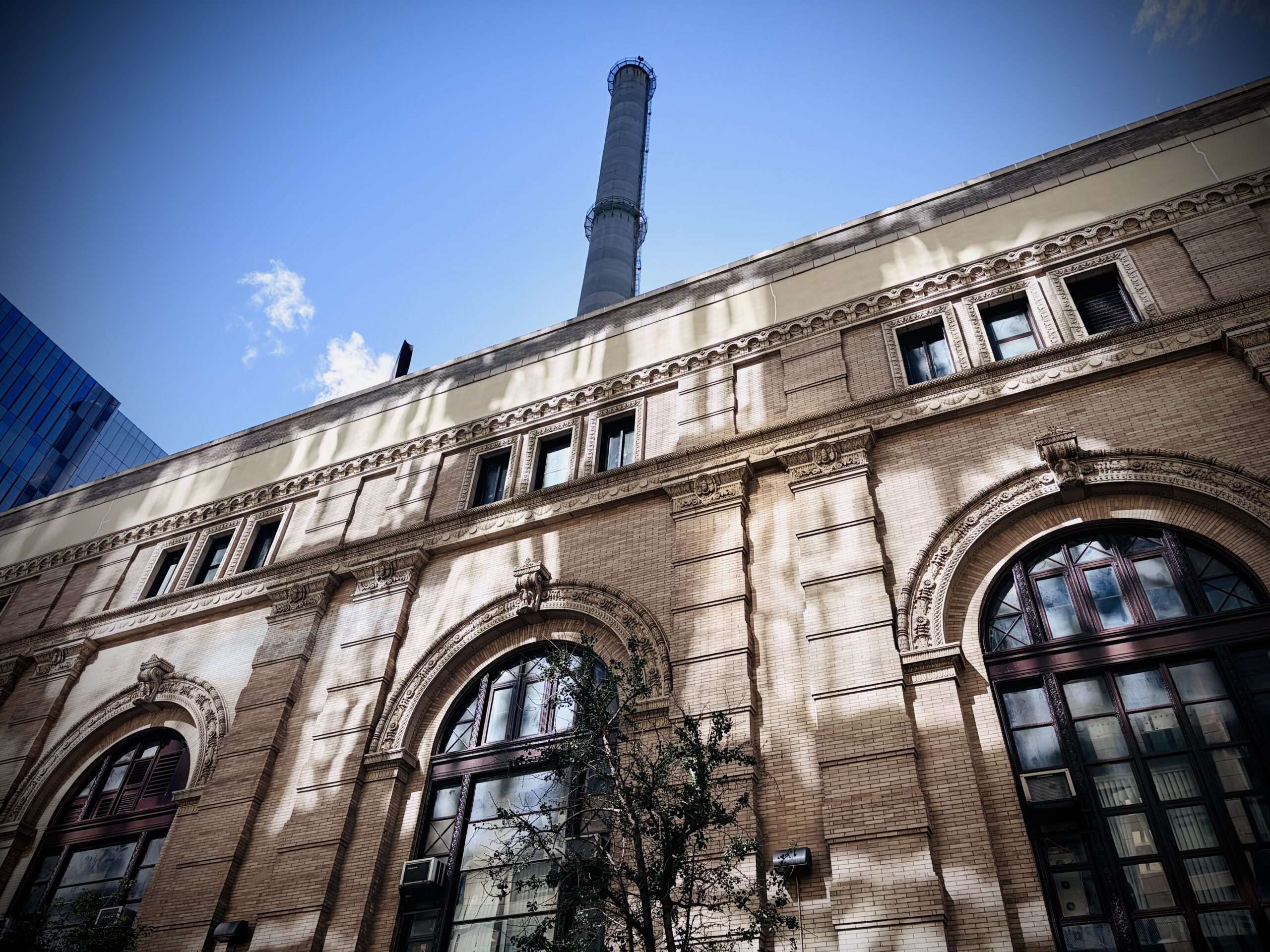
The other day, I was struck by a light so beautiful that I stopped dead in the middle of the sidewalk, blissfully oblivious to the fact that I was holding up the flow of New Yorkers trying to get somewhere. But it was worth it. A sharp stream of light spilled across an old building, making it look as though it were underwater. The light was reflected off a nearby glass tower, throwing waves of light and shimmer across the old façade. It was impossibly beautiful.
But then it struck me again. What was this old building, taking up a whole block at 59th Street between West End Avenue and Riverside? It looked like a grand library, a concert hall, a museum, or an opera house. Or a palace. But a palace with a sky-high smokestack?
Turns out, this building, which looks as though it ought to house something devoted to the finer things humans create, produces something that makes everyday human life possible. Without it, there’d arguably be no Upper West Side at all.
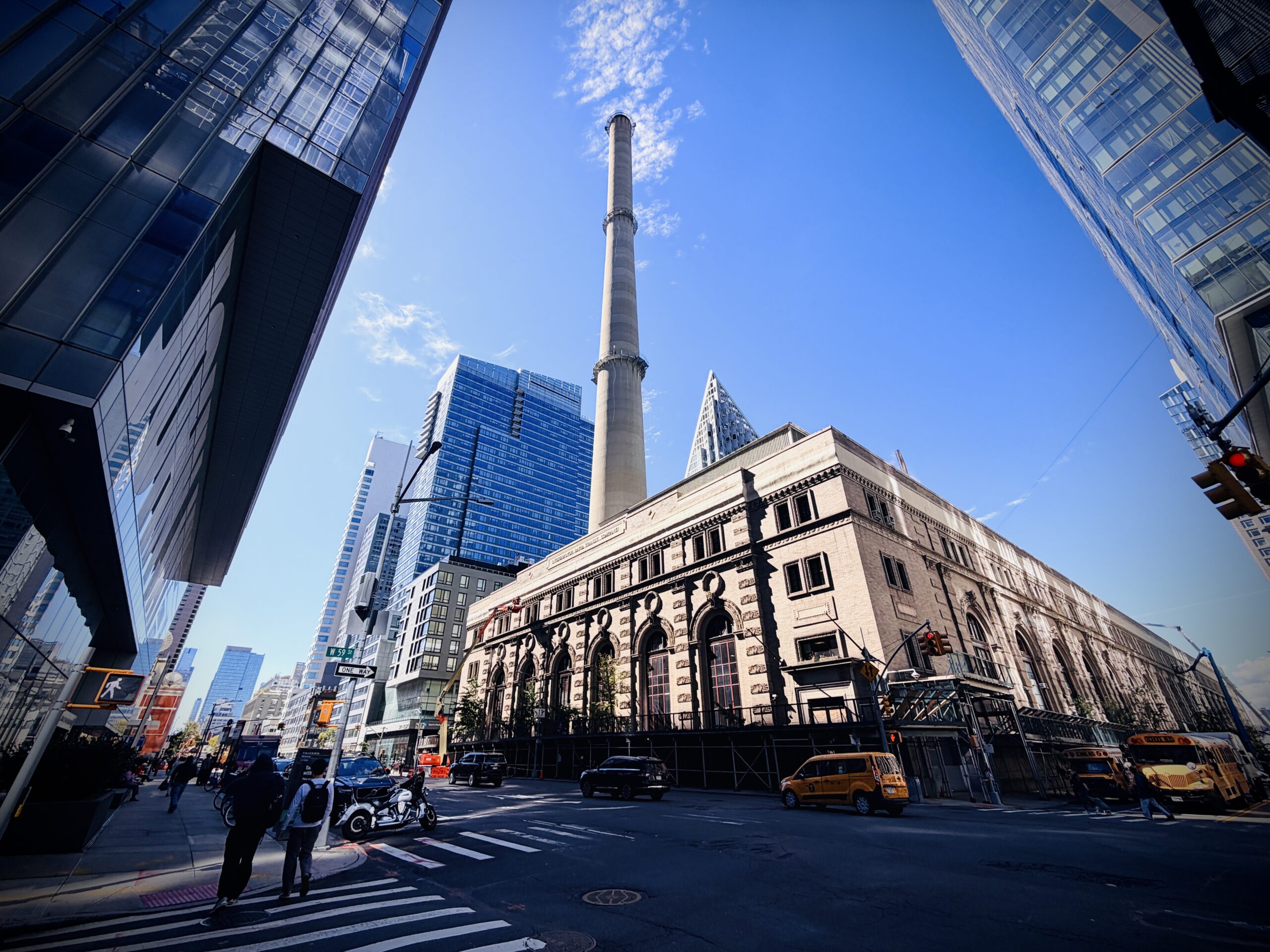
The IRT Powerhouse was completed in 1904 to provide electricity for the city’s first subway line, which ran south to north through the Upper West Side. It was the largest powerhouse in the world — The New York Times called it “an industrial Grand Canyon” — and it helped connect our neighborhood to the city. Because this little stretch of farmland, with its muddy roads and wandering goats, hadn’t really been part of it yet.
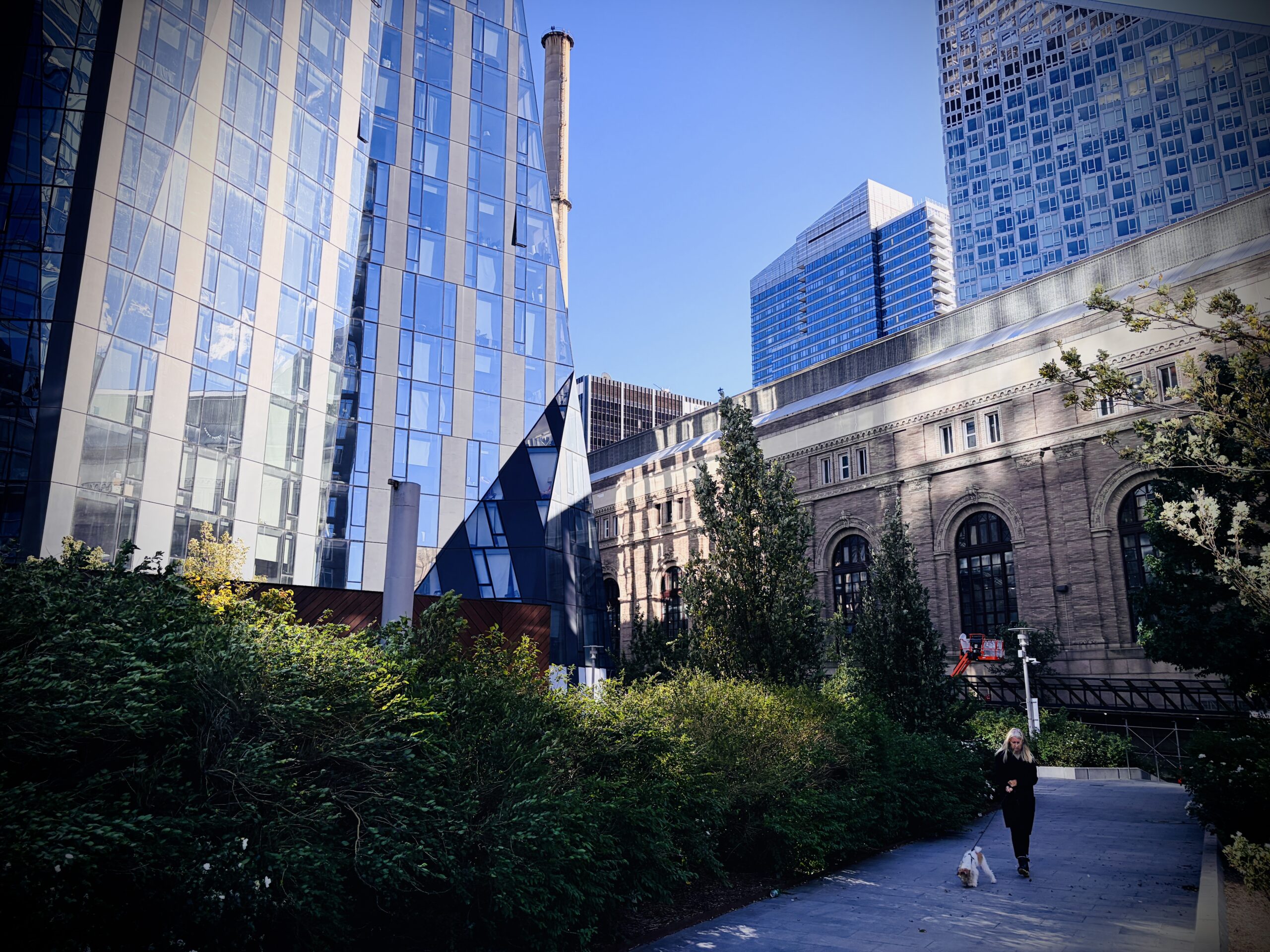
Today, the area around the powerhouse feels like a science-fiction movie starring different centuries. Terracotta and classical pilasters on one side of 59th Street, and the futuristic glass towers of Waterline Square with their sharp edges on the other. Harmonious forms and materials grounded in the earth here; wild shapes, movement, and slick surfaces bouncing light through the air there. Two generations of architecture standing side by side. Just cross the street for time travel.
I imagine the architects behind these two developments discussing urban beauty and disagreeing about almost everything. But their goals weren’t so different. At the turn of the last century, the creators of the powerhouse had to accommodate eight steam engines, 48 boilers, and everything else needed to generate 98,000 kilowatts of electricity using 1,000 tons of coal a day. But they didn’t want it to be an industrial blight, serving no purpose beyond the purely practical. No. They wanted New Yorkers to be proud of this building. They wanted to create an architecturally impressive monument.
The façade was designed by the legendary Stanford White, who embellished it generously with lightning bolts, eagles, and winged pine cones. The building originally had five smokestacks, with a sixth added shortly after its completion, and when the Landmarks Preservation Commission designated the powerhouse a city landmark in 2017, it noted that the smokestacks resembled the Parthenon on the Acropolis in Athens.
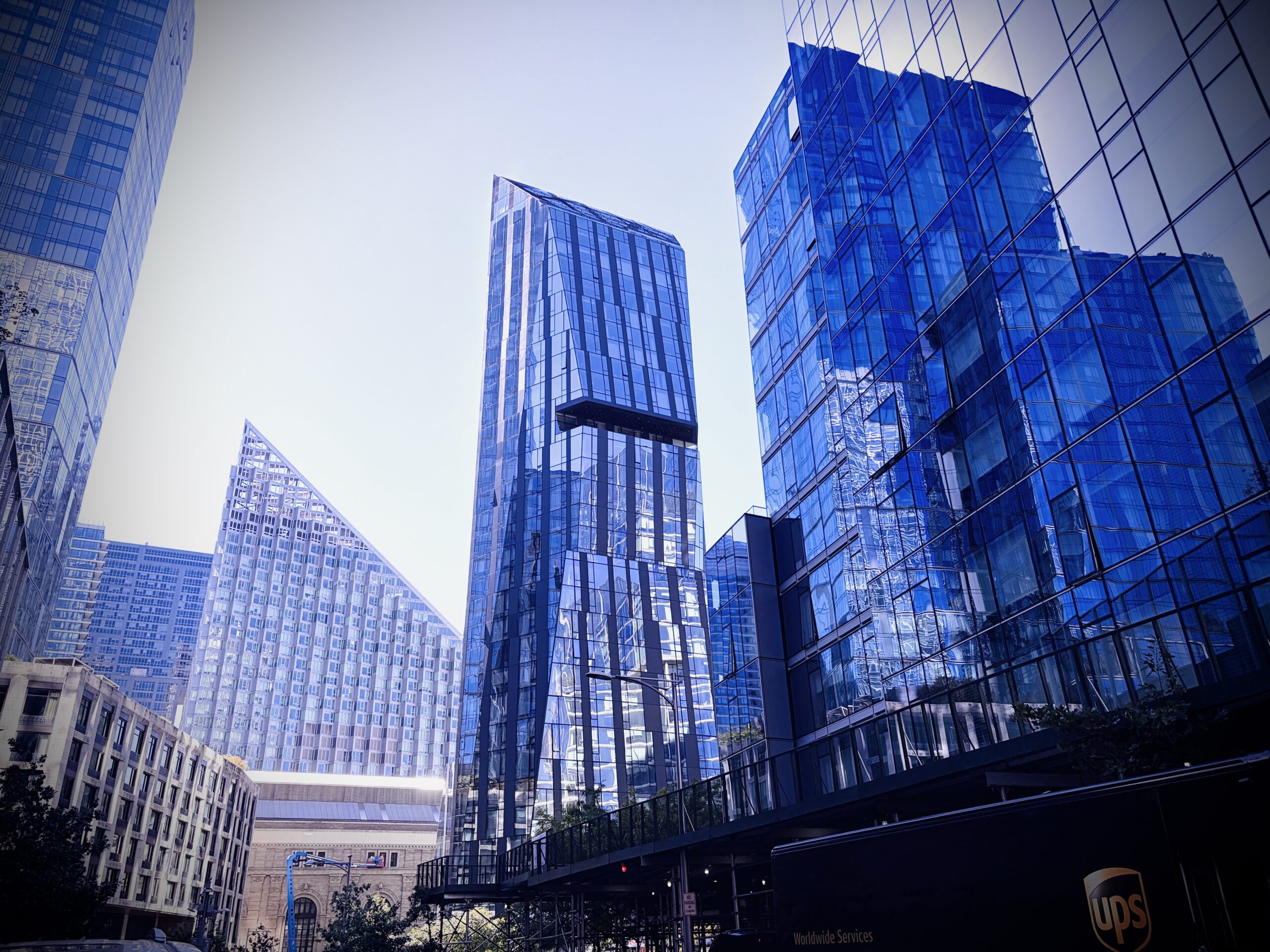
The developer of Waterline Square, completed in 2020, might not have had to accommodate 48 boilers and all that, but only a whole little city. Three residential towers, three acres of public park, restaurants, bars, shops, and a dizzying number of amenities. You can play soccer, tennis, or golf in these buildings; climb rocks, swim laps, skate, bowl, box, or see what’s happening in the dog-training studio. Or, if you’re more of an outdoorsy person, join the three towers for a game of catch as they toss balls of light back and forth all day.
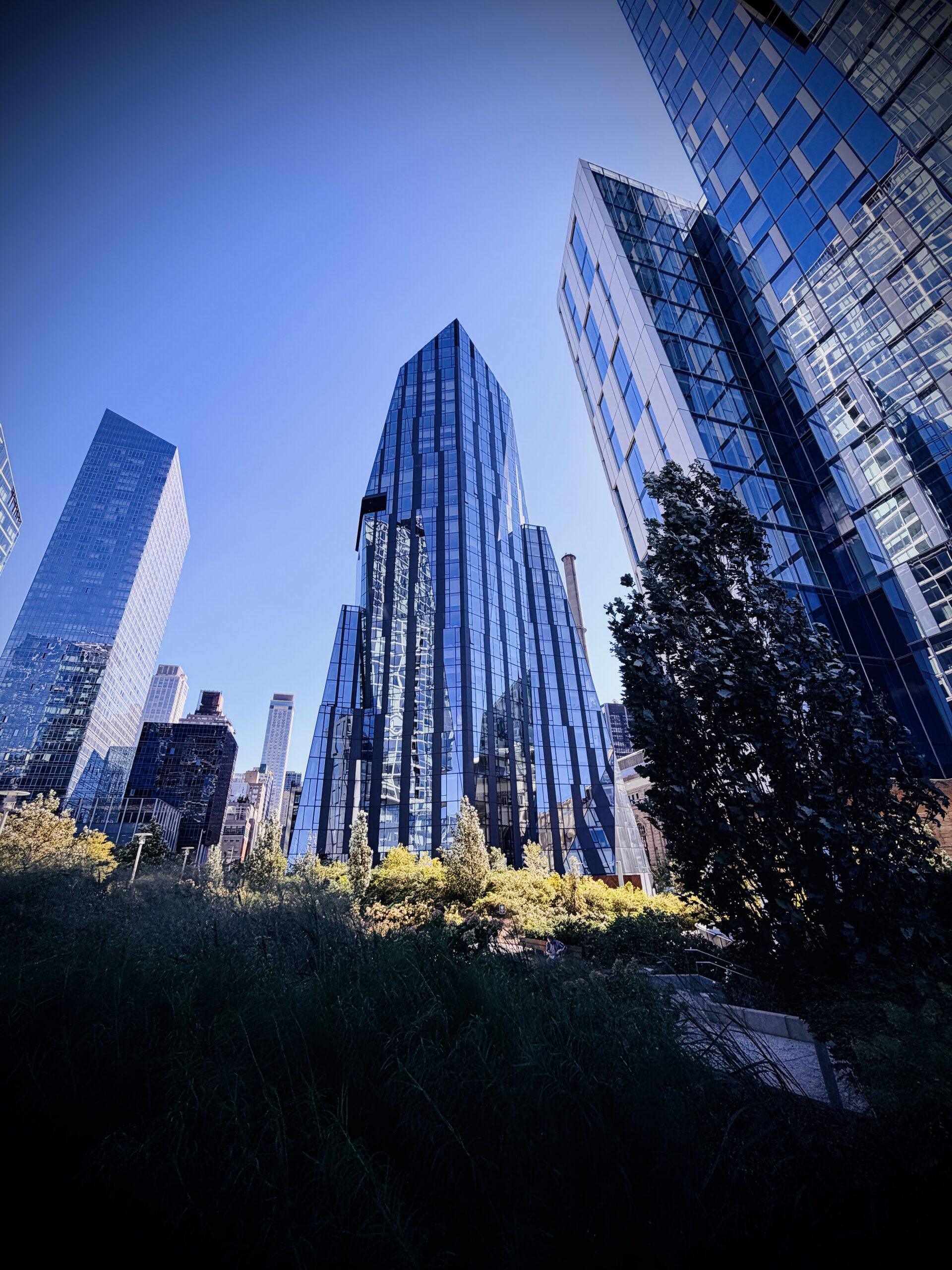
Each of the three towers was designed by a different architect, giving each one a personality of its own. My favorite, Three Waterline Square, looks like an ice princess’s castle from one angle, and from another like an open-mouthed robot with a beard. It seems to bend and burst and change its shape every chance it gets. A real Picasso. As much as I love and adore old New York, Three Waterline Square is my boyfriend.
But the most beautiful thing about these three towers is what they do for our little powerhouse. And what the powerhouse gives them in return. They really make each other shine. The old building’s ornaments come alive against the clean modern lines, while Waterline Square’s spectacle pops all the more against the backdrop of another century.
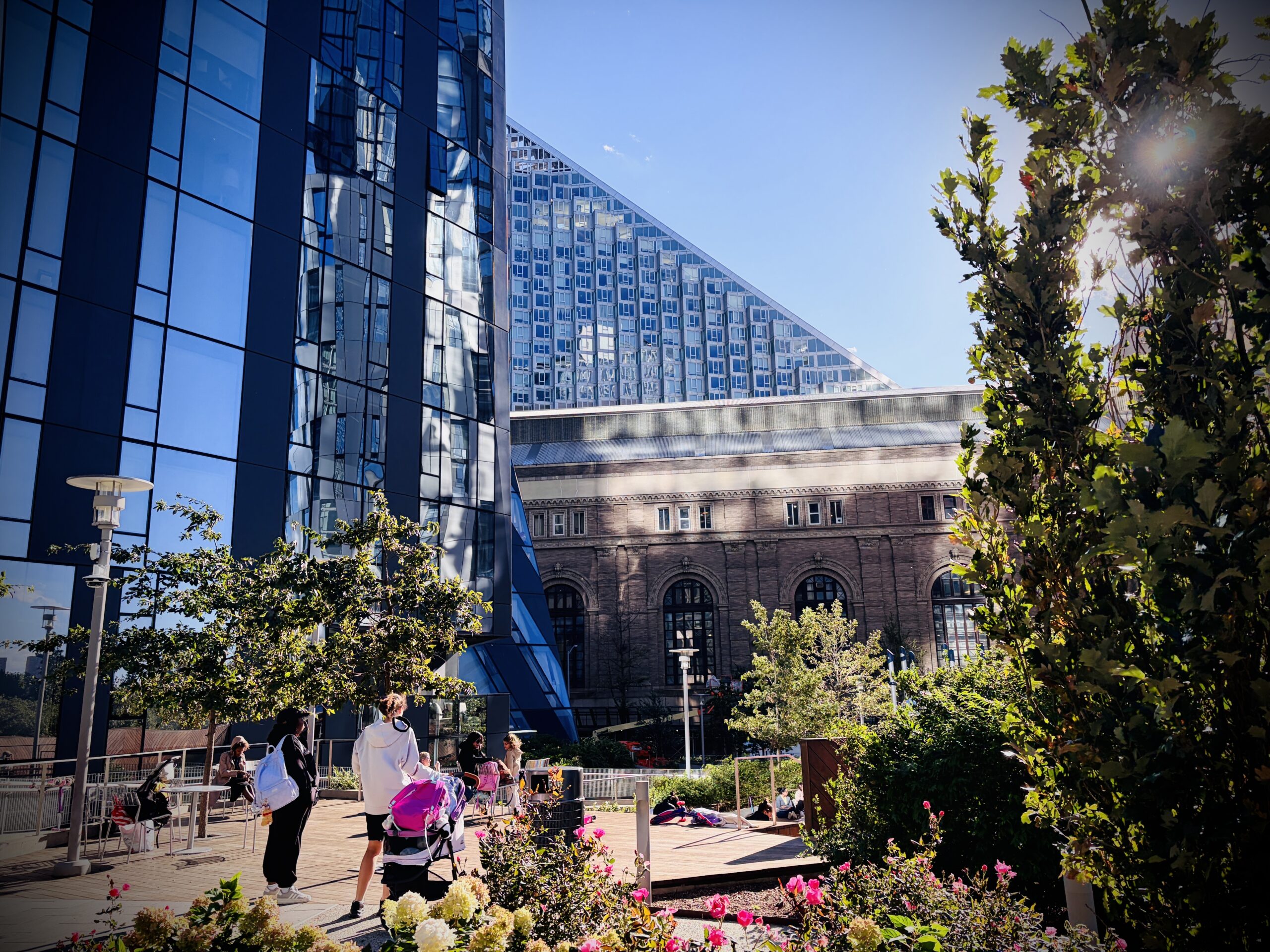
Like a grandparent and their grandchildren, these buildings seem to be having a grand old time together. The young ones keep the elder up to date with new perspectives, while the elder gives the young ones some context for their head-in-the-clouds dreams. It probably tells them stories about the days when it was cutting-edge itself, somebody’s vision of the city’s future. Who knows what kind of building will join them 100 years from now? Maybe my open-mouthed robot and his Waterline Square friends will seem charmingly old-fashioned by then, the grandparents of a whole new generation of architectural creatures.
Yvonne Vávra is a magazine writer and author of the German book 111 Gründe New York zu lieben (111 Reasons to Love New York). Born a Berliner but an aspiring Upper West Sider since the 1990s (thanks, Nora Ephron), she came to New York in 2010 and seven years later made her Upper West Side dreams come true. She’s been obsessively walking the neighborhood ever since.
Subscribe to West Side Rag’s FREE email newsletter here. And you can Support the Rag here.



Thank you for another wonderful essay. Yes, we love the juxtaposition of the old and new, specially with that impressive IRT Powerhouse and the contemporary Waterline Square. It is very New York and we hope it stays that way.
What we missed is Harry’s Table, the restaurant that Cipriani created in the Waterline Square. It was bright, spacious and beautiful. It has a huge selection of delicious Italian food and be with families and people with dogs. You can almost imagine you were in Italy. Unfortunately it closed this year.
Oh man. When I was at John Jay. I used to just stare at that building. And that was before the construction boom, so there was nothing blocking the light
I was on a tour of that facility. It’s amazing, as is its history and the work done there today to send steam to buildings in Manhattan.